Upfront Installation Costs vs Long-Term Lifespan Value
For many Northern Wisconsin homeowners, a metal roof is worth the investment if you plan to stay in the home long term, while architectural shingles are often the better value if upfront budget is the priority or you expect to move within 5 to 10 years. Metal roofing typically lasts closer to 60 years and sheds snow more easily, but it costs more on day one. Architectural shingles usually cost less upfront and still provide dependable protection for 15 to 30 years depending on climate and maintenance.
When weighing whether to invest in a brand-new roof, the financial equation breaks down into two core elements: what you pay today and how many years of dependable protection you receive in return. Before deciding on materials, assessing whether a roof needs repair or total replacement helps establish whether a spot fix or a complete overhaul makes the most economic sense.
Architectural shingles, also known as dimensional or laminate shingles, are built with multiple layers of fiberglass mat and asphalt. They deliver substantial structural depth, attractive shadow lines, and dependable protection against Midwest weather. In contrast, residential metal roofing typically features either concealed-fastener standing seam panels or exposed-fastener corrugated steel profiles coated with durable polymer finishes.
Over a full life-cycle, the pricing dynamics shift dramatically. While architectural shingles offer an approachable upfront investment, metal roofing delivers a multi-decade service life that often eliminates the need for future re-roofing projects entirely.
| Feature / Metric | Architectural Asphalt Shingles | Residential Metal Roofing (Standing Seam / Steel) |
|---|---|---|
| Typical Upfront Cost | $3.50 – $5.50 per sq. ft. | $4.00 – $30.00 per sq. ft. (varies by profile/metal) |
| Expected Lifespan | 15 – 30 years (climate dependent) | Closer to 60 years |
| Wind Resistance Rating | Some architectural shingles are rated up to 110 to 130 mph when installed as part of the required system | Commonly rated up to 140+ mph |
| Snow & Ice Shedding | Moderate (holds snow on coarse granules) | Superior (smooth surface encourages natural shedding) |
| Maintenance Requirements | Periodic shingle, flashing, and granule checks | Occasional fastener checks and valley clearing |
| Recyclability | Limited recycling facilities; mostly landfill | 100% recyclable steel/aluminum |
Is a metal roof worth it in Northern Wisconsin, or are architectural shingles the better value for upfront budgets?
For many property owners, immediate project cost is the primary deciding factor. Architectural shingles generally cost between one-third and one-half of what a standing seam metal roof costs. While basic metal panels start around $4.00 per square foot, premium standing seam systems can range up to $30.00 per square foot depending on the gauge, finish, and complexity of the roof geometry. For a full project, total replacement costs commonly range from the upper four figures to mid five figures, with the final price depending on roof size, pitch, number of layers, decking condition, materials, and labor.
To better understand local pricing factors, exploring what shapes roof replacement costs in Central Wisconsin provides clarity on how pitch and architectural features influence labor. In addition, reviewing what is included in a roof estimate ensures you are comparing identical scopes of work regarding underlayment, flashing details, and cleanup.
Industry contractors frequently evaluate these cost-to-benefit ratios in detail; for a broader visual breakdown of materials and labor demands, check out this industry video analysis on metal vs shingles.
A lower price may reflect differences in materials, scope, cleanup, warranty coverage, or installation details. Financing options are available for qualifying homeowners. Loan amounts up to $100,000 unsecured may be available, with final approval, rates, and terms based on lender review and credit qualification.
Long-Term ROI and Resale Impact
While architectural shingles require less capital on day one, a metal roof can easily last closer to 60 years. In Northern Wisconsin communities like Minocqua, Lac du Flambeau, and St. Germain, asphalt shingles face severe winter stress that can accelerate wear, requiring a complete tear-off every 15 to 25 years.
Across a 50- or 60-year horizon, a homeowner might replace an asphalt roof two to three times. When factoring in recurring labor costs, inflation, and disposal fees, a single metal installation often proves more cost-effective over the life of the structure. Furthermore, homes with metal roofs tend to sell for slightly higher values, as prospective buyers appreciate the longevity of the material and the prospect of never having to replace the roof during their own residency.
Winter Climate Performance: Snow, Ice Dams, and Freeze-Thaw Durability
Northern Wisconsin winters subject roofs to extreme physical demands. Heavy snowfall, sustained sub-zero temperatures, howling winds, and rapid freeze-thaw cycles test every seam and fastener. Selecting the best roofing systems for harsh Wisconsin weather requires understanding how materials react under continuous snow cover.
Asphalt shingle roofs tend to deteriorate slightly faster than their metal counterparts because moisture can seep into microscopic fissures, freeze, expand, and slowly crack the asphalt matting. Metal panels, by contrast, create an impermeable shield that easily withstands repeated freeze-thaw cycles without surface cracking.
Snow Shedding and Structural Requirements
One of the most visible differences during winter in towns like Boulder Junction, Tomahawk, and Three Lakes is how each material handles snow accumulation:
- Asphalt Shingles: The textured, mineral granule coating creates friction that holds snow on the roof. While this prevents dangerous snow slides, it allows massive snow loads to accumulate, putting stress on roof trusses.
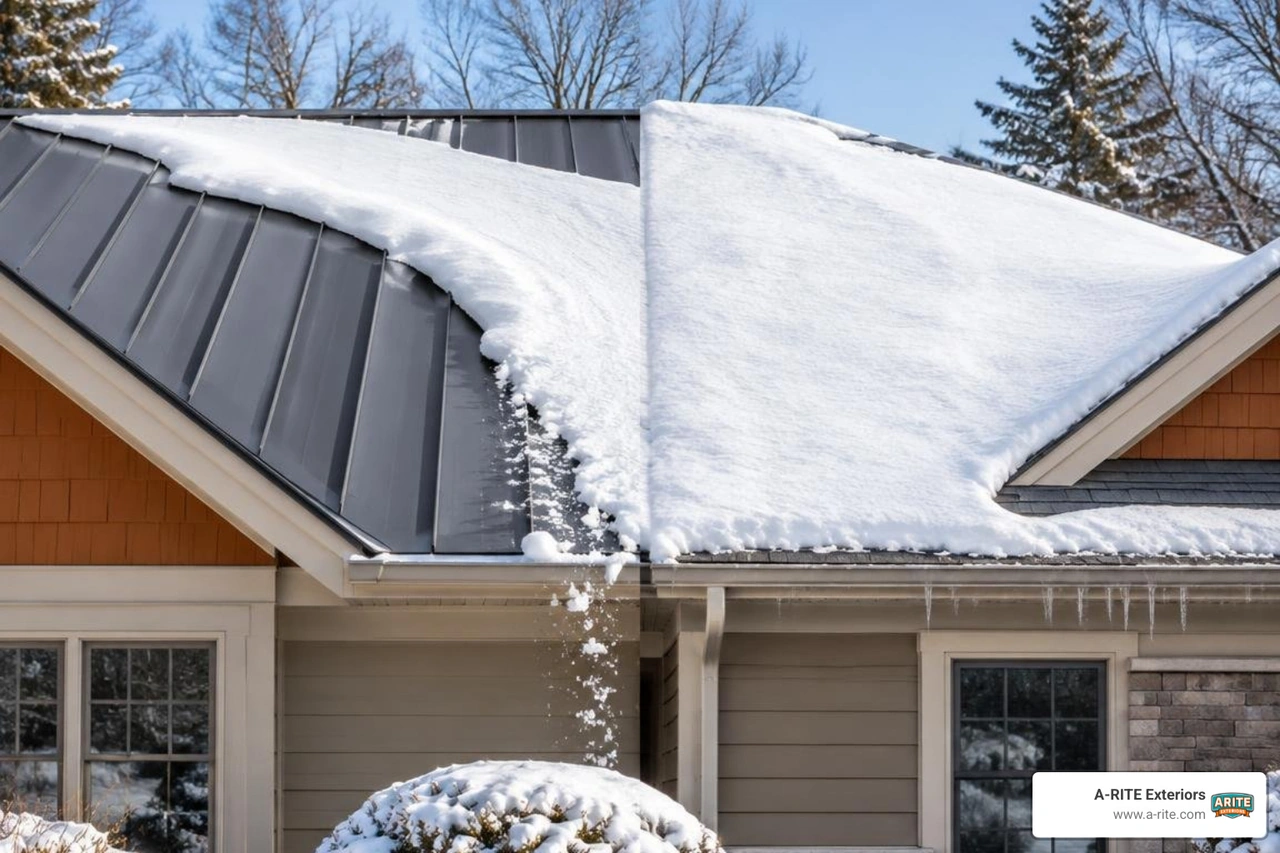
- Metal Panels: The smooth, low-friction surface allows snow and ice to slide off naturally once temperatures rise slightly or indoor heat warms the roof deck.
Homeowners with metal roofs consistently report fewer issues with excessive snow accumulation. However, uncontrolled snow slides can damage gutters, lower porch roofs, landscaping, or strike walkways below. To manage this, we install engineered snow guards along eaves and entryways. Structural framing rarely needs reinforcement for metal roofing because steel and aluminum panels are significantly lighter than asphalt shingles per square foot.
Roofing contractors frequently discuss profile durability under deep drifts; see this real-world discussion among contractors debating corrugated metal vs architectural shingles for practical installer perspectives.
Ice Dam Prevention and Roof Deck Protection
Ice dams form when warm air escapes from the living space into the attic, warming the roof deck and melting the underside of the snow pack. The meltwater runs down to the cold eaves, freezes into an ice barrier, and traps water behind it. On an asphalt shingle roof, this standing water can back up underneath shingle tabs, penetrate the decking, and leak into living areas. Water damage repairs from major roof leaks can cost thousands of dollars, and severe cases can cost much more.
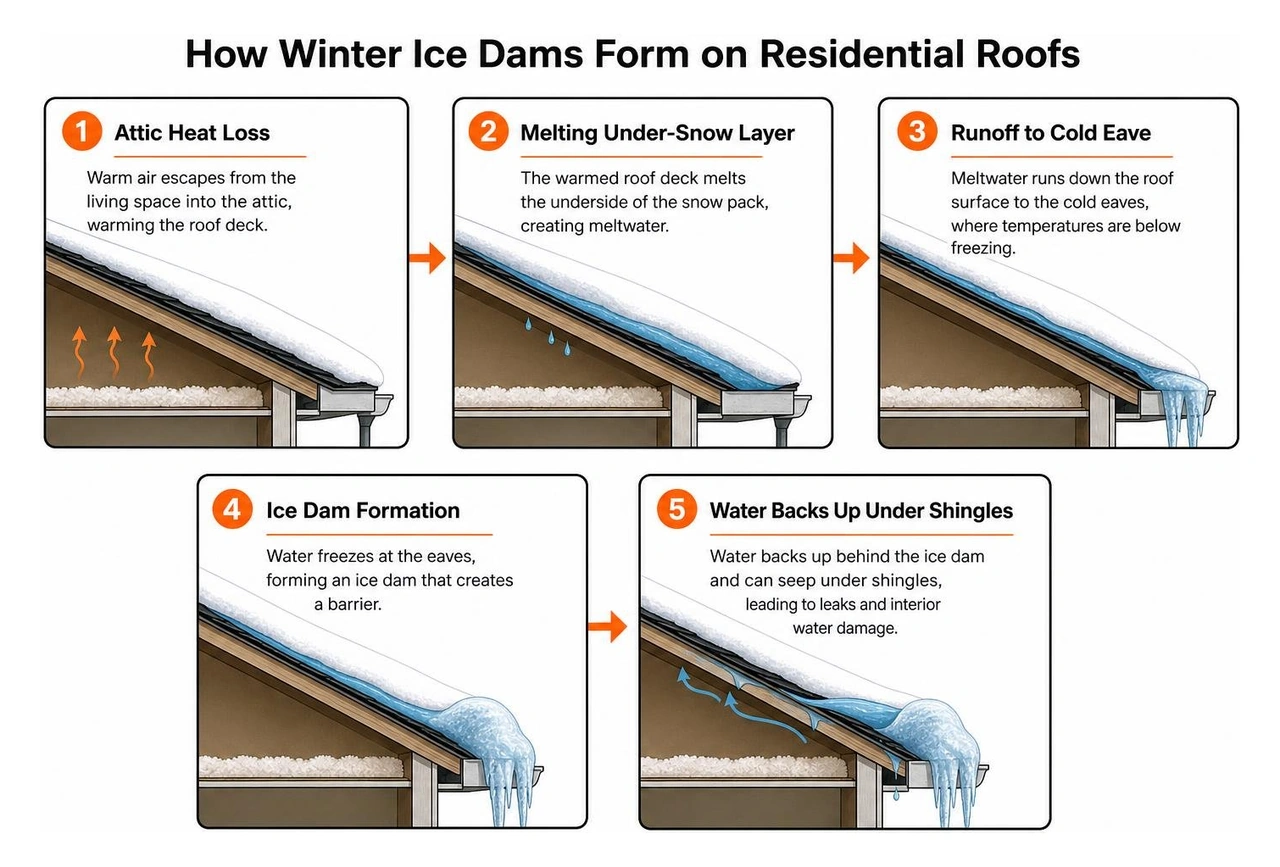
Metal roofs are far less prone to leaking from ice dams because continuous standing seam panels have no horizontal edges for standing water to penetrate. However, metal roofs are not completely immune to thermal dynamics; understanding how ice dams affect metal roofing highlights why proper attic ventilation and high-temperature self-adhered underlayment remain essential along every eave and valley.
Energy Efficiency, Maintenance, and Environmental Considerations
Year-round energy consumption and ecological impact represent another key contrast between metal panels and architectural shingles.
Thermal Performance and Heating Costs in Wisconsin Winters
Metal roofing features high solar reflectance, bouncing daytime sunlight away from the home to keep attics cooler during hot humid summers in Green Bay, Stevens Point, and Wisconsin Rapids.
In the winter, however, thermal dynamics operate differently:
- Asphalt-shingled homes tend to absorb solar radiation and retain ambient heat, which can slightly assist with winter warmth.
- Metal roofing can conduct heat away more rapidly, which can make homes built in colder climates slightly more expensive to heat if the attic space is under-insulated.
To counter winter heat loss, ensuring an adequate attic R-factor in Wisconsin homes is vital. Pairing a metal roof with proper attic insulation seals thermal bypasses and maintains low utility bills year-round. Homeowners may qualify for Focus on Energy rebates. These rebates are for qualifying insulation and air-sealing work (such as attic insulation, air sealing, wall insulation, foundation insulation, duct sealing, and qualifying DIY attic insulation and air sealing), not for roof replacement itself. Rebate amounts and eligibility rules change over time, and homeowners should confirm current program rules before starting work.
When choosing asphalt shingles, reviewing the thermal profile of dark vs light shingle options can help strike the right balance between winter heat absorption and summer cooling demands.
Maintenance Demands and Recyclability
Maintenance expectations vary widely by material:
- Architectural Shingles: Require regular post-storm inspections for missing or lifted tabs, wind crease lines, moss and algae buildup in damp wooded areas, and granule erosion in gutters.
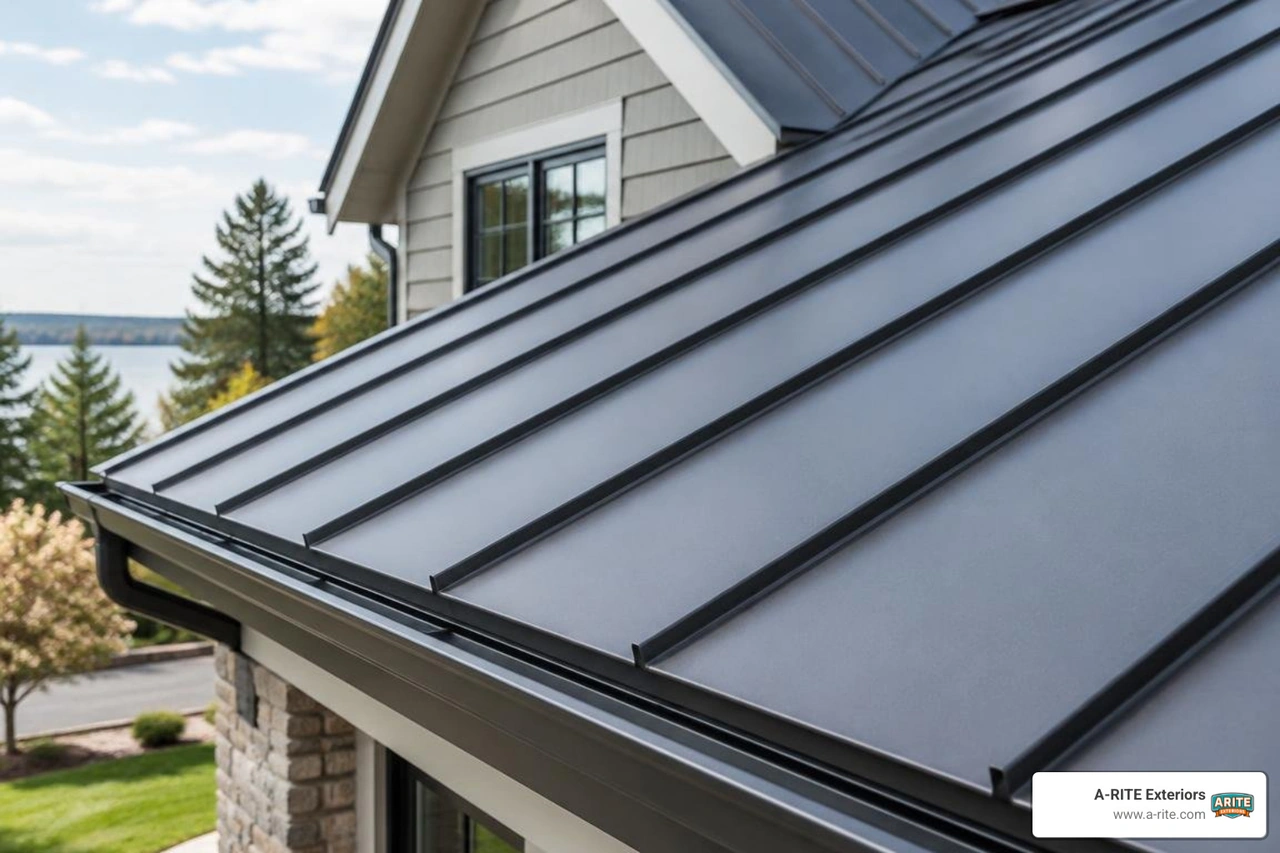
- Metal Roofing: Standing seam panels require virtually no ongoing surface maintenance. Exposed-fastener metal roofs require periodic inspection of neoprene rubber washer grommets, which may dry out or loosen after 10 to 15 years of seasonal expansion and contraction.
From an environmental standpoint, metal is the clear frontrunner. Millions of tons of asphalt shingles enter landfills each year across the country. In contrast, steel and aluminum panels are manufactured with high recycled content and are 100% recyclable at the end of their lifespan, keeping heavy waste out of local landfills.
Is a metal roof worth it in Northern Wisconsin, or are architectural shingles the better value?
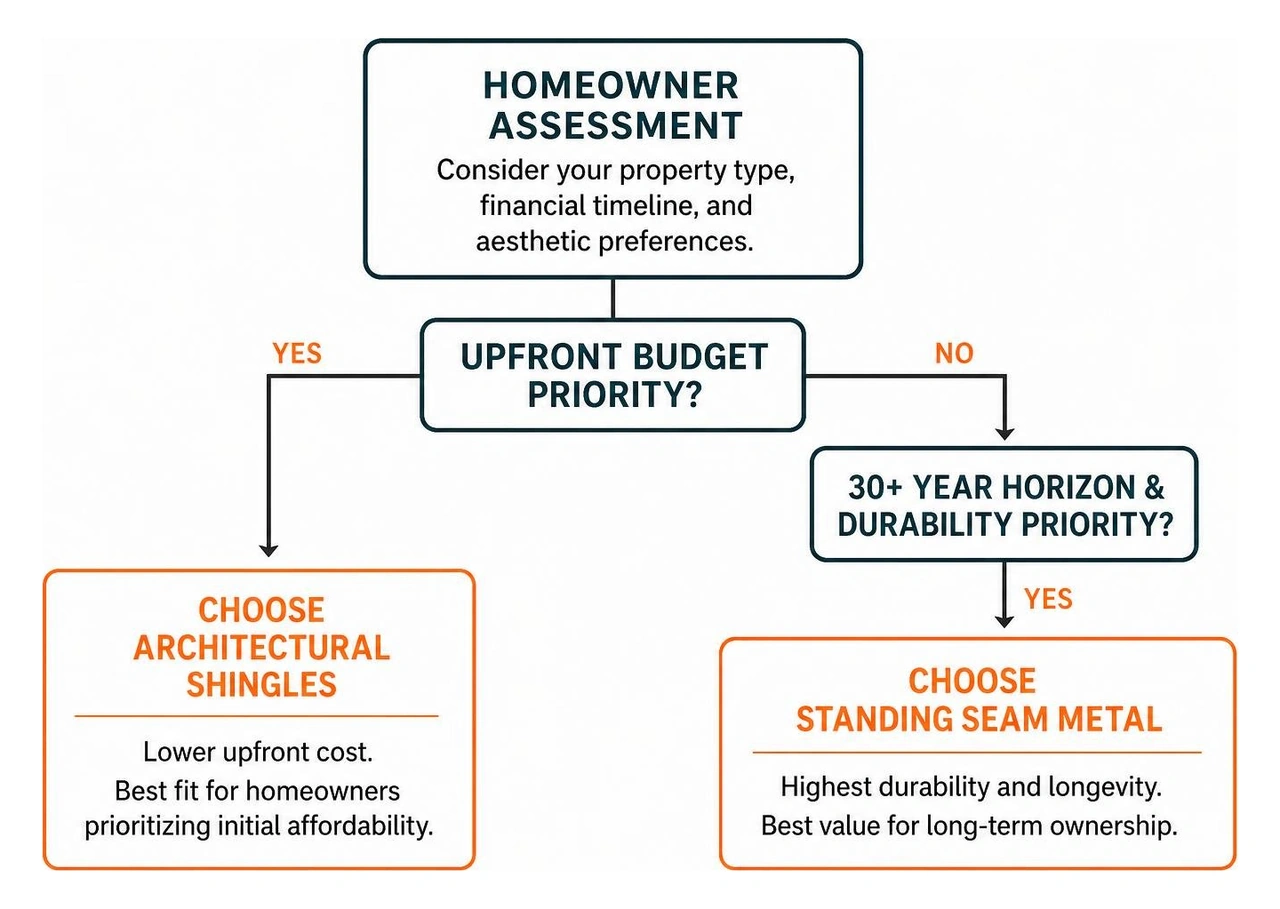
Determining which system delivers the best value comes down to your property type, personal financial timeline, and aesthetic preferences.
Choosing Based on Aesthetic Style and Architecture
Roofing material plays a massive role in exterior architectural design across Northern and Central Wisconsin:
- Rustic Cabins & Lakeside Retreats: In heavily wooded areas like Woodruff, Arbor Vitae, and Lake Tomahawk, standing seam metal roofs complement log siding, natural timber accents, and cedar trim perfectly.
- Suburban & Traditional Neighborhoods: In residential communities throughout Wausau, Weston, Rothschild, Kronenwetter, Rib Mountain, and Schofield, architectural shingles offer timeless dimension and color blends that seamlessly match surrounding homes.
Final Verdict: Is a metal roof worth it in Northern Wisconsin, or are architectural shingles the better value for your home?
A metal roof is well worth the investment in Northern Wisconsin if you are building or renovating a "forever home," cabin, or long-term rental property. The freedom from heavy snow raking, resistance to ice dam backups, superior wind performance, and 60-year lifespan easily justify the higher initial outlay.
Architectural shingles represent the better value if upfront capital is limited, if you plan to relocate within the next 5 to 10 years, or if your home's architecture favors classic textured shingle shadow lines. When installed by experienced professionals with modern synthetic underlayments, high-grade architectural shingles deliver dependable protection for Wisconsin homes.
Frequently Asked Questions About Northern Wisconsin Roofing
Do metal roofs lower home insurance premiums in Wisconsin?
Many insurance carriers offer discounts for homes with metal roofs due to their superior Class 4 impact ratings and Class A fire resistance. Because metal resists hail punctures and ember ignition far better than aging shingles, some insurers reduce policy premiums. Check directly with your local insurance agent to verify eligible discounts.
Can metal roofing be installed over existing shingles in Northern Wisconsin?
While some building codes permit installing lightweight metal panels over a single layer of existing asphalt shingles, direct tear-off is almost always recommended. Reviewing why you should not roof over existing shingles explains how recovering old shingles can trap hidden moisture, hide rotted roof decking, and compromise manufacturer warranties. Proper tear-off and preparing your home for roof replacement guarantees a clean, structurally sound substrate.
Are federal tax credits still available for metal or shingle roof installations in 2026?
Under Section 25C (the Energy Efficient Home Improvement Credit), federal tax credits were available for qualifying energy-efficient roofing improvements placed in service through December 31, 2025. Current IRS guidance does not present this as an active credit for 2026 or beyond. We always recommend consulting a certified tax professional regarding current tax incentives.
Conclusion
Both metal roofing and architectural shingles have earned their place on Northern Wisconsin homes. Whether you prioritize the unmatched longevity and snow-shedding ease of standing seam steel or the accessible upfront cost and classic beauty of architectural shingles, the key to lasting performance is choosing an experienced local installer.
Using a comprehensive roofing contractor selection guide will help you vet potential contractors on safety practices, local licensing, and workmanship warranties. When you are ready to evaluate your home's exterior, connect with our team for expert Wisconsin roofing services tailored specifically to withstand our northern winters.
A-RITE Exteriors provides professional attic insulation along with complete roofing, gutter, siding, and window installations across Central and Northern Wisconsin. Contact us today to schedule your comprehensive on-site roof assessment.