Why Wisconsin Weather Demands a Smarter Roofing Decision
What is the best roofing system for Wisconsin weather comes down to a few key factors: the right material, proper installation, and a ventilation system that works together to handle snow, ice, and freeze-thaw cycles.
Quick Answer: Best Roofing Systems for Wisconsin Weather
| Material | Lifespan | Best For | Key Strength |
|---|---|---|---|
| Architectural asphalt shingles | 20-30 years | Most homes, most budgets | Wind resistance up to 130 mph, proven performance |
| Standing seam metal | 40-60 years | Long-term value, snow country | Snow shedding, low maintenance, longevity |
| Stone-coated steel | 40-60 years | Complex rooflines, curb appeal | Metal durability with shingle-like look |
| Cedar shake | 25-40 years | Aesthetic preference | Natural look, requires more maintenance |
For most Wisconsin homeowners, architectural asphalt shingles are the most practical starting point. If you plan to stay in your home long-term and want to reduce maintenance, standing seam metal may offer stronger value over time. Either way, the quality of the installation often matters just as much as the material you choose.
Wisconsin's climate is one of the most demanding in the continental United States for roofing. Northern counties like Vilas can see up to 125 inches of snow in a single season. Even in Madison, snowfall regularly tops 50 inches. Across the state, roofs face 40 to 100 freeze-thaw cycles every winter, where temperatures rise above freezing during the day and drop back below at night. That repeated expansion and contraction puts real stress on shingles, flashings, sealants, and the entire roof assembly.
Add in hail (Wisconsin recorded 45 tornadoes in 2024, and hail is a regular visitor in the warmer months), high winds, and ice dams that can quietly force water under shingles without any visible warning, and you can see why choosing the right roof here is a different decision than it would be in a warmer state.
The material matters. But how it is installed, ventilated, and protected underneath matters just as much.
I'm Bryan Londerville, founder of A-RITE Exteriors, and I've been helping Central Wisconsin homeowners figure out what is the best roofing system for Wisconsin weather since 2002, inspecting roofs after storms, replacing aging systems, and helping homeowners understand what is actually happening above their heads. In this guide, I'll walk you through everything you need to make a confident decision for your home.
Understanding Wisconsin Weather Challenges for Roofs
To choose a roof that lasts, we have to look closely at the specific weather forces it must withstand in places like Wausau, Stevens Point, and Green Bay. Wisconsin weather does not just test the outer surface of your shingles; it tests the entire structural assembly of your home.
Freeze-Thaw Cycles
Wisconsin experiences a large amount of freeze-thaw cycles every winter season. In the northern third of the state, including Minocqua, Tomahawk, and Arbor Vitae, WI, we see between 60 and 100 of these cycles. In the southern and central parts of the state, such as Plover, Wisconsin Rapids, and Schofield, we average 40 to 70 cycles.
When snow on your roof melts during a sunny afternoon, the water trickles down toward the eaves. As soon as the sun goes down and temperatures drop, this water freezes. This constant freezing and thawing causes materials to expand and contract, which can loosen fasteners, crack older shingles, and break down sealants around chimneys and vents.
Heavy Snow and Ice Dams
Ground snow loads in Wisconsin range from 30 pounds per square foot (psf) in the southern counties to 60 to 80 psf in northern areas. Wet, dense snow can easily exceed 20 pounds per cubic foot. When this heavy snow accumulates, it places immense physical weight on your roof structure.
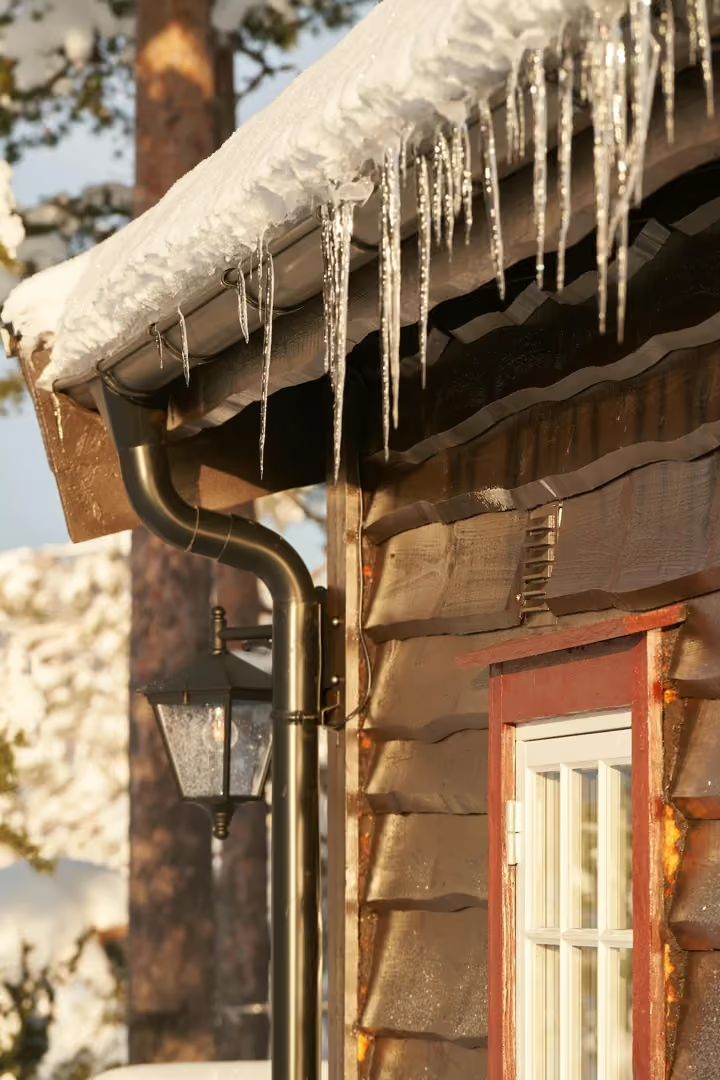
Even worse, this snow acts as an insulating blanket. If heat escapes from your living space into the attic, it warms the roof deck, melting the bottom layer of snow. The meltwater runs down to the cold eave overhang, where it refreezes into a thick band of ice. This is an ice dam.
As more water melts and pools behind this dam, it has nowhere to go. It backs up under the shingles, leading to water stains, mold, and rot. Some homes are naturally more vulnerable to this cycle than others, which is why understanding Why Some Homes Are More Prone to Ice Dams Than Others is so important for local homeowners.
High Winds and Hail Damage
High winds and severe storms are common across Central Wisconsin. In 2024 alone, Wisconsin recorded 45 tornadoes. These storms bring wind speeds that can easily peel back weak or improperly fastened shingles.
Additionally, hail can cause severe impact damage. When hail strikes a roof, it knocks away the protective mineral granules on asphalt shingles, leaving the underlying asphalt mat exposed to the sun's damaging ultraviolet rays. Over time, this exposure leads to premature leaks and roof failure.
Winter Roof Preparation Checklist
To help protect your home before the cold Wisconsin winter arrives, we recommend following these practical steps:
- Conduct a ground-level visual check: Look for lifted, cracked, or missing shingles, as well as damaged flashings around your chimney and vents.
- Clear debris from gutters and valleys: Properly sloped, clean gutters help manage runoff and direct water away from the roofline and foundation. Clogged gutters can trap water, which worsens ice buildup at the roof edge.
- Inspect snow guards on metal roofs: Ensure they are securely fastened and positioned correctly to protect walkways and entryways from sudden snow slides.
- Check attic insulation and ventilation: Look for blocked soffit vents or signs of moisture inside your attic space.
What is the Best Roofing System for Wisconsin Weather?
When choosing a roofing material, homeowners in Central Wisconsin usually compare architectural asphalt shingles and metal roofing systems. Both options have distinct advantages and tradeoffs depending on your budget, home style, and how long you plan to live in your home.
Material Comparison Matrix
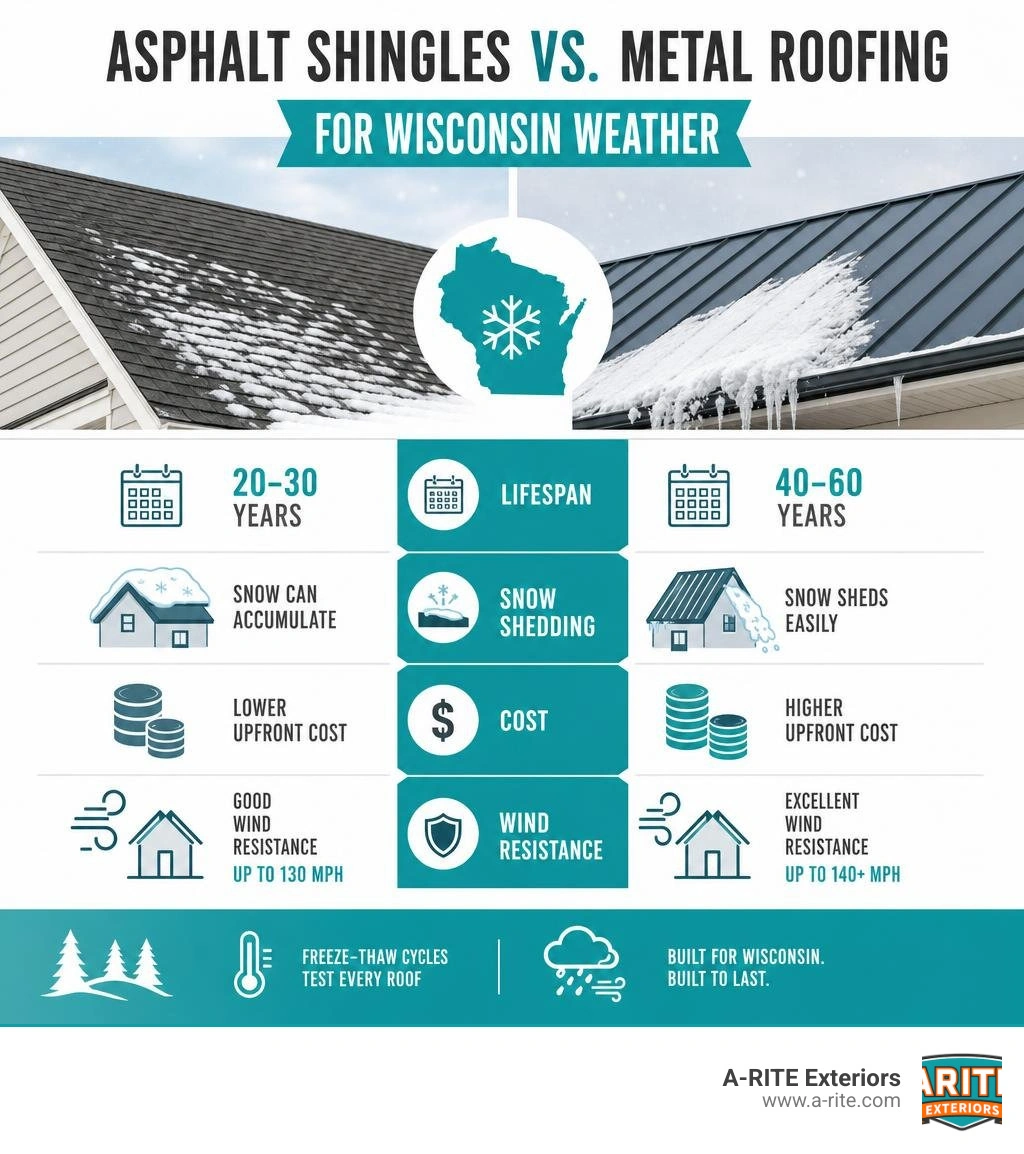
| Feature | Architectural Asphalt Shingles | Standing Seam Metal Roofing |
|---|---|---|
| Expected Lifespan | 20 to 30 years | 40 to 60 years (Aluminum can exceed 50 years) |
| Upfront Cost | Moderate | High (2x to 3x higher than asphalt) |
| Wind Resistance | Rated up to 110-130 mph | Rated up to 120-140 mph |
| Snow Handling | Retains snow (prevents sudden slides) | Sheds snow quickly (requires snow guards) |
| Maintenance Need | Low to moderate (check for granule loss) | Very low (check fasteners on exposed systems) |
| Recyclability | Limited (landfill waste) | 100% recyclable at end of life |
While standard three-tab asphalt shingles are available, they generally only last 15 to 22 years in our climate and are only rated for 60 to 70 mph winds. For this reason, we focus on architectural shingles and metal systems as the primary choices for weather resistance. Homeowners looking for a technical breakdown of regional options can consult the GAF Roofing Guide to see how different materials evaluate durability.
Selecting durable materials designed for cold climates is the first step toward a worry-free winter. A high-quality roof system functions as a water-shedding system, relying on overlapping courses, premium underlayments, and proper attic ventilation to keep your home dry.
Architectural Asphalt Shingles: The Practical Standard
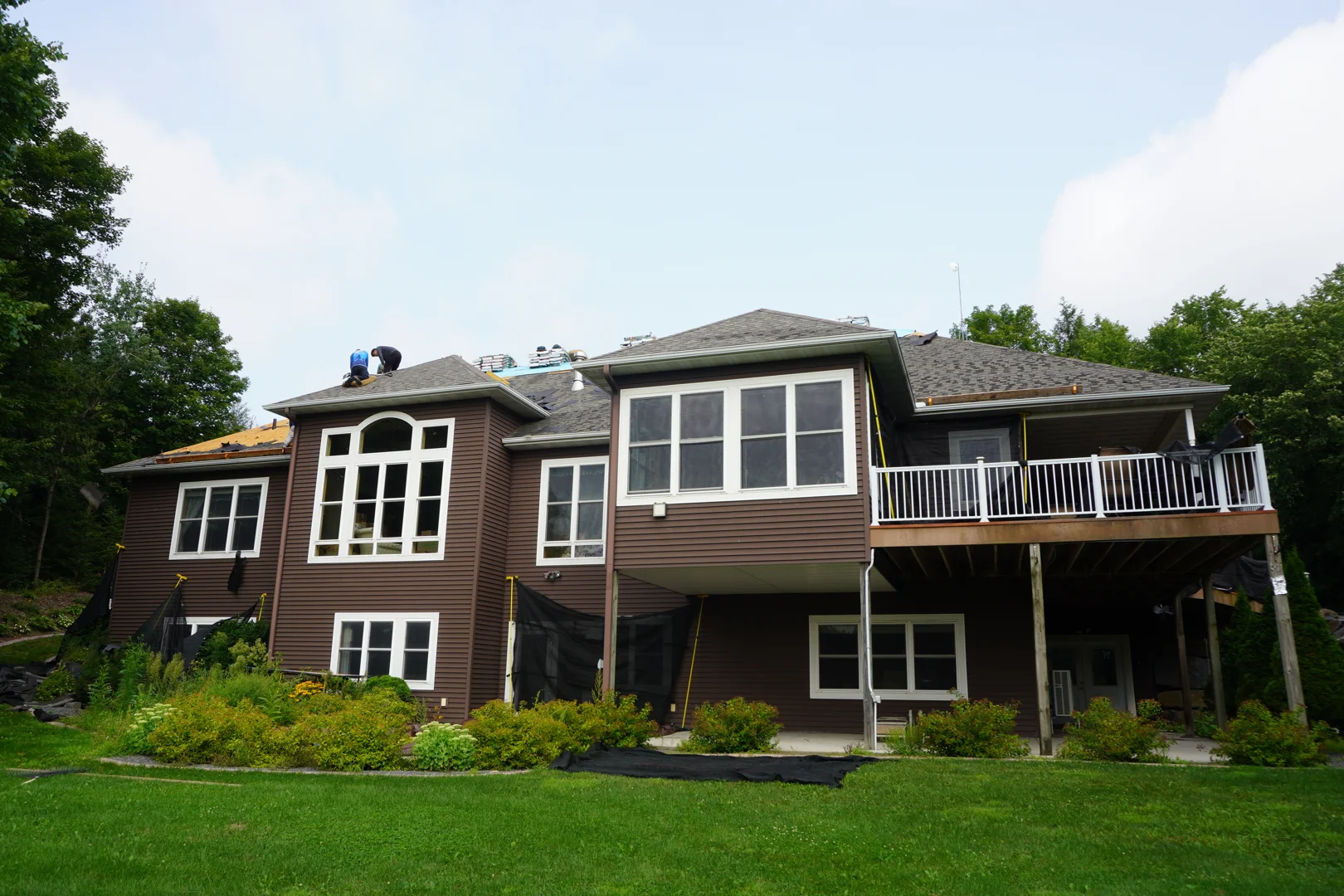
Architectural asphalt shingles (sometimes called dimensional or laminate shingles) are the most common roofing choice across Wausau, Stevens Point, and Green Bay. Unlike older three-tab shingles, architectural shingles are constructed with multiple layers of asphalt and fiberglass, creating a thicker, richer appearance that mimics natural wood shake.
Wind and Impact Resistance
Because they are heavier and have stronger adhesive strips, architectural shingles offer excellent wind resistance, typically rated for winds between 110 and 130 mph. This makes them highly reliable during spring and summer storms. Many manufacturers, such as GAF, design these shingles with advanced granule adhesion to resist algae growth and protect against UV damage.
Cost-Effectiveness and Lifespan
Architectural shingles offer a strong balance of cost and performance. In Wisconsin, a well-installed architectural shingle roof will typically last 20 to 30 years. This makes them a highly practical choice for homeowners who want reliable weather protection without the higher upfront investment of a metal roof.
Shingle Color and Heat Absorption
When choosing asphalt shingles, color is more than just an aesthetic choice. Darker shingles absorb more solar heat, which can help melt snow on sunny winter days but may increase attic temperatures during hot summer months. Light-colored shingles reflect more sunlight, helping keep your attic cooler in the summer. To help you decide which option is right for your home's energy needs and style, read our guide on Dark vs Light Shingles: Which is Right for Your Home.
Evaluating Roof Slope and Attic Conditions for Wisconsin Weather
Your roof's slope (or pitch) plays a major role in how it sheds water and handles heavy snow loads.
Pitch and Material Selection
Asphalt shingles are designed to shed moving water, not hold standing water. They are appropriate for standard roof pitches at or above 4:12 (a 4-inch rise for every 12 inches of horizontal run). If your roof has a lower pitch between 2:12 and 4:12, we must use double underlayment or a self-adhering ice-and-water barrier across the entire deck to prevent leaks.
Metal roofing, especially standing seam, is highly versatile and can be installed on lower slopes because the interlocking panels create a highly watertight seal.
Snow Accumulation and Thermal Bridging
On a steep-pitched roof, snow can slide off naturally, reducing the structural load on your home. However, on shallower roofs, snow accumulates and sits for longer periods. This is where thermal bridging becomes a major factor.
Thermal bridging occurs when heat from your home's interior travels through structural elements (like wooden rafters or wall top plates) directly to the roof deck, bypassing your insulation. This localized heat melts the snow above it, creating the perfect conditions for ice dams to form along the cold eaves. Understanding how your roof's pitch and attic structure interact is essential when researching local standards, which you can verify through the Wisconsin Department of Safety and Professional Services.
Choosing the Right Contractor in Central Wisconsin
Even the highest-quality roofing material will fail if it is not installed correctly. In Wisconsin, where freeze-thaw cycles and high winds put constant stress on your roof, installation details like precise nail placement, correct flashing, and proper underlayment are critical.
Separating Manufacturer and Workmanship Warranties
When comparing roofing estimates, it is important to understand that warranties are split into two separate categories:
- Manufacturer Warranties: These cover defects in the roofing materials themselves. For example, GAF offers strong material warranties on their shingles.
- Workmanship Warranties: These cover installation-related issues and are provided directly by your contractor.
If you work with a certified installer, you may gain access to extended system warranties. For example, the GAF Golden Pledge workmanship coverage may last 20, 25, or 30 years depending on the qualifying GAF system and warranty terms. This is one of GAF’s strongest warranty options, but it requires installation by a GAF Master Elite contractor to be valid.
The Value of Local Experience
Working with a local contractor who understands our regional climate is highly beneficial. Some out-of-area contractors may be harder to reach later if warranty or service issues come up. A local crew will know how to handle specific Wisconsin building codes, such as the requirement for ice-and-water barriers to extend at least 24 inches inside the heated wall line.
Knowing how to choose a roofing contractor in Central Wisconsin is key to a successful project. To help you evaluate local companies, we have put together a guide on How to Choose a Roofing Contractor in Central Wisconsin to ensure you ask the right questions before signing a contract.
The Role of Ventilation, Insulation, and Underlayment
While shingles and metal panels are the visible parts of your roof, the real work of weather protection happens underneath. A truly "Wisconsin-proof" roof is a complete system that includes attic insulation, underlayment, and balanced ventilation.
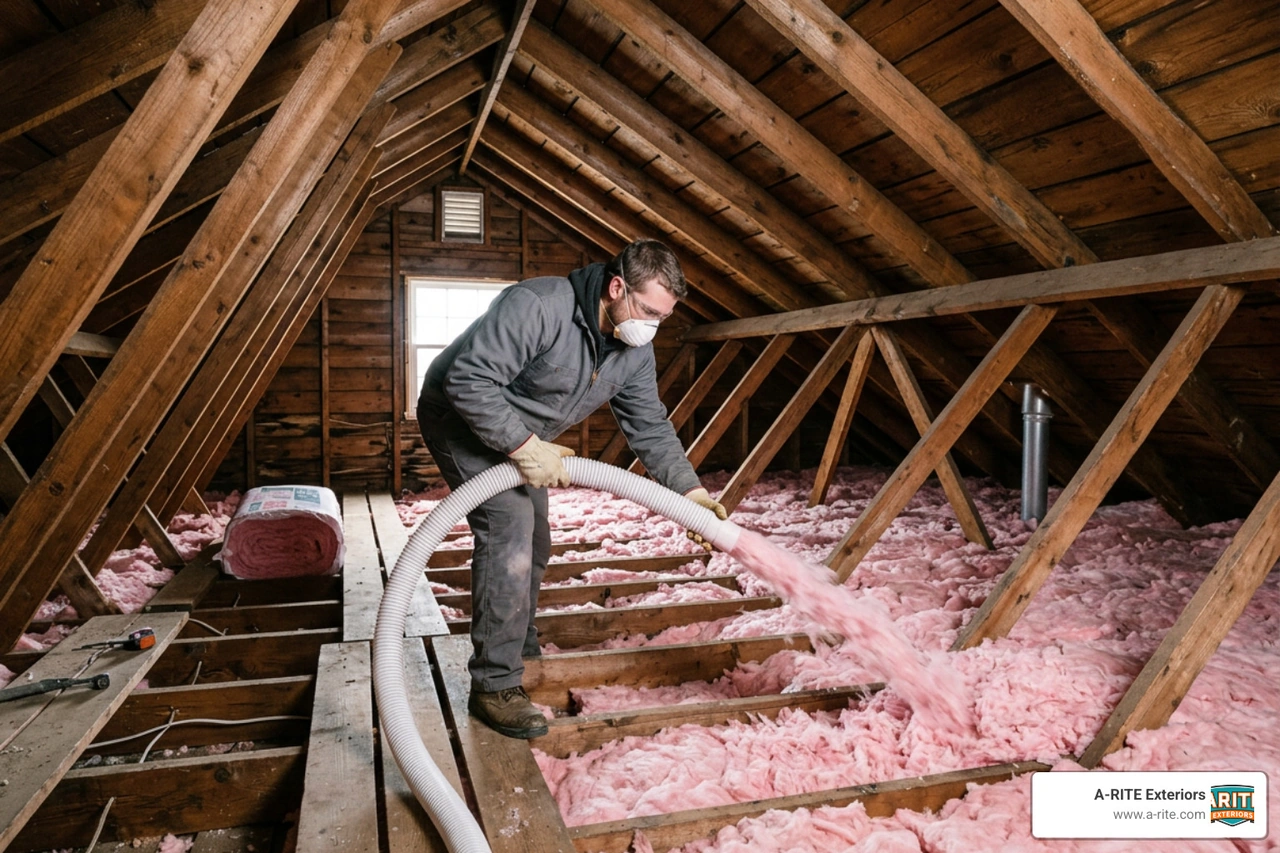
Attic Insulation and the AttiCat System
Attic insulation helps keep warm, conditioned air inside your living space rather than letting it escape into your attic. When warm air leaks into your attic, it heats up the roof deck, causing uneven snow melt and increasing the risk of ice dams.
We install attic insulation using the Owens Corning AttiCat blown-in fiberglass system. This loose-fill fiberglass insulation is designed to provide excellent attic coverage, comfort, and energy efficiency. For homes in our climate zones, an insulation value of R-49 to R-60 is a common recommendation for Wisconsin attics.
The EPA estimates that homeowners can achieve an average savings of about 15% on heating and cooling costs by air sealing and adding insulation in attics, crawl spaces, and basement rim joists. If you notice large icicles, drafts, or high heating bills, these could be signs of attic insulation, air sealing, or ventilation issues.
Underlayment and Ice Barriers
Underlayment acts as a secondary water-resistant barrier beneath your primary roofing material. The Wisconsin Uniform Dwelling Code requires a self-adhering, polymer-modified bitumen ice-and-water barrier (often called ice and water shield) to be installed at the eaves. This barrier must extend from the eave edge to a point at least 24 inches inside the interior heated wall line.
If an ice dam forms and water pools at the edge of your roof, this ice and water shield helps protect against water intrusion if ice dams occur, but it does not prevent ice dams by itself.
Balanced Ventilation: Intake and Exhaust
Proper ventilation keeps your roof deck temperature closer to the outdoor temperature, preventing the rapid snow-melt cycle that leads to ice dams. A balanced system requires two parts:
- Intake Vents (Soffit Vents): Located at the lower edge of your roof, these draw cool, fresh air into the attic.
- Exhaust Vents (Ridge Vents): Located at the very peak of your roof, these allow warm, moist air to escape naturally.
This continuous airflow prevents moisture buildup in the winter (which can cause mold and rot) and keeps your attic cooler during hot summer months. Proper ventilation is just as critical for metal roofs as it is for asphalt shingles. If you are considering a metal system, you might wonder: Should You Worry About Ice Dams on a Metal Roof? The answer is yes, because ice dams are caused by attic heat loss and poor ventilation, regardless of the material on top of your roof.
Frequently Asked Questions about Wisconsin Roofing
How long do asphalt shingles last in Wisconsin?
In Wisconsin's climate, a professionally installed architectural asphalt shingle roof typically lasts between 20 and 30 years. Standard three-tab shingles have a shorter lifespan, usually lasting 15 to 22 years due to their lower wind resistance and thinner construction. The actual lifespan of your shingles depends heavily on proper attic ventilation, adequate insulation, and exposure to severe storms or hail.
Are metal roofs good for heavy snow?
Yes. Metal roofing is excellent for snow because its smooth surface allows snow to slide off easily, which reduces the physical snow load on your roof structure. However, this rapid snow shedding can create safety hazards near entryways, driveways, and walkways. To manage this, we install snow guards to hold the snow in place and allow it to melt or slide off in small, controlled amounts.
What is the best way to handle ice dams?
If you already have ice dams on your roof, the safest and most effective solution is professional steam removal. Using hammers, shovels, or salt can easily gouge your shingles, tear your gutters, and void your manufacturer warranties. Professional steam removal uses low-pressure, high-temperature steam to melt the ice safely without damaging your roofing materials. If you are dealing with ice buildup, you can explore our professional Ice Dam Removal Services to safely clear your roofline.
Conclusion
Choosing what is the best roofing system for Wisconsin weather requires looking at your home as a complete, integrated system. Whether you choose the proven, cost-effective performance of architectural asphalt shingles or the long-term durability and low maintenance of a standing seam metal roof, your roof needs proper insulation, underlayment, and balanced ventilation to stand up to our cold Wisconsin winters.
At A-RITE Exteriors, we have spent more than two decades installing roof-first, weather-resistant solutions designed for local storms and winters. From our offices in Wausau, we proudly serve homeowners across Schofield, Stevens Point, Plover, Wisconsin Rapids, Green Bay, Minocqua, and the surrounding Central Wisconsin communities.
If you want to ensure your home is fully prepared for whatever the next season brings, we are here to help. Contact us today to learn more about our comprehensive Roofing Services or to schedule a professional, pressure-free roof inspection.
Trust the Hawk on Your Block.