Why Knowing How Do I Choose a Roofing Contractor Can Help Reduce the Risk of Secondary Water Damage
Knowing how do I choose a roofing contractor is one of the most important decisions you will make as a homeowner. A roof replacement typically costs anywhere from the upper four figures to the mid five figures, and that number can climb depending on roof size, pitch, number of layers, decking condition, materials, and labor. Choosing the wrong contractor can cost you even more down the road.
Here is a quick answer to get you started:
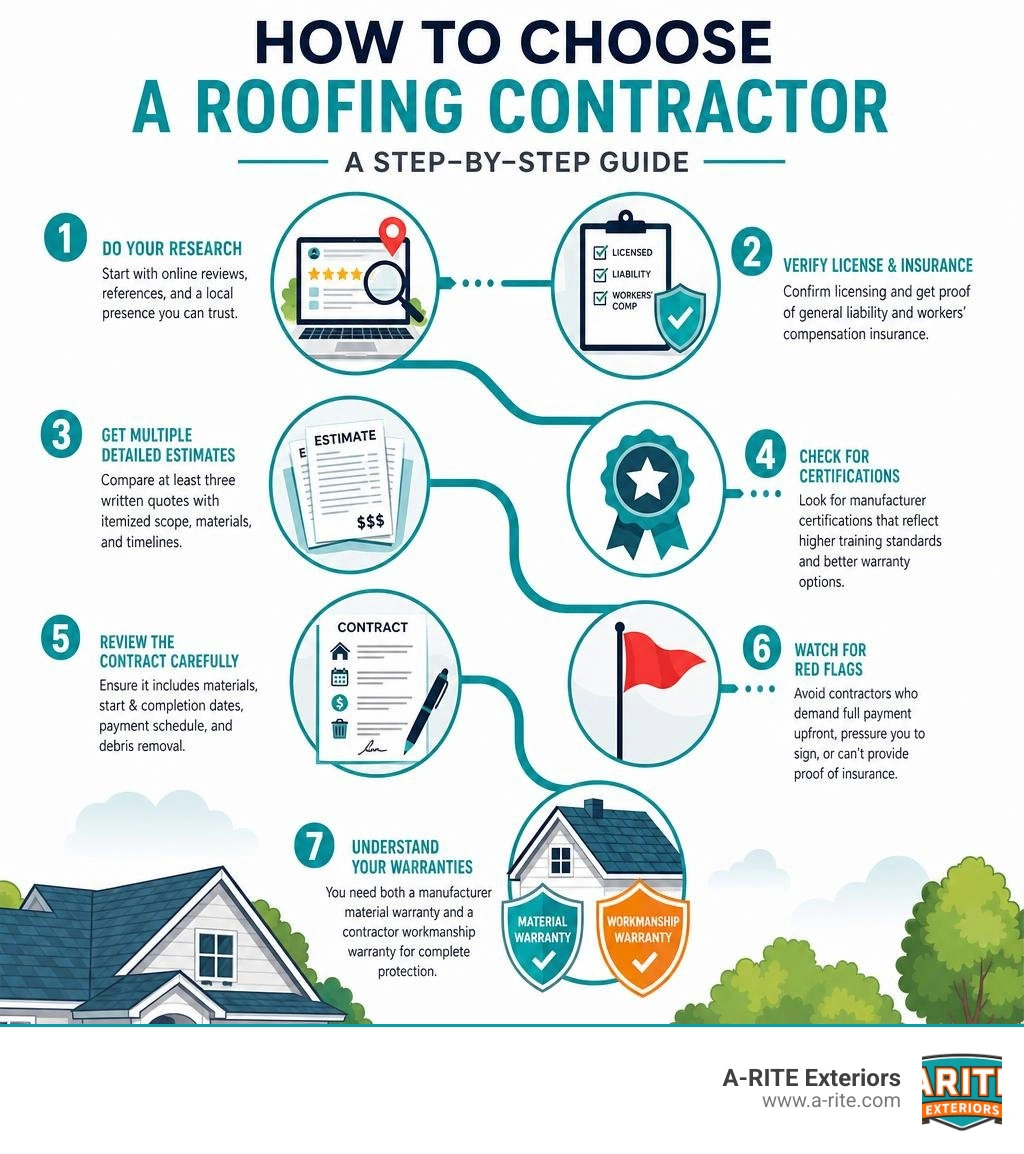
- Verify licensing and insurance: Confirm general liability and workers' compensation coverage before anyone steps on your roof.
- Check local reputation: Look for verified reviews, references, and a physical office in your area.
- Get multiple detailed estimates: Compare at least three written quotes with itemized scope, materials, and timelines.
- Look for manufacturer certifications: Credentials like GAF Master Elite or Owens Corning Platinum Preferred signal higher training standards and better warranty options.
- Review the contract carefully: Make sure it includes materials, start and completion dates, payment schedule, and debris removal.
- Watch for red flags: Avoid contractors who demand full payment upfront, pressure you to sign on the spot, or cannot provide proof of insurance.
- Understand your warranties: You need both a manufacturer material warranty and a contractor workmanship warranty for complete protection.
Most roofing complaints trace back to one root cause: homeowners chose based on price alone, without checking credentials, reviewing the contract, or comparing scope. This guide will walk you through every step so you do not make that mistake.
I'm Bryan Londerville, founder of A-RITE Exteriors, and since 2002 I've helped Central Wisconsin homeowners navigate exactly this question, how do I choose a roofing contractor, by building our process around transparency, documented recommendations, and respect for your property. Everything in this guide reflects what I've seen work, and what I've seen go wrong, over more than two decades in the field.
Must-know how do i choose a roofing contractor terms:
- how do i choose a roofing contractor in central wisconsin
- what is the best roofing system for wisconsin weather
Vetting Checklist: How Do I Choose a Roofing Contractor?
When you are standing in your driveway looking up at curling shingles or water spots on your ceiling, it is easy to feel overwhelmed. You might wonder, how do I choose a roofing contractor who won't leave me high and dry?
Vetting a contractor is not about finding the person with the loudest truck or the flashiest flyer. It is about systematic verification. By taking a structured approach, you can filter out unreliable storm chasers and find a true local professional. The Selecting a Contractor - National Roofing Contractors Association guidelines emphasize that prequalifying your contractor is the single most effective way to ensure a successful build.
To help you navigate this process, we have put together a comprehensive approach based on our guide to how do I choose a roofing contractor in central wisconsin.
Step 1: Researching How Do I Choose a Roofing Contractor Locally
The first rule of smart hiring is to keep it local. A contractor with a permanent physical office, a local phone number, and a solid community reputation is someone you can actually find if a problem arises years down the road.
If you live in Wausau, Schofield, Weston, or Mosinee, you want a contractor who understands how heavy snow loads and ice dams affect local homes. When researching, check local business directories and ask your neighbors for word-of-mouth recommendations. You can also consult resources like Who is the Best Roofing Company Near Wausau WI to see how local providers stack up in terms of history and customer service.
Be sure to cross-reference multiple service areas. A reputable local contractor will have a proven track record across Central Wisconsin, serving communities like Weston, Mosinee, Merrill, and Minocqua.
If a contractor lists a PO Box as their only address or uses a temporary out-of-state phone number, proceed with extreme caution.
Step 2: Gathering Multiple Detailed Estimates
Never settle for a single estimate or a verbal ballpark figure whispered over the hood of a truck. We recommend gathering multiple written estimates to establish a clear baseline for your project.
When comparing bids, look beyond the bottom-line price. A detailed estimate should outline the complete scope of work, including the exact materials to be used, the estimated project timeline, permit fees, and cleanup procedures. This level of detail is standard for a professional Local Roof Replacement and ensures that there are no hidden surprises when the final bill arrives.
Verifying Credentials: Licenses, Insurance, and Certifications
A handsome estimate is worthless if the crew operating on your home lacks the legal credentials to do so. In the roofing industry, proper licensing and robust insurance are your primary shields against financial and legal liability. If an uninsured worker is injured on your property, you could be held liable for their medical expenses.
Before signing anything, verify credentials through trusted platforms like the Roofing Contractors near Wisconsin Rapids, WI - BBB directory, and check out peer-reviewed guides such as Who is the Best Roofing Contractor Near Wausau WI for Roof Replacement to ensure you are dealing with vetted professionals.
Verifying State Licensing and Insurance Coverage
In Wisconsin, professional roofing contractors should hold a Dwelling Contractor Certification and a Dwelling Contractor Financial Responsibility Certification issued by the Wisconsin Department of Safety and Professional Services (DSPS).
Always ask for proof of:
- General Liability Insurance: This protects your home and property from damage during the construction process. Look for a policy with at least a $1 million limit.
- Workers' Compensation Insurance: This covers the crew members while they are on your property, ensuring you are not legally responsible for on-the-job injuries.
When evaluating local options, whether you are looking at providers in Schofield or beyond, verify their standing directly. For instance, you can research Who is the Best Roofing Contractor in Schofield WI or check the state's database of registered dwelling contractors to confirm their credentials are up to date.
The Value of Manufacturer Certifications
Did you know that only about 2% of all roofing contractors nationwide hold elite manufacturer certifications, such as the GAF Master Elite status?
These certifications are not easy to get. Manufacturers require contractors to undergo rigorous training, maintain high credit ratings, and demonstrate excellent workmanship standards. Hiring a certified contractor is highly beneficial because it unlocks enhanced, long-term warranties that are backed directly by the manufacturer. This is particularly crucial when designing What is the Best Roofing System for Wisconsin Weather, as specialized high-wind and ice-resistant systems require precise, certified installation to perform as intended.
Evaluating Estimates, Contracts, and Warranties
Once you have your estimates in hand, it is time to look at the fine print. The contract is your legally binding protection, and it should leave zero room for interpretation.
One critical detail to confirm early is whether the contractor plans to perform a complete tear-off or simply lay new shingles over the old ones. We strongly advise against overlays. To understand why this practice can compromise your home's structural integrity, read our detailed breakdown on Why You Should Not Roof Over Existing Shingles.
Warranty TypeWhat It CoversTypical DurationWho Backs ItManufacturer WarrantyMaterial defects, premature shingle degradation, and system failures.20 to 50 years (varies by product and system)The shingle manufacturer (e.g., GAF, Owens Corning)Workmanship WarrantyInstallation errors, leaks caused by poor labor, flashing mistakes, and ventilation issues.Workmanship coverage may last 20, 25, or 30 years depending on the qualifying GAF system and warranty termsThe roofing contractor
What a Detailed Roofing Contract Must Include
A professional roofing contract must be a comprehensive, written document. Never accept verbal promises. Ensure your contract explicitly includes:
- The exact scope of work: Written confirmation of tear-off, decking replacement rules, underlayment installation, and ice and water shield placement.
- Material specifications: The brand, type, and color of shingles, underlayments, and flashing materials.
- Timeline: Clear start and estimated completion dates (subject to weather contingencies).
- Payment schedule: A structured milestone-based payment plan (never pay 100% upfront).
- Cleanup and debris removal: Explicit confirmation that the contractor is responsible for hauling away all old materials, cleaning the gutters, and performing a magnetic sweep for nails.
Understanding Material vs. Workmanship Warranties
It is a common misconception that a "50-year material warranty" covers everything that could go wrong with your roof. If a crew installs a high-quality shingle incorrectly, the manufacturer will void the warranty, leaving you responsible for the repair costs.
This is why you must verify both the manufacturer's material warranty and the contractor's workmanship warranty. For example, if you are planning a Roof Replacement Stevens Point WI, always ask how the contractor stands behind their labor. An established local company will offer a robust workmanship warranty to match the longevity of the materials they install.
Protecting Your Property and Managing the Project
A roofing project is essentially a controlled construction zone on your property. Thousands of pounds of old shingles, thousands of sharp nails, and heavy equipment will be moving around your home. A professional contractor will have a clear, proactive plan to protect your landscaping, gutters, and siding from damage.
The Ultimate Guide on How Do I Choose a Roofing Contractor Without Getting Scammed
Unfortunately, the roofing industry attracts its share of bad actors, particularly after severe weather events. "Storm chasers" are out-of-state companies that follow major hail and wind storms. They knock on doors, offer "free roofs" by waiving insurance deductibles (which is illegal), and demand large upfront deposits; however, some out-of-area contractors may be harder to reach later if warranty or service issues come up.
If your home has recently experienced storm damage, take your time. Read our guide on Who Should I Call for Storm Damage Roof Repair in Wausau or Central Wisconsin to ensure you are working with a legitimate, local advocate.
To spot a scam, watch out for these red flags:
- High-pressure sales tactics demanding a signature on the spot.
- Demands for a full payment or a massive deposit before materials are delivered.
- Offers to "hide" or waive your insurance deductible.
- A lack of a physical, local office or verifiable local references.
For more tips on navigating post-storm recovery safely, review our checklist on Hail Damage Wausau.
Property Protection and Post-Project Cleanup
Before any work begins, ask your contractor exactly how they plan to safeguard your home. A professional crew will:
- Use specialized property protection nets or tarps to shield your siding, windows, and delicate landscaping from falling debris.
- Stabilize ladders so they do not dent or bend your gutters.
- Run a high-powered magnetic nail sweep over your lawn, driveway, and sidewalks multiple times to collect stray fasteners.
- Clean out your gutters to ensure no loose granules or debris clog your downspouts.
Pricing, Financing, and Energy Efficiency Incentives
When evaluating the cost of a new roof, it is helpful to keep a realistic perspective. While guides for other regions, such as those from the Department of Energy, focus heavily on regional climate challenges like extreme heat, our Central Wisconsin roofs must be engineered to handle heavy snow loads, ice damming, and severe spring storms.
As noted earlier, a professional roof replacement typically ranges from the upper four figures to the mid five figures, depending on your home's unique variables.
Comparing Quotes and Understanding Project Costs
If you receive an estimate that is significantly lower than the others, take a close look at the details. A lower price may reflect differences in materials, scope, cleanup, warranty coverage, or installation details.
For instance, a low bid might skip replacing worn flashing, omit ice and water shields in critical valleys (remember that ice and water shield helps protect against water intrusion if ice dams occur, but it does not prevent ice dams by itself), or exclude the cost of permits and debris disposal. If a contractor cuts corners on installation, fixing the resulting leaks can be costly, whereas proper installation can help reduce the risk of secondary water damage. Always compare quotes line-by-line to ensure you are comparing equal value.
Financing Options and Energy Efficiency Rebates
We understand that a new roof is a major investment, which is why we offer flexible paths to help you protect your home with options available for qualifying homeowners.
Financing options are available for qualifying homeowners. Loan amounts up to $100,000 unsecured may be available, with final approval, rates, and terms based on lender review and credit qualification.
Additionally, homeowners may qualify for Focus on Energy rebates. Please note that these rebates are specifically designated for qualifying insulation and air-sealing work (such as attic insulation, air sealing, wall insulation, foundation insulation, duct sealing, and qualifying DIY attic insulation and air sealing), rather than the roof replacement itself. Combining attic insulation and air sealing with a roof replacement is a highly effective way to help reduce the risk of ice dams and helping lower your heating bills. Because rebate amounts and eligibility rules change over time, homeowners should confirm current program rules before starting work.
If you are researching federal tax credits, note that the Section 25C Energy Efficient Home Improvement Credit was available for qualifying improvements placed in service through December 31, 2025, under historical IRS guidance, and is not presented as active for 2026. Always recommend consulting a tax professional to verify any active tax incentives or credits for your specific tax year.
Frequently Asked Questions About Selecting a Roofer
How many roofing quotes should I get before deciding?
We recommend gathering at least two to three written estimates. Getting multiple estimates gives you a clear sense of the local market rate and allows you to compare different communication styles, material options, and warranties. If you want to check local ratings and find vetted pros, platforms like The 10 Best Roofing Contractors in Wausau, WI (with Free Estimates) can serve as a helpful starting point.
What insurance should a roofing contractor carry?
A legitimate roofing contractor must carry both general liability insurance (to protect your home from damage during the build) and workers' compensation insurance (helping protect you from liability if a worker is injured on your property). Always ask the contractor's insurance agency to send a Certificate of Insurance directly to you to verify active coverage.
How much should I pay a roofing contractor upfront?
Never pay 100% of the project cost upfront. A standard, professional payment structure typically involves a deposit of 10% to 30% when the contract is signed (to secure your spot on the schedule and cover initial material orders), with subsequent milestone payments and a final 10% holdback paid only after the project is fully completed, inspected, and cleaned up to your satisfaction.
Conclusion: Trust the Hawk on Your Block
Choosing a roofing contractor does not have to be a stressful guessing game. By taking your time, verifying state licenses, insisting on comprehensive insurance, and comparing detailed, written quotes, you can make your decision with complete confidence.
At A-RITE Exteriors, we have spent over two decades serving homeowners across Central Wisconsin, including Wausau, Schofield, Minocqua, Stevens Point, and Green Bay. Our "roof-first" philosophy means we focus on weather-resistant solutions specifically engineered to stand up to brutal Wisconsin winters, heavy snow, and severe storms.
When you are ready to work with a local team that prioritizes transparency, quality materials, and outstanding property protection, we are here to help. For More info about roofing services or to schedule a professional, honest inspection of your home, reach out to us today. Trust the Hawk on Your Block!