What Causes Frost and Moisture to Accumulate in an Attic During Winter?
To stop frost from taking over your roof deck, you have to understand the physical forces driving moisture into the attic cavity. It is rarely a single defect; rather, it is typically a combination of building physics, indoor moisture production, and mechanical or passive ventilation failures.
The Mechanics of the Stack Effect and Warm Air Leakage
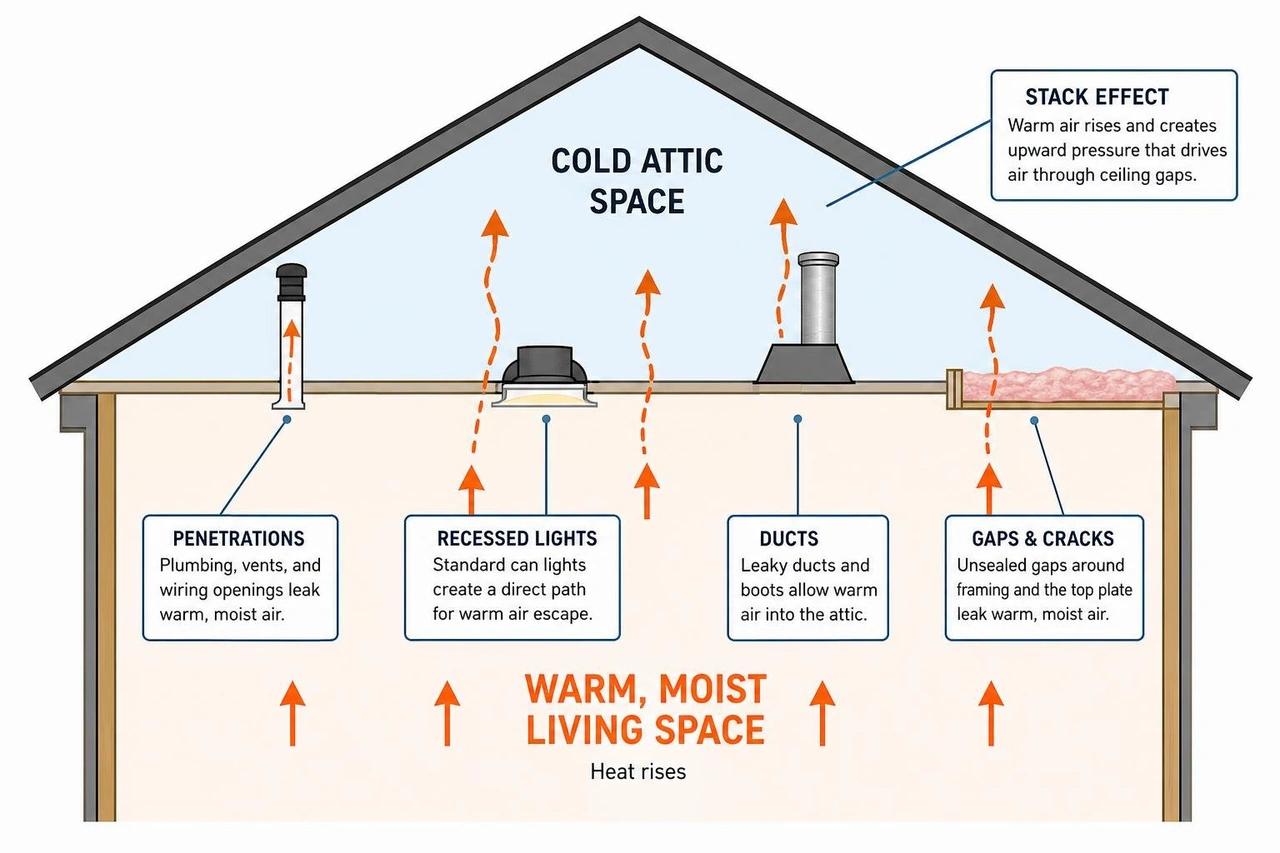
During cold Wisconsin winters in communities like Wausau, Stevens Point, and Minocqua, your heating system works hard to keep living areas comfortable. As indoor air warms, it expands, becomes less dense, and naturally rises. This movement creates a phenomenon known as the stack effect.
The stack effect exerts continuous upward pressure against your upper-floor ceiling plane. If that ceiling is not adequately air-sealed, warm, buoyant indoor air forces its way through tiny gaps, cracks, and structural penetrations into the cold attic space above.
Everyday living activities generate substantial amounts of airborne moisture. Cooking, long hot showers, laundry, dishwashing, and the use of whole-home humidifiers add moisture to indoor air throughout the day.
When this moisture-laden air gets pushed through ceiling bypasses, it carries that humidity straight into your unconditioned attic. Common bypass points include:
- Recessed light fixtures: Standard can lights cut directly through the drywall ceiling, creating chimneys for warm air escape unless they are airtight and IC-rated.
- Attic access hatches and drop-down stairs: Often uninsulated and rarely weatherstripped, attic entries allow large plumes of warm air to rise unchecked.
- Plumbing vent stacks and electrical wiring runs: Openings cut into top plates for wiring, conduit, and PVC pipe chases provide direct expressways from wall cavities into the attic.
- Interior partition wall top plates: The joints where drywall meets the top framing plates behind walls frequently harbor unsealed seams along the entire footprint of your home.
- Dropped soffits, chimney chases, and bathroom exhaust shafts: Hidden structural cavities behind cabinetry or around masonry flues often terminate wide open in the attic.
As explained in scientific research on attic air leakage and condensation physics, cold winter air is naturally dry and holds little moisture. When high-humidity indoor air escapes into sub-freezing attic air, that moisture can condense on cold wood sheathing and form frost.
Ducting and Ventilation Deficiencies
Air leakage through framing penetrations is only half the battle. Serious moisture spikes frequently stem from mechanical exhaust issues and inadequate passive roof ventilation.
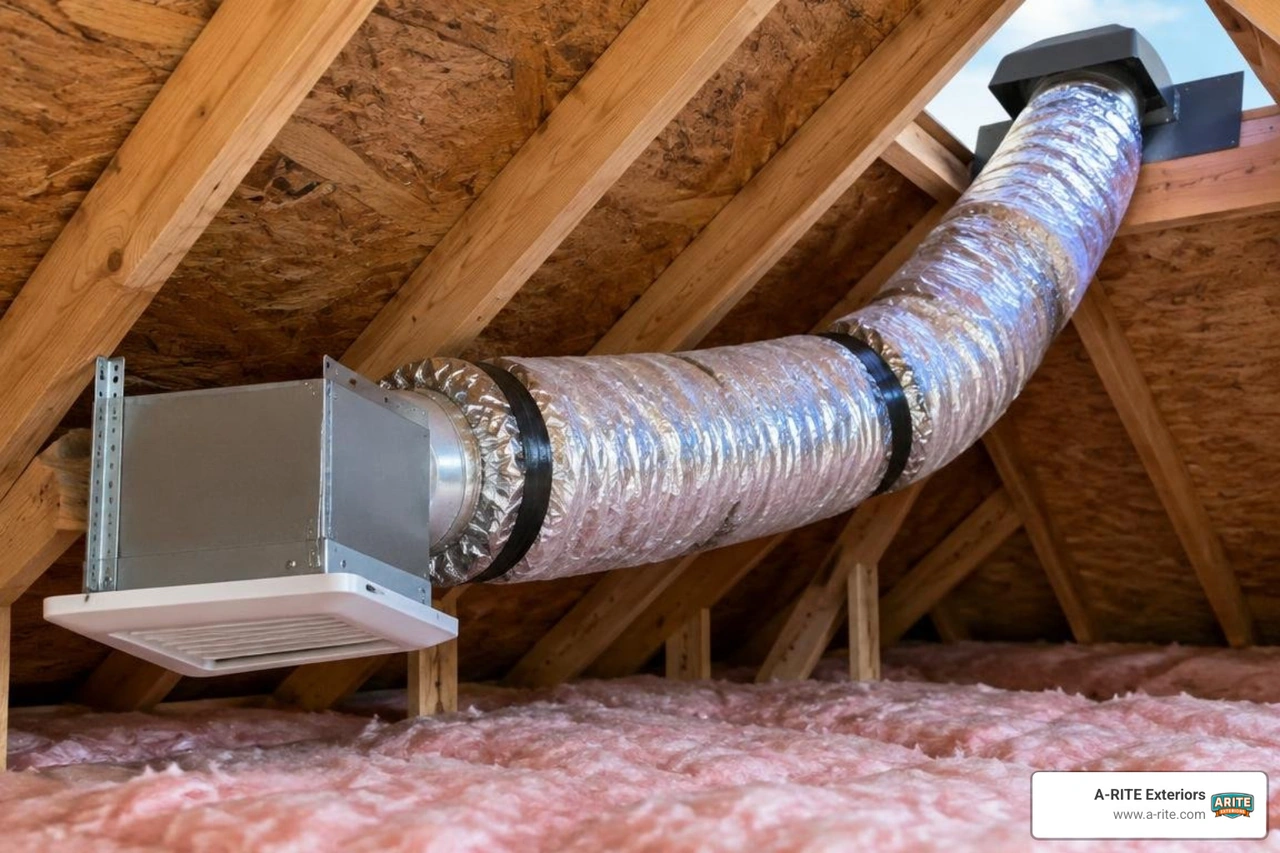
A common cause of attic frost is bathroom and kitchen exhaust fans venting directly into the attic. In older homes, or houses where ductwork has separated over time, flexible vent hoses are often left lying loose on the insulation or pointed toward a nearby roof louver without a positive exterior connection. Every time someone takes a hot shower, gallons of hot, steam-saturated air are pumped directly against the cold underside of the roof deck.
Compounding this problem is imbalanced or obstructed attic ventilation. A healthy, passive attic ventilation system relies on balanced intake at the lower eaves (soffits) and exhaust at the highest point of the roof (ridge vents). Outdoor air enters low, washes across the underside of the roof sheathing, and carries out residual moisture vapor through the ridge.
When soffit intake vents are blocked by blown insulation, painted over, or missing entirely, the natural convection current breaks down. Warm, moist air becomes trapped in the upper third of the roof cavity. Without steady cross-ventilation to flush out humidity, the roof deck sweats, saturates, and freezes. Comprehensive research on balanced attic ventilation and deck sweating shows that maintaining balanced airflow is critical to preserving cold roof deck temperatures and preventing condensation accumulation.
What Does Attic Moisture and Frost Mean for Your Roof's Health?
Finding frost on your roof sheathing is not just a seasonal curiosity; it is an active threat to the structural integrity of your roofing system and the health of your home.
Structural Damage and "Phantom Rain"
Frost accumulation does not remain frozen forever. The moment outdoor temperatures climb during a winter thaw, or when intense sunshine radiates onto dark shingles on a clear February morning, attic conditions become warm enough for the frost to melt.
When this happens, much of the frost that built up over weeks of sub-zero weather can melt at once. This sudden indoor deluge is known as "phantom rain."
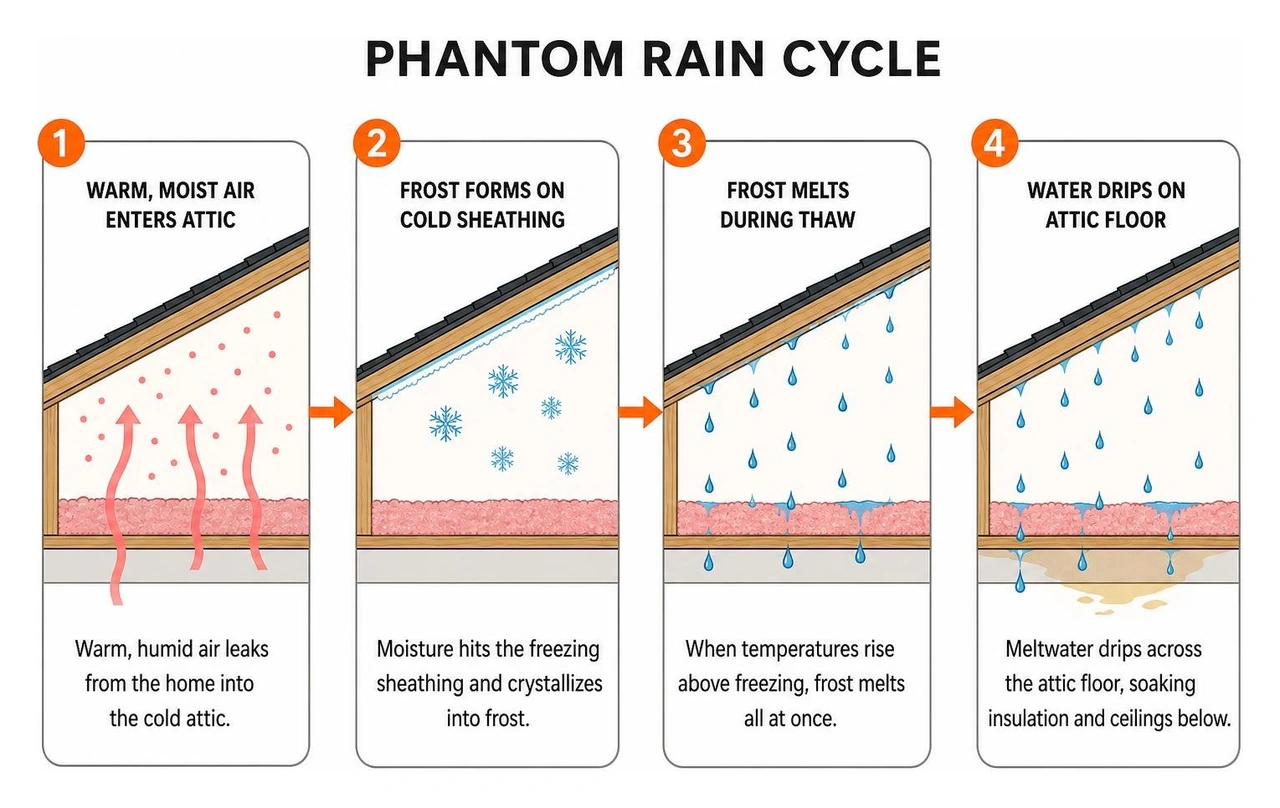
Meltwater drips heavily across the attic floor, soaking through fiberglass or cellulose insulation. Wet insulation compresses, loses its loft, and suffers a drastic reduction in thermal resistance, which in turn lets even more indoor heat escape into the attic.
From there, water pools on the upper surface of your ceiling drywall, leading to yellow-brown ceiling stains, sagging drywall panels, bubbling paint, and peeling tape joints in the living spaces below.
More critically, repeated wetting and drying cycles compromise the structural wood components of your roof:
- Plywood and OSB Delamination: Roof sheathing absorbs meltwater, leading to swollen edges, wood rot, ply separation, and soft spots that buckle under foot traffic. Understanding what is under your shingles and why underlayment and decking matter highlights how degraded decking undermines your entire shingle warranty and roof strength.
- Fastener Corrosion: Condensation heavily targets metal roofing nail tips protruding through the sheathing because metal conducts cold faster than wood. Over time, these nails rust. Corroded fastener shanks lose their friction grip in the wood decking, making shingles vulnerable to blow-offs during severe storms.
- Structural Framing Decay: Rafters, trusses, and ceiling joists subjected to prolonged dampness develop wood-decay fungi, weakening the structural load capacity of the roof framing.
Remediating widespread moisture damage, replacing rotted decking, and restoring structural roof framing can cost thousands of dollars, and severe cases can cost much more.
The Direct Link to Ice Dam Formation
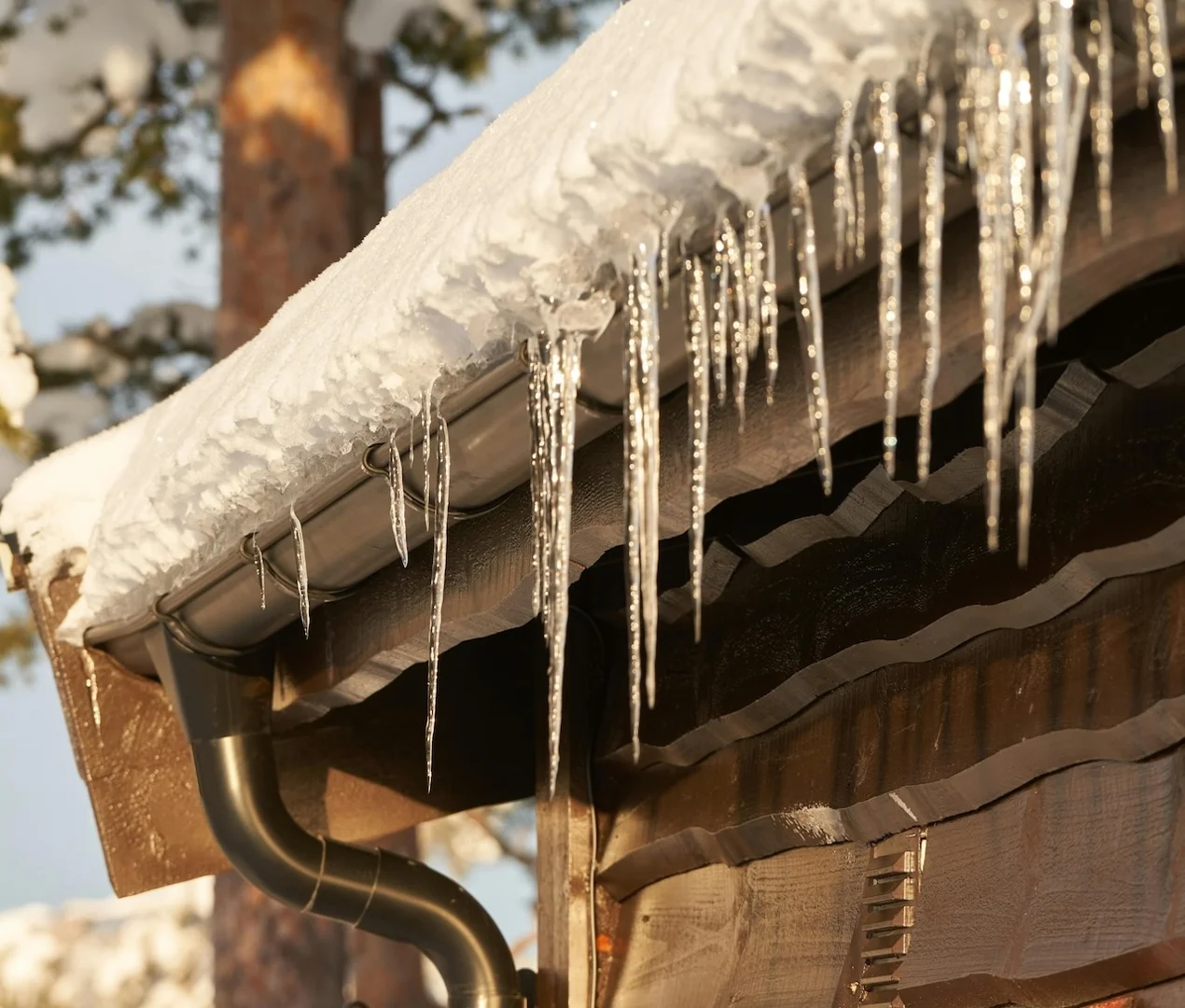
Attic frost and ice dams can both result from heat and moisture moving from the living space into the attic. Proper attic ventilation and ice-dam prevention help keep the roof deck colder and reduce the conditions that contribute to melting and refreezing. Ongoing attic moisture can also support mold growth on wood surfaces, so the underlying moisture source should be addressed.
How Can You Tell the Difference Between Attic Condensation and a Roof Leak?
When homeowners in places like Weston, Kronenwetter, or Merrill spot water marks on their ceilings or damp spots in the attic during winter, their immediate assumption is often that their roof is leaking. However, during the dead of winter, roof leaks and attic condensation behave very differently.
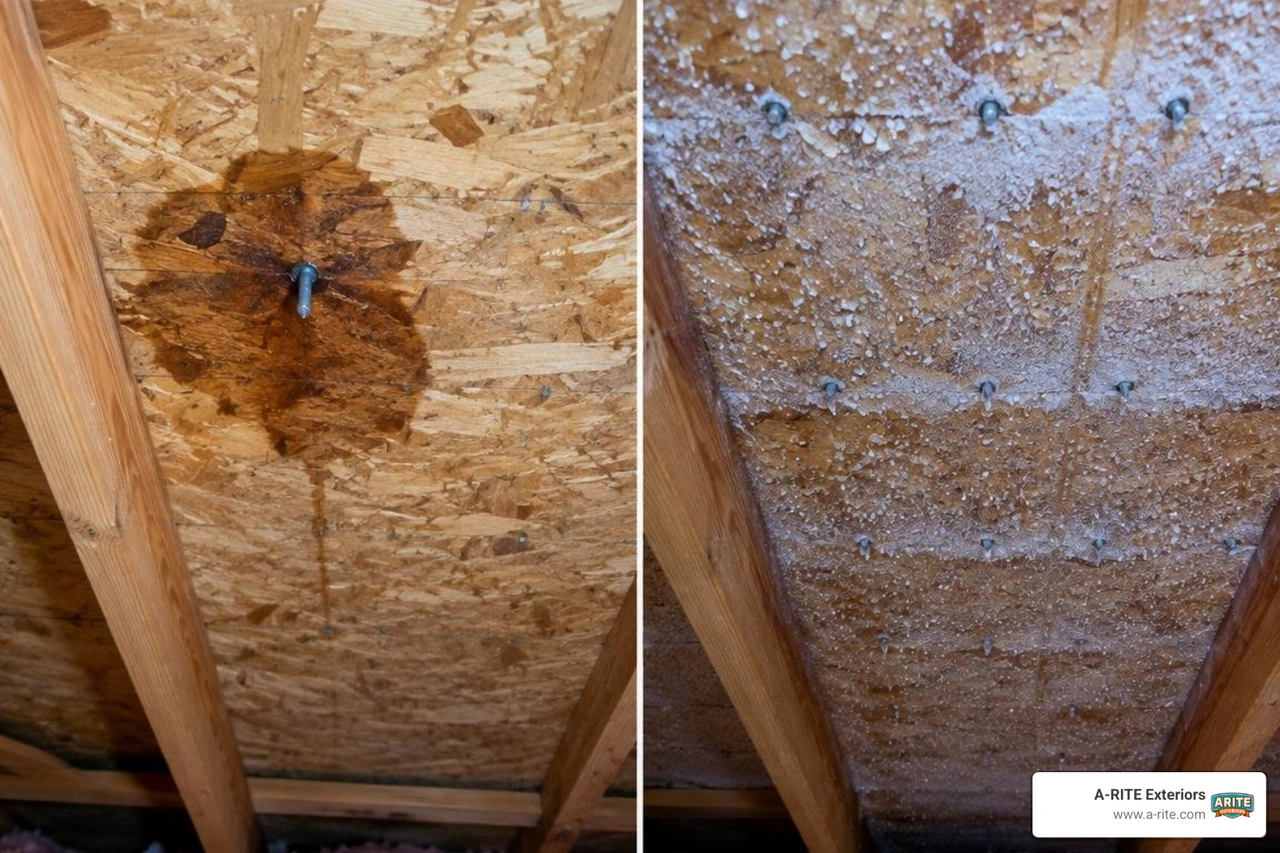
Distinguishing between the two requires looking at three factors: timing, distribution, and stain patterns.
- Timing: A standard exterior roof leak requires active precipitation, either a heavy rainstorm or substantial topside snowmelt caused by warm weather. In contrast, attic condensation and frost melt occur during or immediately following extreme cold snaps. If your ceiling begins dripping during a cold, sunny period with no rainfall, frost melt may be the cause rather than an exterior roof leak.
- Distribution Pattern: Exterior roof leaks typically show up in concentrated areas. They track along specific roof penetrations (like flashing around a chimney, skylight, or plumbing boot) or follow a broken shingle, resulting in localized wood staining. Condensation, on the other hand, is diffuse. You may see rust or frost beads on exposed roofing nail tips, with dampness spread across broad sections of sheathing.
- Seasonal Context: While experiencing a roof leak in heavy rain indicates compromised shingles or flashing, winter moisture stains that appear without rain require evaluating whether to worry about a small roof leak or whether your attic envelope is failing to manage internal moisture.
| Characteristic | Attic Condensation / Frost Melt | Active Exterior Roof Leak |
|---|---|---|
| Primary Trigger | Severe cold snaps followed by sunshine or sudden warming | Active rainfall, wind-driven rain, or heavy snowmelt |
| Moisture Pattern | Widespread frost, frosted/rusted nail tips across entire roof deck | Isolated damp spots, specific tracking trails along rafters |
| Common Locations | Broad sheathing planes, north-facing slopes, uninsulated attic floor | Valleys, chimney flashings, skylights, plumbing vent boots |
| Insulation Condition | Broad surface dampness or crusting across top layers | Saturated column directly beneath a single penetration point |
| Root Cause | Warm indoor air leakage and inadequate attic ventilation | Damaged shingles, failed underlayment, or deteriorated flashing |
| Primary Solution | Ceiling air sealing, ventilation balancing, exhaust fan rerouting | Exterior flashing repairs, shingle replacement, roof repair |
How Can You Prevent and Eliminate Winter Attic Moisture?
Solving winter attic moisture is not about installing a new roof; it is about creating an airtight thermal boundary between your heated living space and the cold attic, paired with balanced ventilation.
Air-Sealing the Ceiling Plane
One of the most effective actions you can take to stop attic frost is air-sealing the attic floor. Many homeowners mistakenly believe that adding thicker insulation is enough. However, standard fiberglass and cellulose insulation act like a wool sweater: they slow down conductive heat transfer, but air and water vapor move right through them. You must stop the air movement first.
A comprehensive air-sealing process involves:
- Locating and Sealing Hidden Bypasses: Move aside existing insulation to expose all electrical wire penetrations, plumbing vent pipes, and the top plates of interior stud walls. Seal these gaps using expanding polyurethane foam or elastomeric sealant.
- Treating Recessed Lighting: Replace leaky can lights with airtight, IC-rated (Insulation Contact) LED units, or build sealed, fire-rated airtight covers over existing non-rated fixtures from the attic side.
- Weatherstripping Attic Access Hatches: Install durable foam weatherstripping around the perimeter of your attic hatch or drop-down stair frame. Fasten a rigid foam insulation board directly to the top of the access panel to ensure continuous thermal and air protection.
- Sealing HVAC and Chimney Chases: Use sheet metal and fire-rated high-temperature silicone to bridge gaps between masonry chimney flues and wood framing.
- Managing Indoor Relative Humidity: Monitor indoor humidity during severe Wisconsin cold snaps, because excessive humidity can increase the amount of moisture that reaches attic cavities.
Optimizing Attic Ventilation and Insulation
Once the ceiling plane is sealed tight, the next priority is ensuring that any stray moisture that reaches the attic is promptly flushed out before it can condense against the roof deck.
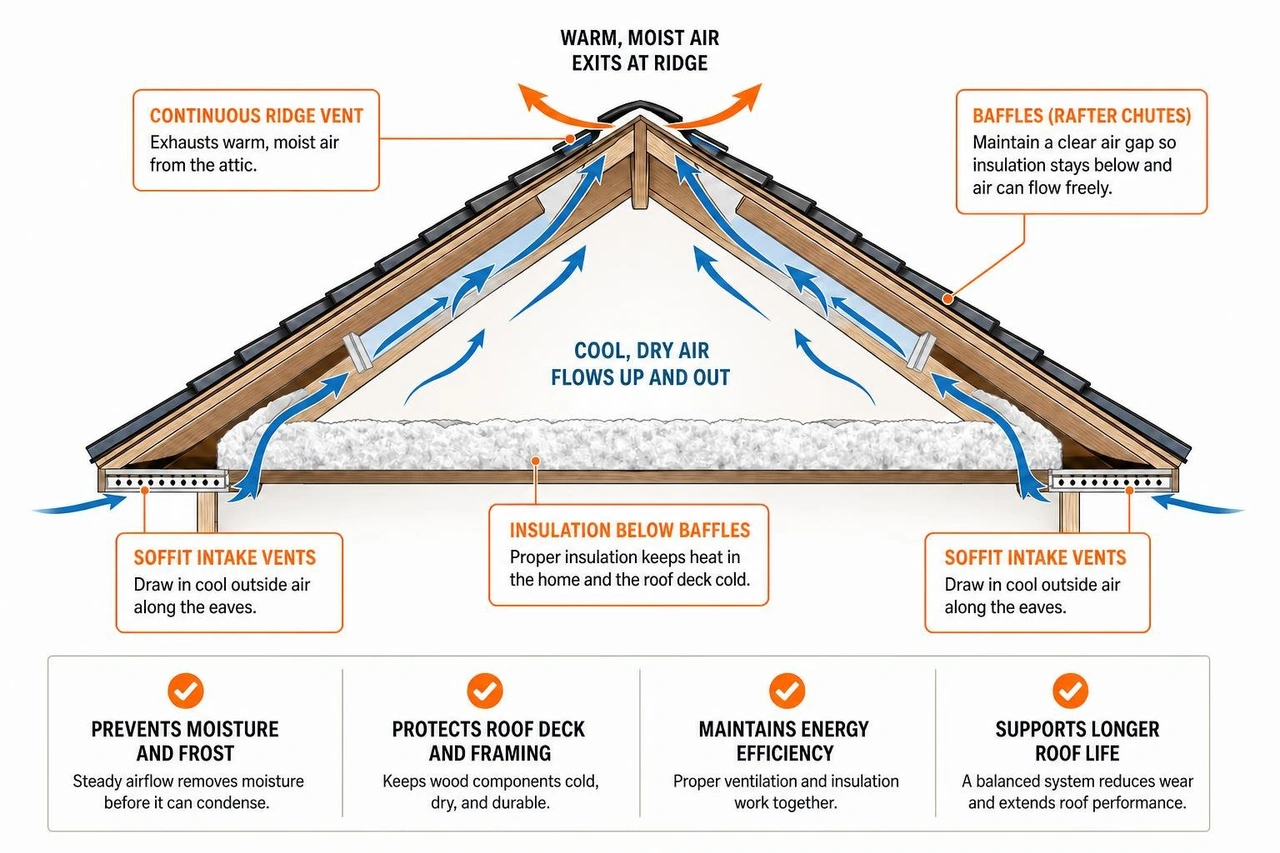
- Install Continuous Vent Baffles (Rafter Chutes): Airflow entering soffit vents must have a clear, unobstructed path up into the attic cavity. Install rigid rafter baffles at every rafter bay along the eaves. These chutes help keep a clear airflow path between the roof deck and the insulation, reducing the chance that insulation will block soffit vents.
- Balance Intake and Exhaust Ventilation: A qualified professional can evaluate whether soffit intake and ridge exhaust provide balanced attic ventilation for the home. Addressing roof airflow vulnerabilities helps explain why some homes are more prone to ice dams.
- Upgrade Attic Insulation to Northern Standards: For the coldest U.S. climate zones, ENERGY STAR recommends attic insulation levels of R-49 to R-60. Understanding the thermal principles behind R-factor insulation and determining the R-value needed for your attic ensures your attic floor maintains a robust thermal blanket, keeping your roof deck cold and dry.
- Reroute Exhaust Ducts Directly Outdoors: Inspect all bathroom, kitchen, and laundry exhaust ducts. Replace flexible, ribbed plastic or foil hoses with smooth, rigid galvanized metal piping. Insulate the full length of the ductwork to prevent moisture from condensing inside the pipe, and terminate the run through a dedicated, damper-equipped roof cap or gable wall hood.
When Should You Call a Professional for Attic Moisture and Insulation Solutions?
While checking your attic with a flashlight is an easy homeowner task, diagnosing complex air leakage paths, assessing structural roof decay, and installing high-performance attic insulation systems require professional expertise.
Consider scheduling a professional attic and roof inspection if you notice:
- Widespread dark spotting or visible fuzzy mold growth across roof sheathing and rafters.
- Spongy, sagging, or delaminating roof decking visible from inside the attic or soft spots when walking on the roof.
- Heavily matted, wet, or contaminated insulation that has lost its R-value.
- Recurring, heavy ice damming along your roof eaves every winter, following the warning signs in our guide on early signs of ice dams.
- Water stains appearing on ceilings beneath attic spaces during winter thaws.
When choosing a contractor, it pays to work with a local specialist. As an experienced attic insulation contractor in Central Wisconsin, A-RITE Exteriors takes a roof-first approach to winter weatherization. For insulation, A-RITE Exteriors works on attic insulation and does not provide wall, foundation, or whole-home insulation. Our work focuses directly on securing the attic envelope, improving roof ventilation, and protecting your roof system from the inside out.
Rebates, Tax Credits, and Financing Options
Taking care of attic moisture and upgrading your thermal envelope is an investment that pays dividends in energy savings, roof longevity, and home comfort.
- Focus on Energy Rebates: Homeowners may qualify for Focus on Energy rebates. These rebates are for qualifying insulation and air-sealing work (such as attic insulation, air sealing, wall insulation, foundation insulation, duct sealing, and qualifying DIY attic insulation and air sealing), not for roof replacement itself. Rebate amounts and eligibility rules change over time, and homeowners should confirm current program rules before starting work.
- Federal Energy Tax Credits: Current IRS guidance shows that the Section 25C Energy Efficient Home Improvement Credit was available for qualifying improvements placed in service through December 31, 2025. Always consult a certified tax professional to determine current tax rules, eligibility, and potential credits applicable to your tax year.
- Flexible Project Financing: Financing options are available for qualifying homeowners. Loan amounts up to $100,000 unsecured may be available, with final approval, rates, and terms based on lender review and credit qualification. A-RITE offers financing through Service Finance, and example terms are available on our financing page.
When comparing contractor estimates for roof and attic remediation, a lower price may reflect differences in materials, scope, cleanup, warranty coverage, or installation details. Ensuring your contractor addresses the underlying air sealing rather than just blowing extra insulation over existing problems is important for a lasting solution.
Frequently Asked Questions About Attic Frost and Moisture
Will running a dehumidifier in the attic solve winter frost?
A standard portable dehumidifier in a vented attic is unlikely to resolve frost problems.
First, standard residential dehumidifiers are not engineered to operate in sub-freezing temperatures; their internal coils can freeze up, which makes the unit far less effective.
Second, a properly functioning attic is open to outdoor air through soffit and ridge vents. Running a dehumidifier in a vented attic is like trying to air-condition your backyard; it continuously pulls moisture from incoming outdoor air without ever addressing the warm indoor air leaking through your ceiling plane. Addressing ceiling air leaks is typically more effective than running mechanical equipment in the attic.
Does adding more attic insulation fix attic condensation?
Adding insulation alone without first performing air sealing may not resolve attic condensation.
When you add thick layers of new insulation over unsealed ceiling bypasses, you trap escaping heat below while making the attic air above even colder. The warm, moist air still leaks straight through the porous insulation via the stack effect, but it now encounters an even colder roof deck. This causes moisture to condense and freeze faster and more intensely.
Start with air sealing across the ceiling plane, then add insulation as needed. For the coldest U.S. climate zones, ENERGY STAR recommends R-49 to R-60.
Does frost on my roof decking mean I need a roof replacement?
In most cases, no. Attic frost is an air-leakage, insulation, and ventilation failure originating from inside your home, not a failure of your exterior shingles or roofing underlayment. Replacing the shingles on top of your house will not stop indoor moisture from rising into the attic and freezing against the new sheathing.
However, a comprehensive roof inspection is strongly recommended. If heavy frost buildup has gone unnoticed for multiple seasons, repeated melting cycles may have rotted the plywood or OSB roof decking, rusted roofing fasteners, or fostered extensive mold growth. If the structural decking beneath the shingles is soft, warped, or delaminated, those sections of sheathing will need to be replaced. For full roof replacements, overall project costs commonly range from the upper four figures to mid five figures, with the final price depending on roof size, pitch, number of layers, decking condition, materials, and labor.
When structural decking is intact and the shingles are in good condition, modern roofing materials provide strong durability; some architectural shingles are rated up to 110 to 130 mph when installed as part of the required system, though actual performance varies by product, installation, ventilation, maintenance, and weather exposure.
What Are the Next Steps to Keep Your Attic Dry and Protect Your Roof?
Discovering frost or dripping moisture in your attic during a harsh Wisconsin winter is a clear signal that your home's thermal boundary needs attention. Left unaddressed, seasonal moisture cycles can lead to rotted roof decking, wet insulation, mold growth on wood, and ice dams.
Key steps for a drier attic include:
- Air-seal the ceiling plane to help keep indoor warmth and humidity in the living space.
- Clear and balance intake and exhaust ventilation to help maintain a cold, dry roof deck.
- Upgrade attic insulation depth to ENERGY STAR's recommended R-49 to R-60 levels for the coldest U.S. climate zones.
- Vent all exhaust fans directly outdoors through insulated, rigid metal ductwork.
By taking a proactive, roof-first approach to your attic's insulation and ventilation, you protect your roof decking, extend shingle lifespan, help lower your heating bills, and keep your home safe and comfortable all winter long.
If you have spotted frost, moisture, or ice dam warning signs in your attic, let our experienced team inspect your attic and ventilation system. Explore our professional attic insulation services today to schedule your comprehensive evaluation and help keep your roof protected for years to come.