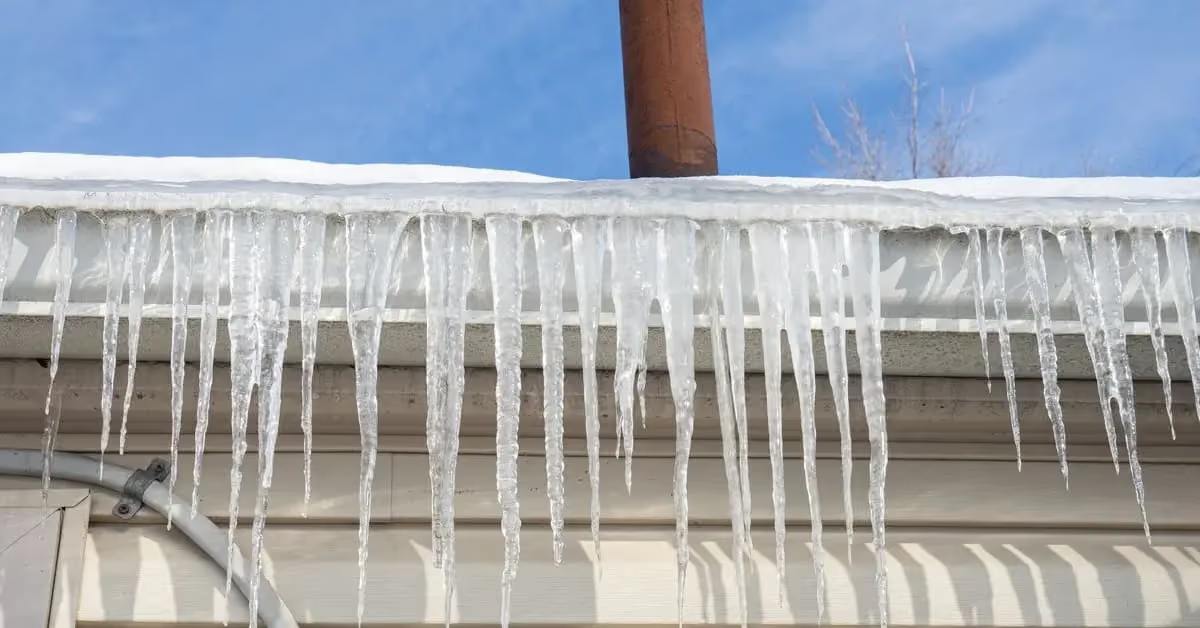
Ice dams give off warning signs long before water shows up on your ceiling. The earliest ones are easy to spot from your driveway: snow melting unevenly on the roof, a thick ridge of ice along the roof edge, and icicles hanging where they shouldn't. Inside, the first clues usually show up in the attic as frost, damp insulation, or a musty smell.
Catch them early and you can often stop the problem before it reaches your drywall and insulation. Here is what to look for and when to call for help.
Why Ice Dams Are So Common in Central Wisconsin
Wausau averages about 64 inches of snow each winter, based on the 1991 to 2020 climate normals from the Wisconsin State Climatology Office. The record season topped 100 inches. From Wisconsin Rapids and Stevens Point up to Merrill and Minocqua, snow can sit on your roof for weeks at a time.
Our winters also bring stretches of hard cold broken up by sunny afternoons and brief thaws. Each time snow melts a little and refreezes, the ice at the roof edge grows.
Many homes in our area also have features that make ice dams more likely:
- Story-and-a-half homes with short upstairs side walls (knee walls) and sloped ceilings
- Older attics with thin or uneven insulation
- Recessed lights, bath fans, and attic hatches that leak warm air
- Low-slope porch roofs and additions that tie into the main roof
How an Ice Dam Forms
An ice dam forms in three simple steps:
- Warm air escapes into your attic. Heat from your living space leaks through gaps in the ceiling and thin spots in the insulation. That heat warms the underside of your roof.
- Snow melts on the warm part of the roof. The meltwater runs down toward the edge of the roof.
- Water refreezes at the cold roof edge. The overhang (the eave) sits outside your home's walls, so it stays cold. Water freezes there and builds a ridge of ice.
As more snow melts, water pools behind that ridge. Shingles are built to shed water that flows downhill. They are not built to hold back standing water. That trapped water can work its way under the shingles and into your home.
What Does an Ice Dam Look Like?
From the ground, an ice dam looks like a thick, rounded band of ice along the lower edge of your roof, often right above the gutters. Large icicles usually hang from the same spot.
The 8 Early Signs of Ice Dams
The first four signs are things you can check from outside. The last four are in your attic and living space.
1. Uneven Snow Melt on Your Roof
After a snowfall, look at your roof on a cold, calm day. Snow that stays evenly across the roof is a good sign. Bare patches, melted stripes, or spots that clear faster than your neighbors' roofs point to heat escaping from your attic. Compare areas that get the same sun, since south-facing slopes clear first.
This sign often shows up before any ice builds at the edge.
2. A Thick Ridge of Ice Along the Roof Edge
A ridge of ice along the eaves is the ice dam itself. If it gets thicker after each sunny afternoon, water is melting above it and refreezing at the edge. The dam is growing.
Even a few inches of ice can hold back enough water to cause a leak.
3. Icicles in Unusual Places
Icicles alone do not always mean trouble. A few thin icicles hanging from the front of a gutter are common in a Central Wisconsin winter.
Pay closer attention when you see:
- Large icicles growing from behind the gutter or out of the soffit
- Icicles along your siding or around windows and doors
- Ice forming inside the soffit vents under the overhang
Icicles in these spots can mean water is running behind the gutter or even behind your roofing and siding.
4. Gutters That Sag, Pull Away, or Fill With Ice
A gutter packed with ice can weigh a lot. Look for sections that sag, lean outward, or pull away from the fascia board. Loose fasteners and bent hangers are also clues.
Frozen gutters don't cause ice dams by themselves, but they can make a dam larger and block the last path water has to get off your roof.
5. Frost, Ice, or Dark Streaks Around Attic Vents
Now head to the attic with a flashlight. Look at bath fan ducts, vent pipes, and roof vents. Signs of trouble include:
- Frost or ice around vent openings or duct connections
- Dark streaks or stains on the wood near vents
- Frost on the tips of roofing nails poking through the roof deck
These clues mean warm, moist air is getting into your attic. A bath fan that dumps air into the attic instead of outside is a common cause.
6. Damp or Packed-Down Insulation
When warm, moist air from your home reaches the cold roof deck, the moisture in it turns to frost or water. That water drips onto the insulation below. Look for insulation that feels damp, looks packed down, or has water spots, especially near the roof edge.
Wet insulation does a poor job of slowing heat loss. More heat reaches the roof, more snow melts, and the ice dam grows.
7. A Musty Smell in the Attic or Upstairs
Sometimes you smell the problem before you see it. A damp, musty odor in the attic or in upstairs rooms can mean moisture is trapped somewhere it should not be.
It can point to a slow leak, wet insulation, or early mold growth. Look for the source right away.
8. Water Stains on Ceilings or Walls
This is the sign most homeowners notice first, but it's usually the last to appear. Look for:
- Yellow, brown, or gray spots on ceilings
- Bubbling or peeling paint
- Stains near the top of exterior walls, around windows, or in closets on outside walls
These stains often show up right after a thaw. By this point, water has already passed through your roof and insulation. It's time to act.
A Quick Winter Check You Can Do Safely
You don't need a ladder to check for ice dams. Try this after a big snowfall and again after a few days of freeze and thaw:
- Walk around your home. Look at the roof edge, gutters, and icicles from the ground. Binoculars help.
- Compare your roof to your neighbors'. Faster melting on your roof points to heat loss.
- Check the attic. Look for frost, damp insulation, and stains near vents and the roof edge. Stay on the framing or walk boards so you don't step through the ceiling.
- Walk through the top floor. Check ceilings near outside walls, window tops, and closets.
- Take photos. They help you see if something changes over a few days.
Please don't climb onto a snowy or icy roof. Falls are a serious risk, and chipping at ice can damage your shingles.
When to Worry About an Ice Dam
Call a professional when you see any of the following:
- Water dripping inside or a new stain on a ceiling or wall
- An ice ridge that keeps getting thicker after each thaw
- Gutters pulling away from your home
- Icicles growing from behind the gutter or along siding and windows
- Frost or wet insulation in your attic that keeps coming back
While you wait, you can:
- Use a roof rake from the ground to pull snow off the lower few feet of the roof, if you can do it safely
- Move furniture and valuables away from drips and set out buckets or towels
- Keep people and pets away from areas under large icicles
- Dry wet areas as soon as you can. The EPA recommends drying water-damaged areas within 24 to 48 hours to help prevent mold growth.
If you're weighing whether to tackle it yourself, our guide to DIY vs. professional ice dam removal walks through the risks.
How A-RITE Exteriors Helps
Our ice dam removal service follows three steps:
- We inspect the roof edge and visible winter risk. We look at the ice buildup, the roof edge, and signs that melting snow isn't draining the way it should.
- We explain the problem and the next step. We tell you what we see, why it matters, and what kind of response makes sense for your home.
- We remove the ice dam with steam and help you plan ahead. Steam melts through the ice without the hammering or high pressure that can damage shingles and gutters. Then we help you understand what may be causing it and what to watch for next.
Removing the ice is only half the job. If heat loss from your attic is the cause, better attic insulation can help reduce repeat ice dams. Our gutter team can fix gutters that make the problem worse. For spots that keep icing up, we can also install heat cables. And a roof replacement is the right time to add an ice and water barrier along the eaves.
Frequently Asked Questions
What does an ice dam look like?
An ice dam looks like a thick band of ice along the lower edge of your roof, usually right above the gutters. You may see a slushy or bare strip of roof just above it, with snow still on the rest of the roof. Large icicles often hang from the same spot.
How can I tell an ice dam from normal icicles?
Normal icicles are usually thin and hang from the front of the gutter. An ice dam is a ridge of ice sitting on the roof itself. Icicles that grow from behind the gutter, from the soffit, or along your siding and windows are a stronger sign that water is backing up.
When should I worry about an ice dam?
Worry when you see water or a new stain inside, when the ice ridge keeps growing after each thaw, or when gutters start pulling away. Those signs mean water may already be getting past your roof.
Can I have an ice dam without water coming inside?
Yes. Many ice dams hold back water for days before a leak shows up. Water can also soak your roof deck or attic insulation without leaving a stain on the ceiling. That's why checking your attic for frost and damp insulation is so useful.
How do I keep ice dams from coming back next winter?
Most ice dams start with heat escaping into the attic. Sealing air leaks, adding insulation, and making sure your attic vents work all reduce the heat that melts snow on your roof. An inspection can pinpoint the cause for your home.
Keep Your Roof Ready for Winter
The sooner you spot the early signs, the easier your roof and home are to protect.
A-RITE Exteriors has helped Central Wisconsin homeowners protect their roofs since 2002. If you're seeing any of these signs, call us at (715) 201-3459 or request an inspection. We'll show you what we find and explain your options in plain language.
Trust the Hawk on Your Block.