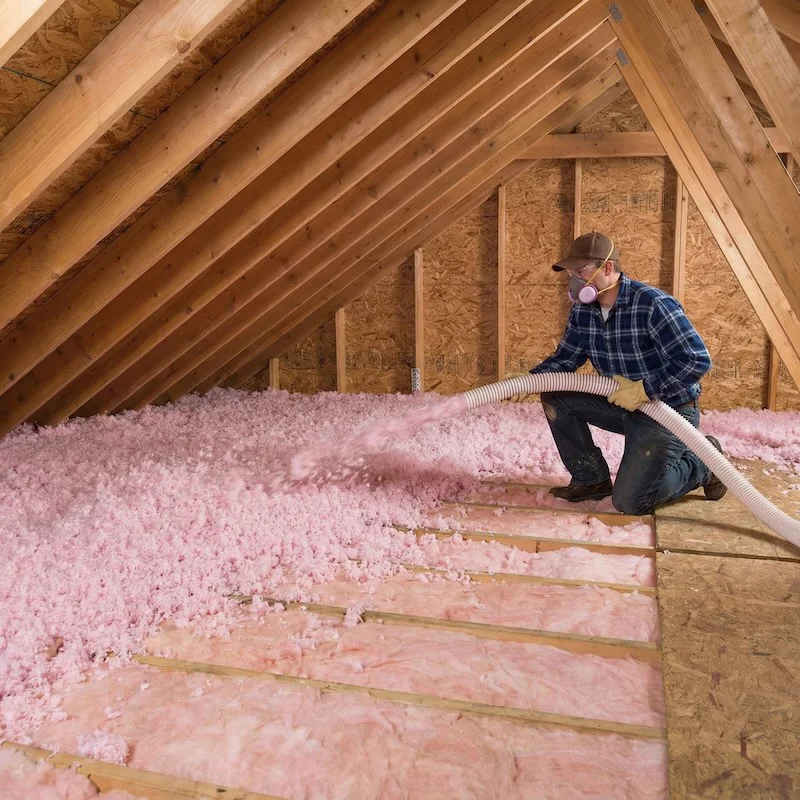
Why Understanding R-Factor Insulation Matters for Your Wisconsin Home
What is R-factor insulation — also called R-value insulation — is a simple but powerful idea: it measures how well an insulating material resists heat flowing through it.
Quick Answer: What Is R-Factor Insulation?
| Term | What It Means |
|---|---|
| R-factor / R-value | A number that rates how well insulation resists heat flow |
| Higher R-value | Better insulation performance |
| Lower R-value | Heat moves through more easily |
| Measured per inch | Each material has a rated R-value per inch of thickness |
| Additive | Layers of insulation add up to a total R-value |
The "R" stands for resistance — resistance to heat moving through your walls, attic, floor, and roof. The higher the number, the harder it is for heat to pass through.
This matters most in a state like Wisconsin, where winters are long and heating bills can be brutal. A poorly insulated attic or wall does not just waste energy — it makes your home uncomfortable, strains your heating system, and can contribute to ice dam problems along your roofline.
According to the U.S. Department of Energy, homeowners can save on heating and cooling costs by adding insulation and air sealing.
But here is what most homeowners do not realize: the R-value printed on the label is tested under perfect lab conditions. Real-world performance depends on how the insulation is installed, where it goes, and what other materials surround it. That gap between the label and real life is exactly what this guide is here to explain.
I'm Bryan Londerville, founder of A-RITE Exteriors, and since 2002 I've helped Central Wisconsin homeowners improve attic insulation performance as part of a complete exterior system. Understanding what is R-factor insulation — and how it applies to your specific home and climate — is one of the most practical things you can do to protect your home long-term.

What is R Factor Insulation and How Does It Work?
At its core, the R-value is a mathematical expression of thermal resistance. In the building industry, we use it to calculate exactly how much heat a barrier can block over a given area and time.
The standard scientific formula for R-value is:
R = ΔT / q
Where:
ΔTrepresents the temperature difference between the inside and outside surfaces.qrepresents the heat flux (the rate of heat transfer per unit area).
In simple terms, R-value tells us how much temperature difference we can maintain across a wall or ceiling for every unit of heat energy trying to leak through.
To keep manufacturers honest, the Federal Trade Commission (FTC) enforces the FTC R-value Rule. This regulation requires manufacturers to test their products under strict laboratory conditions using standardized tests like ASTM C177 (the guarded hot plate method) or ASTM C518 (the heat flow meter apparatus). These tests measure thermal conductivity under steady-state conditions, usually at a mean temperature of 75°F. You can read more about the scientific history and development of these standards on R-value (insulation) - HandWiki).
Understanding What is R Factor Insulation in Building Science
To understand how insulation works, we have to look at the three ways heat moves through a home:
- Conduction: Heat moving directly through solid materials (like wood studs, drywall, or metal framing).
- Convection: Heat circulating through air currents. Warm air rises to your attic, while cold air sinks.
- Radiation: Heat traveling in a straight line through space (like the sun beating down on your asphalt shingle roof).
Most traditional insulation materials, such as fiberglass or cellulose, work by trapping millions of tiny pockets of still air. Since still air is a poor conductor of heat, these air pockets slow down conductive heat transfer.
However, air can still move through porous insulation. That is why we emphasize that R-value is only part of the story. If cold air is physically blowing through your attic, the effective R-value of your insulation drops significantly. This is why we always recommend pairing high-quality insulation with comprehensive air sealing. You can dive deeper into this relationship in our guide on What R-Value Means and Why It's Important for Insulation.
R-Value vs. U-Value: What is the Difference?
While R-value is the standard metric in the United States construction industry, you will often see another term on window labels and in commercial building codes: U-value (or U-factor).
The relationship between the two is simple: they are mathematical inverses of each other.
U = 1 / R and R = 1 / U
Where R-value measures thermal resistance, U-value measures the overall heat transfer coefficient (how easily heat flows).
- R-value: Higher is better. (You want high resistance to heat loss).
- U-value: Lower is better. (You want low heat transfer).
Another important distinction is the unit of measurement. In the U.S., R-values are expressed in inch-pound (I-P) units (°F·ft²·h/BTU). In Canada, Europe, and Australia, thermal resistance is measured in metric SI units, known as RSI units (K·m²/W).
To convert between the two, I-P R-values are approximately 5.68 times larger than metric RSI values. If you are reading international design guides or technical documents, such as the INSULATION HANDBOOK, keeping this conversion factor in mind will prevent confusion.
Recommended R-Values for Climate Zones and Building Assemblies
The amount of insulation your home needs depends entirely on where you live. The International Energy Conservation Code (IECC) and the Department of Energy divide the United States into distinct climate zones.
Central Wisconsin—including Wausau, Stevens Point, Minocqua, and Green Bay—is located in Climate Zone 6 (with some far northern areas like Vilas County touching Climate Zone 7). This means we experience some of the coldest winter design temperatures in the country, requiring robust thermal boundaries.
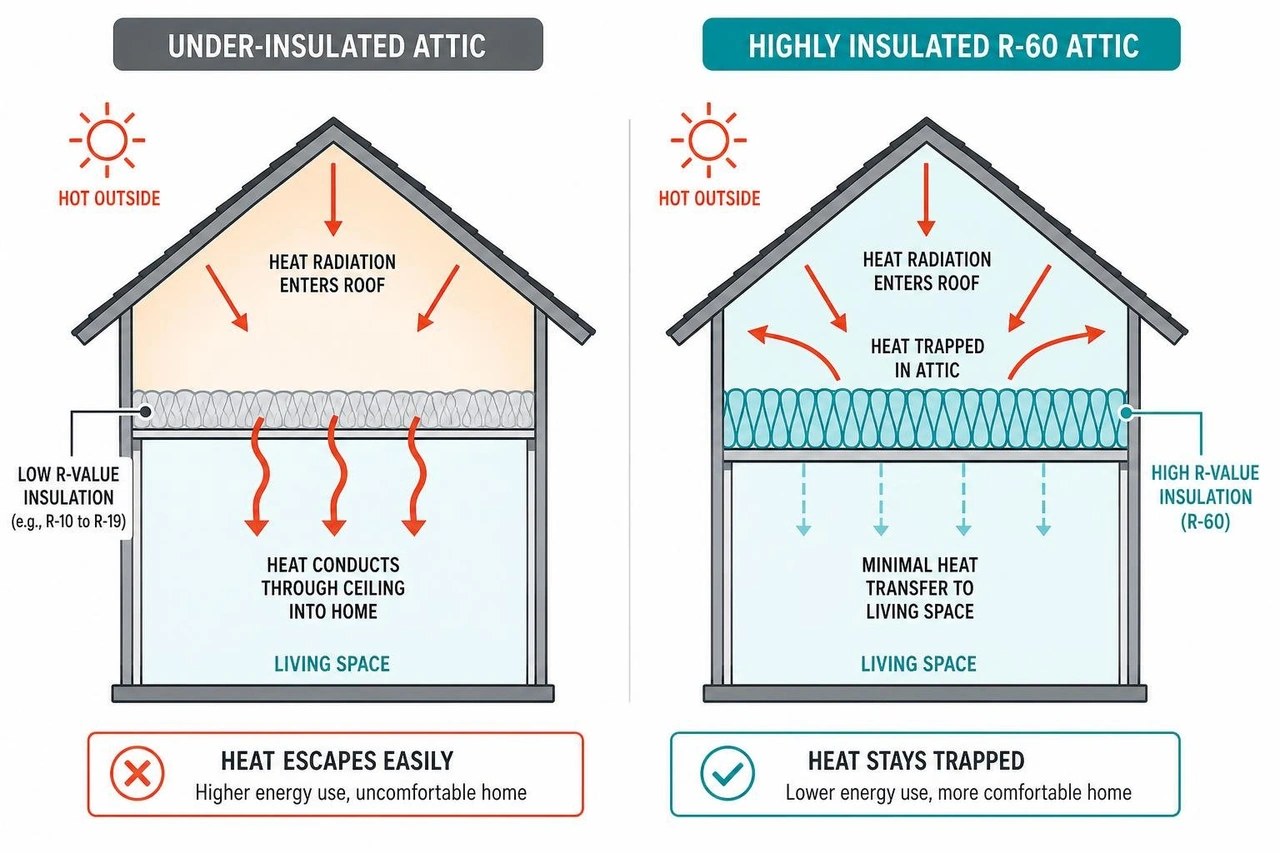
According to Recommended Home Insulation R–Values - Energy Star, the targets for Climate Zone 6 are significantly higher than those in southern states:
- Attic (Uninsulated): R-49 to R-60
- Attic (Existing 3-4 inches of insulation): Add R-38 to R-49
- Floor: R-30
- Wood-Framed Walls: R-20+5ci (or R-13+10ci, where "ci" stands for continuous insulation)
- Basement/Crawlspace Walls: R-15ci or R-19 cavity insulation
How to Choose What is R Factor Insulation for Your Attic
Your attic is almost always the most critical area to insulate. Because warm air rises, a massive amount of heat escapes through an under-insulated ceiling during our freezing Wisconsin winters.
If you live in an older home in Wausau or Stevens Point, there is a very high probability that your attic is under-insulated. If you peak into your attic and can see your wooden floor joists, you likely only have R-19 or worse.
To determine how much insulation to add, we look at your existing insulation depth:
- Fiberglass Batts / Loose-Fill: Typically provides R-2.5 to R-3.2 per inch.
- Cellulose: Typically provides R-3.2 to R-3.8 per inch.
If you have 6 inches of old fiberglass (roughly R-18), you will need to add at least another 10 to 14 inches of blown-in insulation to reach the recommended R-60 target. When retrofitting, we also ensure that we do not block your attic's soffit vents, which are critical for preventing moisture buildup and ice dams. To learn more about calculating your specific attic needs, check out our resource on What R-Value Insulation Do I Need for Attic.
R-Values for Walls, Floors, and Roof Assemblies
While attics get the most attention, insulating your walls and floors is just as vital for eliminating drafts and cold spots.
In older Wisconsin homes, exterior walls were often framed with 2x4 studs and insulated with basic R-11 or R-13 fiberglass batts. Modern building codes for Climate Zone 6 call for much higher performance.
To achieve these higher numbers without rebuilding your walls, building scientists recommend using continuous insulation (ci). This involves installing rigid foam boards on the exterior side of your wall sheathing when you replace your siding.
Continuous insulation is incredibly effective because it interrupts thermal bridging. Thermal bridging occurs because solid wood studs conduct heat much faster than insulation. In a typical home, wooden framing accounts for 23% to 25% of the wall's surface area. Without continuous exterior foam, heat bypasses your cavity insulation by traveling directly through the wood studs. Adding just R-5 of continuous exterior insulation can dramatically improve your home's comfort and cut your energy bills. For more information on whole-house requirements, you can read What R-Value Do I Need in My Home? - Alpine Insulation.
Comparing Insulation Materials and Real-World Performance Factors
Not all insulation materials are created equal. Different products have different physical properties, densities, and R-values per inch. Choosing the right material depends on your budget, space constraints, and moisture exposure.

Material R-Values Per Inch
To help you compare your options, here is a breakdown of the typical R-values per inch for common insulation materials used in Central Wisconsin:
| Material Type | Typical R-Value Per Inch | Best Applications | Pros & Cons |
|---|---|---|---|
| Blown-in Cellulose | R-3.2 to R-3.8 | Attics, closed wall cavities | Excellent coverage, eco-friendly, but can settle over time. |
| Blown-in Fiberglass | R-2.2 to R-2.7 | Attics | Lightweight, budget-friendly, but susceptible to wind washing. |
| Fiberglass Batts | R-3.1 to R-4.3 | Open wall cavities, floors | Easy to install between studs, but performance drops if compressed or installed with gaps. |
| Open-Cell Spray Foam | R-3.5 to R-4.0 | Interior walls, roof decks | Great air-sealer, flexible, but vapor-permeable and loses R-value if wet. |
| Closed-Cell Spray Foam | R-6.0 to R-7.1 | Basements, crawlspaces, roof decks | Incredible R-value per inch, acts as a vapor barrier, but is more expensive. |
| Rigid Foam Board (XPS) | R-5.0 | Exterior walls, foundations | Moisture-resistant, structural density, prevents thermal bridging. |
| Vacuum Insulated Panels | R-30 to R-45 | Specialized commercial / ultra-low energy | Highest R-value available, but extremely expensive and cannot be cut. |
For a deeper dive into how these materials compare in residential scenarios, check out What Is R-Value? Insulation R-Value Explained Simply (2026) | InsulationRValues.com.
Real-World Factors That Reduce Effective R-Value
As we mentioned earlier, the R-value stamped on the packaging is a laboratory measurement. In the real world, several factors can drastically degrade your insulation's actual performance:
- Compression: Squishing insulation ruins its performance. If you compress a 6-inch fiberglass batt (R-19) into a 3.5-inch wall cavity, its total R-value drops to about R-13. The material relies on trapped air; if you squeeze the air out, you lose the thermal resistance.
- Moisture: Water is an excellent conductor of heat—about 23 times faster than still air. If your insulation gets wet from a roof leak or high humidity, its R-value drops close to zero.
- Settling: Loose-fill materials like cellulose can settle up to 20% over the first few years after installation. Professional installers must over-fill the attic space slightly to account for this natural compaction.
- Air Movement (Wind Washing): In cold, windy Wisconsin winters, strong winds can enter your attic through the soffit vents and blow across loose-fill insulation. This "wind washing" pushes the cold air deep into the insulation, bypassing its thermal resistance. Installing wind baffles at the eaves is essential to prevent this.
- Thermal Bridging: As discussed, heat bypassing insulation via wood framing can reduce a wall assembly's overall R-value by 15% to 25%.
Pricing, Financing, Rebates, and Tax Credits for Insulation
Upgrading your insulation is one of the few home improvement projects that actively pays you back over time. However, understanding the upfront costs, financing options, and available incentives is key to maximizing your return on investment.
Financial Incentives and Rebates
Because energy efficiency benefits the entire electrical grid, there are several programs designed to help offset the cost of insulation upgrades:
- Focus on Energy Rebates: Homeowners may qualify for Focus on Energy rebates. These rebates are specifically for qualifying insulation and air-sealing work—such as attic insulation, air sealing, wall insulation, foundation insulation, duct sealing, and qualifying DIY attic insulation and air sealing. They are not intended for the roof replacement itself. Because rebate amounts and eligibility rules change over time, homeowners should always confirm current program rules before starting work. You can read more about these state programs on Understanding R-Values and Insulation.
- Federal Tax Credits (Section 25C): The Energy Efficient Home Improvement Credit (Section 25C) has historically provided tax credits for qualifying energy efficiency upgrades. Current IRS guidance shows this credit was available for qualifying improvements placed in service through December 31, 2025. Do not assume this is an active credit for 2026 or beyond unless current IRS guidance confirms it. We always recommend consulting a tax professional to verify active credits and filing requirements.
Financing and Professional Installation Costs
When planning an insulation project, the total cost can vary depending on the size of your home, the material selected, and the accessibility of your attic or walls.
For qualifying homeowners, financing options are available. Loan amounts up to $100,000 unsecured may be available, with final approval, rates, and terms based on lender review and credit qualification. This can help you spread the cost of the project into manageable monthly payments while enjoying immediate energy savings.
When comparing quotes from different contractors, keep in mind that a lower price may reflect differences in materials, scope, cleanup, warranty coverage, or installation details. For example, a thorough contractor will include detailed air sealing, chimney flashing, and baffle installation in their scope of work, whereas a budget installer might simply blow new fiberglass over dirty, leaking bypasses.
If you are looking for a trusted local team to evaluate your home, consider working with an experienced Attic Insulation Contractor Central Wisconsin.
Frequently Asked Questions About R-Value
Does doubling insulation thickness always double the R-value?
For dense, rigid materials like foam board, R-values are linear and additive. However, for loose-fill insulation, doubling the depth does not always perfectly double the R-value.
As loose-fill insulation (like cellulose or fiberglass) is piled higher, the weight of the top layers compresses the bottom layers. This increase in density slightly decreases the R-value per inch of the compressed bottom material. When working in your attic, always refer to the manufacturer's coverage chart, which dictates exactly how many bags of material are required to achieve a target R-value, rather than relying solely on a tape measure. If you are planning a DIY project, make sure to review these Safety Tips for Homeowners Working with Insulation.
Can insulation lose its R-value over time?
Yes, certain types of insulation can degrade over time:
- Blowing Agent Diffusion: Some rigid foams and closed-cell spray foams use specialized gases (blowing agents) trapped inside their cells to achieve high R-values. Over several years, these gases slowly diffuse out and are replaced by ambient air. This process, called "aging," reduces the R-value slightly. Manufacturers now publish Long-Term Thermal Resistance (LTTR) values to show the expected performance over a 15-year span.
- Moisture Accumulation: If your attic has a roof leak or poor ventilation, moisture can accumulate in the insulation. This can cause the material to rot, mold, and permanently lose its loft. Resolving these issues can cost thousands of dollars, and severe cases can cost much more.
What is the difference between label R-value and whole-wall R-value?
The label R-value is the thermal resistance of the insulation material itself, tested in a laboratory under perfect conditions.
The whole-wall R-value (or whole-assembly R-value) takes into account the entire building assembly. This includes the drywall, wooden wall studs, exterior sheathing, siding, and air films. Because wood studs act as thermal bridges, the whole-wall R-value of a standard 2x6 wall with R-21 batts is typically 14% to 18% lower than the label on the insulation package.
Conclusion
Understanding what is R-factor insulation is the first step toward creating a more comfortable, energy-efficient, and durable home. In Central Wisconsin, our homes have to withstand extreme temperature swings, heavy snow, and high humidity. Relying on basic, poorly installed insulation simply won't cut it.
By investing in proper R-value insulation, comprehensive air sealing, and balanced attic ventilation, you can protect your roof from ice dams, extend the lifespan of your heating and cooling equipment, and keep your family comfortable all year long.
At A-RITE Exteriors, we take a "roof-first" approach to home energy efficiency, ensuring your insulation and ventilation systems work in perfect harmony with your roof, siding, and gutters. If you are ready to stop wasting energy and want a professional assessment of your home's thermal boundary, explore our Services - Insulation and contact us today. We serve homeowners across Wausau, Stevens Point, Minocqua, Green Bay, and the surrounding Central Wisconsin communities. Trust the Hawk on Your Block!