Is a Small Roof Leak Ever Truly Harmless to Ignore?
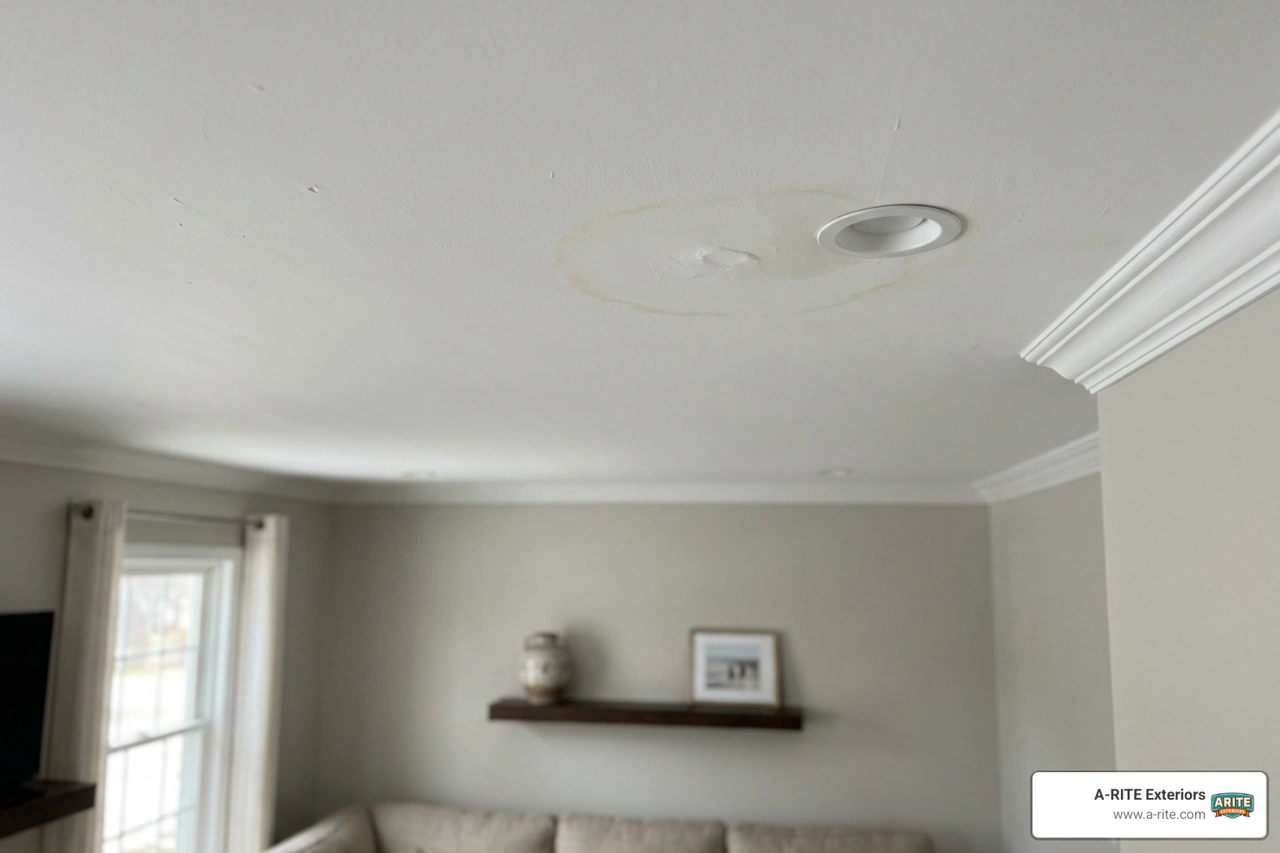
The short answer is no. A small roof leak is never harmless to ignore. While a faint yellowish mark on your ceiling or a solitary drip during a heavy rainstorm might seem like a minor cosmetic issue, it is almost always the tip of a much larger, hidden iceberg.
Water rarely drops straight down from the point where it enters your roof. When heavy rain, melting snow, or ice dams penetrate your asphalt shingles or metal flashing, water travels along the path of least resistance. It trickles down sloped roof rafters, runs horizontally along structural roof decking, and saturates attic insulation long before it ever breaks through drywall to create a visible ceiling stain.
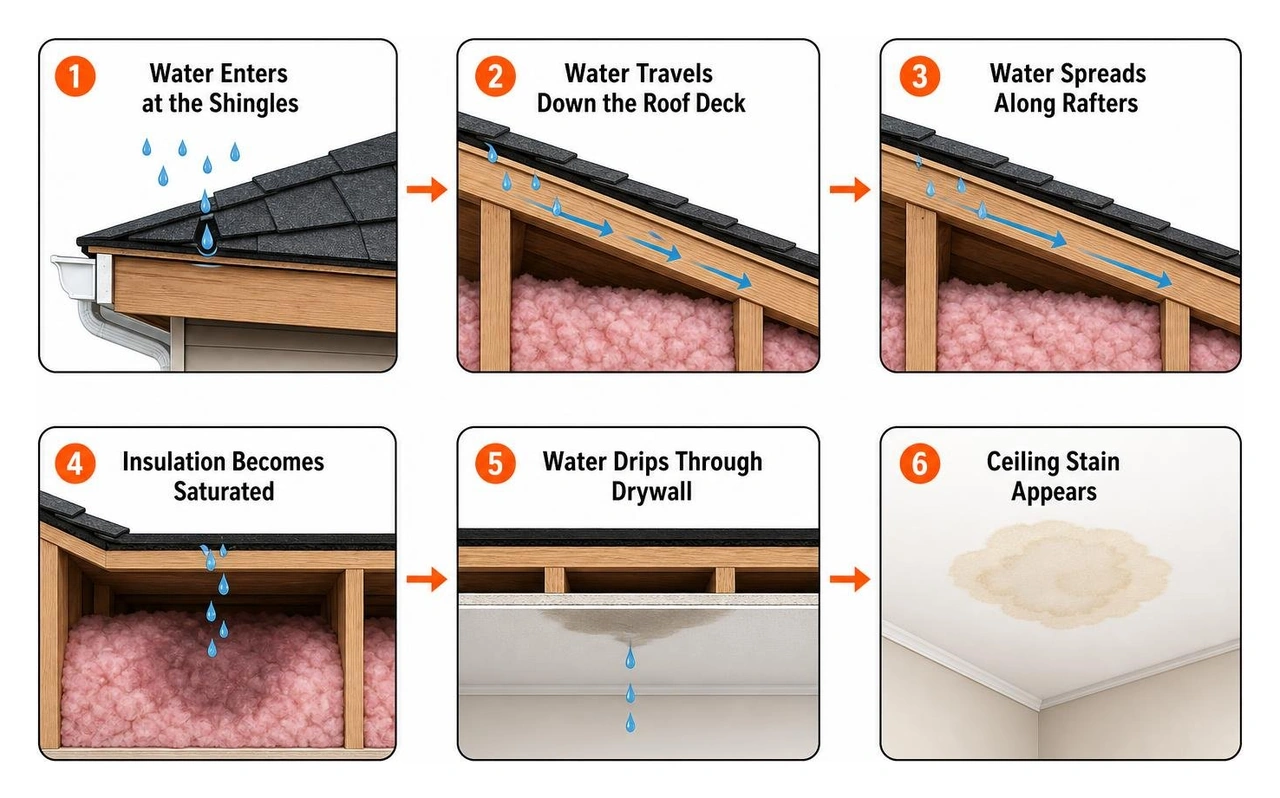
A quarter-sized stain on your living room ceiling often masks a saturated two-foot section of structural roof decking directly above it. By the time water becomes visible inside your living space, the materials above your ceiling have likely been wet for weeks or even months. As small roof leaks go unaddressed, minor roof defects steadily compound beneath the surface.
In Central Wisconsin communities like Wausau, Stevens Point, Rhinelander, and Minocqua, our harsh winter climate accelerates this damage significantly:
- Freeze-Thaw Cycles: Water that seeps into small cracks around shingles or flashing freezes when temperatures drop below zero. As ice expands, it forces shingles apart, cracks seals, and widens tiny entry points into gaping vulnerabilities.
- Ice Dam Formation: Inadequate attic ventilation or uneven insulation allows heat to escape into the attic, melting roof snow. This runoff freezes at the cold roof eaves, creating ice dams that back up standing water under shingles.
- Snow Accumulation Weight: Heavy snow loads press down on damp, softened decking timber, increasing the risk of structural sagging or framing deflection.
Ignoring a small leak during autumn virtually guarantees a severe, high-cost emergency by mid-winter. Treating a small leak as a low-priority chore is one of the primary reasons routine repairs turn into major home restorations.
What Are the First Signs of a Hidden Roof Leak?
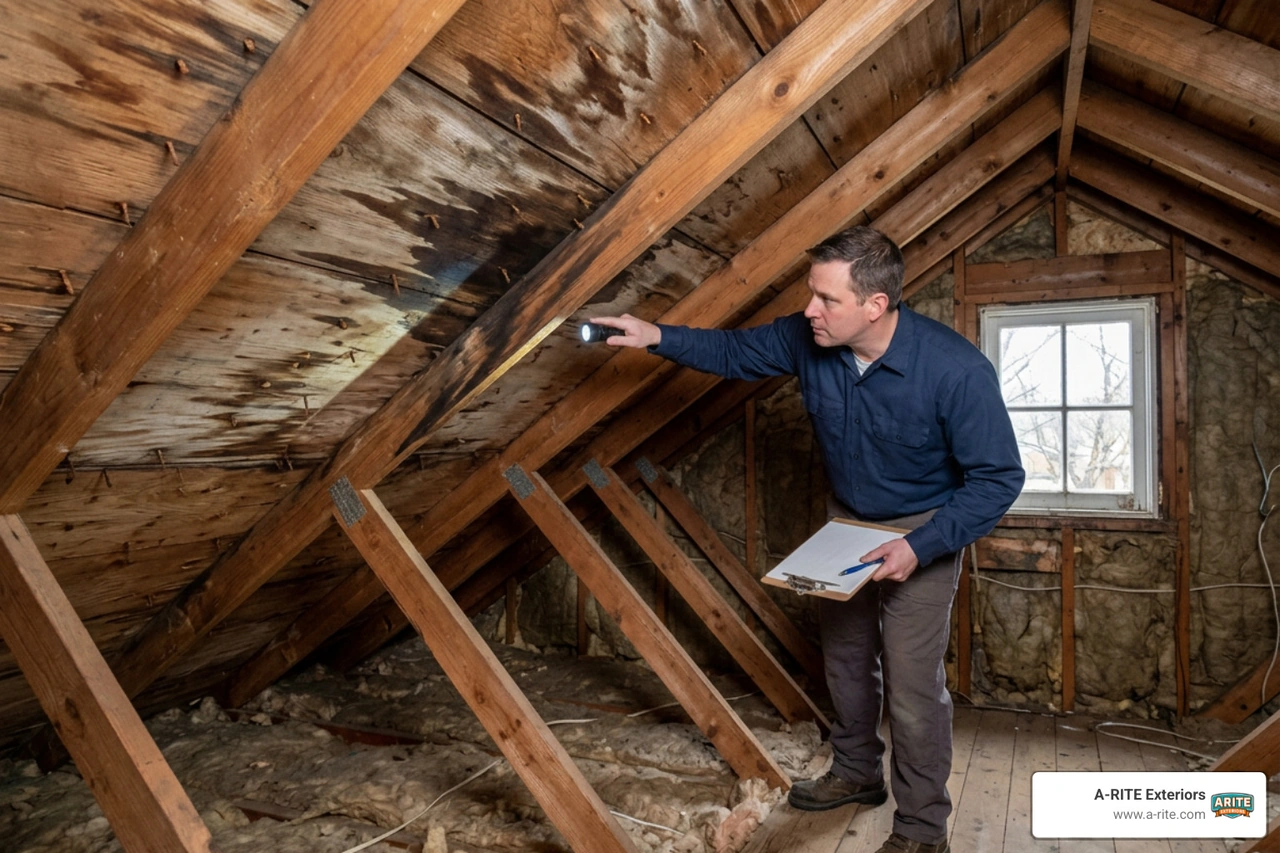
Catching a leak before it ruins interior finishes requires knowing where to look and what to look for. Water leaves clear clues inside your home, in your attic, and on your roof surface.
Early Interior Warning Signs
Before water drips onto your furniture, it usually manifests in subtle ways throughout your upper floors:
- Ceiling and Wall Discoloration: Circular or ringed stains that are light tan, yellow, or brown on ceilings and upper wall corners.
- Peeling or Bubbled Paint: Moisture trapped behind latex paint creates soft, water-filled blisters or flaking paint along ceiling seams.
- Sagging Drywall: Saturated drywall loses structural strength, causing ceiling panels to bow downward under the weight of trapped water.
Attic Warning Signs
Your attic is your home's early warning defense system. We recommend performing a visual attic check with a flashlight after major rain or snow melt. Look for:
- Rusted Roofing Nails: Nails protruding through the underside of roof decking that show rust or white mineral deposits ("shiners") indicate chronic high humidity or direct leaks.
- Dark or Stained Wood Framing: Discolored rafters, trusses, or plywood decking signal past or active water penetration.
- Compressed Attic Insulation: Wet fiberglass or blown-in cellulose insulation clumps together, loses its fluffiness, and hardens.
- Musty Odors: A persistent damp, earthy smell in the attic indicates active moisture trapped in timber or insulation.
For a comprehensive checklist of red flags, review our home guide on Signs of Hidden Roof Damage.
Exterior Warning Signs
Exterior damage is frequently caused by high winds or severe hail. After major storms in Central Wisconsin, look for exterior warning signs:
- Damaged, cracked, or missing shingles after severe wind events (see our breakdown on Roof Damage from High Winds).
- Dented, bruised, or granule-lacking asphalt shingles caused by hail (learn more about How to Spot Hail Damage Shingles).
- Cracked rubber boots around plumbing vent pipes.
- Damaged, bent, or rusted metal flashing surrounding chimneys, skylights, and roof valleys.
Safety Tip: Never walk on a wet or ice-covered roof. You can safely perform ground-level exterior inspections using a high-powered pair of binoculars to examine shingle lines, roof valleys, and chimney flashings from the safety of your yard.
How Quickly Can a Small Leak Cause Mold and Structural Damage?
The speed at which moisture damages a home often catches homeowners by surprise. According to building science standards and environmental health studies, mold spores can establish active colonies on wet organic surfaces (such as wood framing, attic insulation paper, and drywall) within 24 to 48 hours of water exposure.
The 6-Stage Roof Damage Progression
When a small leak is left unaddressed across multiple weather events, water damage follows a predictable six-stage escalation:
- Decking Saturation: Moisture saturates roof plywood or OSB, causing the wood sheets to swell, delaminate, and lose fastener-holding strength.
- Framing Exposure: Water trickles onto structural rafters and ceiling joists, initiating timber rot.
- Attic Insulation Degradation: Wet insulation loses its thermal resistance (R-value). Saturated insulation acts like a heavy sponge, transferring heat out of your home in winter while weighing down ceiling joists.
- Mold Development: Spores colonize damp surfaces in the dark, warm attic cavity, releasing mold spores into your home's ventilation system.
- Interior Damage: Water breaks through drywall, destroying plaster, paint, trim, and light fixtures.
- Secondary Structural Damage: Prolonged rot weakens load-bearing wall studs and ceiling joists, creating severe safety hazards.
Restoration professionals highlight that hidden water travel frequently creates unseen electrical fire hazards when water trickles into ceiling light electrical boxes, outlets, or recessed fixtures, leading to short circuits.
Preserving Home Performance with Attic Insulation
Proper moisture mitigation includes evaluating attic insulation. When a roof leak strikes, attic insulation is usually the first casualty. We offer targeted attic insulation services designed to restore thermal efficiency, improve attic ventilation, and help mitigate winter ice dam risk across Wisconsin homes. (Note: A-RITE Exteriors specializes strictly in attic insulation services and does not perform wall or general structural insulation work).
Homeowners looking to upgrade their home's thermal performance may qualify for Focus on Energy rebates. Homeowners may qualify for Focus on Energy rebates for qualifying insulation and air-sealing work (such as attic insulation, air sealing, wall insulation, foundation insulation, duct sealing, and qualifying DIY attic insulation and air sealing), though these rebates apply to energy-efficiency improvements rather than standard roof shingle replacements. Rebate amounts and eligibility rules change over time, so homeowners should confirm current program requirements prior to starting work.
How Do You Find the Leak Source and Stop It Temporarily?
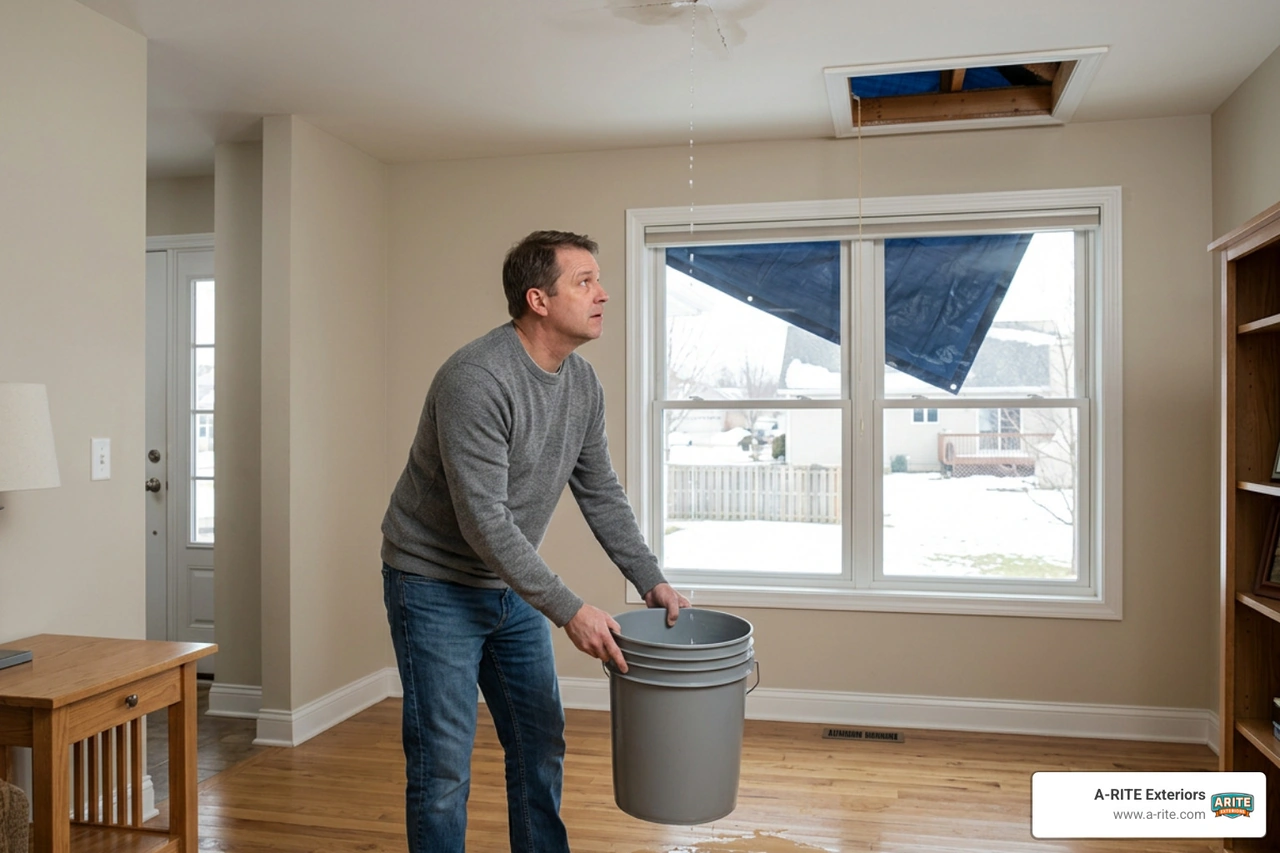
If you discover an active drip during a heavy rainstorm or sudden thaw, taking prompt temporary action protects your interior living space while you await professional repair.
Tracing the Leak Source in the Attic
Because water travels along sloping roof components, the entry point on your roof is rarely located directly above the stain on your ceiling.
- Take a flashlight into the attic space safely.
- Measure the location of the interior stain relative to exterior walls.
- Trace damp spots or water streaks upward along the roof rafters toward the peak of the roof.
- Look for light shining through the roof deck, discolored wood, or moisture dripping from protruding roofing nails.
Emergency Interior and Exterior Mitigation Steps
- Contain Drips: Place buckets, plastic bins, or thick towels beneath active leaks inside your living space.
- Relieve Drywall Water Bubbles: If water is pooling behind ceiling paint, creating a sagging bulb or water bubble, place a broad bucket beneath it and carefully puncture the center of the bubble with a nail or screwdriver. Releasing trapped water prevents heavy drywall panels from collapsing under the weight.
- Tarp the Roof (If Safe): If weather permits and safety is assured, place a heavy-duty waterproof tarp over the exterior roof section. Secure the tarp edges with 2x4 lumber boards to keep wind from lifting it. Never venture onto a icy, steep, or wet roof surface.
For guidance on post-weather inspections, consult our articles on Should I Inspect My Roof After a Storm and How Often Should Roofs Be Inspected.
Can a Small Roof Leak Be Fixed Without Replacing the Entire Roof?
Yes, in many cases, a small roof leak can be resolved with a localized spot repair rather than a complete roof teardown. However, whether a spot repair is suitable depends entirely on the age of the overall roof system, the extent of underlying timber damage, and the exact cause of the leak.
When a Spot Repair Works
If your roof is relatively young and the surrounding shingles are supple and securely adhered, targeted repairs are highly effective. Common localized fixes include:
- Replacing damaged rubber pipe boots around plumbing stacks.
- Re-flashing compromised chimney aprons or skylight step flashing.
- Replacing a handful of storm-damaged or missing asphalt shingles.
When replacing shingles, quality matters. Modern high-performance products offer exceptional durability; for example, some architectural shingles are rated up to 110 to 130 mph when installed as part of the required system. That overall shingle performance and actual service life vary by product, installation quality, ventilation, routine maintenance, and severe weather exposure.
Explore detailed repair services on our Repairs service page.
The Problem with DIY Caulking Fixes
Many homeowners attempt to solve leaks by squeezing tube sealant or roof cement over exterior shingle gaps. DIY caulking usually fails because it coats only the top surface, trapping trapped moisture inside the roof decking. Unvented moisture rots wood decking beneath the patch while water continues finding alternate pathways into the attic.
If inspection reveals widespread granule loss, sagging roof lines, or multi-location moisture intrusion, localized patching will only delay the inevitable. Review your long-term options on our Roof Replacement page.
How Much Does It Cost to Repair a Small Leak vs. Ignoring It?
Addressing a roof leak immediately is significantly less expensive than delaying work. A simple flashing fix completed today prevents extensive structural, insulation, and interior drywall remediation later.
When discussing secondary water damage repair costs without a cited source, it is important to note that unaddressed structural water damage can cost thousands of dollars, and severe cases can cost much more.
| Repair Scope Stage | Typical Condition & Work Required | Relative Financial Impact |
|---|---|---|
| Stage 1: Immediate Minor Repair | Replacing pipe boots, sealing small flashing gaps, replacing missing shingles | Minor localized repair cost |
| Stage 2: Delayed Drywall Repair | Patching ceiling drywall, priming, painting living space | Moderate repair cost |
| Stage 3: Insulation & Framing Decay | Removing moldy attic insulation, replacing localized decking sheets | Substantial remediation cost |
| Stage 4: Major Restoration & Rot | Extensive rafter replacement, structural framing rebuilding, complete mold abatement | High-cost restoration expense |
Note: Precise repair pricing depends on roof pitch, accessibility, structural condition, scope of work, material selection, and local labor rates. A lower price may reflect differences in materials, scope, cleanup, warranty coverage, or installation details.
Flexible Payment Solutions
When unexpected roof repairs arise, homeowners do not always have immediate cash reserves available. Financing options are available for qualifying homeowners. Loan amounts up to $100,000 unsecured may be available, with final approval, rates, and terms based on lender review and credit qualification.
Does Homeowners Insurance Cover Damage From a Small Roof Leak?
Understanding how insurance carriers treat roof leaks helps prevent unexpected out-of-pocket bills.
Sudden Storm Damage vs. Gradual Neglect
Standard homeowners insurance policies generally cover roof leak damage if the leak stems from a sudden, accidental, storm-related event (such as high winds tearing shingles off, hail cracking roof ridge caps, or a tree branch striking the roof deck).
Conversely, insurance policies typically exclude coverage for damage resulting from gradual wear-and-tear, age, or lack of maintenance. If an insurance adjuster determines a leak stemmed from a 25-year-old worn-out pipe boot or years of unaddressed ice damming, the claim for interior water damage may be denied.
The Danger of Delayed Claim Reporting
If a storm damages your roof, file your claim promptly. If you notice a small stain after a severe storm but wait six to twelve months to report it, your insurance carrier may deny secondary claims for mold growth or structural framing rot, arguing that failure to take timely mitigation action expanded the damage.
Documenting Damage for Your Carrier
- Take high-resolution photos of interior ceiling stains, active drips, attic space moisture, and exterior roof conditions immediately upon discovery.
- Maintain clean record logs of dates, rainfall events, and emergency containment actions taken (such as placing buckets or tarping).
- Partner with an established, licensed roofing contractor to provide clear photographic evidence and an accurate scope of work.
When selecting an honest roofing partner, consult our Roofing Contractor Selection Guide. For property owners in Wausau, Schofield, Weston, Merrill, or Stevens Point, read our local resource on Who Should I Call for Storm Damage Roof Repair in Wausau or Central Wisconsin.
What Are the Most Frequently Asked Questions About Small Roof Leaks?
Can a roof leak seal itself over time?
No, a roof leak cannot permanently seal itself. Homeowners sometimes think a leak has miraculously fixed itself because dripping stops after a heavy storm. In reality, temporary shifts in wind direction, light rainfall, debris buildup, or thermal expansion of roofing materials during warm afternoon sunshine may temporarily restrict water entry. However, the physical tear in your shingle, flashing, or underlayment remains open. The very next driving rainstorm or freeze-thaw cycle will reopen the leak path.
Should I worry about a ceiling stain if it is not dripping during rain?
Yes, absolutely. A non-dripping ceiling stain indicates that attic insulation, ceiling drywall, or roof rafters are currently absorbing incoming water like a sponge. Drywall can hold significant quantities of water before becoming saturated enough to drip through to your living space. Beneath the dry surface, structural framing rots quietly, and mold spores flourish in the damp, dark attic environment.
How long can a small roof leak go undetected in an attic?
A slow roof leak located around a chimney, valley, or pipe boot can linger undetected for months, or even an entire weather season. Because attic insulation absorbs moisture and releases it slowly, water often saturates heavy rafter timber long before it breaks through home ceiling drywall. Performing routine biannual attic checks during spring and autumn is the best way to catch these silent moisture problems early.
What Are the Next Steps for Protecting Your Central Wisconsin Roof?
A small roof leak should never be left to chance. What appears to be a small stain today can quietly compromise your attic insulation, rot load-bearing roof decking, foster health-threatening mold growth, and escalate repair expenses exponentially if ignored across winter freeze-thaw cycles.
Taking fast, decisive action preserves your home's structural integrity, maintains your indoor air quality, and protects your finances.
At A-RITE Exteriors, we have spent over two decades serving homeowners across Central Wisconsin, including Wausau, Schofield, Weston, Mosinee, Merrill, Stevens Point, Green Bay, Rhinelander, and Minocqua. We specialize in weather-resistant asphalt roofing systems, durable gutters, high-performance siding, replacement windows, and protective attic insulation engineered specifically to handle winter ice dams and severe midwestern storms.
Energy Tax Credit Information
When planning home efficiency updates alongside roof work, note that Section 25C (the Energy Efficient Home Improvement Credit) under IRS guidance was available through December 31, 2025. It should not be presented as active for 2026 or beyond unless explicitly confirmed by updated IRS guidance. Approved neutral resources for energy tax credit guidelines, pricing standards, rebates, and financing include the IRS, ENERGY STAR, EPA, Focus on Energy, USDA, Wisconsin DSPS, GAF, Owens Corning, and the Better Business Bureau (BBB). Always consult a certified tax professional regarding eligibility for home energy tax credits.
Don't wait for a tiny drip to become a major structural emergency. Trust the local team that puts your home first.
Schedule a professional roof inspection with A-RITE Exteriors today to protect your home with weather-resistant roofing solutions built for Wisconsin winters.