Can You Replace a Roof During a Wisconsin Winter?
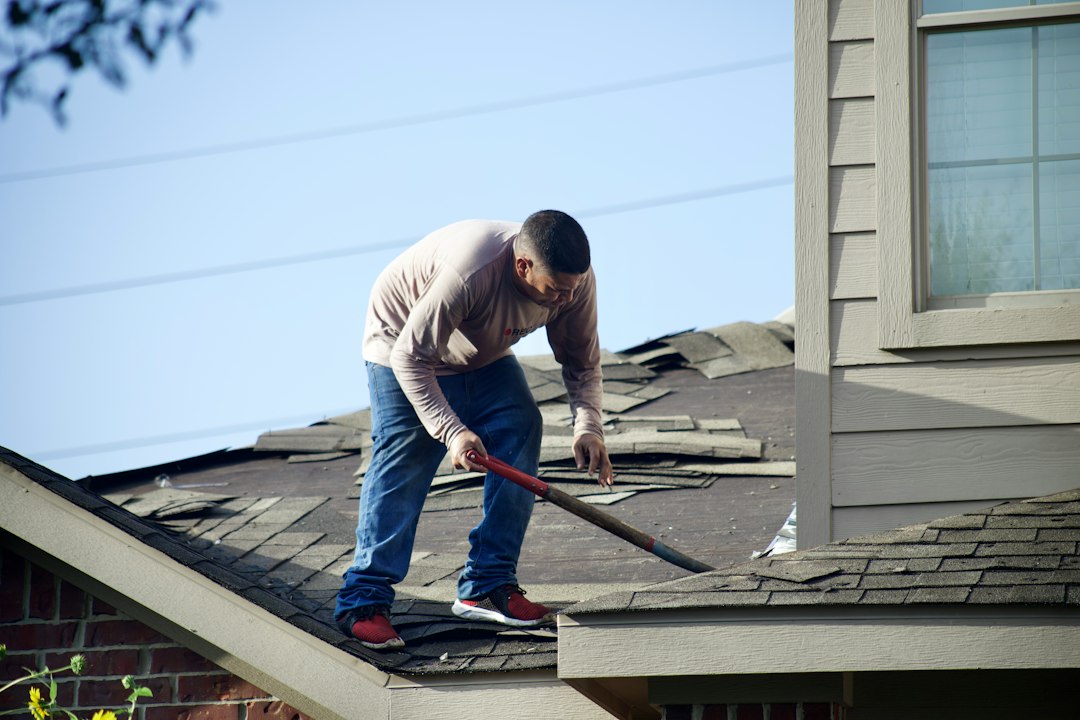
Yes, roof replacements are fully feasible throughout late fall and winter across Wisconsin when performed by experienced crews using specialized cold-weather protocols. While peak roofing season runs from late spring through early autumn, winter installations happen every year out of practical necessity.
Living in Central and Northern Wisconsin, from Wausau, Weston, and Mosinee up to Tomahawk, Minocqua, and Arbor Vitae, means dealing with severe winter weather. Sub-freezing temperatures, heavy inland snowfall, frequent freeze-thaw cycles, and shortened daylight hours create unique challenges for exterior construction. However, cold weather does not shut down roofing operations entirely. Instead, it changes how materials are handled, fastened, and sealed.
There is an important distinction between a planned late-fall upgrade and an urgent winter emergency replacement:
- Planned Late-Fall Installations (October to November): Homeowners often schedule late-fall projects to beat the first severe blizzards. Ambient temperatures are cooler, but dry weather windows allow crews to work efficiently before heavy snow cover accumulates.
- Urgent Winter Replacements (December to March): When a severe storm, heavy snow load, or falling branch compromises your roof deck in the middle of January, waiting until May is simply not an option. Emergency winter replacements stop active water intrusion before moisture rots roof trusses, ruins insulation, and causes interior ceiling collapses.
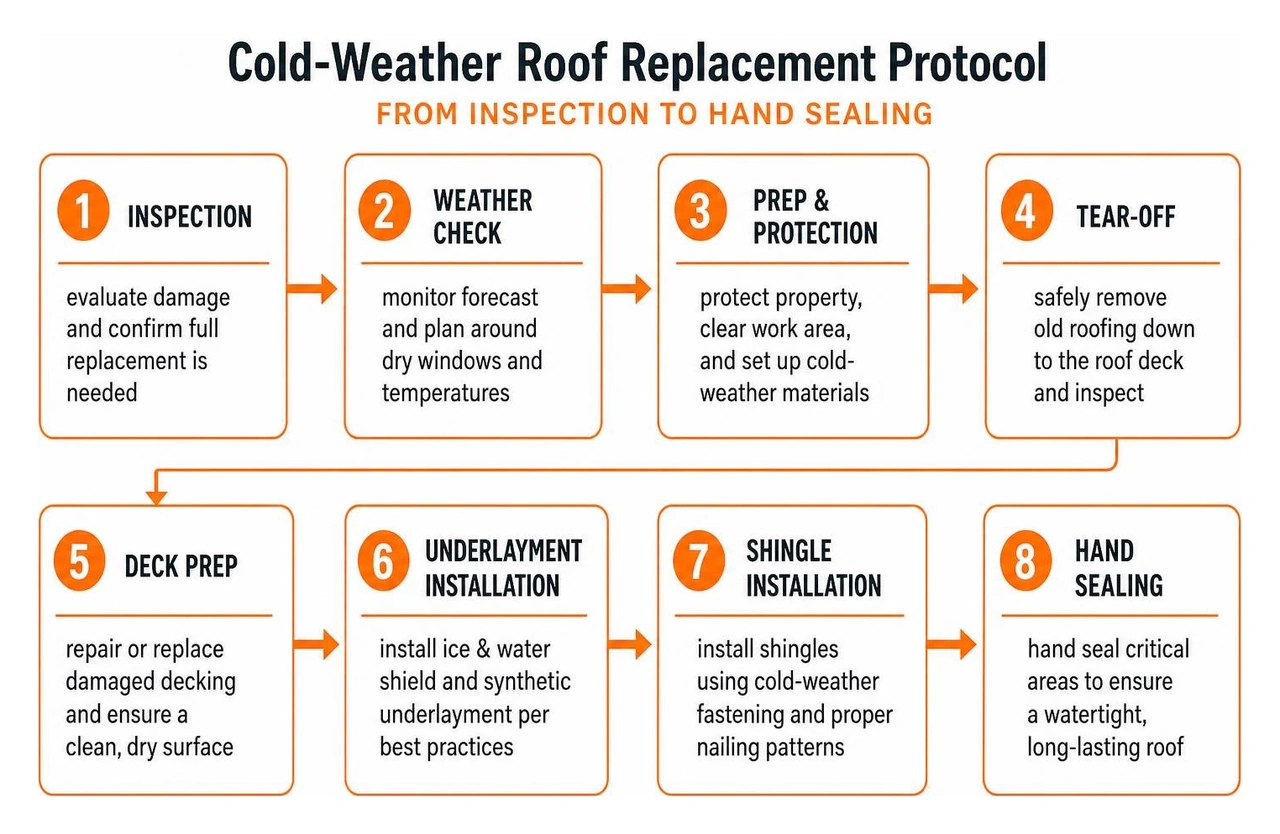
Understanding how the seasonal construction calendar operates helps homeowners protect their property. When structural integrity is on the line, an experienced local crew can safely strip, prep, and install a brand-new roof in sub-freezing weather without compromising quality or long-term durability.
What Changes When Installing a Roof in Cold Temperatures?
Cold temperatures fundamentally alter the physical properties of building materials. Professional winter roofing requires specific adjustments to ensure every component performs as designed.
Thermal Properties of Shingles Below 40°F
Standard asphalt shingles contain a fiberglass mat coated in asphalt and mineral granules. In warm weather, these shingles are flexible and easy to cut. Below 40°F, asphalt stiffens and becomes brittle. If cold shingles are bent, thrown, or dropped, they can fracture or crack along the edges. Professional crews store shingle bundles in heated trailers or warm staging areas until the moment they are carried up to the roof deck, keeping them pliable during layout.
Sealant Strips and Manual Hand-Sealing
Asphalt shingles rely on factory-applied thermal adhesive strips to bond overlapping courses together. Under normal summer conditions, ambient warmth and direct sunlight (typically requiring temperatures around 60°F to 65°F or higher) activate this adhesive, locking the shingles into a unified wind-resistant barrier.
During a Wisconsin winter, ambient temperatures remain far below the activation threshold. Because the sun cannot activate the adhesive strip in freezing conditions, cold-weather installations require manual hand-sealing (also called hand-tabbing):
- Installers manually apply quarter-sized dabs of asphalt plastic roofing cement beneath each shingle tab.
- Each tab is pressed firmly into the cement, creating an immediate physical bond.
- This mechanical seal protects the shingles from wind uplift until consistent spring sunshine warms the roof and permanently cures the factory adhesive.
Major manufacturers, including technical guidelines from GAF, specifically mandate manual sealing for cold-weather applications to maintain wind warranties. When researching systems, understanding how to select the best roofing system for Wisconsin weather helps ensure your home receives the right materials for our climate.
Fastener Depth and Pneumatic Tool Adjustments
Cold shingles crack easily if nails are over-driven. Standard pneumatic nail gun pressures that work perfectly in July will punch right through rigid asphalt in January. Our installers constantly monitor and adjust compressor air pressure throughout the day. Nails must be driven perfectly flush with the shingle surface, never angled, under-driven, or shot through the shingle mat.
Ice-and-Water Barrier and Deck Protection
Underlayments must also perform under freezing conditions. Self-adhering ice-and-water membranes require specialized low-temperature formulations to adhere firmly to wood decking in sub-freezing air. Learning about underlayment and roof decking is vital; ice and water shield helps protect against water intrusion if ice dams occur, but it does not prevent ice dams by itself.
| Factor | Architectural Asphalt Shingles | Standing-Seam Metal Panels |
|---|---|---|
| Pliability Threshold | Becomes brittle below 40°F; requires warm staging | Remains structurally unaffected by sub-zero temperatures |
| Adhesive Curing | Requires manual hand-tabbing with asphalt cement in winter | Mechanical fasteners/hidden clips; no thermal adhesive needed |
| Fastening Precision | High; compressor pressure must be calibrated to prevent shingle penetration | High; requires expansion/contraction clip spacing for thermal movement |
| Snow Shedding | Granular surface holds snow until gradual melt occurs | Smooth surface sheds snow loads rapidly away from eaves |
| Winter Labor Intensity | Higher due to hand-sealing each shingle tab | Moderate; panel handling requires specialized winter grip gear |
While architectural asphalt shingles remain the most popular choice, some architectural shingles are rated up to 110 to 130 mph when installed as part of the required system. Standing-seam metal roofing is an outstanding cold-weather alternative because metal panels do not depend on adhesive bonding strips to achieve full weather protection.
How Do Contractors Manage Weather, Safety, and Deck Moisture in the Winter?
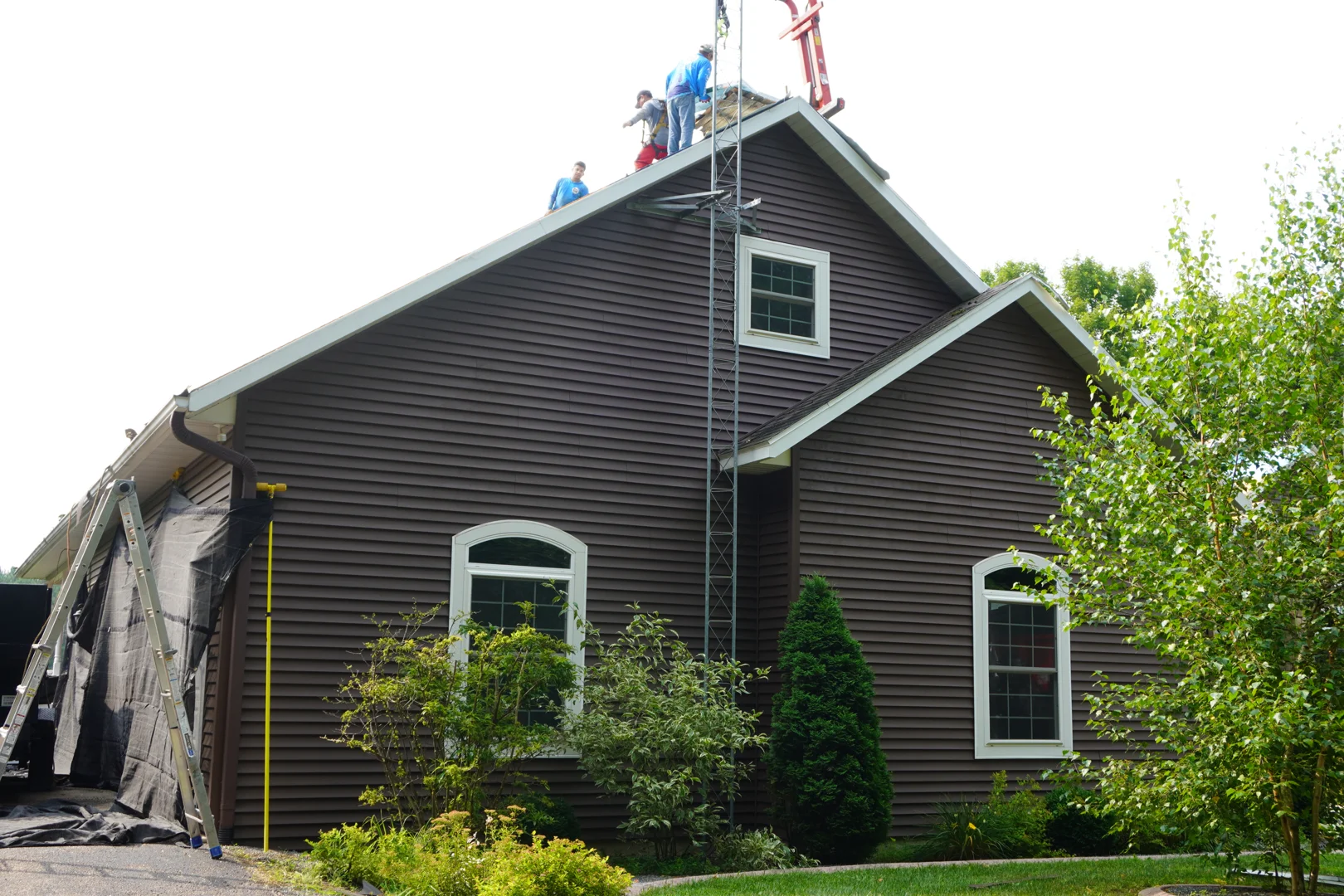
Working on a roof in freezing temperatures demands strict safety protocols, careful logistical planning, and moisture management.
Site Preparation and Snow Removal
Before any tear-off begins, the crew must clear all accumulated snow and ice from the working area. Raking snow off the roof with non-abrasive tools exposes the surface without damaging underlying components. If thick ice has built up along eaves or valleys, deploying specialized ice dam removal equipment safely clears the ice without gouging the roof deck.
Once old shingles are removed, the crew inspects the exposed wood decking. Any frost, surface moisture, or rotted plywood is addressed immediately. Shingles and underlayment must never be applied over frost-covered or wet decking, as trapped moisture leads to mold and internal deck rot.
Controlling Thermal Bypass and Attic Moisture
A roof replacement provides the perfect opportunity to address the underlying causes of winter moisture and ice dams. Warm air escaping from living spaces into the attic melts roof snow from underneath, causing meltwater to refreeze at the cold eaves.
Controlling thermal bypass requires proper ridge and soffit ventilation paired with attic insulation services. Please note that A-RITE Exteriors only provides attic insulation. Upgrading attic insulation and sealing air leaks keeps heat inside your living spaces and helps reduce uneven roof deck temperatures that contribute to ice dam formation.
Homeowners may qualify for Focus on Energy rebates. These rebates are for qualifying insulation and air-sealing work (such as attic insulation, air sealing, wall insulation, foundation insulation, duct sealing, and qualifying DIY attic insulation and air sealing), not for roof replacement itself. Rebate amounts and eligibility rules change over time, and homeowners should confirm current program rules before starting work.
Logistics and Worker Safety
Winter roofing requires altered daily workflows:
- Shorter Working Windows: Early winter sunsets compress productive daylight to roughly 8:00 AM through 4:00 PM. Crews plan smaller, sectional tear-offs each day to ensure no roof section is left uncovered overnight.
- Fall Protection: Slick roof surfaces require full-body safety harnesses, secured lifelines, and specialized winter-traction footwear at all times.
- Temperature-Controlled Material Staging: Adhesive tubes, asphalt cement, and nail coils are kept in heated truck cabs or job-site hot boxes until the exact moment of installation.
Should You Replace a Failing Roof in Winter or Wait Until Spring?
Homeowners dealing with roof wear often wonder whether to push through winter and address the project in May. While postponing non-essential projects during mild wear is reasonable, waiting with an actively failing roof carries severe risks.
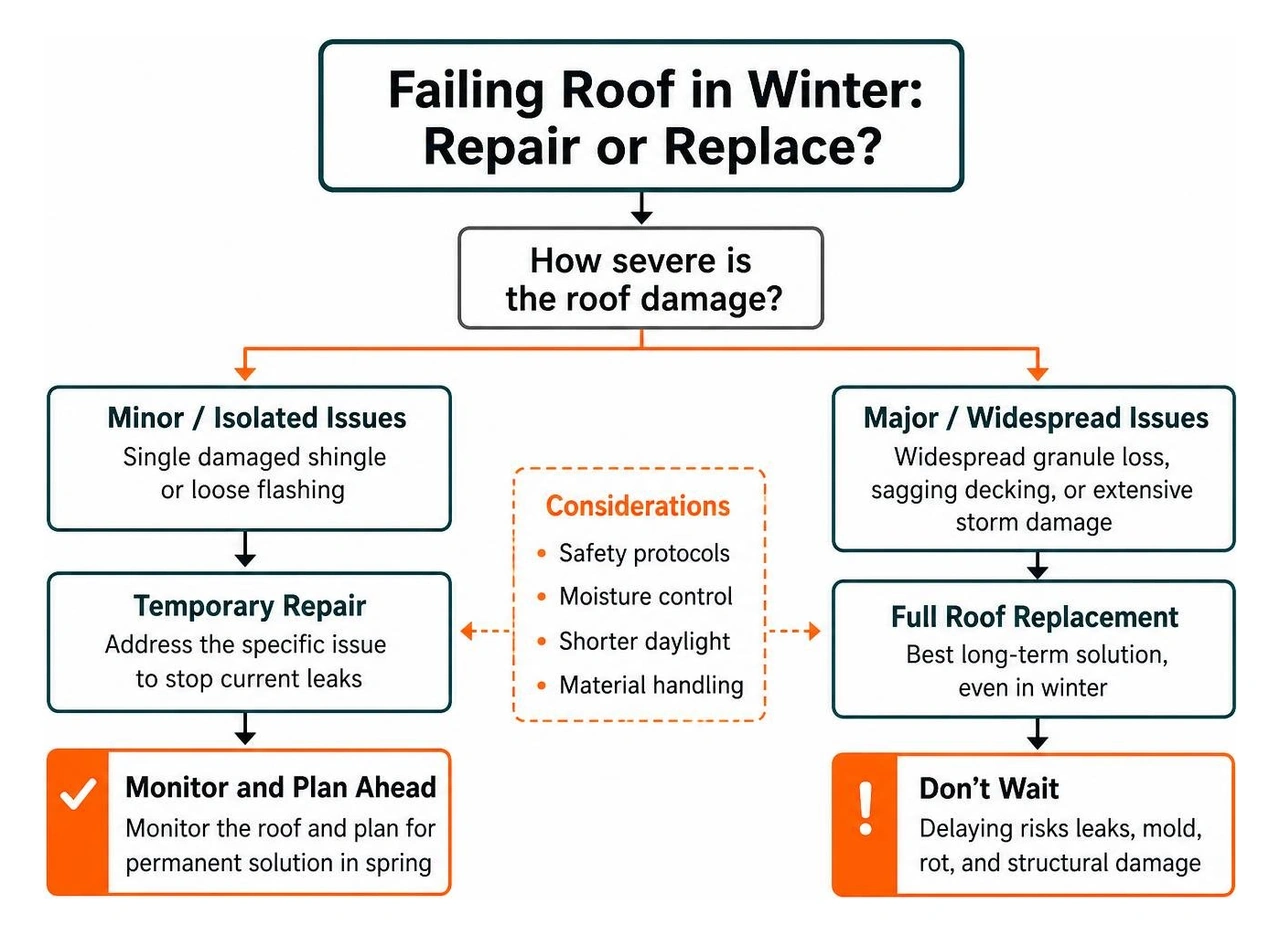
Reviewing whether your home needs roof repair or complete replacement helps clarify your options. Minor issues, like a single damaged tab or a loose piece of step flashing, can often be repaired temporarily. However, widespread granule loss, sagging decking, or extensive storm damage demand a full replacement.
The Dangers of Waiting Out a Wisconsin Winter
Delaying an essential roof replacement through a Wisconsin winter exposes your home to compounding structural damage:
- Freeze-Thaw Expansion: When water enters hairline roof cracks, it freezes, expands by roughly 9%, and tears open larger entry points for future meltwater.
- Wind Vulnerability: Winter blizzards bring sustained high winds. Knowing how storms affect roof shingles underscores why unsealed or brittle shingles are prone to tearing off, leaving bare deck exposed to driving snow. Addressing small roof leaks early prevents catastrophic interior damage during winter storms.
- High-Wind Damage: Heavy winter gales can rip aged shingles away completely. Reviewing the effects of roof damage from high winds shows that missing shingles quickly escalate into major structural vulnerabilities.
- Cost of Hidden Structural Rot: Water infiltration and framing rot left unaddressed through spring snowmelts can cost thousands of dollars, and severe cases can cost much more.
Protecting Manufacturer Warranty Coverage
Homeowners sometimes worry that a winter installation invalidates their warranty. Standard manufacturer warranties remain completely valid during winter installations, provided the contractor follows the manufacturer's cold-weather fastening and hand-tabbing guidelines. A certified contractor documents the cold-weather application procedures, ensuring your material and workmanship protections remain fully enforceable.
How Should Homeowners Prepare and Select the Right Wisconsin Roofing Contractor?
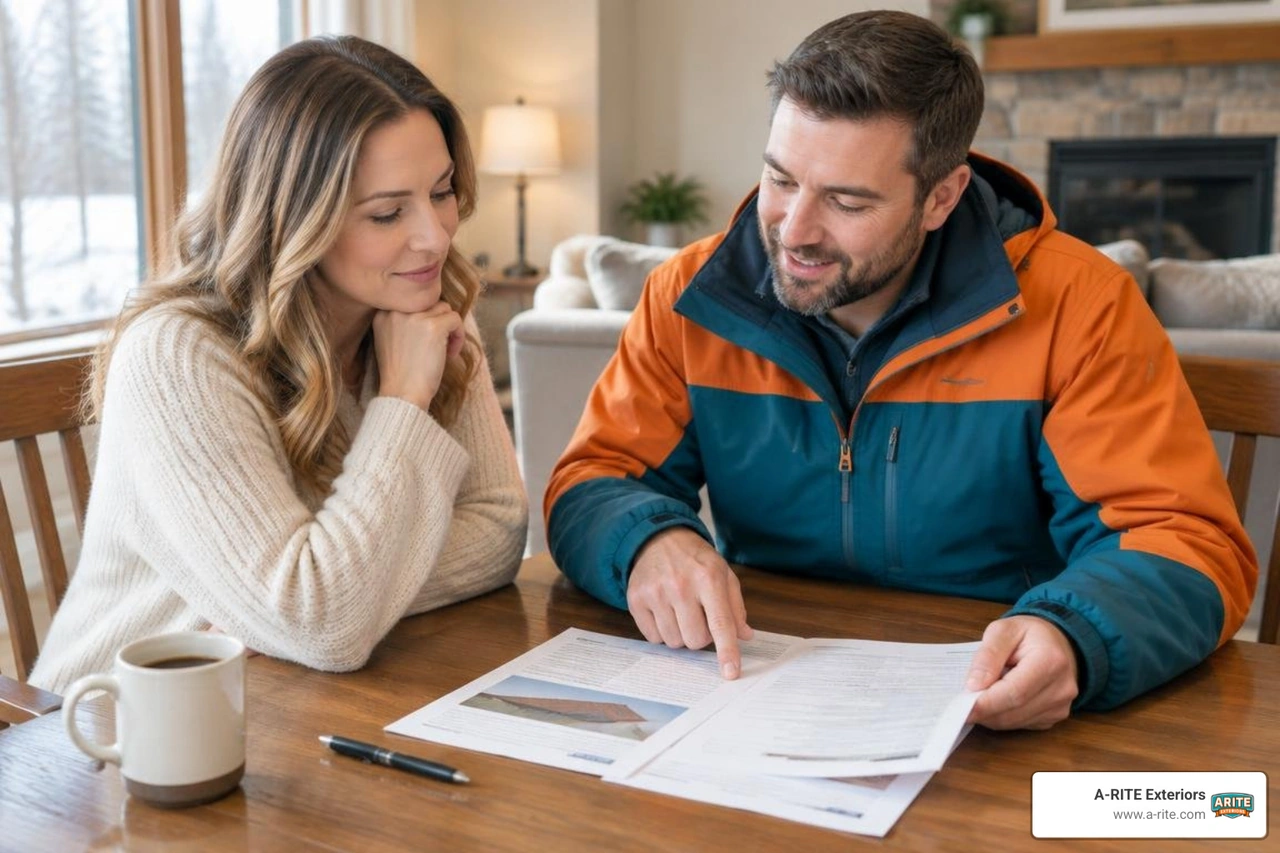
A successful winter roof replacement requires clear communication, proper home preparation, and selecting a contractor with proven cold-weather experience.
Preparing Your Home for Winter Installation
Homeowners can take practical steps to streamline the installation process:
- Clear Driveways and Walkways: Ensure driveways, walkways, and access gates are plowed and salted so material delivery trucks and crews can position equipment safely.
- Protect Attic Belongings: Reroofing causes vibrations throughout the roof deck. Cover stored items in the attic with drop cloths to protect them from dust and dislodged debris, as detailed in our home preparation guide for roof replacements.
- Secure Wall Hangings: Remove fragile picture frames, mirrors, and loose wall decorations on upper-floor rooms directly below the roofline.
Evaluating Bids and Project Costs
A full roof replacement in Wisconsin typically ranges from the upper four figures to the mid five figures. The final price depends on roof size, pitch, number of layers, decking condition, material selection, and labor requirements.
When evaluating proposals, review what is included in a roof replacement estimate to ensure cold-weather provisions, such as manual hand-sealing, low-temp underlayment, and snow removal protocols, are explicitly itemized.
Consult our roofing contractor selection guide when vetting potential installers. Always verify state licensing, local physical office locations, and active liability and worker's compensation insurance.
Be cautious of bids that come in drastically lower than standard market rates. Understanding why the lowest roofing bid is not always the best value protects you from substandard work; a lower price may reflect differences in materials, scope, cleanup, warranty coverage, or installation details.
Financing Options and Energy Tax Credit Information
A-RITE offers financing through Service Finance, and example terms are available on our financing page. Financing is subject to credit approval. Financing options are available for qualifying homeowners. Loan amounts up to $100,000 unsecured may be available, with final approval, rates, and terms based on lender review and credit qualification.
Regarding energy incentives: For Section 25C (Energy Efficient Home Improvement Credit), current IRS guidance shows it was available for qualifying improvements placed in service through December 31, 2025. It should not be treated as an active credit for 2026 or beyond unless confirmed by updated IRS guidance. Always consult a qualified tax professional regarding current tax rules and eligibility.
When you need dependable, certified Wisconsin roofing services, our local crew is equipped to handle complex winter conditions. You can also start your project planning online with an instant online roof quote.
Frequently Asked Questions About Cold-Weather Roof Replacement in Wisconsin
Will installing asphalt shingles in freezing temperatures void the manufacturer warranty?
No. Installing asphalt shingles below 40°F does not void manufacturer warranties as long as the contractor follows the manufacturer's specific cold-weather application instructions. These specifications require hand-sealing each shingle tab with asphalt roofing cement and adjusting pneumatic nail gun pressures so fasteners do not cut through brittle shingles. When installed according to these technical standards, full material and wind warranty protections remain intact.
Do shingles seal properly on their own during a Wisconsin winter?
Thermal sealant strips on asphalt shingles remain dormant in cold weather because they need consistent ambient warmth and direct solar exposure (typically 60°F to 65°F or warmer) to activate. In winter, professional installers manually apply quarter-sized dabs of asphalt plastic cement under each tab to create an immediate mechanical bond. Once warm spring temperatures arrive, the factory sealant strips activate naturally, permanently bonding the shingles together.
Is it less expensive to replace a roof during late fall or winter?
Late fall and winter can offer cost advantages and faster turnaround times. Because contractor schedules are typically less congested than during the peak summer rush, homeowners often benefit from flexible scheduling and prompt project starts. While winter work requires extra labor steps like snow clearing and manual hand-tabbing, seasonal material supplier incentives and off-peak contractor availability often make late fall and winter an economical time to replace a roof.
What Are the Next Steps for Your Wisconsin Cold-Weather Roof Replacement?
Replacing a roof in late fall or winter in Wisconsin is completely achievable when handled by a knowledgeable, properly equipped crew. By using low-temperature underlayments, adjusting fastener depths, storing materials in heated environments, and hand-tabbing every shingle, professional installers deliver a durable, fully warrantied roof regardless of the outdoor temperature.
If your roof is showing severe storm damage, missing shingles, or active indoor leaks, do not leave your home vulnerable to months of freezing snow and spring thaws. Contact A-RITE Exteriors today to schedule an on-site inspection and consultation, or request an instant estimate online to protect your home this season.