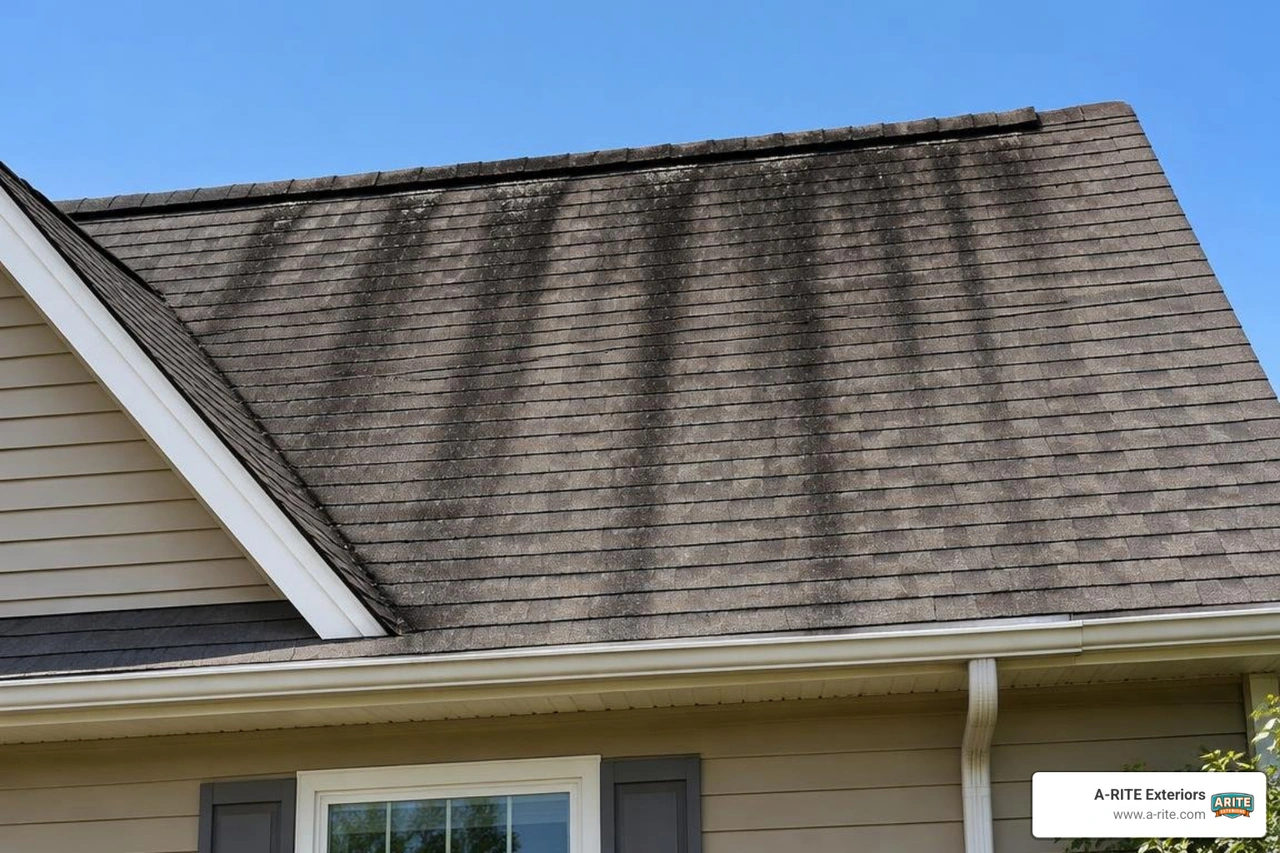
What Causes Black Streaks on Wisconsin Roofs?
When dark, soot-like stains begin staining an asphalt shingle roof, many homeowners assume it is accumulation from chimney soot, airborne dirt, or industrial pollution. However, in almost every instance across Central Wisconsin communities, from Wausau and Stevens Point to Minocqua and Green Bay, the true cause is a living, photosynthesizing bacterium known as Gloeocapsa magma.
This microscopic cyanobacteria (often called blue-green algae) travels on wind currents and settles on residential roofing. Nearly 80 percent of homes across the United States are affected by this organism at some point during the roof’s working lifespan.
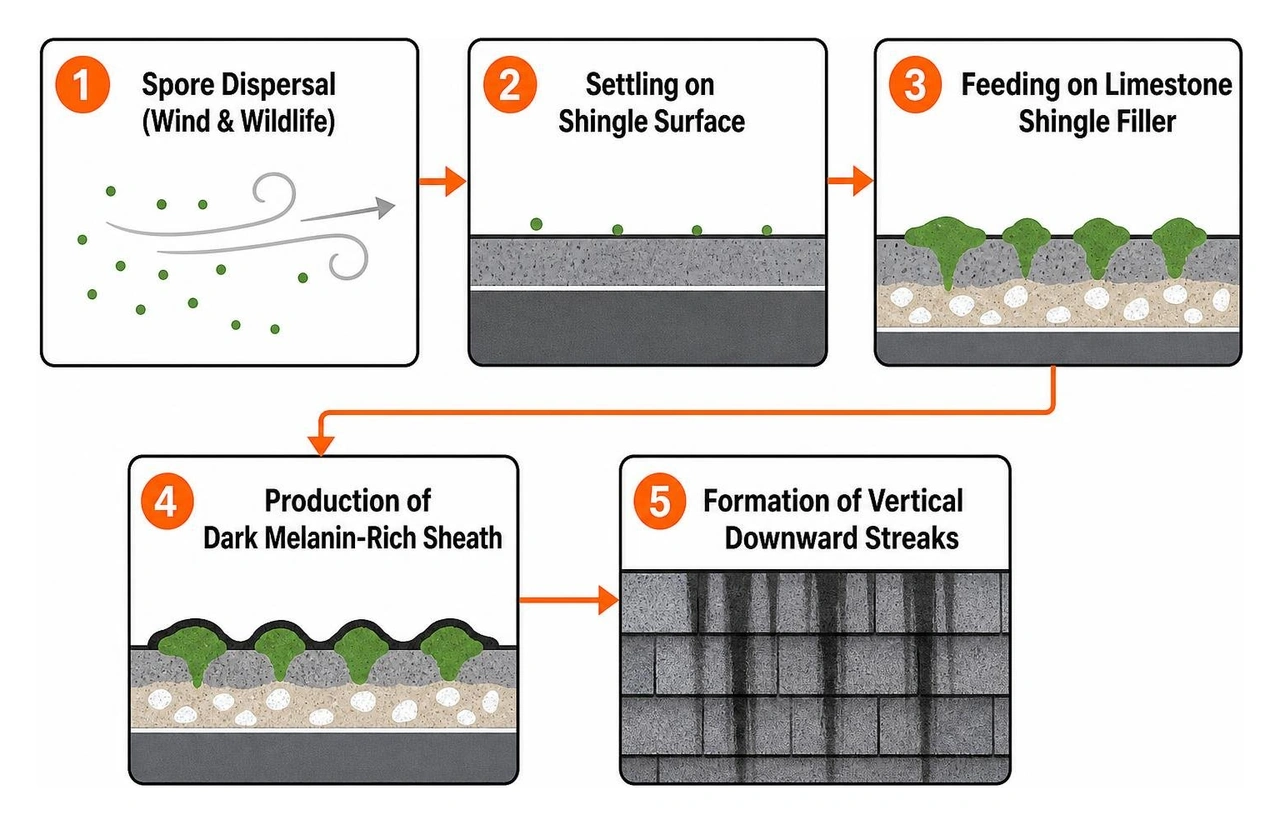
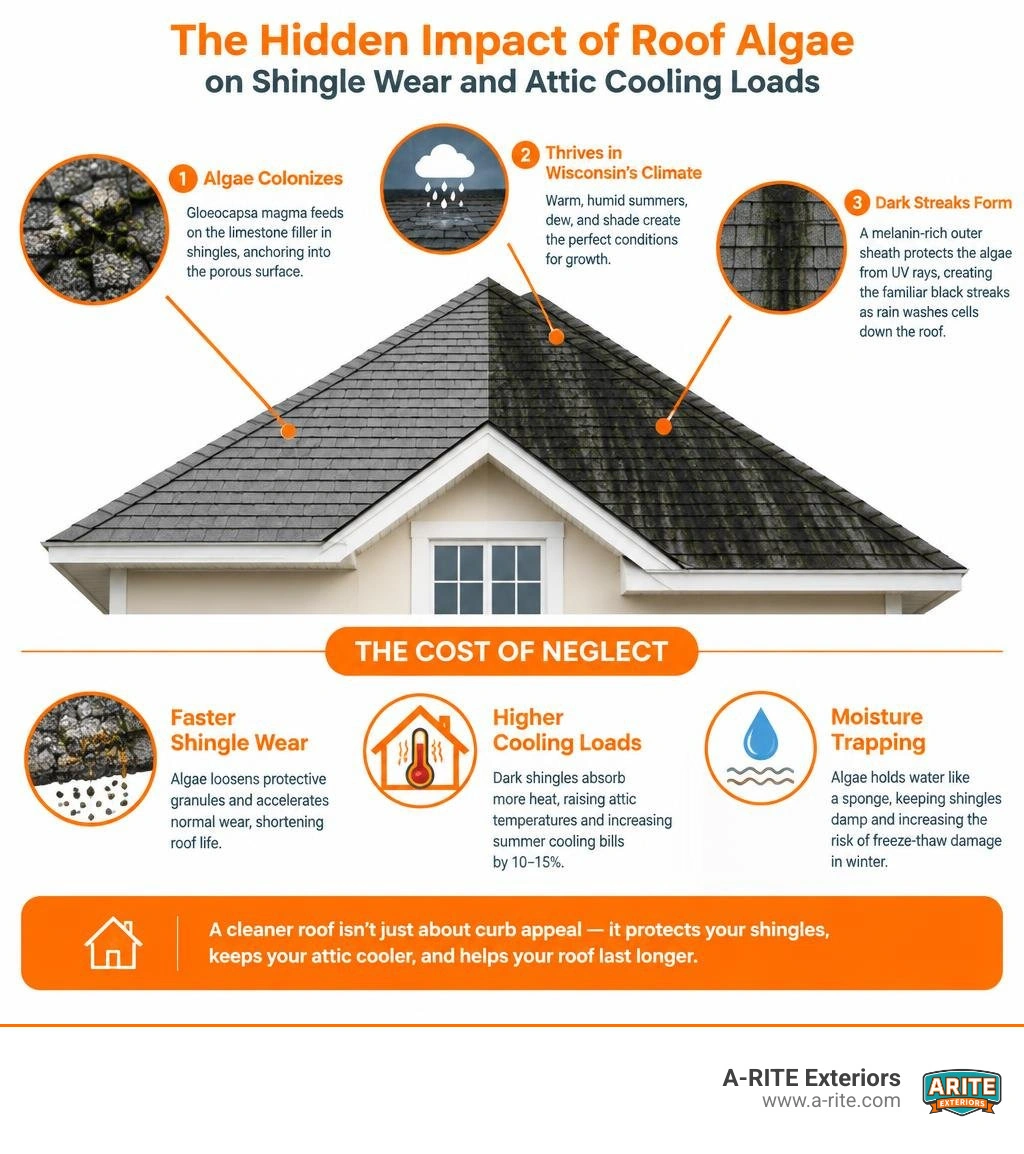
Modern asphalt shingles are manufactured using fiberglass mats embedded with asphalt and limestone filler, which provides weight, structural rigidity, and fire resistance. Unfortunately, Gloeocapsa magma feeds directly on this calcium carbonate limestone content. As colonies consume the filler, they anchor themselves into the porous matrix of the shingle.
Wisconsin’s regional climate accelerates this biological activity. Our warm, humid summers, heavy morning dew cycles, breezes carrying moisture off nearby inland lakes and rivers, and dense pine and hardwood canopies produce an ideal microclimate for fungal and algae reproduction.
North-facing slopes and heavily shaded sections of a roof receive significantly less direct sunlight throughout the day. Because morning condensation and rainwater take hours longer to evaporate from these shaded planes, the colonies gain an extended window of dampness required to spread.
To protect its internal cellular structure from harsh ultraviolet radiation during midday sun exposure, the organism develops a dark, pigmented outer sheath. This melanin-rich barrier functions like sunscreen for the colony, giving the roof its recognizable, soot-black vertical streaks as rain washes dead cells and active spores down the slope.
Understanding the Biology of Gloeocapsa Magma
Microscopic spores are lightweight and resilient, drifting effortlessly across neighborhoods. If a nearby home in Weston or Rib Mountain develops an active roof bloom, neighboring roof slopes will likely encounter spore accumulation within several seasons.
Once settled, Gloeocapsa magma begins multiplying. The characteristic vertical pattern develops because rainwater continually washes the multiplying cells downward toward the eaves. While the organism starts out microscopic, visible colonies merge over several growth seasons.
Across Wisconsin, biological growth begins actively multiplying in late spring following the thaw, peaks during the hot and humid months of July and August, and goes dormant during the sub-freezing winter months before resuming its cycle the following spring.
Are Black Roof Streaks Just a Cosmetic Issue or Can They Damage Shingles?
A common misconception is that dark roof discoloration is purely an aesthetic defect. While it certainly harms exterior curb appeal (often lowering perceived home property value by 5 to 10 percent in real estate evaluations), untreated biological growth actively compromises shingle performance.
Left unmanaged, an algae infestation can shorten a roof's typical 25-year service life down to 15 to 20 years. Shingle longevity commonly varies by product, installation, ventilation, maintenance, and weather exposure, but biological organisms accelerate natural wear through three distinct physical mechanisms:
- Granule Loosening: As algae colonies feed on limestone fillers, their micro-filaments wedge beneath the protective mineral granules. Over time, this loosens the ceramic-coated granules that shield the asphalt core from sun exposure, resulting in premature granule shedding into the gutters.
- Thermal Heat Absorption: Light-colored or standard reflective shingles are engineered to reflect solar radiation. Dark, algae-coated shingles absorb excess solar energy instead, driving attic temperatures upward and increasing summer cooling bills by 10 to 15 percent.
- Moisture Trapping: Biological colonies hold onto moisture like a sponge, keeping shingle surfaces damp long after rainfall ceases.
When biological growth is ignored for years, moisture intrusion can eventually reach the roof deck. Structural water damage that rots underlayment and plywood decking can cost thousands of dollars, and severe cases can cost much more to fully remediate. Understanding what is under your shingles and why the underlayment and decking matter is vital for identifying vulnerabilities before moisture breaches your home’s interior envelope. For additional scientific context, homeowners can review this guide on removing mold and algae from roof shingles.
Moisture Retention and Freeze-Thaw Damage
Wisconsin winters subject exterior building materials to intense freeze-thaw cycles. When Gloeocapsa magma, moss, or lichen hold ambient moisture against the edges of shingles, that water freezes and expands as temperatures plunge below zero.
This cyclical expansion creates micro-fissures in the asphalt base, gradually lifting shingle tabs and breaking the factory seal strip. Once the seal is broken, high winds and winter blizzards can more easily tear or crease individual tabs. Homeowners should understand how storms affect roof shingles when evaluating how environmental weathering and biological growth combine to degrade a roof.
Energy Inefficiency and Attic Heat Buildup
A clean shingle reflects a significant portion of the solar spectrum. When black streaks spread across an entire roof slope, the dark surface turns the roof into an unintended heat sink.
Comparing dark vs light shingles and thermal performance shows how shingle coloration alters attic heat dynamics. When black algae artificially darkens a light or medium-toned roof, air conditioning systems must cycle longer to offset the radiant heat penetrating the attic floor.
What Is Soft Washing and Why Is High-Pressure Washing Dangerous for Roofs?
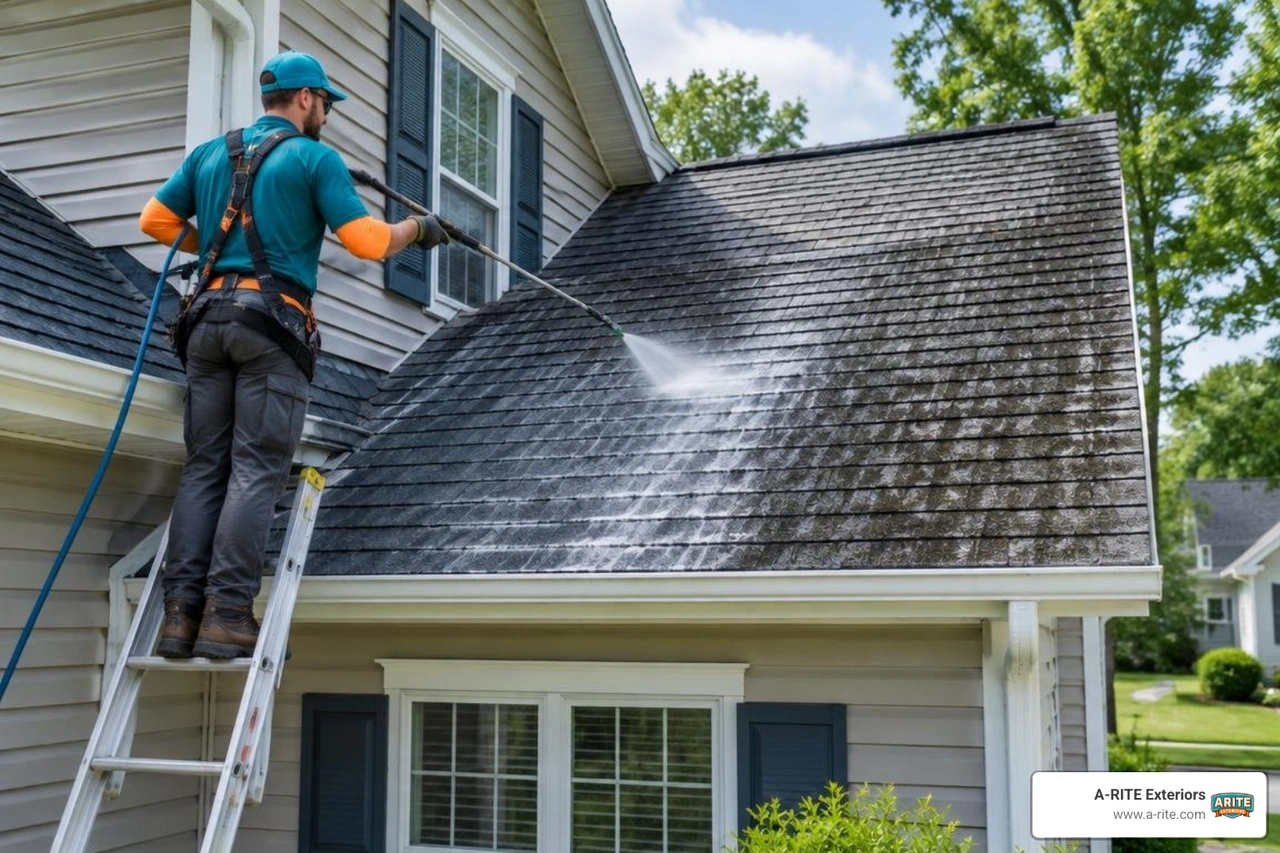
When homeowners notice black streaks, their initial instinct is often to use a standard pressure washer or hire a general contractor with power-washing gear. High-pressure washing should never be used on an asphalt shingle roof.
Standard pressure washers operate at 1,500 to 4,000+ PSI (pounds per square inch). Directing high-pressure water onto asphalt shingles strips away thousands of protective mineral granules instantly, exposes the delicate asphalt substrate, breaks factory adhesive bonds, and can blast water underneath shingle laps straight into the roof decking. Furthermore, high-pressure washing on shingles immediately voids major manufacturer warranties.
The only safe, manufacturer-approved method for cleaning asphalt shingles is soft washing.
Soft washing utilizes high-volume, low-pressure delivery systems operating under 100 PSI (roughly equivalent to the force of a standard garden hose). Rather than using mechanical force to dislodge stains, soft washing relies on specialized, biodegradable algaecidal treatments formulated in accordance with the Asphalt Roofing Manufacturers Association (ARMA) standards. The solution neutralizes algae, moss, and lichen at the spore level without disturbing mineral granules.
| Comparison Feature | Soft Washing | High-Pressure Washing |
|---|---|---|
| Operating Pressure | Low pressure (< 100 PSI) | High pressure (1,500–4,000+ PSI) |
| Primary Cleaning Action | Chemical spore eradication | Mechanical water blasting |
| Manufacturer Warranty Safe | Yes (ARMA compliant) | No (Voids shingle warranties) |
| Granule Retention | Granules stay intact | Causes severe granule loss |
| Longevity of Results | Typically 2 to 5 years | Typically 6 to 18 months |
| Risk of Water Intrusion | Minimal to none | High risk beneath shingle laps |
Federal agencies and historical building preservation guidelines emphasize gentle, chemical-based cleaning methods over abrasive force for long-term envelope maintenance; consult this historical research on dwelling maintenance and preservation for foundational exterior preservation standards.
How Professional Soft Washing Protects Your Roofing System
A professional soft-wash treatment follows a disciplined, multi-stage process designed to protect both the roofing assembly and the surrounding property:
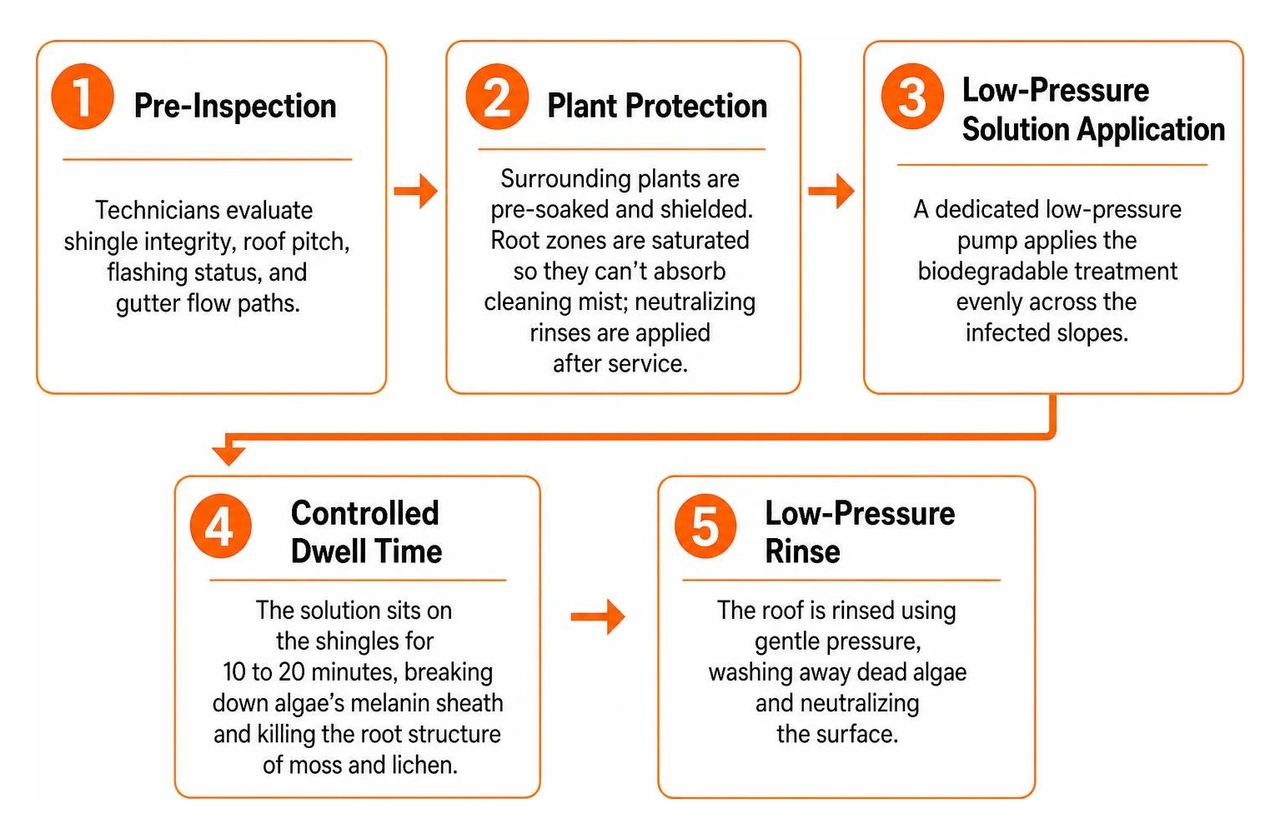
- Pre-Inspection: Technicians evaluate shingle integrity, roof pitch, flashing status, and gutter flow paths.
- Plant Protection: Surrounding shrubs, flowerbeds, and turf are pre-soaked with clean water and shielded. Pre-wetting fills plant root zones so they cannot absorb stray cleaning mist, and neutralizing rinses are applied after service.
- Low-Pressure Solution Application: A dedicated low-pressure pump applies the biodegradable treatment evenly across the infected slopes.
- Controlled Dwell Time: The solution sits on the shingles for 10 to 20 minutes, breaking down the algae’s melanin sheath and killing the root structure of moss and lichen.
- Low-Pressure Rinse: The roof is rinsed using gentle pressure, washing away dead algae and neutralizing the surface.
Because soft washing destroys the root structures and spores rather than just removing visible surface layers, results typically last 2 to 5 years, compared to just 6 to 18 months for high-pressure washing. For most homes in Central Wisconsin surrounded by trees or near lakes, scheduling a professional soft wash every 3 to 4 years keeps organic growth under control.
How Can Wisconsin Homeowners Know If a Roof Needs Cleaning, Repair, or Replacement?
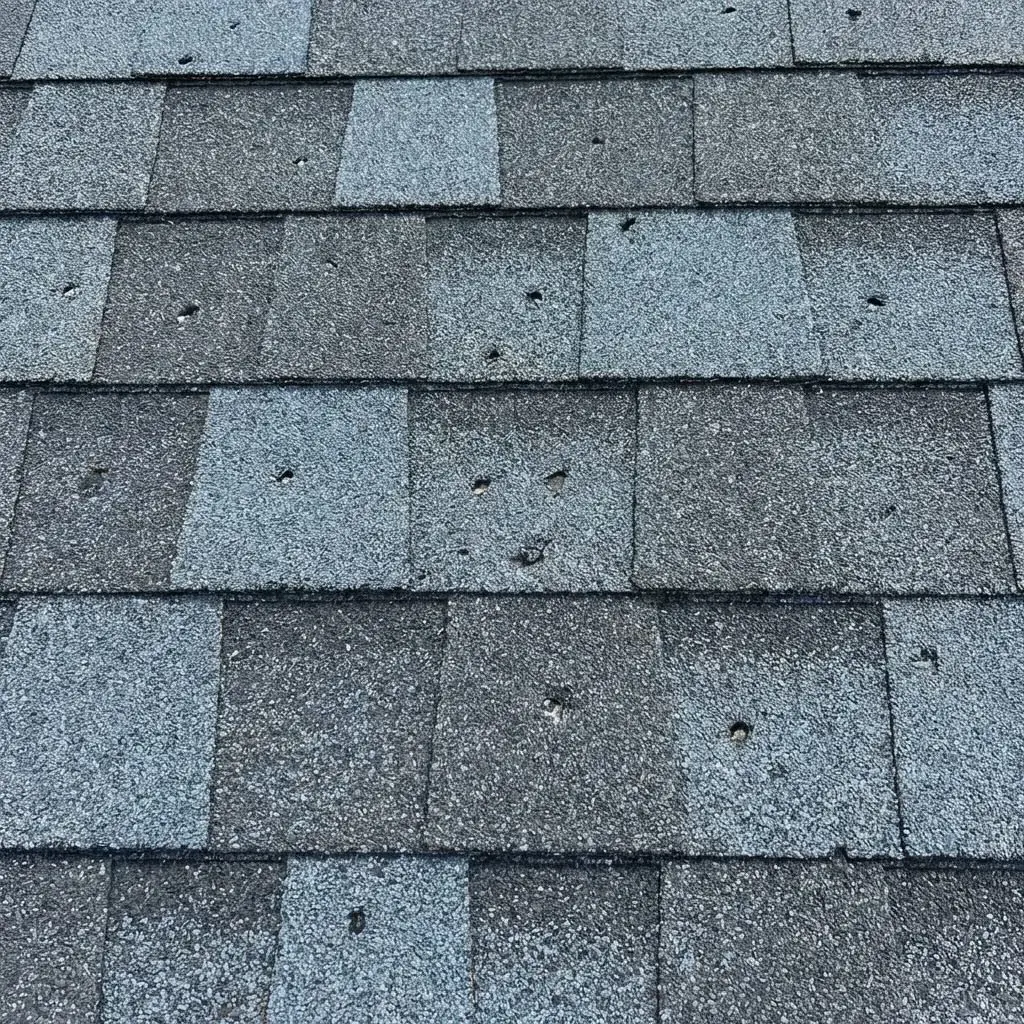
Not every stained roof simply needs a wash. In some instances, black streaks conceal advanced material degradation that requires repair or full replacement.
Knowing how often roofs should be inspected helps homeowners catch structural issues before minor leaks turn into interior rot. Understanding signs of hidden roof damage is essential when deciding between cleaning and construction work.
When Cleaning Is the Right Choice
Cleaning is ideal if:
- Shingles lie completely flat with intact seal strips.
- Granule coverage is thick and uniform across all slopes.
- There are no soft spots on the decking when walking the roof.
- Discoloration is limited to surface streaks without curling or cracking.
When Roof Repairs or Replacement Are Required
A roof needs more than cleaning if:
- Shingle edges are cupped, curled, or brittle to the touch.
- You observe bald patches where the black asphalt underlayer is exposed.
- Roof valleys show heavy granule loss or cracked shingles.
- Shingles are missing following strong windstorms.
- Attic decking exhibits water staining, active drips, or localized sagging.
If you are uncertain whether your roof can handle cleaning, reviewing how to know if your roof needs to be replaced or just repaired will help clarify your options. When underlying materials are sound, focused roof repairs can fix localized damage. If the system is approaching the end of its useful service life, planning a complete roof replacement is the most cost-effective long-term path.
A typical full asphalt roof replacement generally ranges from the upper four figures to mid five figures, depending on total roof square footage, roof pitch, number of existing layers to tear off, decking replacement needs, chosen shingle grade, and installation labor. When comparing contractor estimates, keep in mind that a lower price may reflect differences in materials, scope, cleanup, warranty coverage, or installation details.
Long-Term Roofing Solutions and Energy Upgrades
When replacing an aging roof in Wisconsin, you can choose materials engineered to prevent Gloeocapsa magma growth permanently. Modern algae-resistant architectural shingles incorporate copper- or zinc-infused ceramic granules evenly blended throughout the shingle surface. Over decades of rainfall, these granules release microscopic amounts of metal ions that inhibit algae spores from establishing colonies, backed by manufacturer streak-resistance warranties lasting 10 to 25 years.
Investing in the best roofing system for Wisconsin weather includes matching durable shingles with an effective ventilation and insulation package. When installing high-performance shingles, some architectural shingles are rated up to 110 to 130 mph when installed as part of the required system, providing reliable protection against severe Midwest wind events.
Pairing roof replacement with upgraded attic insulation helps balance attic temperatures, minimize winter ice dams, and lower summer cooling demand. Our team specializes specifically in professional attic insulation to optimize thermal performance.
Homeowners may qualify for Focus on Energy rebates. These rebates are for qualifying insulation and air-sealing work (such as attic insulation, air sealing, wall insulation, foundation insulation, duct sealing, and qualifying DIY attic insulation and air sealing), not for roof replacement itself. Rebate amounts and eligibility rules change over time, and homeowners should confirm current program rules before starting work.
Regarding federal energy tax credits, current IRS guidance shows that the Section 25C Energy Efficient Home Improvement Credit was available for qualifying improvements placed in service through December 31, 2025. Homeowners should consult a qualified tax professional to confirm active tax incentive rules.
To make major exterior improvements accessible, financing options are available for qualifying homeowners. Loan amounts up to $100,000 unsecured may be available, with final approval, rates, and terms based on lender review and credit qualification. Example terms and program details can be reviewed directly on our financing page through Service Finance.
How Can You Prevent Algae Streaks from Returning to Your Roof?
Once your roof is clean or newly installed, proactive maintenance will slow the return of airborne spores and extend the interval between washings:
- Install Metal Ridge Strips: Installing a 2- to 4-inch strip of pure zinc or copper along the roof ridge just below the cap shingles is one of the most effective preventative measures. Every time it rains, water oxidizes the metal, washing microscopic ions down the shingles. These ions make the surface inhospitable to algae spores for 15 to 20 feet down-slope.
- Trim Overhanging Tree Limbs: Cut back tree branches to eliminate heavy canopy shade and allow direct sunlight to reach the shingles. Increased UV exposure and unobstructed wind circulation help morning dew evaporate rapidly.
- Keep Gutters Clear: Clogged gutters trap standing water and saturate lower shingle edges. Learning how gutters help prevent water damage ensures moisture drains smoothly away from roof eaves.
- Ensure Adequate Attic Ventilation: Proper soffit-to-ridge airflow prevents heat and humidity from getting trapped under the roof deck, reducing thermal stress on shingles.
- Perform Regular Debris Removal: Use a leaf blower on low power or a soft-bristle broom to remove accumulated pine needles, leaves, and twigs from valleys before organic compost can form.
Ridge Metal Strips and Chemical Prevention
When installing copper or zinc strips along the ridge line, use compatible, corrosion-resistant roofing nails (such as copper nails for copper strips or hot-dipped galvanized nails for zinc) sealed with roofing-grade elastomeric sealant. Avoid using standard galvanized nails on bare copper, as dissimilar metals trigger galvanic corrosion that leads to roof leaks.
What Are the Most Common Questions About Wisconsin Roof Cleaning?
Does homeowners insurance cover professional roof cleaning for black streaks?
Standard homeowners insurance policies do not cover the cost of removing roof algae or black streaks. Insurance is designed to cover sudden, accidental physical losses, such as hail punctures, fallen trees, or wind-torn shingles, rather than routine maintenance or cosmetic wear. However, keeping your roof clean and well-maintained helps protect shingle integrity, preventing secondary structural leaks that could complicate future claims.
Will roof soft washing solutions harm my lawn, shrubs, or flowerbeds?
When performed by experienced professionals, soft washing is completely safe for residential landscaping. Technicians protect plants by pre-saturating soil and foliage with clean water, applying plant wash neutralizers, diverting downspout runoff away from delicate garden beds, and thoroughly rinsing all vegetation post-treatment.
Can I clean black streaks off my roof myself using a pressure washer or bleach?
We do not recommend DIY roof cleaning. Walking on a wet, algae-covered roof poses severe slip-and-fall hazards. High-pressure washing will permanently strip protective granules and void your shingle warranty, while homemade bleach mixtures applied improperly can corrode metal valley flashing, damage aluminum gutters, bleach painted siding, and kill surrounding landscape plants. ARMA guidelines consistently advise relying on trained professionals with dedicated low-pressure delivery systems and balanced algaecides.
What Should You Do Next to Protect Your Wisconsin Roof?
Black streaks on your roof are a clear sign that Gloeocapsa magma algae is actively feeding on your shingles. While these dark stains begin as a cosmetic blemish that harms curb appeal, unaddressed biological colonies accelerate granule shedding, increase summer cooling loads, and leave your roofing materials vulnerable to winter freeze-thaw damage.
Whether your shingles require low-pressure soft washing to restore their appearance and function, targeted repairs to fix damaged tabs, or a full replacement with advanced algae-resistant shingles, taking proactive steps today preserves your home’s structural envelope.
If your roof is showing dark streaks, granule loss, or signs of storm weathering, contact us today. Our experienced team will evaluate your shingle condition, examine your attic ventilation, and recommend the right weather-resistant solution to protect your Central Wisconsin home for decades to come.