
Why the Signs of Hidden Roof Damage Are So Easy to Miss
The signs of hidden roof damage are often invisible from the street, until they become very expensive.
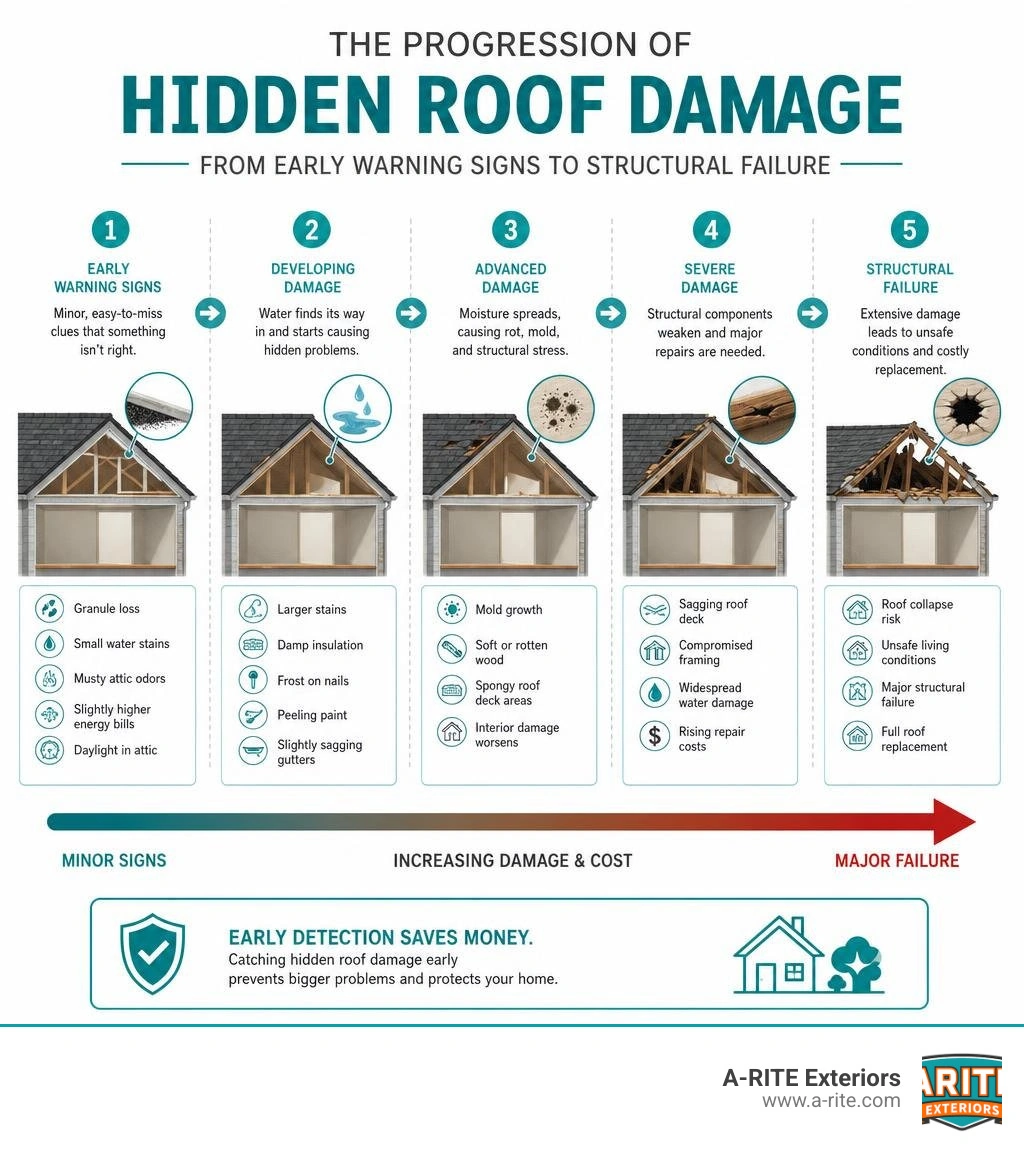
Here is a quick summary of what to look for:
Top signs of hidden roof damage:
- Granule loss (black, sand-like material collecting in your gutters or at the base of downspouts)
- Water stains on ceilings or walls (faint yellow or copper-colored rings, even ones that seem to dry up and disappear)
- Musty smells in the attic or upper floors (a sign of trapped moisture or early mold growth)
- Rising energy bills (wet attic insulation loses its thermal resistance, forcing your HVAC to work harder)
- Daylight in the attic (pinpricks of light visible through the roof deck on a sunny day)
- Curling, cupping, or shifted shingles (often only visible with binoculars from the ground)
- Frost or "shiners" on attic nails (a sign of moisture escaping from the living space into a cold attic)
- Sagging gutters or soft fascia boards (can indicate rotted wood caused by long-term water backup)
- Peeling interior paint near rooflines (a downstream sign of an upstream moisture problem)
- Spongy or soft spots on the roof deck (a sign of long-term water intrusion into the structural framing)
Most homeowners don't notice these warning signs until a bucket is sitting on the living room floor. By then, what started as a minor issue has often grown into a much larger and more costly problem. Research suggests that 90% of major roof problems begin as hidden damage that isn't visible without a closer look.
Wisconsin weather makes this worse. Freeze-thaw cycles, ice dams, heavy snow loads, and severe hail can quietly compromise a roof over months, sometimes years, before anything shows up inside your home.
I'm Bryan Londerville, founder of A-RITE Exteriors, and I've been helping Central Wisconsin homeowners identify and address signs of hidden roof damage since 2002, from storm damage inspections to full roof replacements and attic performance work. In this guide, I'll walk you through exactly what to look for, where to look, and when to call a professional before a small problem becomes a big one.
Signs of hidden roof damage word roundup:
Ground-Level Clues: Spotting Signs of Hidden Roof Damage
You do not need to climb a tall ladder to start looking for signs of hidden roof damage. In fact, we always recommend keeping your feet safely on the ground and using a pair of binoculars to inspect your home's exterior. This simple habit, especially after severe weather, can reveal the early indicators of a failing roof system.
Granule Loss and Gutter Sand
Asphalt shingles are coated with mineral granules that serve a vital purpose: they protect the underlying asphalt from harsh ultraviolet (UV) rays. Without these granules, the sun's intense heat rapidly degrades the shingle, causing it to dry out, crack, and leak.
Over time, shingles naturally shed these granules as they age, but accelerated granule loss is a major red flag. When you clean your gutters or check your downspout discharge areas, look for piles of coarse, dark debris that resembles black sand. If your gutters are loaded with this material, your shingles are losing their protective armor. While a typical shingle lifespan varies by product, installation, ventilation, maintenance, and weather exposure, heavy granule loss is a clear sign that your roof's defense system is wearing thin.
Subtle Shingle Shifts and Wind Creasing
High winds in Central Wisconsin can cause damage that is incredibly deceptive. When strong gusts sweep across your roof, they can create "wind uplift." This force lifts the shingles and breaks the factory sealant strip underneath.
Once the seal is broken, the shingles may settle back down and look completely flat and normal from the ground. However, they are no longer bonded to the roof. The next windstorm can easily drive rain horizontally underneath them. Additionally, this constant lifting can create micro-tears and wind creasing along the top edge of the shingle.
While some architectural shingles are rated up to 110 to 130 mph when installed as part of the required system, repeated exposure to severe weather will eventually compromise even the strongest roofs. To learn more about identifying storm-related issues, read our guide on Identifying 4 Common Signs of Hail Damage.
The Attic Diagnostic: Uncovering Hidden Roof Leaks
If the shingles are the shield of your home, the attic is the early warning system. Many of the most reliable signs of hidden roof damage can only be found by climbing into your attic with a high-powered flashlight.
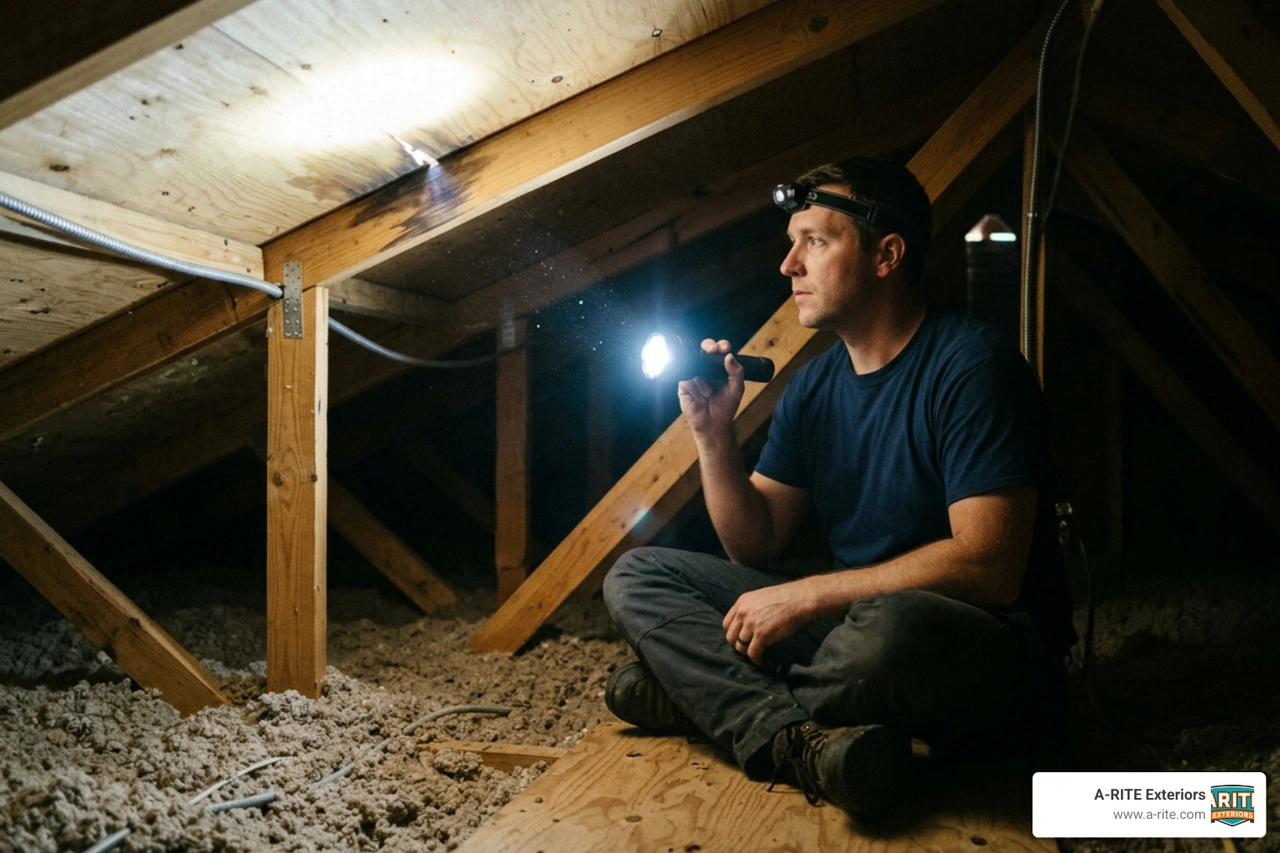
The Attic Light Test for Signs of Hidden Roof Damage
One of the easiest ways to spot a physical breach in your roof is the "Light Test." On a bright, sunny afternoon, head up into your attic and turn off all the lights. Give your eyes a minute to adjust to the darkness, and then look up at the underside of the roof deck.
If you see pinpricks of daylight filtering through the wood boards, you have physical gaps in your roof system. If light can get in, water can too. Thanks to surface tension, water can "crawl" along rafters and framing, traveling far from the original entry point before it actually starts dripping. Catching these gaps early is essential; according to EPA guidance on mold and moisture, mold can begin to colonize damp building materials in as little as 24 to 48 hours.
Frosty Nails and the 'Shiner' Phenomenon
During cold Wisconsin winters in Wausau, Stevens Point, or Wisconsin Rapids, you might notice something strange in your attic: nails that look like they are covered in frost or sparkling in your flashlight beam.
In the roofing industry, we call these "shiners." These are nails that missed the wooden rafters during installation and are now exposed to the open attic air. Because these nails are metal, they get incredibly cold. When warm, moist air escapes from your living spaces into the attic, it hits these cold nails and instantly freezes, forming frost.
During a winter thaw, this frost melts, dripping water onto your insulation and ceiling. While this looks exactly like a roof leak, it is actually a sign of poor attic ventilation and air sealing.
Interior Red Flags: Musty Smells and Rising Energy Bills
Sometimes, the roof itself doesn't look damaged, but your home's interior starts dropping subtle clues that something is wrong.
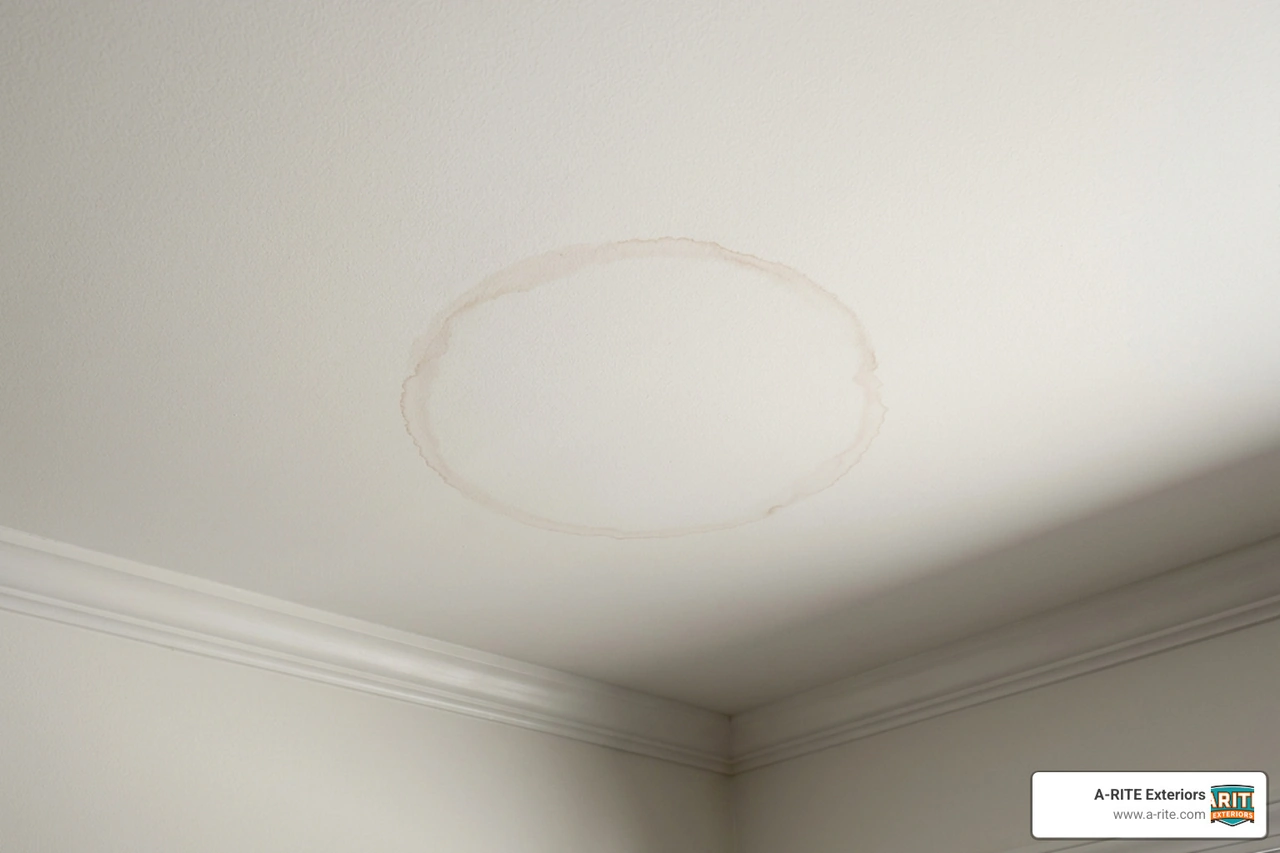
Disappearing Water Stains and Peeling Paint
Have you ever noticed a faint, copper-colored ring on your ceiling that seems to fade away during dry spells, only to reappear after a heavy rainstorm? This is the classic "disappearing water stain" phenomenon.
These stains occur when wind-driven rain forces water into vulnerable areas like flashing, valleys, or unsealed vents. Because the leak only happens when the wind blows from a specific direction, the drywall has time to dry out between storms, making the stain seem to disappear.
Never ignore these spots or simply paint over them. Over time, this repeated wetting and drying will cause bubbling drywall, peeling wallpaper, and structural decay. If you spot these subtle warning signs, it is time to look into professional Services Repairs to stop the moisture at its source.
Compromised R-Value and Spiking Utility Bills
A hidden roof leak doesn't just damage wood and drywall; it also destroys your attic insulation. Fiberglass and cellulose insulation act like giant sponges. They can hold gallons of water before a single drop ever reaches your ceiling.
When insulation gets wet, it compresses and loses its thermal resistance (known as R-value). According to ENERGY STAR guidelines, compressed, wet insulation cannot properly keep heat inside your home during the winter or keep it out during the summer. This forces your HVAC system to work much harder to maintain comfortable temperatures, leading to unexplained spikes in your monthly energy bills.
Weather-Induced Wear: How Storms Cause Invisible Harm
Central Wisconsin is no stranger to severe weather. From summer hailstorms in Wausau to freezing winter temperatures in Minocqua, our roofs take a beating year-round. Often, this weather leaves behind damage that remains completely hidden for months.
Hail Bruising and Fractured Fiberglass Mats
When hail hits an asphalt shingle, it doesn't always leave a gaping hole. Instead, it often creates what we call "hail bruising."
The impact of the hailstone knocks away the protective granules and fractures the internal fiberglass mat of the shingle. From the ground, the shingle might look perfectly fine. However, over the following weeks and months, solar UV radiation will degrade the exposed, fractured area. Eventually, the shingle will crack and leak.
Many insurance adjusters use the "8 hits per square" rule (a square is a 100-square-foot roofing area) to determine if a roof has sustained enough storm damage to warrant a full replacement. If you suspect your home was hit, you can also read about Hail Damage Wausau to understand local storm impacts.
Ice Dams and Freeze-Thaw Cycles in Cold Climates
Wisconsin winters bring over 150 freeze-thaw cycles every year. This constant temperature fluctuation is incredibly tough on roofing materials.
Ice dams are the ultimate winter wild card. They form when heat escapes from your attic, melting the snow on the upper sections of your roof. This meltwater runs down to the colder eave zones, where it refreezes, creating a thick barrier of ice.
As more snow melts, the water backs up behind this ice dam. Because it has nowhere to go, the water is forced backward under the shingles, where it rots the roof deck, ruins insulation, and leaks into your walls. This is one of many reasons Why You Should Not Roof Over Existing Shingles, as multiple layers of shingles make it much easier for ice dams to trap moisture and cause hidden rot.
Proactive Maintenance and Professional Inspections
The best way to deal with hidden roof damage is to prevent it from happening in the first place. A little bit of regular, proactive care can add years to your roof's lifespan.
Simple Maintenance Tasks to Prevent Signs of Hidden Roof Damage
You don't need to be a roofing expert to perform basic preventative maintenance. Here are a few simple tasks every homeowner should do:
- Clean your gutters twice a year: Keep your gutters and downspouts clear of leaves, twigs, and shingle granules. This prevents water from backing up and rotting your fascia boards and roof edge.
- Keep tree branches trimmed: Ensure all tree limbs are cut back to maintain at least a 6-foot clearance from your roofline. This prevents branches from scraping your shingles and keeps pests from easily accessing your roof.
- Remove moss safely: If you notice moss or algae growing on your shingles, do not use a high-pressure washer, which will strip away your shingle granules. Instead, use a soft brush and a mild, roof-safe detergent to gently clean the area.
When to Call a Professional Roofer
While DIY walkarounds and attic checks are incredibly helpful, some things require a professional eye. If you notice structural sagging along your roofline, or if you suspect a hidden leak but cannot find the source, it is time to call in the experts.
Professional roofers use advanced diagnostic tools like thermal imaging cameras and moisture meters. These tools allow us to "see" through drywall and insulation, pinpointing exact moisture pathways without tearing your home apart.
When choosing a contractor, keep in mind that a lower price may reflect differences in materials, scope, cleanup, warranty coverage, or installation details. For guidance on finding a trustworthy local team, read our resource on Who Should I Call for Storm Damage Roof Repair in Wausau or Central Wisconsin.
Frequently Asked Questions about Hidden Roof Damage
How often should I schedule a professional roof inspection?
We recommend scheduling a professional roof inspection at least once a year, ideally in the spring or fall. Spring inspections are perfect for catching hidden damage caused by winter freeze-thaw cycles and ice dams, while fall inspections ensure your roof is ready to handle the upcoming winter weather. You should also schedule an inspection immediately after any major storm event involving high winds or hail.
Can a roof leak even if there are no active ceiling stains?
Yes, absolutely. Your attic insulation acts like a giant sponge, absorbing moisture from slow, hidden leaks for weeks or even months before the water finally saturates the material and drips down to your ceiling. During this time, the trapped moisture is quietly causing wood rot in your rafters and allowing mold to colonize your attic space.
Does homeowners insurance cover hidden storm damage?
Most standard homeowners insurance policies cover sudden and accidental storm damage, including wind-lifted shingles and hail impact. However, they typically exclude damage caused by deferred maintenance, normal wear and tear, or aging materials. This is why thorough, professional documentation of storm damage is so important when filing a claim.
Conclusion
Your roof is your home's first line of defense against the unpredictable Central Wisconsin weather. Ignoring the subtle signs of hidden roof damage can lead to serious structural issues, ruined insulation, and unhealthy mold growth.
At A-RITE Exteriors, we specialize in roof-first, weather-resistant solutions designed to keep your home dry and safe through the harshest winters and storm seasons. If you suspect your attic insulation has been compromised by a hidden leak, our team can help restore your home's efficiency through our professional A-RITE Insulation Services.
To help you understand the value of proactive care, here is a quick comparison of addressing minor issues early versus letting them turn into deferred damage:
| Minor, Proactive Repair | Deferred Damage Cost |
|---|---|
| Replacing a cracked vent seal | Can cost thousands of dollars, and severe cases can cost much more to repair ceiling drywall and structural framing |
| Fixing a single wind-damaged shingle | Can cost thousands of dollars in structural wood rot repairs |
| Clearing a minor ice dam early | Can cost thousands of dollars in mold remediation and insulation replacement |
When a full roof replacement is necessary, costs typically range from the upper four figures to mid five figures, depending on your roof's size, pitch, number of layers, decking, materials, and labor.
To help make these vital home improvements more accessible, financing options are available for qualifying homeowners. Loan amounts up to $100,000 unsecured may be available, with final approval, rates, and terms based on lender review and credit qualification.
Additionally, homeowners may qualify for Focus on Energy rebates. Please note that these rebates are for qualifying insulation and air-sealing work (such as attic insulation, air sealing, wall insulation, foundation insulation, duct sealing, and qualifying DIY attic insulation and air sealing), not for the roof replacement itself. Rebate amounts and eligibility rules change over time, and homeowners should confirm current program rules before starting work.
If you are looking into tax incentives, please note that the Section 25C Energy Efficient Home Improvement Credit was available for qualifying improvements placed in service through December 31, 2025; always consult a tax professional regarding current tax credit eligibility.
Don't wait for a wet ceiling to tell you your roof is in trouble. Contact us at A-RITE Exteriors today to schedule a comprehensive inspection and keep your home protected year-round.