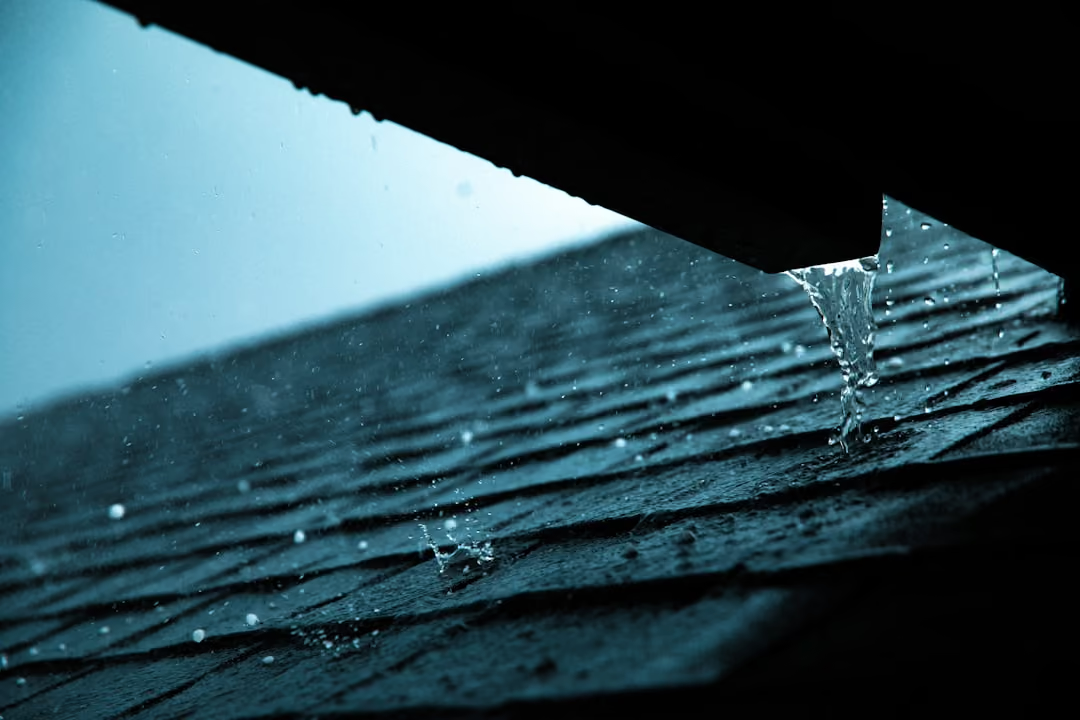
Why Gutters Are One of Your Home's Most Important Defenses Against Water Damage
Understanding how do gutters help prevent water damage is one of the most practical things a homeowner can do to protect their home long-term. Gutters collect rainwater running off your roof and direct it away from your home's foundation, siding, and landscaping before it can cause serious problems.
Here is a quick summary of how gutters prevent water damage:
| What Gutters Do | Why It Matters |
|---|---|
| Collect roof runoff | Keeps hundreds of gallons of rainwater from falling directly against your home |
| Direct water away from the foundation | Reduces soil saturation and the risk of leaks, cracks, or movement in your foundation |
| Channel water through downspouts | Controls where water lands so it can't pool near the structure |
| Protect siding and fascia boards | Prevents rot, staining, and long-term exterior wear |
| Reduce soil erosion around the home | Keeps landscaping and grading stable near the foundation |
A roof on a 1,000-square-foot home can shed roughly 624 gallons of water from just one inch of rain. Without a working gutter system, all of that water lands right next to your home, and the damage it causes can cost thousands of dollars, with severe cases costing much more.
I'm Bryan Londerville, founder of A-RITE Exteriors, and since 2002 I've helped Central Wisconsin homeowners understand how gutters help prevent water damage as part of a complete exterior protection system. In this guide, I'll walk you through exactly how gutters work, what goes wrong when they fail, and what you can do to keep your home protected.
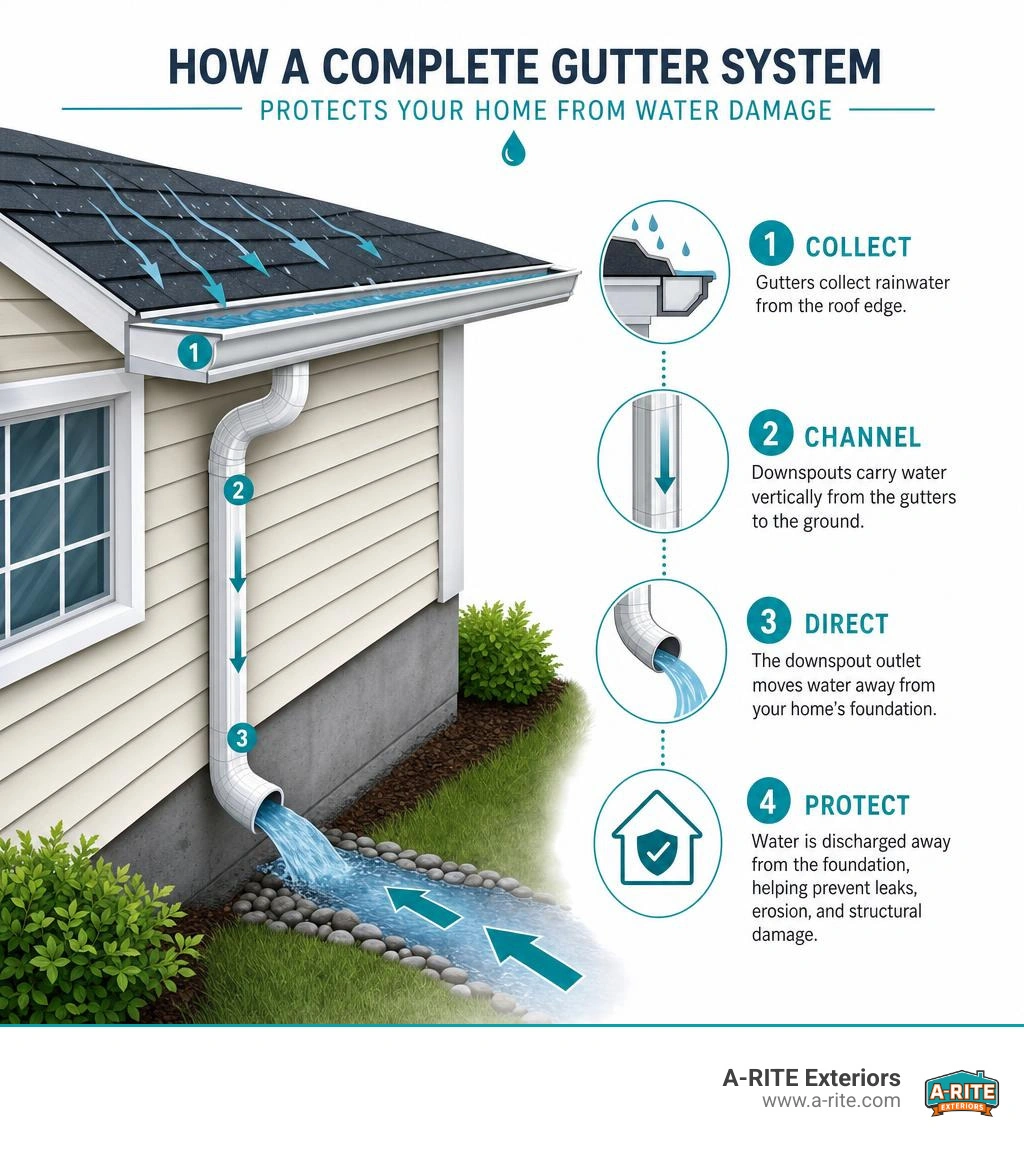
The Primary Purpose of Home Rain Gutters
At its core, a Rain gutter is a horizontal channel installed along the edge of your roofline. Its job is simple: to collect rainwater and melted snow as it slides off your roof, and then guide that water to downspouts that carry it safely away from your home.
Without this system, your roof would act like a giant funnel, dumping massive amounts of water directly onto your siding, windows, and the ground right next to your foundation. In Central Wisconsin, where we get heavy summer storms and thick winter snow, controlling this water flow is essential.
By managing how water leaves your roof, gutters act as the first line of defense for your entire property. They transform a chaotic downpour into a controlled, safe drainage process. This protects everything from your shingles down to the dirt around your basement walls. This is why we always look at gutters as a natural extension of your Services - Roofing system.
How Do Gutters Help Prevent Water Damage at the Roofline?
Many homeowners do not realize that water damage often starts at the very top of the house. Your roof is designed to shed moving water, not hold standing water. When everything is working correctly, gravity pulls water down the shingles and straight into your gutters.
However, when you have clogged gutters, undersized gutters, or poorly sloped gutters, water cannot flow away quickly enough. Instead, it pools in the gutter troughs. This standing water can back up under your shingles, soaking the roof decking and rotting the wood beneath.
In cold weather, this standing water and poor drainage can worsen winter issues. While insulation, air sealing, and attic ventilation are the primary factors in stopping ice buildup, clean, working gutters help manage snowmelt and reduce drainage-related ice issues. If water backs up and freezes at the roof edge, it can lead to some of the 9 Common Types of Damage Caused by Ice Dams, including damaged shingles and ruined fascia boards.
How Do Gutters Help Prevent Water Damage to Your Foundation?
Perhaps the most critical job your gutters perform is foundation protection. Your foundation supports the entire weight of your home, and its worst enemy is excess water.
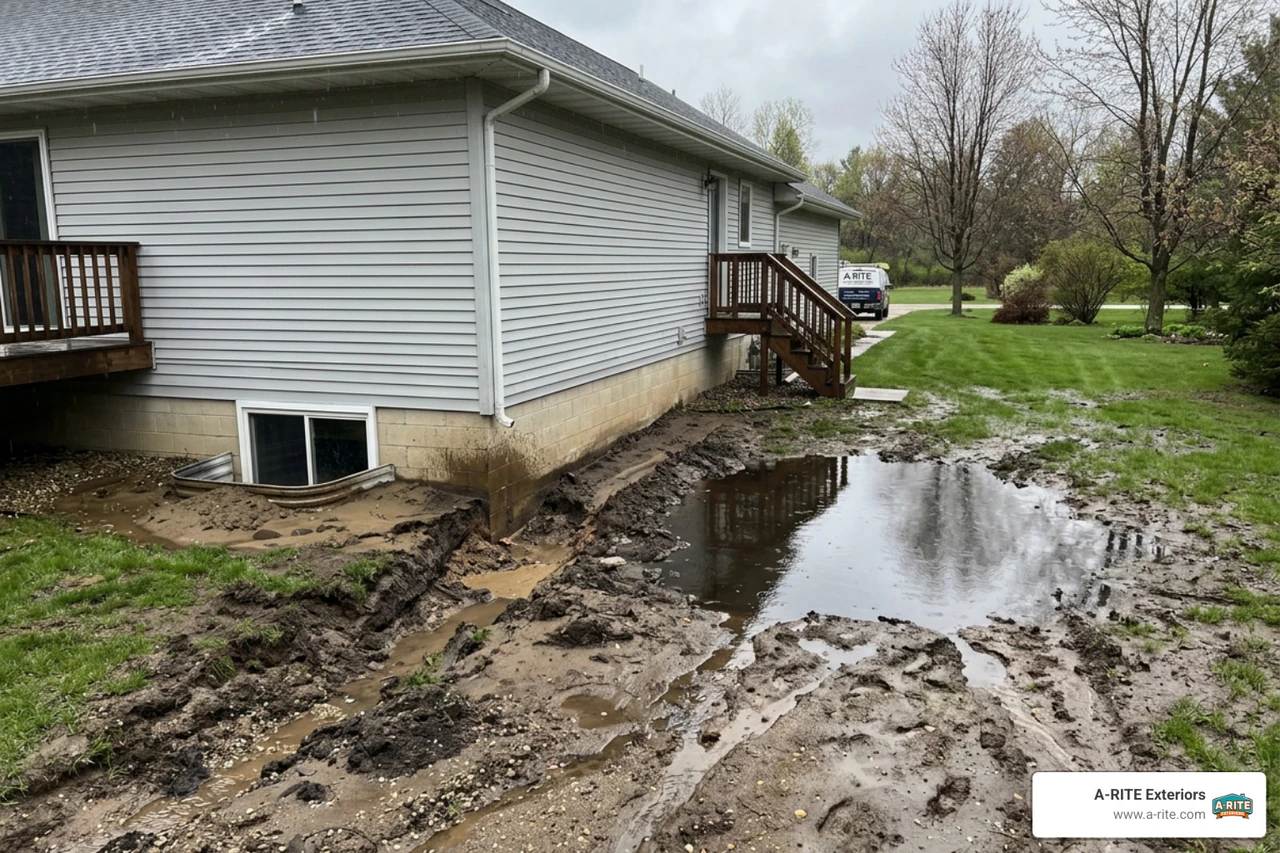
When rainwater drops straight off a roof without gutters, it saturates the soil directly surrounding your foundation walls. This creates a zone of highly saturated dirt right against your home. Over time, this constant moisture weakens the soil, causing it to pack down or wash away entirely. This process can cause your foundation to settle unevenly, leading to stuck doors, cracked drywall, and structural shifting. You can learn more about this connection in this detailed guide on The Importance of Gutters: Protecting Your Home's Foundation.
Managing Hydrostatic Pressure and Soil Erosion
When soil around your home absorbs too much water, it expands. This expansion creates hydrostatic pressure, which is the force of water pushing against your basement or crawlspace walls.
This excess water and pressure can contribute to leaks, cracks, or movement in your foundation. Water will always find the path of least resistance. If there are tiny pores or hairline cracks in your concrete, hydrostatic pressure will force water through them, leading to wet basement floors, damp crawlspaces, and mold growth.
Additionally, uncontrolled roof runoff causes severe soil erosion. It washes away the protective slope of soil around your home, which is supposed to guide surface water away from the walls. Once this soil is eroded, water naturally pools in the low spots, making the saturation problem even worse and putting an extra load on your sump pump.
How Do Gutters Help Prevent Water Damage to Siding and Landscaping?
Gutters do more than just protect the top and bottom of your home; they also shield everything in between. When rain falls off a roof without gutters, it splashes mud, dirt, and water back up onto your siding. This constant splashing leaves ugly stains and introduces mold and mildew spores to your home's exterior.
Over time, this moisture can rot wood siding, ruin paint, and damage window frames. It can also rot the wooden fascia boards that hold your gutters in place.
Your landscaping is also at risk. Heavy sheets of water falling from the roofline can crush expensive shrubs, wash away mulch, and drown flower beds.
| Feature | Home With Working Gutters | Home Without Working Gutters |
|---|---|---|
| Siding & Paint | Clean, dry, and long-lasting | Stained, rotting wood, and peeling paint |
| Fascia & Soffits | Protected from water backup and rot | Exposed to constant moisture and rot |
| Landscaping | Mulch and plants stay in place | Mulch washes away; plants are crushed |
| Basement/Crawlspace | Dry and free of heavy moisture | Damp, prone to leaks and mold growth |
The Importance of Gutter Slope, Downspouts, and Extensions
A gutter system is only as good as its design and installation. To work correctly, gutters must have the proper gutter pitch (or slope). If a gutter is perfectly flat, water will simply pool in the middle instead of flowing toward the downspouts.
Generally, gutters should slope downward about 1/16 to 1/8 of an inch for every foot of run toward the downspouts. This slight angle keeps water moving quickly so it does not sit in the troughs and attract pests or cause sagging.
Downspouts and extensions are the final, crucial pieces of the puzzle. The gutter collects the water, but the downspout carries it down to the ground. If your downspouts simply dump water at the base of your home, you have only moved the problem from the roof to the ground.
That is why downspout extensions are so important. They should carry water at least 3 to 5 feet away from your foundation (and ideally farther if your yard does not slope away from the house). Choosing the right setup is key, which is why we focus on Choosing the Right Gutter Downspout Size for Your Home to handle heavy rain. For more technical details on proper layout, you can review the guide on Gutters and Downspouts | Building America Solution Center.
Essential Gutter Maintenance and Performance Enhancements
To ensure your gutters continue to protect your home, regular maintenance is required. Clogged gutters are often worse than having no gutters at all, because they trap standing water against your roofline and cause heavy, concentrated overflows that accelerate foundation damage.
Here are the key steps to keep your system performing well:
- Clean them regularly: Clean your gutters at least twice a year, once in the spring and once in the late fall after the leaves have dropped.
- Inspect for damage: Look for sagging sections, loose brackets, rusted spots, or leaking joints.
- Check the downspouts: Make sure your downspouts and underground drains are clear of leaves, twigs, and pine needles.
- Look at the slope: Ensure water is not pooling in any sections of the gutter run.
Many homeowners choose to install gutter guards to help manage debris. Gutter guards are covers that sit over your gutters, letting water in while keeping leaves, pine needles, and pests out. While they reduce debris and maintenance significantly, they do not eliminate maintenance entirely or guarantee perfect year-round performance. You will still need to check them occasionally to ensure water is flowing freely. For more advice on keeping your system clean, check out The Importance of Gutter Maintenance for Your Home - Servpro.
Frequently Asked Questions About Gutter Water Protection
How often should gutters be cleaned?
We recommend cleaning your gutters at least twice a year. The best times are late spring, after trees drop their seeds and pollen, and late fall, after all the leaves have fallen. If you have many pine trees or overhanging branches near your roof, you may need to clean them more often to prevent clogs.
Do gutter guards eliminate the need for cleaning?
No, gutter guards do not completely eliminate the need for maintenance. They are excellent tools for reducing debris and maintenance, but fine materials like pine needles, seeds, and silt can still build up over time. You will still need to inspect your gutters occasionally and rinse out any fine debris that makes its way inside.
Can gutters prevent ice dams in Wisconsin winters?
No, gutters do not prevent ice dams. Ice dams are caused by heat escaping from your home into the attic, which melts the snow on your roof. This melted snow runs down to the cold roof edge and freezes.
Clean, working gutters help manage snowmelt and reduce drainage-related ice buildup, but insulation, air sealing, and attic ventilation are the primary factors in preventing ice dams. If you are struggling with heavy ice buildup on your roof, our team can help with professional Services - Ice Dam Removal to safely clear the ice without damaging your shingles.
Conclusion
Your gutter system is one of the hardest-working parts of your home's exterior. By collecting roof runoff and directing it safely away, gutters protect your roof, siding, landscaping, and foundation from serious water damage. Keeping this system clean and properly sloped is one of the best ways to avoid costly repairs down the road.
At A-RITE Exteriors, we specialize in roof-first, weather-resistant solutions built to handle Wisconsin winters and storms. Whether you live in Wausau, Stevens Point, Minocqua, Merrill, Weston, or Mosinee, we are here to help you protect your home.
If you are ready to upgrade your home's protection with a professional seamless gutter installation, contact us today at A-RITE Exteriors Gutter Services to schedule a consultation. We will help you find the right system to keep your home safe, dry, and secure for years to come.