Why Is Choosing the Right Siding Crucial for Wisconsin Winters?
Fiber cement and engineered wood provide the strongest defense against cold-weather impact and repeated freeze-thaw expansion, while premium insulated vinyl offers a practical, budget-conscious alternative for reliable thermal performance. Choosing the right material isn't just about curb appeal; it is an investment in protecting your home's structural framing.
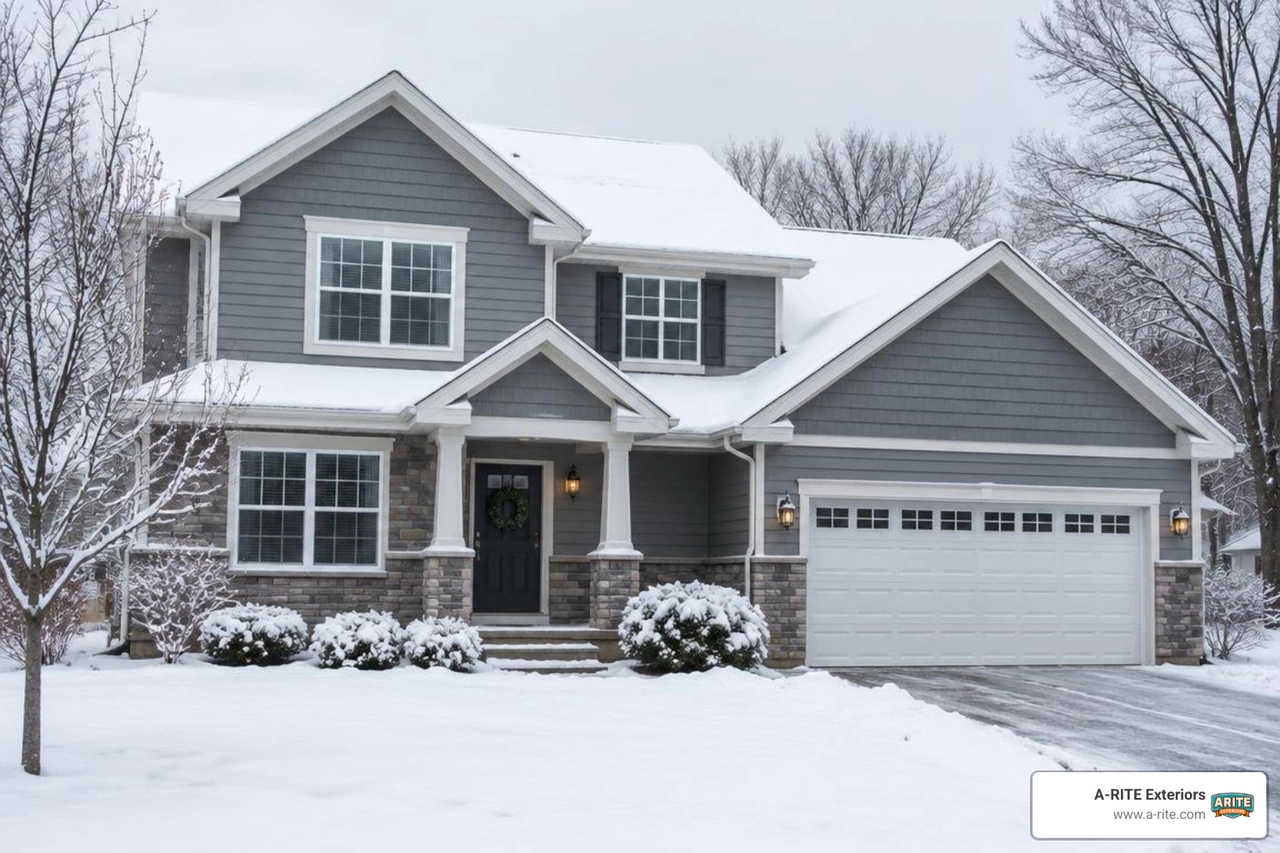
Living in Central and Northern Wisconsin, whether in Wausau, Minocqua, or Stevens Point, means subjecting your home to some of the harshest winter conditions in the country. Between December and March, our exterior walls face sustained sub-zero temperatures, howling winds carrying sleet, massive snowbank drifts, and dozens of rapid freeze-thaw cycles.
Your exterior cladding is your home’s primary shield against structural deterioration, wind-driven moisture, and continuous heat loss. When exterior cladding fails during a brutal cold snap, moisture slips into the wall cavities, freeze-thaw expansion cracks structural sheathing, and indoor heating systems work in overdrive to replace escaping warmth.
How Do Vinyl, Engineered Wood, and Fiber Cement Perform in Sub-Zero Temperatures?
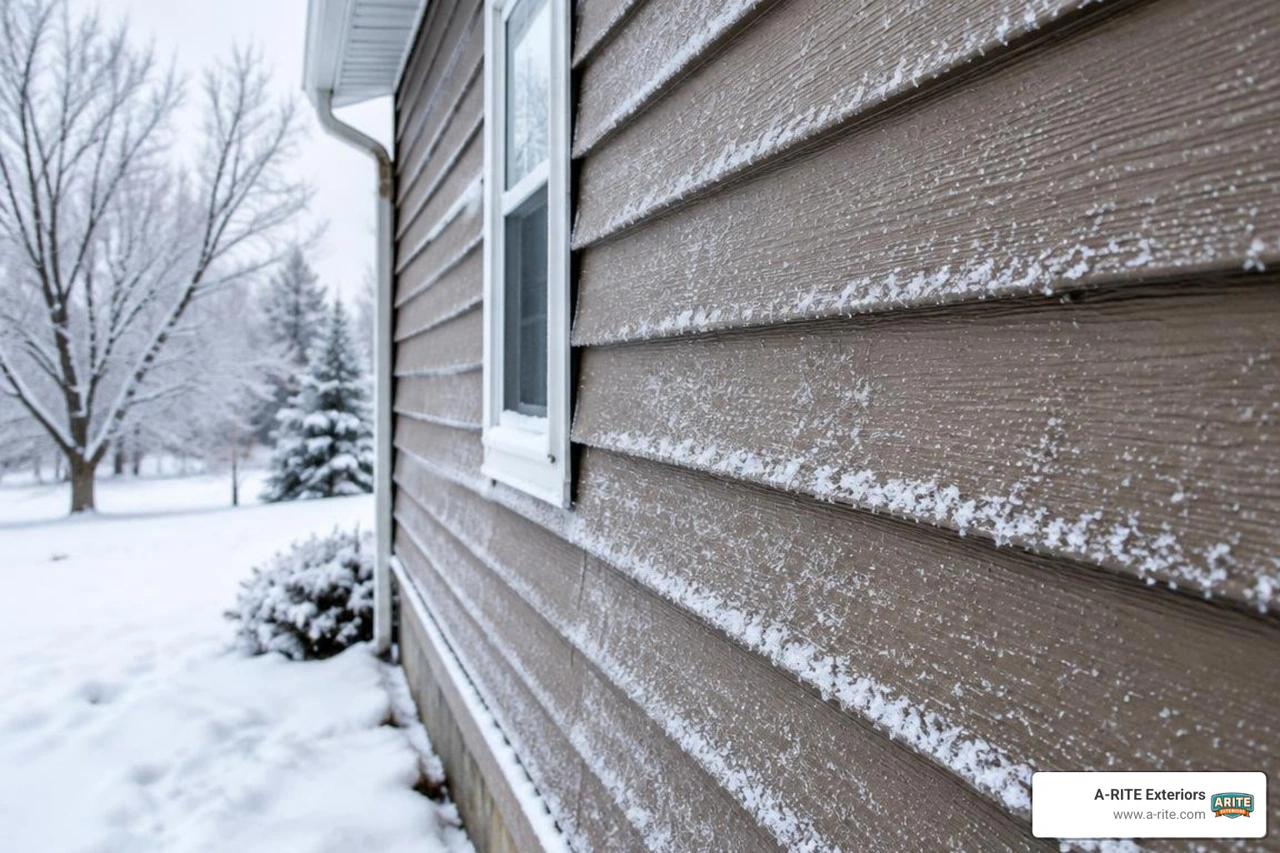
When temperatures plummet to well below freezing across Marathon, Oneida, or Portage County, materials behave very differently at a molecular level:
Vinyl Siding in Deep Cold
Standard polyvinyl chloride (PVC) vinyl siding becomes rigid and brittle as temperatures drop below freezing. In extreme cold, thin-gauge standard vinyl loses its flexibility, making it susceptible to cracking if struck by flying debris, heavy ice chunks, or hail. Modern premium vinyl products use heavier-gauge profiles and impact modifiers that help withstand typical seasonal stress. Understanding how long vinyl siding lasts in Wisconsin often comes down to product thickness and installation quality.
Engineered Wood in Deep Cold
Engineered wood siding combines wood strands or fibers with advanced resins, industrial waxes, and zinc borate binders, pressed under immense heat and pressure. This composition gives engineered wood high tensile strength and natural flexibility. In sub-zero weather, it does not become brittle like unreinforced plastics, helping it absorb direct mechanical stress without shattering as readily as standard vinyl.
Fiber Cement in Deep Cold
Composed of Portland cement, sand, water, and cellulose wood fibers, fiber cement delivers exceptional dimensional stability. It is non-combustible and highly resistant to the deep-freeze embrittlement that affects standard plastics. Because it does not contract or warp noticeably under extreme cold, seams stay tightly aligned throughout the winter months. Insights from the University of Wisconsin Extension guide on sustainable building choices highlight how mineral- and fiber-based exterior products deliver consistent performance and long-term durability in cold northern climates.
Thermal Expansion and Contraction
All siding materials expand in summer heat and contract in winter cold, but their rates of movement vary dramatically:
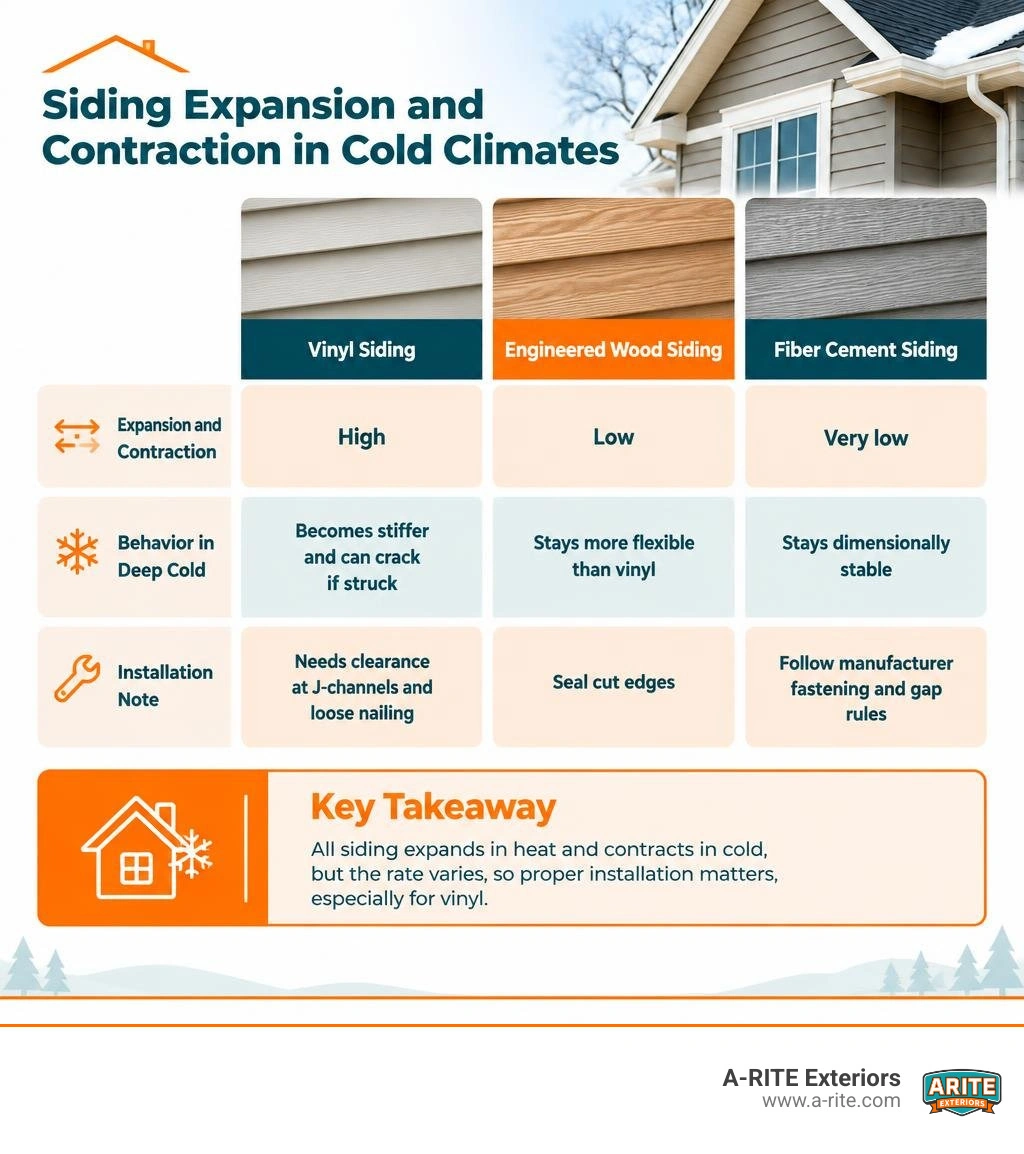
- Vinyl: Has a high thermal expansion rate. Vinyl panels can move noticeably between summer heat and winter cold. If an installer nails vinyl too tightly or fails to leave proper clearance at the J-channels, panels will buckle in summer or pull out of their locking channels during sub-zero snaps.
- Engineered Wood: Exhibits minimal expansion and contraction, moving only slightly along its length with humidity shifts rather than temperature drops.
- Fiber Cement: Has an exceptionally low coefficient of thermal expansion. It generally maintains its shape through sharp overnight temperature swings.
| Metric / Performance Factor | Standard & Insulated Vinyl | Engineered Wood | Fiber Cement |
|---|---|---|---|
| Sub-Zero Brittleness Risk | Moderate to High (standard); Low to Moderate (insulated) | Low | Low |
| Expansion / Contraction Rate | High (requires generous expansion gaps) | Very Low | Minimal |
| Impact Tolerance in Deep Cold | Fair (can crack under direct strike) | High (handles heavy impact well) | High (dense matrix resists chipping) |
| Moisture / Rot Resistance | Highly resistant to surface rot | High (treated with zinc borate and wax) | Highly resistant to fungal decay and rot |
How Impact Resistance Matters During Heavy Winter Storms
During high-wind winter blizzards, siding faces flying tree branches, frozen snow crusts tossed from snowblowers, and windblown hail or ice pellets.
Budget vinyl panels can shatter upon high-velocity winter impact, leaving jagged holes that expose house wrap to moisture. In contrast, engineered wood’s resin-bonded wood matrix can better absorb direct impacts from thrown ice chunks, reducing the risk of cracking. Heavy fiber cement profiles also resist impact damage effectively, though heavy point-impacts can occasionally chip unbacked edges if installed without solid continuous backing.
Which Siding Material Resists Freeze-Thaw Moisture and Ice Dam Damage Best?
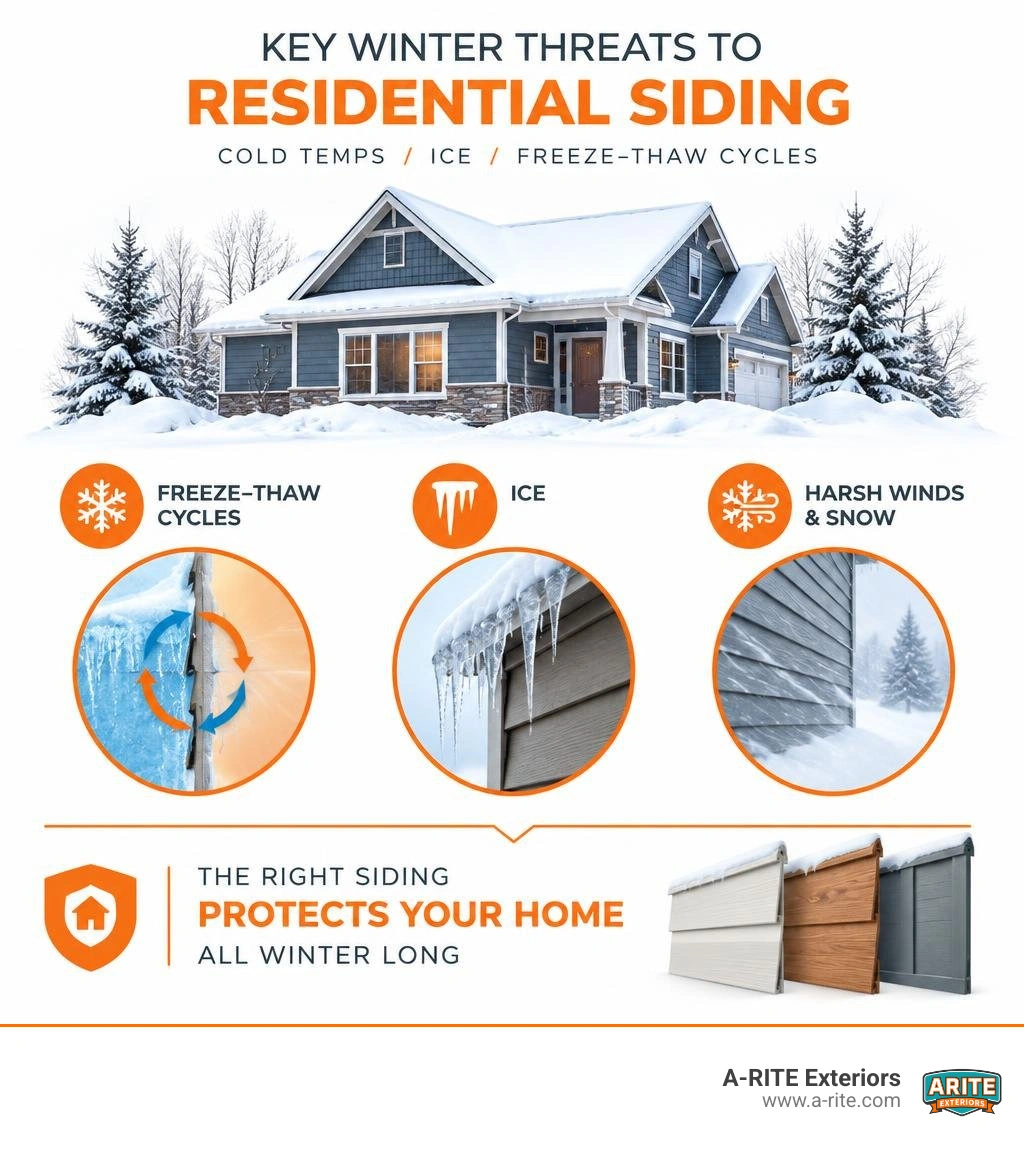
Wisconsin winters are infamous for relentless freeze-thaw cycles. Snow can melt during sunny afternoons, seep into exterior gaps and micro-fissures, and then refreeze overnight. As water turns to ice, it expands and can exert mechanical pressure on cladding panels, sealants, and fasteners.
Moisture Performance Breakdown:
- Fiber Cement: Factory-primed and finished fiber cement panels typically resist liquid water absorption. Because the material is inorganic and cured under high pressure, it is highly resistant to swelling, softening, and rot when snow accumulates near foundation perimeters.
- Engineered Wood: Modern engineered wood uses zinc borate distributed throughout every strand, alongside proprietary edge-seal primers and water-resistant waxes. While it handles snow exposure well, cut edges must be sealed during installation to ensure standing snow against lower walls does not cause localized edge swelling over many years.
- Vinyl: As an inorganic plastic, vinyl typically resists rot, swelling, and water absorption. However, vinyl siding is designed as a loose-hanging, vented rainscreen rather than a watertight seal. Wind-driven snow and driving winter rain can blow behind vinyl laps. If the underlying weather-resistive barrier (WRB) or flashing is compromised, that trapped moisture can rot the underlying wood sheathing unseen.
When winter moisture damage compromises structural framing or exterior sheathing, structural repairs can cost thousands of dollars, and severe cases can cost much more. Recognizing when it is time to replace siding instead of repairing it helps protect your home before moisture rots your wall studs from the outside in.
How Ice Dams and Roof Runoff Affect Siding Integrity
Ice dams form when attic heat warms the upper roof deck, melting snow that runs down and refreezes at the cold eaves. When gutter troughs fill with solid ice, melted water backs up under shingles and cascades down exterior walls.
Prolonged ice dam runoff saturates exterior wall cladding. If fascia wrap, drip edges, or siding transition flashings are improperly detailed, freezing runoff finds its way behind upper siding courses. Over weeks of freezing and thawing, this runoff can saturate wall sheathing, degrade fiberglass insulation inside the walls, and loosen siding fasteners.
How Do Siding Materials Impact Winter Insulation and Energy Efficiency?
Exterior siding is your home's outward defense, but standard cladding by itself provides limited thermal resistance:
- Standard Hollow Vinyl: Provides limited insulation by itself.
- Engineered Wood Lap Siding: Provides limited insulation by itself.
- Fiber Cement Siding: Provides limited insulation by itself.
The Role of Insulated Vinyl and Continuous Foam Sheathing
Standard wood wall studs act as thermal bridges, creating conductive pathways that transfer indoor heat outside. Wood framing can create thermal bridges across a meaningful share of an exterior wall's surface area.
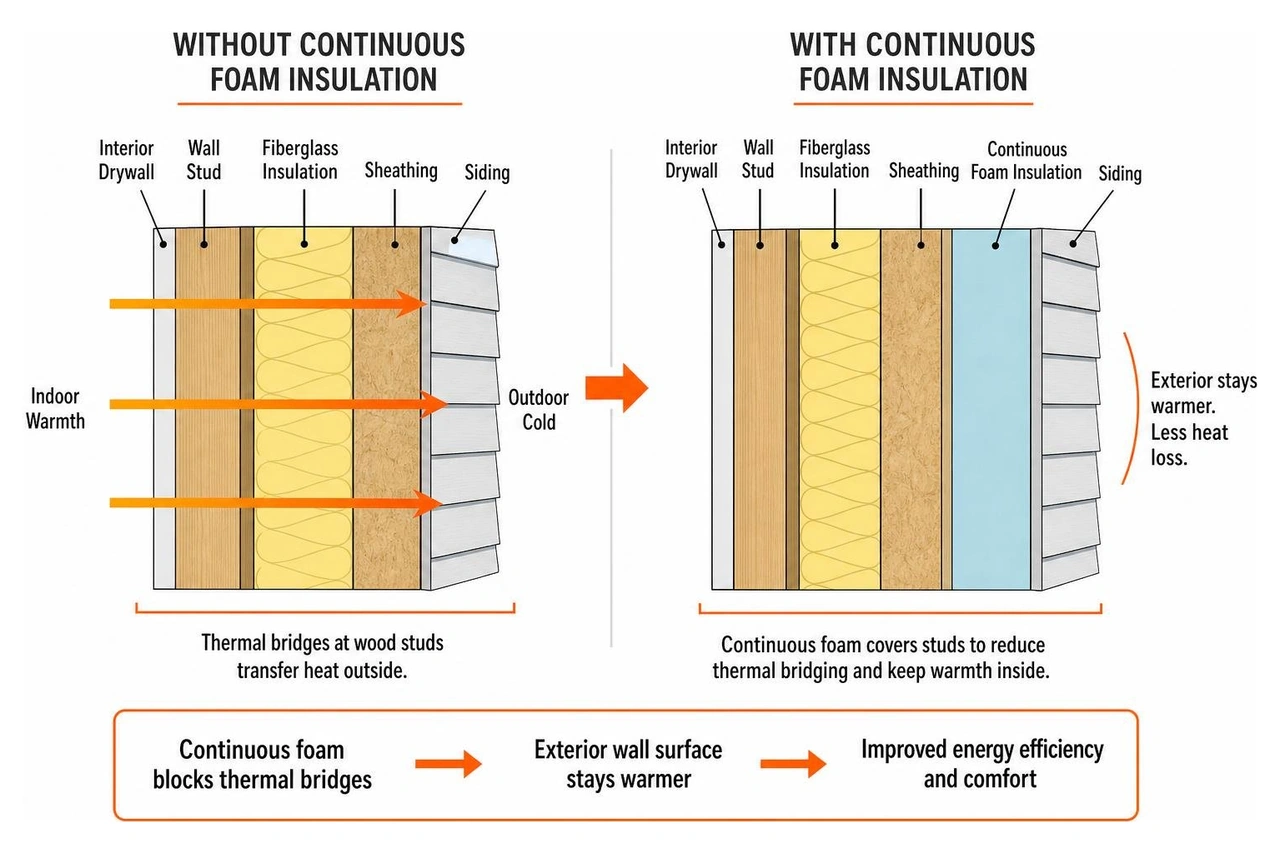
To combat thermal bridging:
- Insulated Vinyl Siding features rigid EPS (expanded polystyrene) foam fused directly to the back of each panel. The foam backing adds insulation and helps create a more continuous layer over wall studs, which can help keep exterior wall surfaces warmer.
- Continuous Rigid Insulation Under Fiber Cement or Engineered Wood: Adding rigid foam board (such as continuous XPS or ISO foam) beneath engineered wood or fiber cement delivers similar thermal break benefits while maintaining the superior impact resistance of rigid lap siding.
Whole-Home Thermal Envelope Considerations
Understanding the right R-factor for Wisconsin homes is essential for helping lower your heating bills during sub-zero January cold spells. While insulated siding reduces wall conduction, true winter comfort requires a complete exterior envelope approach.
Significant winter heat loss can occur upward through the ceiling plane, which is why understanding proper attic insulation R-values and using R-49 to R-60 attic insulation levels recommended by ENERGY STAR for the coldest U.S. climate zones is critical.
Please note: A-RITE Exteriors specializes in roof-first exterior envelope solutions and provides attic insulation only, not wall cavity insulation or other insulation services.
When planning home efficiency upgrades, keep in mind: Homeowners may qualify for Focus on Energy rebates for qualifying insulation and air-sealing work (such as attic insulation, air sealing, wall insulation, foundation insulation, duct sealing, and qualifying DIY attic insulation and air sealing), not for roof replacement itself. Rebate amounts and eligibility rules change over time, and homeowners should confirm current program rules before starting work.
Additionally, for Section 25C (the Energy Efficient Home Improvement Credit), current IRS guidance shows it was available for qualifying improvements placed in service through December 31, 2025. It should not be presented as an active credit for 2026 or beyond unless confirmed by current IRS guidance; we always recommend consulting a qualified tax professional.
What Are the Lifespan, Maintenance, and Total Cost Differences?
Investing in new siding requires balancing upfront investment against ongoing maintenance and total lifespan.
Cost and Lifespan Comparison
Vinyl Siding
- Lifespan: Often several decades, though durability varies by product, installation, ventilation, maintenance, and weather exposure.
- Cost Level: Most affordable upfront material and labor cost.
- Maintenance: Very low; requires annual or bi-annual soft washing to remove mildew and dirt.
- Warranties: Often lengthy, but coverage details, exclusions, and prorating vary by manufacturer and product.
Engineered Wood Siding
- Lifespan: Often several decades with regular upkeep.
- Cost Level: Mid-range; typically higher in total project cost than standard vinyl.
- Maintenance: Moderate; requires periodic inspection of caulked butt joints and repainting over time depending on sun and snow exposure.
- Warranties: Leading manufacturers may offer long limited warranties, sometimes with enhanced early-term coverage and certain hail resistance provisions.
Fiber Cement Siding
- Lifespan: Often several decades when properly installed and maintained.
- Cost Level: Premium; typically higher than standard vinyl due to specialized cutting tools, heavier material handling, and skilled multi-person installation crews.
- Maintenance: Low to moderate; factory-applied color coatings often last many years before repainting is needed; periodic caulking inspections around windows and door trims are required.
- Warranties: Long limited substrate warranties are common among tier-one manufacturers, with terms varying by product and installation requirements.
Upgrading your exterior with professional siding services protects structural framing while maximizing curb appeal and long-term appraisal value. When considering contractor proposals, a lower price may reflect differences in materials, scope, cleanup, warranty coverage, or installation details.
To help manage exterior remodeling investments, A-RITE offers financing through Service Finance, and example terms are available on its financing page. Financing options are available for qualifying homeowners. Loan amounts up to $100,000 unsecured may be available, with final approval, rates, and terms based on lender review and credit qualification. Financing is subject to credit approval.
Essential Pre-Winter Siding Maintenance Checklist
To ensure your siding holds up against freezing temperatures, complete these maintenance steps every autumn:
- [ ] Inspect Caulk Joints: Check all caulking along window trims, door perimeters, corner posts, and siding joints. Replace dried, cracked, or shrunken sealant with high-performance polyurethane or hybrid exterior sealant rated for sub-zero flexibility.
- [ ] Clear Ground and Deck Clearances: Follow the siding manufacturer’s clearance requirements at the ground, rooflines, and deck intersections so melting snowbanks cannot wick upward.
- [ ] Check J-Channels and Weep Holes: Ensure bottom weep holes on vinyl courses are free of debris, dirt, or insect nests to allow condensation to drain freely.
- [ ] Clean Gutters and Downspouts: Clear fallen autumn leaves to eliminate gutter blockages that can contribute to winter ice dam conditions and exterior wall overflow.
- [ ] Inspect Fastener Engagement: Look for loose, warped, or detached panels that could catch high winter wind gusts.
What Are Common Questions About Winter Siding in Wisconsin?
Can Siding Be Installed During a Wisconsin Winter?
Yes, professional siding installation can take place year-round in Wisconsin, provided cold-weather handling protocols are followed:
- Vinyl: Standard vinyl is difficult to cut and nail in cold weather without cracking. Experienced crews store panels in heated trailers, pre-punch nail slots, or hand-nail carefully with extra expansion gap allowances.
- Engineered Wood & Fiber Cement: Both materials install smoothly in freezing temperatures because they do not shatter under pneumatic nail guns in cold weather. Installers must use low-temperature sealants that cure properly in cold conditions.
Does Fiber Cement Crack When Frozen?
Not usually. High-quality fiber cement is designed to withstand freeze-thaw cycles and is less likely to crack from freezing temperatures alone. Cracking only occurs if unprimed, raw edges absorb trapped standing water over prolonged periods or if installers nail panels improperly without adequate room for normal building movement.
How Does Heavy Snow Accumulation Against Siding Affect Engineered Wood?
Engineered wood siding can perform well in snowy regions such as Three Lakes, Arbor Vitae, and Boulder Junction when installers maintain the manufacturer’s required ground clearances. Extended contact with deep snow can allow melting moisture to reach unsealed lower cuts, so proper flashing and edge sealing remain important.
How Do You Choose the Best Winter Siding for Your Wisconsin Home?
Choosing the ideal winter siding comes down to aligning your budget, aesthetic preferences, and performance goals:
- Choose Fiber Cement if you want long-term durability, resistance to freeze-thaw cycles, and a solid, authentic wood look with minimal thermal movement.
- Choose Engineered Wood if you want high-tensile impact resistance against hail and snowblower debris, beautiful deep woodgrain textures, lighter installation weight, and proven moisture protection.
- Choose Insulated Vinyl if you want an economical upfront investment, low painting maintenance, and continuous foam backing to reduce thermal bridging across your wall studs.
Regardless of which cladding material you choose, the ultimate durability of your siding depends on precision installation, correct flashing around penetrations, proper ventilation, and high-performance weather-resistive barriers.
When you need an experienced local partner, finding roofing, gutters, siding, windows, and attic insulation help near you ensures your home is protected by professionals who understand Central Wisconsin winters.
At A-RITE Exteriors, our roof-first, weather-resistant solutions are engineered specifically to shield homes across Wausau, Minocqua, Stevens Point, and surrounding communities against severe winter freezes and seasonal storms. Reach out to our team today to schedule an exterior consultation and ensure your home is ready for whatever winter brings.
A-RITE Exteriors installs vinyl siding, including products from Mastic and Norandex, and can walk you through which option fits your home.