How Does Wisconsin’s Extreme Climate Affect Vinyl Siding Durability?
Living in Central Wisconsin, from Wausau and Stevens Point up to Minocqua and Rhinelander, means our homes face some of the most dramatic weather shifts in the country. Vinyl siding is engineered to be resilient, but local environmental forces regularly test its limits. How long siding lasts commonly varies by product grade, installation quality, routine maintenance, and specific weather exposure.
Here is how our distinct seasonal patterns impact vinyl cladding over time:
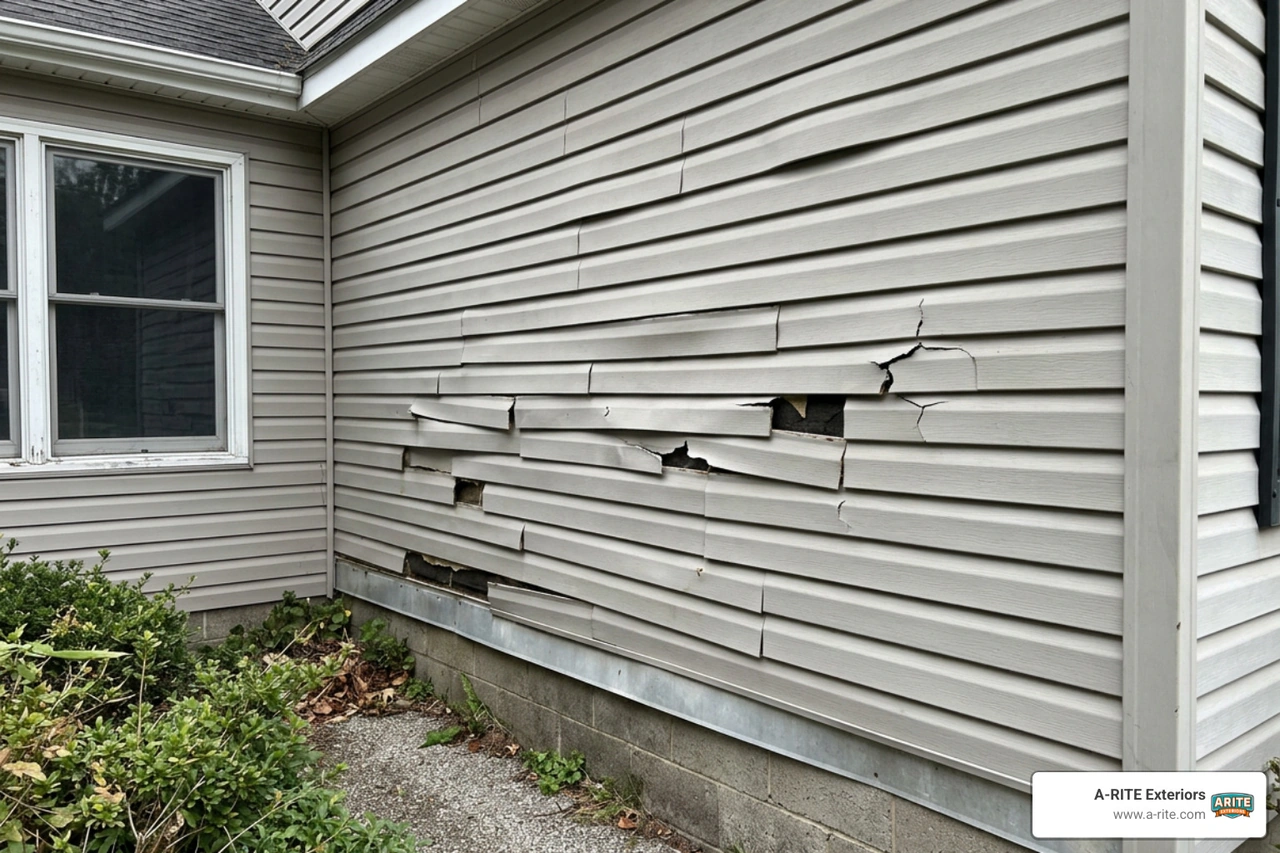
- Sub-Zero Temperatures & Cold Brittleness: When winter temperatures drop below zero, the polyvinyl chloride (PVC) polymers in standard vinyl siding contract and stiffen. In this brittle state, panels are far more vulnerable to physical impacts. Heavy snow thrown by snowblowers, falling icicles, or flying tree branches can easily crack cold vinyl panels.
- Severe Freeze-Thaw Cycles: Wisconsin experiences dozens of rapid freeze-thaw cycles every year. Moisture that settles behind siding panels freezes and expands, pushing panels away from the house sheathing. As temperatures rise and fall, siding panels continuously expand and contract. If panels were nailed too tightly during initial installation without adequate room for expansion, this movement causes severe buckling, warping, or tearing at the fastener slots.
- Snowpack Accumulation and Ice Melt: Snow drifting against ground-level panels and meltwater running off roof edges or clogged gutters put steady moisture pressure on exterior wall cladding. While vinyl panels themselves do not absorb water, standing ice and snow can push beneath seams, exposing the structural wall framing beneath to moisture risks.
- Solar UV Degradation: Even in cold northern climates, ultra-violet (UV) radiation breaks down chemical bonds in vinyl over time. Sunny summer months lead to surface oxidation, which creates a powdery white residue known as "chalking" and causes vibrant colors to fade unevenly across sunny and shaded elevations.
To catch climate-related wear before serious structural issues develop, we recommend conducting an annual exterior inspection each spring. Look closely for hairline cracks, loose corner caps, or panels that have popped out of their locking channels. Addressing minor alignment issues early prevents driven rain and melting snow from penetrating your home's thermal barrier. If you notice signs of storm or winter wear on your home's exterior, our local team provides professional Siding assessments and replacement solutions tailored to Central Wisconsin weather.
What Are the Key Signs That Vinyl Siding Needs to Be Replaced?
While quality vinyl siding commonly delivers decades of reliable performance, every exterior surface eventually reaches the end of its useful lifespan. Knowing what to look for helps you address compromised cladding before moisture reaches your home's interior framework.
Here are the top visual and operational indicators that your vinyl siding needs attention:
1. Sub-Layer Wood Rot Beneath Vinyl Panels
Vinyl itself is inorganic and cannot rot, which is one of its primary benefits. However, when vinyl panels crack, warp, or unlatch, water sneaks behind the siding layers. Trapped water quickly saturates wood sheathing, wall studs, and insulation. If you notice soft spots when pushing gently on exterior walls, or if interior wallpaper and paint begin peeling inside your home, water has likely compromised the wood beneath your siding.
2. Pest Holes and Chewing Damage
Small wildlife like squirrels, mice, chipmunks, and wood-boring insects can enter through minor gaps in exterior cladding during cold weather. Rodents can chew through weakened vinyl corners to create nests inside wall cavities. Insect boreholes or rodent gnaw marks indicate that your home's protective barrier has been breached.
3. Severe Fading, Warping, or Bubbling
Over decades of solar heat exposure, vinyl can warp or develop surface bubbles. Warped panels no longer sit flush against the exterior wall, creating visible gaps where wind and rain can enter. Severe UV fading also indicates that the material has lost its elasticity, making it significantly more brittle and susceptible to minor impacts.
4. Spikes in Seasonal Energy Bills
Unexplained increases in winter heating bills or summer cooling costs often point to a compromised building envelope. When vinyl panels pull away from wall assemblies or loose seals allow cold air drafts to penetrate wall studs, your home's HVAC system has to work twice as hard to maintain comfortable indoor temperatures.
Visual vs. Structural Siding Failure
| Failure Type | Visible Symptoms | Hidden Impact | Recommended Action |
|---|---|---|---|
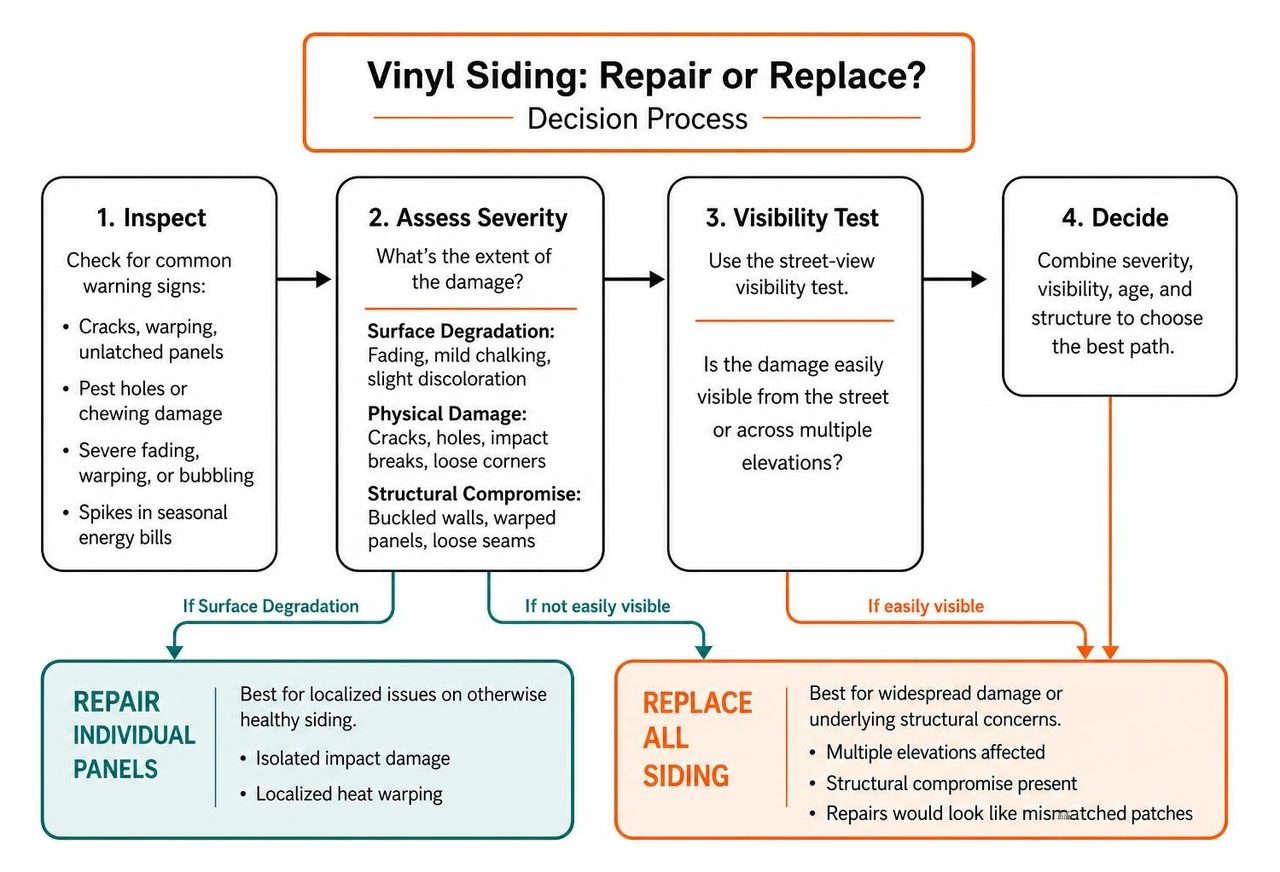
| Surface Degradation | Fading, mild chalking, slight discoloration | Reduced curb appeal, minor surface brittleness | Soft washing, protective repainting, or monitor |
| Physical Damage | Cracks, holes, impact breaks, loose corner posts | Water entry points, pest access gaps | Spot panel repair or localized replacement |
| Structural Compromise | Buckled walls, warped panels, loose seams | Sub-layer wood rot, wet wall insulation, draft intrusion | Complete siding tear-off and system replacement |
The Street-View Visibility Test
A practical method we share with homeowners in areas like Weston, Merrill, and Mosinee is the street-view visibility test. Walk out to the curb and inspect your home from multiple angles. If damaged, faded, or discolored panels are immediately obvious from the street, or if damage spans across multiple elevations of the home, spot repairs will look like mismatched patches. In those cases, a full siding replacement typically restores uniform curb appeal while ensuring full weather protection across all exterior walls.
When Should You Repair Individual Panels Versus Replacing All Siding?

Homeowners often ask whether a single damaged area requires replacing all the siding on their house. The answer depends on the extent of the damage, the age of the existing panels, and the structural integrity of the wood underneath.
When Repairing Individual Panels Makes Sense
Replacing isolated vinyl panels is a cost-effective solution when damage is localized and the rest of your siding remains in excellent physical condition. Individual panel replacement works best for:
- Isolated Impact Damage: A single hail strike, a stray baseball, or minor damage from a lawnmower throwing a stone.
- Localized Heat Warping: Melting caused by reflection off high-efficiency windows or a grill placed too close to a single wall section.
- Pest Entry Points: Fixing a single damaged corner post or trim piece where rodents attempted to chew through.
However, matching colors on older siding presents a unique challenge. Because UV exposure gradually lightens vinyl over time, a brand-new factory-colored panel often stands out against weathered panels around it. In these situations, technicians can sometimes harvest matching panels from an inconspicuous area of the house (such as behind a garage or porch) to use on high-visibility elevations.
When Full Replacement Is Necessary
Partial repairs are no longer practical when structural damage extends beyond the surface layer. A full siding tear-off and replacement is recommended when:
- Sub-Layer Moisture Intrusion: Inspections reveal widespread rot, mold, or structural damage on the wooden sheathing behind the vinyl.
- Systemic Age and Brittleness: The siding is over 30 years old and cracks easily across multiple sections during routine touch.
- Widespread Buckling: Thermal expansion gaps were not left during the original construction, causing panels across entire walls to warp and unhook.
When repairing or replacing siding, it is critical to ensure proper installation techniques. Installers must leave precise gaps at panel ends and center nails within fastener slots so the material can expand and contract naturally during Central Wisconsin freeze-thaw cycles without buckling.
Because exterior building components work as an integrated defense system, siding issues often coincide with roof edge leaks or gutter overflow. If you are assessing weather damage across your home's exterior, consulting qualified professionals who handle multiple trade services ensures your entire weather protection system is aligned. Learn more about comprehensive exterior evaluation by reviewing Who Can Help with Roofing Gutters Siding Windows and Insulation Near Me.
How Does Insulated Vinyl Siding Impact Energy Efficiency in Wisconsin Homes?
Standard vinyl siding installs over weather-resistive barriers, but traditional wood wall studs act as thermal bridges. Thermal bridging occurs when heat travels directly through non-insulated wood wall framing, allowing valuable interior warmth to escape outside during sub-zero winters in places like Plover, Marshfield, or Grand Rapids.
Insulated vinyl siding features a layer of contoured rigid foam permanently bonded to the back of the vinyl profile. This design delivers several key efficiency advantages:
- Continuous Wall Insulation: The foam backing fills the hollow gap behind standard vinyl, creating a continuous barrier over exterior studs to reduce thermal bridging.
- Draft Prevention: Insulated panel profiles interlock more tightly, reducing cold air infiltration around wall seams during high winter winds.
- Impact Resistance: Rigid foam backing supports the vinyl surface, increasing impact resistance against heavy hail, flying branches, and stray athletic balls during freezing temperatures.
Clarification on Insulation Services
While insulated vinyl siding strengthens your exterior wall's thermal performance, it is helpful to understand how whole-home insulation functions. At A-RITE Exteriors, our specialized insulation services focus exclusively on attic insulation. Roof-level thermal loss is the leading cause of heavy ice dam formation, attic condensation, and winter heat escape on Midwest homes. Upgrading attic insulation protects your roof deck from temperature fluctuations, while insulated wall cladding protects exterior vertical framing.
ENERGY STAR Guidelines and Comprehensive Efficiency
According to energy efficiency guidelines published by standard neutral resources like ENERGY STAR and the EPA, maintaining a tight building envelope requires addressing all heat transfer points. If your heating bills remain high after installing quality siding, wall performance may not be the sole issue. Drafty windows, aging exterior doors, and under-insulated attic spaces are common contributors to energy loss.
If air leakage around window frames is compromising your home's thermal defense, explore your options for window upgrades by reviewing Replacement Windows Near Me.
How Does Vinyl Siding Compare to Other Siding Materials in Wisconsin?
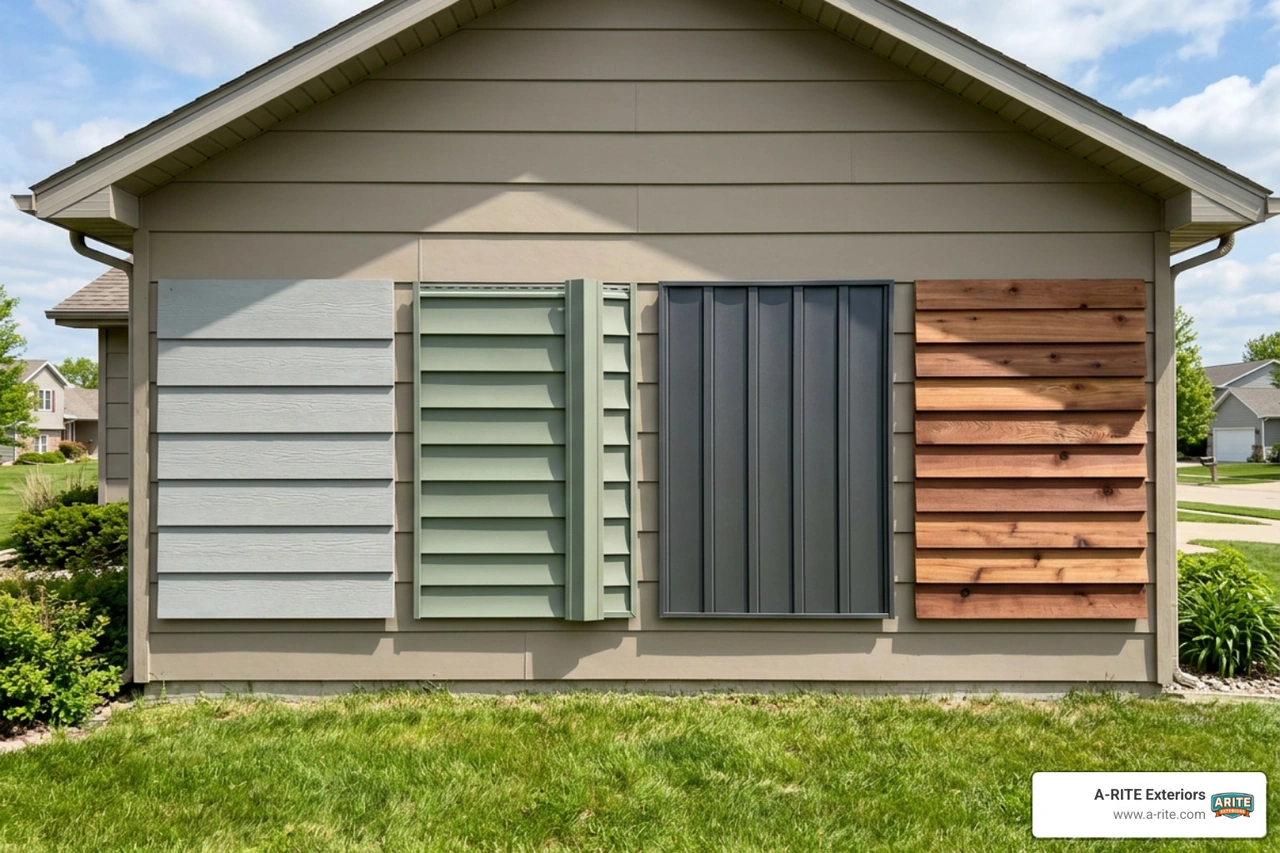
Choosing the right exterior cladding for a home in Central Wisconsin involves balancing upfront material investment, ongoing maintenance expectations, and long-term durability against extreme weather conditions.
Here is how vinyl siding compares to other popular siding materials used throughout Wisconsin:
1. Fiber Cement Siding
Fiber cement is composed of sand, cement, and cellulose fibers. It offers outstanding durability, commonly lasting over 100 years under ideal conditions. It is non-combustible, immune to insect chewing, and highly resistant to freeze-thaw cycles. However, fiber cement is significantly heavier than vinyl, requires specialized installation tools, and carries higher material and labor costs.
2. Steel Siding
Steel siding commonly lasts 30 to 40 years or more in northern climates. Seamless steel siding provides exceptional resistance against severe hail, heavy snow loads, and extreme wind forces without cracking or contracting in sub-zero cold. Its primary drawbacks are higher initial cost and potential corrosion if protective surface coatings become deeply scratched down to the bare metal.
3. Wood Siding
Natural wood lap siding offers traditional aesthetic beauty and typically lasts 20 to 40 years, depending on wood species and care. However, wood requires high maintenance in Wisconsin's wet, freezing environment. Wood siding typically needs repainting or re-staining every 3 to 5 years to prevent water absorption, rot, and insect damage. By comparison, painted vinyl siding only requires repainting every 5 to 10 years for UV protection.
4. Aluminum Siding
Aluminum siding lasts roughly 20 to 40 years. It does not rot or absorb moisture, making it resilient in snow and rain. However, aluminum is softer than steel or modern thick-gauge vinyl, making it susceptible to noticeable denting from hail strikes or fallen tree branches.
Material Lifespan & Maintenance Comparison
| Siding Material | Typical Lifespan | Repainting / Maintenance Frequency | Resistance to Extreme Freeze-Thaw | Impact Resistance in Cold Weather |
|---|---|---|---|---|
| Vinyl Siding | 30–40 years (60+ with high care) | Repaint every 5–10 years (if painted) | Good (requires expansion gaps) | Moderate (can crack when brittle) |
| Fiber Cement | 100+ years | Repaint every 12–15 years | Superior (no contraction) | High (resists hail & impacts) |
| Steel Siding | 30–40+ years | Low maintenance (factory finishes) | Superior (minimal movement) | Excellent (resists cracking/dents) |
| Wood Siding | 20–40 years | Repaint/re-stain every 3–5 years | Moderate (susceptible to moisture rot) | Moderate (susceptible to splitting) |
| Aluminum | 20–40 years | Repaint every 10–12 years | High (impervious to rot) | Low (dents under heavy impact) |
Material Selection Criteria for Central Wisconsin Homeowners
When selecting siding for homes in communities like Wausau, Kronenwetter, Mosinee, or Tomahawk, consider the following decision factors:
- Budget Alignment: Vinyl remains the most economical exterior cladding option for cost-conscious homeowners seeking high longevity per dollar spent.
- Maintenance Willingness: If you prefer minimal maintenance, vinyl and steel eliminate the frequent painting schedules required by natural wood.
- Storm Exposure: Homes situated in open, windy rural settings or lakefront properties in northern areas like Minocqua or Lac du Flambeau may benefit from thick-gauge vinyl profiles or rigid steel to withstand severe winds.
How Can Homeowners Maximize the Lifespan of Their Vinyl Siding?
While vinyl siding is famous for its low-maintenance requirements, taking proactive care of your home's exterior will significantly extend its useful service life, often stretching standard 30-to-40-year performance out past 60 years.
Here are essential maintenance best practices for Wisconsin homeowners:
1. Annual Soft-Pressure Cleaning
Dirt, soot, pollen, and airborne organic matter collect on vinyl over time, encouraging mold and mildew growth in shaded areas. Wash your siding once a year using a soft-bristle brush and a mild cleaning solution (water mixed with standard household cleaner or gentle detergent). Avoid high-pressure power washing at close range, as extreme water pressure can force water behind interlocking panel seams, saturating wall sheathing.
2. Repainting Schedule for UV Defense
Factory vinyl siding color is integrated throughout the material thickness, but painted vinyl requires upkeep. If your vinyl siding has been painted, plan to repaint it every 5 to 10 years using high-grade exterior acrylic latex paint formulated specifically for vinyl. Applying fresh protective coatings shields the underlying PVC substrate from harmful solar UV radiation and prevents chalking.
3. Inspect and Maintain Perimeter Caulking
Check caulking seals annually around exterior window casings, door frames, hose bibs, and corner posts. High-quality exterior polyurethane sealant prevents wind-driven rain from sneaking behind panel ends. Re-caulk any gaps or drying seals promptly before winter freezing begins.
4. Maintain Clean Gutters and Downspouts
Overflowing gutters drop heavy water curtains down exterior siding walls. In winter, this water freezes into thick ice sheets against panel tops, expanding seams and causing corner trim failure. Clean gutters twice a year to ensure meltwater is safely carried away from your home's exterior walls.
Evaluating Quotes and Financing Options
When gathering quotes for siding repair or full replacement, keep in mind that pricing varies across contractors. A lower price may reflect differences in materials, scope, cleanup, warranty coverage, or installation details. Always ensure your chosen contractor is fully licensed, insured, and experienced in northern climate installation standards.
To help manage home improvement costs, financing options are available for qualifying homeowners. Loan amounts up to $100,000 unsecured may be available, with final approval, rates, and terms based on lender review and credit qualification.
What Are the Most Frequently Asked Questions About Vinyl Siding Lifespan in Wisconsin?
How long does vinyl siding typically last in Wisconsin?
In Wisconsin's climate, vinyl siding typically lasts between 30 to 40 years. With regular soft cleaning, caulking upkeep, and protective repainting when applicable, high-quality vinyl siding can commonly last over 60 years before requiring full replacement.
Does cold weather make vinyl siding crack more easily?
Yes. Sub-zero winter temperatures cause PVC polymers to contract and become brittle. When vinyl is extremely cold, sharp impacts from thrown snow, flying hail, falling branches, or lawn equipment ejections can easily crack panels that would normally absorb impacts during warm summer months.
How often should vinyl siding be painted in Wisconsin?
If your vinyl siding is painted, it should commonly be repainted once every 5 to 10 years. Using high-grade 100% acrylic latex paint engineered for vinyl protection shields the PVC substrate from solar UV degradation, surface chalking, and color fading.
What Is the Final Takeaway on Vinyl Siding Longevity in Wisconsin?
Vinyl siding remains one of the most practical, durable, and cost-effective exterior cladding choices for Wisconsin homeowners. While sub-zero winters, freeze-thaw cycles, and summer sun test exterior surfaces, standard vinyl typically delivers 30 to 40 years of dependable protection, while well-maintained installations can endure for more than 60 years.
By performing annual inspections, keeping panel seams clean, addressing isolated damage promptly, and maintaining proper building envelope seals, you can maximize your siding's operational life while protecting your home's underlying structure.
Efficiency Incentives and Professional Guidance
If you are planning comprehensive exterior upgrades to enhance home efficiency, keep financial incentives in mind:
- Federal Tax Credits: For Section 25C (Energy Efficient Home Improvement Credit), IRS guidance showed it was available through December 31, 2025. It should not be assumed active for 2026 or beyond unless confirmed by current IRS guidance. Always consult a certified tax professional regarding tax credit eligibility.
- State Rebate Programs: Homeowners may qualify for Focus on Energy rebates for qualifying insulation and air-sealing work (such as attic insulation, air sealing, wall insulation, foundation insulation, duct sealing, and qualifying DIY attic insulation and air sealing), but not for roof replacement itself. Rebate amounts and eligibility rules change over time according to neutral sources like Focus on Energy, so homeowners should confirm current program rules before starting work.
When you need trusted, professional assistance evaluating your home's exterior, from siding and windows to roofing, gutters, and attic insulation, our team at A-RITE Exteriors is ready to help. We build weather-resistant exterior systems engineered specifically for Central Wisconsin weather.
Contact our local team today to schedule an expert exterior assessment for your home through our main service page at https://www.a-rite.com/services/siding.