Protect Your Roof Warranty Before It Is Too Late
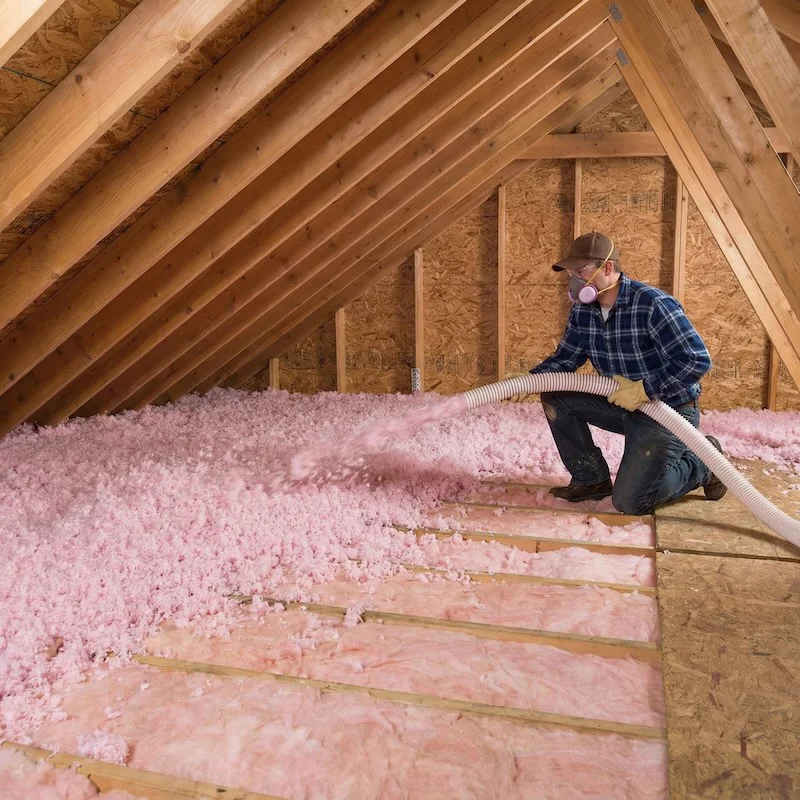
A roof warranty can be voided or reduced by missed registration or transfer deadlines, improper installation, poor attic ventilation, unauthorized repairs or roof changes, pressure washing, damage from foot traffic, or failing to follow the manufacturer’s written rules. Storm, hail, wind, ice dam, and normal-aging damage are also usually insurance or maintenance issues, not warranty claims.
A roof warranty does not automatically transfer when you sell your house. Many manufacturer warranties can transfer once, but the buyer or seller usually must submit the required form, proof of sale, and any fee within a short deadline, often 30 to 60 days after closing. Contractor workmanship warranties are different: they often end when the original owner sells unless the contractor agrees in writing to transfer them.
The key is to confirm the exact warranty before you list or buy a home. Keep the warranty certificate, installation invoice, registration record, repair history, and closing documents together. Then get written confirmation from the manufacturer and, separately, from the installing contractor if workmanship coverage is involved.
I am Bryan Londerville, founder of A-RITE Exteriors, and since 2002 I have helped Central Wisconsin homeowners understand roof systems, ventilation, storm damage, and installation documentation. In this guide to What can void a roof warranty, and does a roof warranty transfer if I sell my house?, I will break down the rules that matter most before a claim or home sale.
Understanding the Core Types of Roofing Warranties
When you invest in a new roof, you are generally receiving two entirely distinct legal promises: one from the company that manufactured the raw materials, and another from the contractor who installed them. Many property owners discover too late that a defect in craftsmanship is not covered by the shingle manufacturer, and a factory defect in a shingle line is not the legal responsibility of the installer.
Understanding how to distinguish manufacturer and workmanship coverage is the foundation for maintaining your protection over decades of harsh Wisconsin seasons.
| Feature / Warranty Tier | Standard Manufacturer Material Warranty | Contractor Workmanship Warranty | Extended / Enhanced System Warranty |
|---|---|---|---|
| Issuer | Shingle Manufacturer (e.g., GAF) | Independent Roofing Contractor | Manufacturer backed, certified contractor installed |
| What It Covers | Factory defects (cracking, curling, granule loss) | Installation errors (flashing leaks, improper nailing) | Both non-prorated materials and full labor/workmanship |
| Typical Duration | 25–50 Years ("Lifetime" Limited) | 1–10 Years (Varies by roofer) | 25–50 Year material / 10–25+ Year workmanship |
| Transferability | Typically 1 time within 30–60 days of closing | Rarely transfers; ends upon property sale | 1 time transfer within strict window (often 60 days) |
| Proration Clock | Prorates after initial 5–10 year window | Non-prorated for term of craftsmanship | Extended non-prorated period (up to 50 years) |
In addition to basic standalone warranties, property owners can secure extended manufacturer system warranties. By choosing a certified GAF Master Elite contractor, homeowners gain access to factory-backed system warranties, such as the GAF Golden Pledge, where workmanship coverage may last 20, 25, or 30 years depending on the qualifying GAF system and warranty terms.
Material Warranties vs. Workmanship Warranties
A standard manufacturer material warranty protects you exclusively against manufacturing flaws that cause premature failure, such as thermal splitting, abnormal granule loss, or factory delamination. However, the fine print matters. Under federal Magnuson-Moss Warranty Act definitions, virtually all residential asphalt shingle warranties are "Limited Lifetime" warranties.
"Lifetime" does not mean the shingle lasts forever without financial degradation. In standard warranties, the manufacturer provides a non-prorated coverage window, typically the first 10 years (or 5 years for certain product lines). During this initial period, defective materials and basic replacement labor are covered 100%. Once that window closes, the coverage enters a steep proration schedule. The payout percentage decreases each month based on the roof’s age, and labor costs for tear-off and reinstallation are completely excluded from the claim.
A contractor workmanship warranty covers the human element: improper nail placement, misaligned starter strips, inadequate valley lining, or incorrect step flashing around chimneys and dormers. Because installation issues cause the vast majority of residential roof leaks, following a strict roofing contractor selection guide is critical. A 50-year material warranty offers little help if an uncertified installer drives nails through the wrong shingle zone, allowing driving rain to penetrate your sub-roof.
What Happens if the Original Contractor Goes Out of Business?
One of the most common dilemmas in homeownership is discovering a roof leak five years after installation, only to find the original contractor has dissolved their business, retired, or rebranded under a new corporate entity.
If you hold only a basic contractor workmanship guarantee, that labor protection typically vanishes the moment the legal entity dissolves. While consumer protection doctrines such as "successor liability" can occasionally obligate a rebranded company with identical ownership to honor previous commitments, proving this in court is costly and time-consuming.
This risk underscores the value of extended system warranties backed by the manufacturer. When an installer holds premium factory certifications, the shingle manufacturer underwrites the workmanship warranty. If that contractor closes their doors or leaves the area, the manufacturer dispatches another certified pro to inspect and repair the installation defect at no cost to you. This is why property owners should prioritize certified, established local companies while avoiding unverified storm chasers who work out of temporary trucks and lack long-term manufacturer backing.
What Can Void a Roof Warranty, and Does a Roof Warranty Transfer if I Sell My House?
Many property owners assume their roof warranty is an unconditional guarantee. In reality, manufacturer and workmanship warranties are strict legal contracts with explicit exclusions. A single unauthorized alteration or improper maintenance step can render a multi-thousand-dollar warranty null and void.
Industry analysis on warranty transfer rules and proration highlights that technical installation errors and post-installation modifications are the leading reasons manufacturers reject claims.
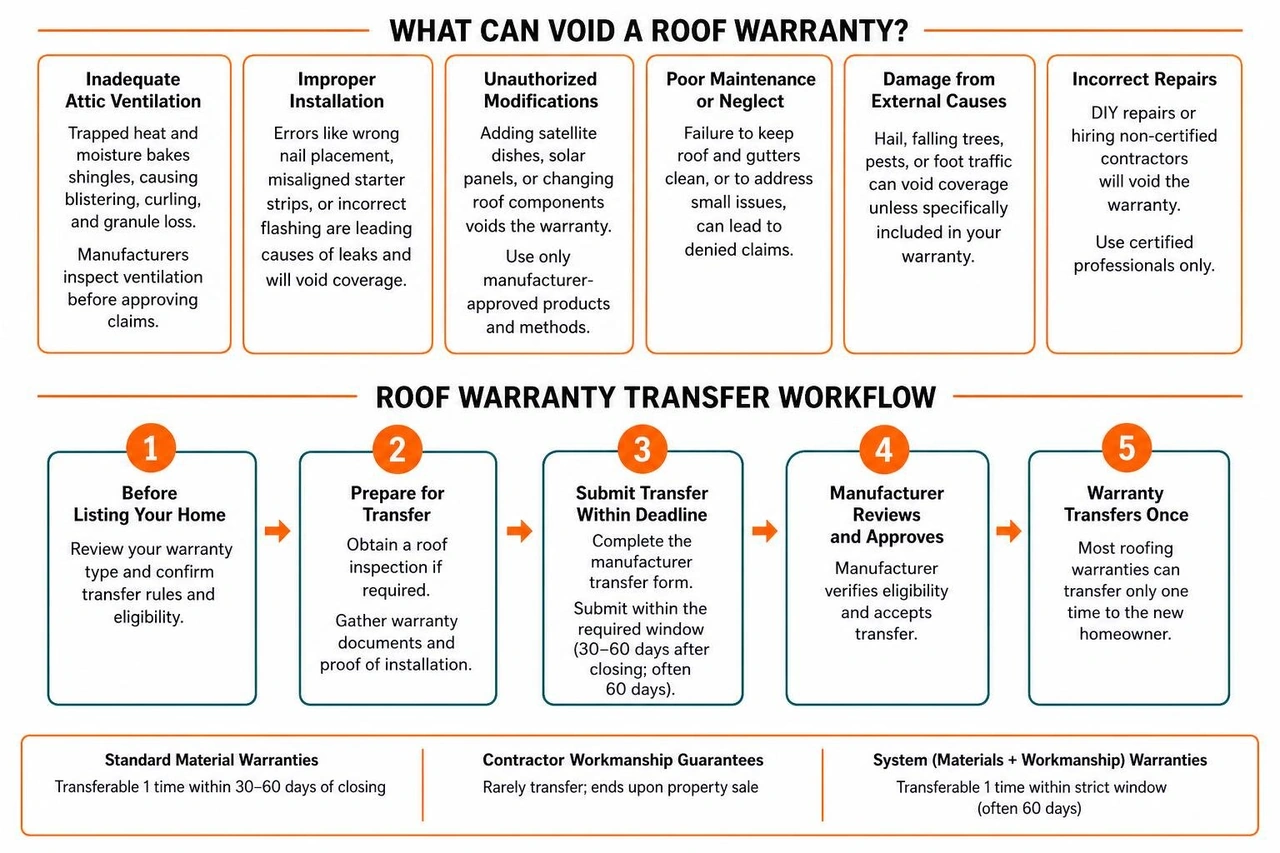
Critical Factors: What Can Void a Roof Warranty, and Does a Roof Warranty Transfer if I Sell My House?
To protect your coverage, avoid these primary actions and errors that routinely void roofing warranties:
- Inadequate Attic Ventilation: Shingle manufacturers require balanced intake (soffit) and exhaust (ridge) ventilation matching specific square-footage ratios (such as the 1:300 or 1:150 rule). Trapped heat and moisture in an unventilated attic will literally bake asphalt shingles from underneath, causing blistering, curling, and premature granule loss. Manufacturers routinely inspect attic ventilation before approving defect claims.
- Layering Over Old Shingles (Roof-Overs): Nailing new shingles directly over an existing layer prevents the new shingles from sealing properly, traps heat, creates uneven surfaces, and hides underlying deck rot. Understanding why you should not roof over existing shingles is essential: most manufacturers immediately void or severely restrict their warranties if shingles are applied over old roofing.
- Pressure Washing the Roof: Using a high-pressure washer to remove algae, moss, or dirt strips away the protective mineral granule coating on asphalt shingles. This exposes the asphalt core to direct UV degradation and instantly voids the manufacturer's algae-resistance and material warranties.
- Unauthorized Penetrations and DIY Alterations: Installing satellite dishes, solar panels, aftermarket skylights, or decorative structures with lag bolts driven directly through shingles breaks the water-shedding seal and voids both material and workmanship coverage in the affected areas.
- Mixing Unapproved Components: Premium system warranties require brand-matched components, including starter strips, deck protection, leak barriers, shingles, and ridge caps. Mixing different manufacturers' parts can disqualify the installation from extended warranty coverage.
- Failing to Register the Warranty: Extended system warranties typically require formal registration with the manufacturer within 30 to 60 days of installation. If the contractor or homeowner fails to complete this step, the coverage automatically reverts to the manufacturer's base limited warranty.
- Using Non-Certified Contractors for Modifications: If an uncertified roofer cuts into the existing roof system to install an exhaust pipe or repair a localized leak, the original contractor’s workmanship warranty and the manufacturer’s system warranty may be terminated.
Weather Damage, Ice Dams, and Warranty Exclusions
A frequent misunderstanding among homeowners in colder regions is the difference between warranty claims and property insurance claims.
Warranties cover factory defects and installation errors; they do not cover storm damage or acts of nature. Hail impacts, wind gusts exceeding rated thresholds, tree branches falling on the deck, and structural movement from ground settling fall under your homeowner's insurance policy, not your roof warranty. For wind exposure, some architectural shingles are rated up to 110 to 130 mph when installed as part of the required system, but storm-related uplift exceeding certified limits remains an insurance event.
In Central Wisconsin communities like Wausau, Stevens Point, Minocqua, and Green Bay, winter freeze-thaw cycles create severe ice dams. When warm air escapes into an attic, snow melts on upper roof planes and freezes upon reaching colder eaves, forcing standing water backward beneath the shingles.
Water infiltration caused by ice dams is generally excluded from manufacturer warranties unless a certified self-adhering ice-and-water barrier was properly installed along eaves, valleys, and penetrations in accordance with local building codes. Homeowners can mitigate this risk by choosing weather-resistant systems for Wisconsin that combine high-performance shingles, complete leak barrier membranes, and balanced attic ventilation.
Roof Warranty Transfer Rules When Selling a Property

When selling a home, a remaining roof warranty can serve as a powerful marketing asset that reassures prospective buyers. However, warranties never transfer automatically via real estate deed transfers or standard closing documents.
According to the guide to warranty transfers at closing, missing the required administrative filing window is the single most common reason second owners lose warranty coverage.
Step-by-Step Sale Checklist: What Can Void a Roof Warranty, and Does a Roof Warranty Transfer if I Sell My House?
To execute a seamless transfer during a property sale in Wisconsin, sellers and buyers should follow this step-by-step checklist:
- Locate Original Documentation: The seller should gather the original manufacturer warranty certificate, the contractor’s installation contract, proof of payment, and all registered warranty identification numbers. When preparing your home for listing, accurately evaluating roof replacement scope helps verify whether transferable components remain active.
- Identify the Transfer Window: Check the manufacturer's exact transfer deadline. Most major manufacturers (such as GAF) require the transfer request to be submitted within 30 to 60 days of the real estate closing date. Missing this window permanently forfeits all remaining coverage.
- Complete the Official Transfer Form: Download the designated warranty transfer form from the manufacturer's portal. Both the original owner (seller) and the new owner (buyer) must fill out their respective sections, noting the legal closing date and property address.
- Attach Proof of Ownership Transfer: The manufacturer requires legal verification of the sale. Attach a copy of the recorded deed, closing disclosure, or settlement statement showing the change of ownership.
- Pay the Administrative Transfer Fee: While some manufacturer programs permit free transfers within the non-prorated window, others require an administrative processing fee, typically ranging from $25 to $100 (and up to $300 for certain commercial systems).
- Request Written Transfer Confirmation: Never assume the paperwork was processed. Both parties should verify that the manufacturer issues an official certificate of transfer in the new homeowner's name, and store this document alongside home records.
Single-Transfer Limits and Coverage Reductions
Even when properly transferred, a roofing warranty rarely operates identically for the second owner. Homeowners must be aware of two critical legal limitations:
- The One-Time Transfer Rule: The vast majority of asphalt shingle manufacturers permit only a single transfer, from the original purchaser to the second owner. If that second owner sells the property five years later, the third owner receives zero warranty coverage.
- Second-Owner Term Caps and Proration Resets: When a manufacturer warranty transfers, the remaining duration is often restructured. For example, some brands convert a transferred 50-year warranty into a fixed 10-year term starting from the date of original installation, or immediately shift the roof into the prorated coverage schedule. Always read the manufacturer-specific transfer terms to determine the exact non-prorated balance that conveys to the buyer.
Frequently Asked Questions About Roof Warranties
Do roof warranties automatically transfer to the new owner when selling a house?
No. Roof warranties never transfer automatically with the sale of real estate. To transfer an eligible manufacturer warranty, the buyer or seller must submit a formal transfer notice, proof of property sale (such as a closing statement or deed), and any required administrative fee to the manufacturer within their specific deadline, typically 30 to 60 days post-closing. If this deadline passes without formal notification, all warranty coverage permanently expires.
Can a roof warranty be transferred more than once?
Under standard residential shingle warranties, the answer is almost universally no. Manufacturers generally limit transferability to one time: from the original property owner who purchased the roof installation to the immediate subsequent buyer. Third owners and beyond are excluded from coverage, causing the warranty to terminate upon the second resale of the home.
What documentation is required to transfer a roof warranty?
To execute a warranty transfer, manufacturers typically require:
- The original warranty registration certificate or warranty number.
- The original contractor invoice showing the installation date and product line.
- The manufacturer-specific transfer application form signed by the buyer/seller.
- Legal proof of property transfer (a copy of the closing disclosure or deed).
- Payment for the administrative transfer fee, if applicable.
Conclusion
A comprehensive roof warranty provides essential financial protection, but preserving its value requires diligence. By maintaining proper attic ventilation, scheduling periodic professional maintenance, avoiding unapproved roof modifications, and adhering strictly to manufacturer transfer timelines during home sales, you can safeguard your home's equity for decades.
At A-RITE Exteriors, we deliver roof-first, weather-resistant solutions engineered to withstand rugged Wisconsin winters, heavy snow loads, and summer storms across Wausau, Stevens Point, Minocqua, Green Bay, and surrounding communities. Whether you need help navigating warranty documentation, resolving storm damage, or exploring a new exterior installation, our team is here to protect what matters most.
Financing options are available for qualifying homeowners. Loan amounts up to $100,000 unsecured may be available, with final approval, rates, and terms based on lender review and credit qualification. A-RITE offers financing through Service Finance, and example terms are available on its financing page. Financing is subject to credit approval.
When planning broader home efficiency updates, homeowners may qualify for Focus on Energy rebates. These rebates are for qualifying insulation and air-sealing work (such as attic insulation, air sealing, wall insulation, foundation insulation, duct sealing, and qualifying DIY attic insulation and air sealing), not for roof replacement itself. Rebate amounts and eligibility rules change over time, and homeowners should confirm current program rules before starting work. A-RITE Exteriors only provides attic insulation. For federal incentives, current IRS guidance shows that Section 25C (Energy Efficient Home Improvement Credit) was available for qualifying improvements placed in service through December 31, 2025; always consult a qualified tax professional regarding credit availability.
When comparing estimates, keep in mind that a lower price may reflect differences in materials, scope, cleanup, warranty coverage, or installation details. Neglecting critical ventilation or flashing details can cost thousands of dollars, and severe cases can cost much more in structural repairs.
Ready to secure your home with premium, fully certified roofing protection? Schedule a professional roof inspection and warranty evaluation with our factory-certified team today. Trust the Hawk on Your Block.