What Should You Know About Roofing Warranties Before Replacing Your Roof?
When investing in a roof replacement, most homeowners focus on shingle colors, curb appeal, and bottom-line estimates. A standard residential roof replacement typically represents an investment ranging from the upper four figures to mid five figures (commonly between $5,000 and $12,000 for standard single-family homes, though final costs depend on roof size, pitch, layers, decking condition, materials, and labor).
With an investment of that magnitude, assuming your roof has "a warranty" is not enough. You must know which warranty covers what problem.
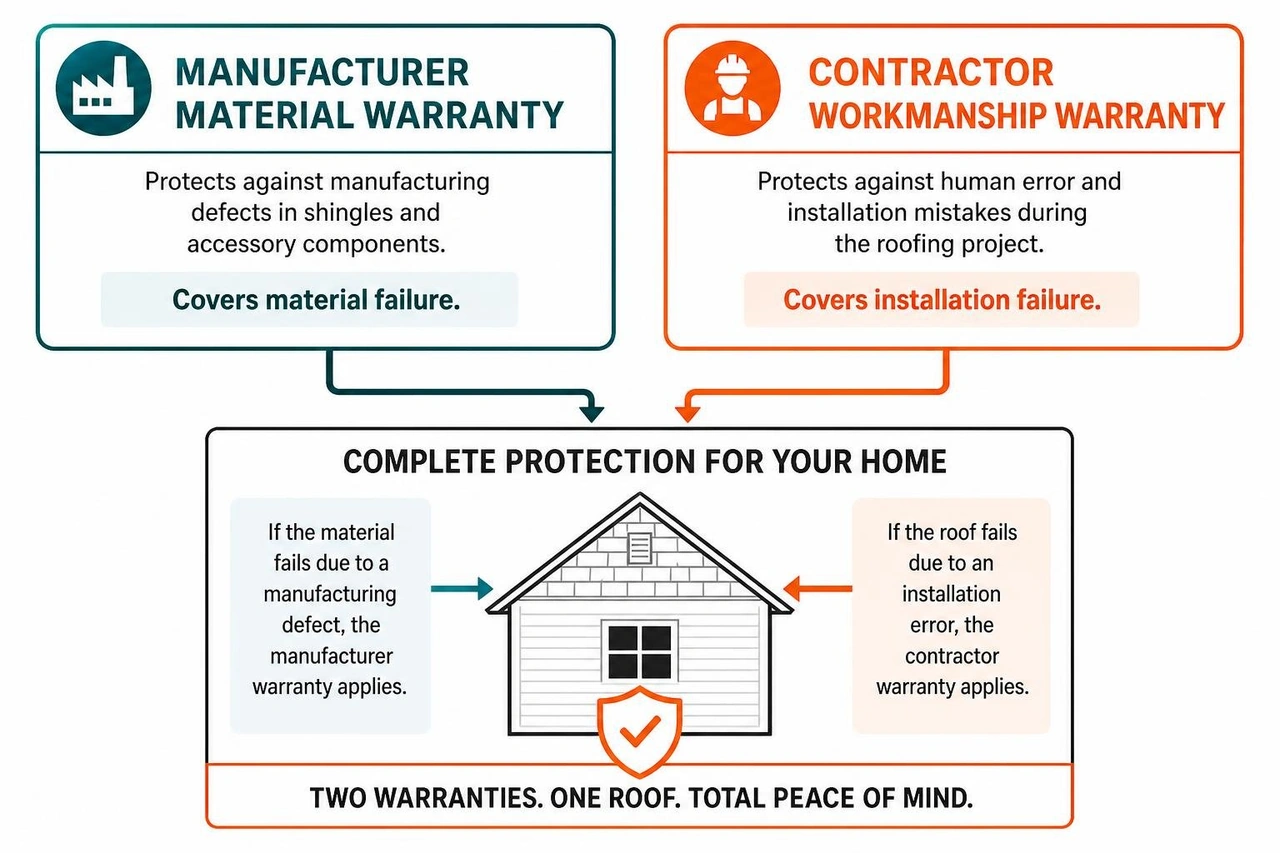
A new roofing system carries two completely separate guarantees:
- The Manufacturer Roof Warranty: Issued by the product maker (such as GAF or CertainTeed), protecting you against manufacturing defects in the shingles and accessory components.
- The Contractor Workmanship Warranty: Issued by your local roofing contractor, protecting you against human error and installation mistakes during the project.
Confusing these two coverages is the leading reason property owners encounter unexpected repair expenses. If a strong storm rolls through Wausau, Stevens Point, or Minocqua and water begins dripping into your attic due to an improperly nailed flashing or reversed valley underlayment, the material manufacturer will deny your claim immediately. The shingle did not fail; the installation did. Conversely, if your shingles blister and crack prematurely within five years due to a chemical defect at the factory, your installing contractor cannot be held liable for manufacturing flaws unless backed by a system-level manufacturer agreement.
Understanding how these warranties work together provides complete coverage from the roof deck to the ridge caps.
What Is the Fundamental Difference Between a Manufacturer Roof Warranty and a Contractor Workmanship Warranty?
The core distinction between these two warranties comes down to product integrity vs. physical execution.
- A manufacturer warranty acts as a product quality promise. It ensures the raw asphalt, fiberglass matting, granules, and sealant strips meet strict manufacturing standards.
- A contractor workmanship warranty is a labor guarantee. It ensures the crew followed proper building codes, regional practices for Wisconsin weather, and manufacturer specifications during installation.
Industry data shows that the vast majority of roof failures occurring within the first decade are directly related to installation errors rather than material defects. While material formulations are tested in controlled factory settings, installation happens outdoors on varying roof pitches, in fluctuating weather, and across complex architectural profiles.
Before signing any contract, it is vital to understand what is included in a roof replacement estimate so you can verify that both material coverage and labor guarantees are clearly detailed in writing.
| Feature / Coverage Aspect | Manufacturer Roof Warranty | Contractor Workmanship Warranty |
|---|---|---|
| Primary Guarantee | Material integrity and manufacturing defects | Installation quality and craftsmanship |
| Issuer | Material manufacturer (e.g., GAF, CertainTeed) | Local roofing contractor |
| Typical Duration | 20 to 50 years (often branded "Lifetime") | 1 to 10 years (standard standalone) |
| Initial Full-Coverage Period | Commonly 10 to 15 years (non-prorated) | Typically matches the full warranty term |
| Labor Coverage for Repairs | Excluded on basic plans; included on enhanced tiers | Included for covered installation errors |
| Common Defects Covered | Granule loss, curling, thermal splitting, blistering | Improper flashing, nail misalignment, bad valley lining |
| Primary Exclusions | Poor installation, improper ventilation, storm damage | Material defects, severe weather events, foot traffic |
| Transferability | Typically transferable once within 60–90 days | At the discretion of the installing contractor |
What Specific Defects Are Covered Under a Manufacturer Warranty?
A standard manufacturer warranty guarantees that the shingle or accessory component will perform as intended without premature physical deterioration caused by factory flaws.
Specific material defects commonly covered include:
- Premature Granule Loss: Bald spots on shingles caused by poor factory adhesion rather than standard weathering or hail strikes.
- Thermal Splitting and Cracking: Premature tearing or splitting in the shingle body under normal temperature fluctuations.
- Factory Blistering and Delamination: Separation of laminated architectural shingle layers due to defective bonding adhesive applied during manufacturing.
- Shingle Curling or Cupping: Deformities occurring despite proper attic ventilation, caused by improper asphalt mixtures.
Standard entry-level manufacturer warranties carry significant limitations. Most basic warranties only cover the cost of replacing the raw defective shingles. They frequently exclude the cost of labor to remove and replace the damaged materials, tear-off expenses, and disposal fees. To review how manufacturers define these boundaries, consult resources like the CertainTeed guide to understanding roof warranties.
What Installation Errors Are Covered Under a Contractor Workmanship Warranty?
A contractor workmanship warranty covers the craftsmanship involved in assembling your roof system. Even the highest-grade architectural shingles will fail if they are improperly secured to the roof deck.
Typical workmanship coverage protects against:
- Improper Fastener Placement: "High-nailing" (placing nails above the designated nail line) or overdriven nails that slice through the shingle mat, reducing wind resistance.
- Flashing Misalignment: Incorrectly layered or missing step flashing, counter-flashing around chimneys, or apron flashing along dormers and vertical sidewalls.
- Valley Installation Errors: Reversed shingle overlaps or misaligned valley liners that funnel water under the shingles during heavy rain or snowmelt.
- Underlayment and Ice Barrier Mistakes: Inadequate ice and water barrier coverage along eaves and valleys, which is essential in cold climates like Central Wisconsin.
- Penetration Sealing: Improperly installed pipe boots, vent flashings, and skylight transitions that allow moisture to enter the building envelope.
Workmanship warranties do not cover every issue. Contractors exclude damage caused by extreme weather events (such as tornadoes or falling tree limbs), homeowner foot traffic, structural settling of the home, alterations made by uncertified third parties (like satellite or solar installers), and general lack of routine roof maintenance.
How Do Warranty Duration, Proration, and Fine Print Affect Your Protection?
Roofing warranties differ significantly in duration, proration schedules, and transfer terms.
Decoding "Lifetime" Coverage and Duration
When a manufacturer advertises a "Lifetime" warranty on architectural shingles, that term rarely means "forever." In the roofing industry, "Lifetime" typically refers to the expected service lifespan of that specific product on a single-family residential home under normal operating conditions (commonly 20 to 50 years). The actual lifespan of any roof varies by product, installation, ventilation, maintenance, and weather exposure.
Workmanship warranties from independent contractors typically range from 1 to 10 years for standard installations. While 1 to 2 years is standard for basic contractors, established regional roofing companies often provide 5-to-10-year workmanship warranties on standard builds, and up to 25 to 30 years when certified under manufacturer-backed programs.
Understanding Proration Math
A critical detail in manufacturer warranties is whether coverage is non-prorated or prorated:
- Non-Prorated Period (Full Coverage): During this initial window (typically the first 10 to 15 years), the manufacturer provides 100% replacement value for defective materials without factoring in the age of the roof.
- Prorated Period (Declining Value): Once the non-prorated window expires, the manufacturer's payout decreases year by year on a straight-line scale. For example, if a defective shingle fails in year 25 of a 30-year prorated policy, the manufacturer may only cover a small fraction of the replacement cost, leaving the homeowner responsible for the rest.
Transferability Rules
If you plan to sell your home, warranty transferability adds real value for prospective buyers. Most upgraded manufacturer warranties allow a one-time transfer to a secondary owner, provided the transfer is completed within a strict window (typically 60 to 90 days) after the closing of the sale, along with any required administrative fee. If missed, the warranty commonly reverts to a baseline prorated schedule or expires entirely.
Contractor workmanship warranties are rarely transferable automatically; transferability remains at the discretion of the contractor and must be negotiated in writing.
Roof Warranties vs. Homeowners Insurance
Homeowners often confuse warranty coverage with property insurance:
- Warranties (Manufacturer & Workmanship): Cover internal failures, such as factory defects in the materials or human error during installation.
- Homeowners Insurance: Covers external, sudden, and accidental perils, such as wind storms, hail impacts, falling tree limbs, fire, or ice storms.
Neither a warranty nor an insurance policy covers natural wear-and-tear or damage resulting from neglected maintenance.
What Actions and Conditions Can Void Your Roof Warranties?
Even the most comprehensive warranty package can be voided if specific manufacturer requirements and installation standards are ignored.
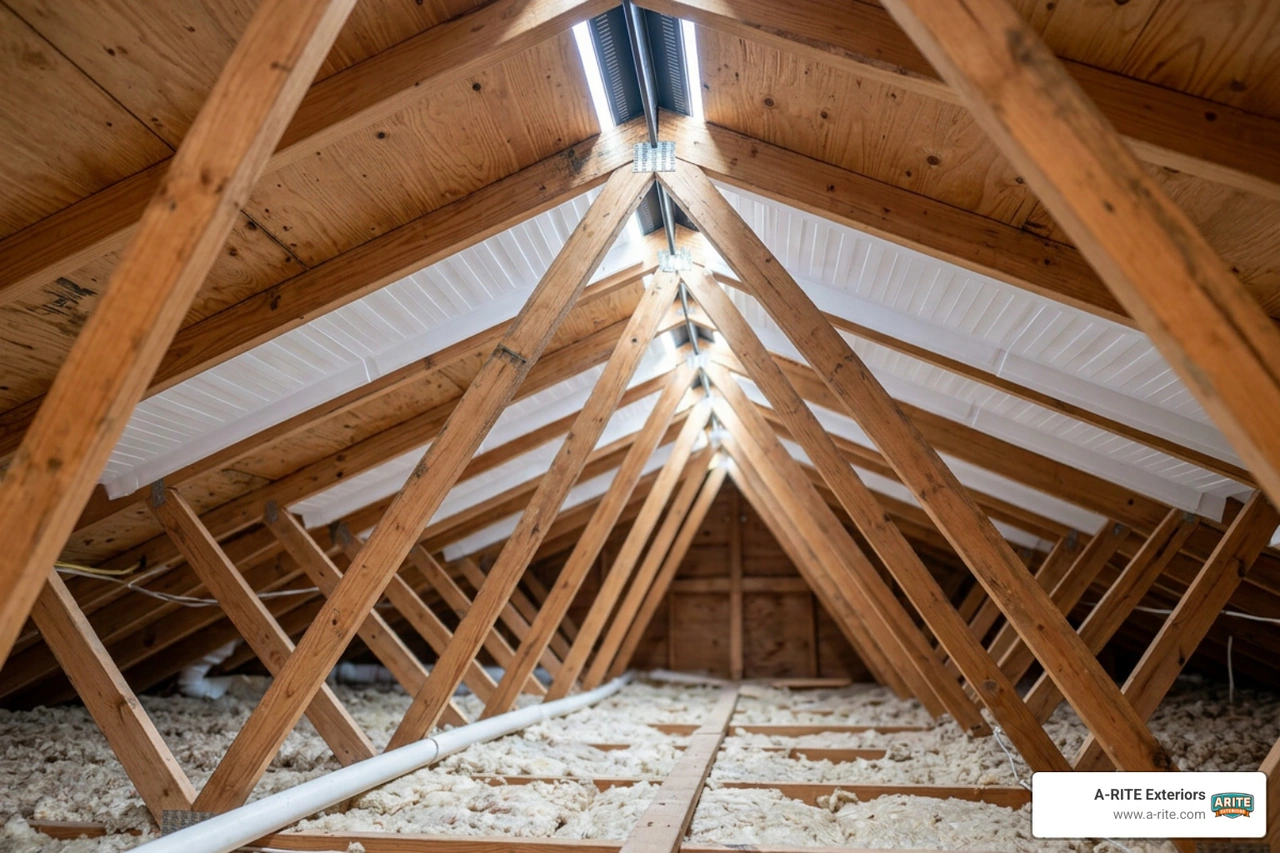
The single most common reason manufacturers deny product warranty claims is inadequate or unbalanced attic ventilation. Asphalt shingles require adequate airflow beneath the roof deck to regulate temperature and exhaust moisture. When an attic lacks sufficient intake (soffits) and exhaust (ridge vents), summer heat builds up under the decking, essentially baking the shingles from beneath and causing premature blistering, curling, and thermal cracking. In winter, trapped moisture condenses on the underside of the deck, promoting rot and leading to severe ice dams.
Other common actions that void roofing warranties include:
- Roofing Over Existing Shingles: Installing a second layer of shingles directly over old materials traps heat, conceals underlying deck rot, and prevents shingles from sealing flat. To understand the structural risks, review our guide on why you should not roof over existing shingles.
- Improper Fastener Depth and Pattern: Shingles must be secured using specific nail types, lengths, and patterns. High-nailing or using an improper number of fasteners voids wind resistance warranties. Some architectural shingles are rated up to 110 to 130 mph when installed as part of the required system, but this rating requires exact fastening techniques.
- Mixing Incompatible System Components: Installing one brand of shingles with an unapproved starter strip, ice and water barrier, or ridge cap from different manufacturers can void enhanced system-level warranties.
- Unauthorized Roof Penetrations: Mounting satellite dishes, unapproved solar brackets, or DIY skylights that penetrate shingles without proper flashing voids both the contractor's workmanship warranty and the manufacturer's leak protection in that area.
- Pressure Washing or Applying Harsh Chemicals: Using high-pressure water streams to remove moss or algae strips the protective ceramic granules from shingles, immediately voiding material coverage.
- Failure to Register the Warranty: Enhanced system warranties typically require registration with the manufacturer within 30 to 60 days of installation completion.
To keep warranties valid, homeowners should schedule seasonal roof inspections, keep gutters clear, and maintain adequate attic ventilation. Balanced airflow paired with proper attic insulation (which we provide at A-RITE Exteriors) helps maintain a stable roof deck temperature throughout severe winter weather.
How Do Enhanced System Warranties and Contractor Certifications Bridge the Coverage Gap?
Under a standard roofing warranty arrangement, the homeowner remains caught between two separate entities. If a leak develops, the contractor might blame the shingle, while the manufacturer points to the installation.
Enhanced system warranties solve this problem by uniting product and labor coverage under a single, manufacturer-backed umbrella.
An enhanced warranty requires installing a complete, matched roofing system from the same manufacturer, including:
- Deck protection (synthetic underlayment)
- Ice and water leak barriers
- Starter shingle strips
- Field shingles
- Ridge cap shingles
- Matched attic exhaust ventilation
Manufacturers only allow these premium system warranties to be issued by factory-certified contractors who undergo regular training, hold proper licensing and insurance, and maintain documented track records of quality installation. Across the roofing industry, contractor certification correlates with a 92% positive outcome rate for warranty reliability and claim resolution.
When choosing a roofer, reference our roofing contractor selection guide to evaluate qualifications. Working with a certified GAF Master Elite Contractor like A-RITE Exteriors gives homeowners access to top-tier warranties, such as the GAF Golden Pledge® Limited Warranty. This tier provides 50 years of non-prorated material coverage, and workmanship coverage may last 20, 25, or 30 years depending on the qualifying GAF system and warranty terms. If the installing contractor ever closes their business, the manufacturer still steps in to pay for and manage any necessary labor repairs.
When evaluating project estimates, a lower price may reflect differences in materials, scope, cleanup, warranty coverage, or installation details. Selecting high-grade materials tailored to local weather, as outlined in our analysis of what is the best roofing system for Wisconsin weather, ensures long-term performance.
For homeowners planning a project, financing options are available for qualifying homeowners. Loan amounts up to $100,000 unsecured may be available, with final approval, rates, and terms based on lender review and credit qualification.
Additionally, when upgrading attic ventilation and efficiency alongside a roof replacement, homeowners may qualify for Focus on Energy rebates. Focus on Energy rebates are for qualifying insulation and air-sealing work (such as attic insulation, air sealing, wall insulation, foundation insulation, duct sealing, and qualifying DIY attic insulation and air sealing), not for roof replacement itself. Rebate amounts and eligibility rules change over time, and homeowners should confirm current program rules before starting work. Regarding federal tax credits under Section 25C (Energy Efficient Home Improvement Credit), IRS guidance showed it was available through December 31, 2025; always consult a tax professional regarding current credit availability.
What Are the Most Common Questions About Roof Warranties?
What happens to my workmanship warranty if my roofing contractor goes out of business?
If you hold a standard, standalone workmanship warranty from a local contractor and that company closes, that labor warranty becomes unenforceable. The manufacturer’s basic material warranty remains in effect, but you will have to pay out of pocket for any labor needed to fix installation-related leaks.
This risk is the primary advantage of choosing an enhanced system warranty through a certified installer. With a manufacturer-backed system warranty, the manufacturer guarantees the workmanship. If your original roofer is no longer in business, the manufacturer will dispatch and pay another certified contractor to complete the necessary repairs.
How do I know if a roof leak is caused by defective materials or poor workmanship?
Determining the cause of a roof leak requires an inspection of the failure point:
- Workmanship Failures: Most common around roof transitions. If leaks occur around chimney flashing, plumbing vent boots, valley seams, or skylights, or if shingles blow off in moderate winds due to high-nailing, the issue is almost certainly installation-related.
- Material Failures: Tend to appear across broader roof planes. Symptoms include widespread surface blistering, premature granule shedding across entire slopes, or shingles cracking along the factory fold lines despite proper fastening and balanced attic airflow.
Repairing roof leaks and interior moisture damage can cost thousands of dollars, and severe cases can cost much more if structural wood rot develops. If you notice signs of moisture, read our guide on how do I know if my roof needs to be replaced or just repaired and review external resources like roofing warranties explained to prepare for the claims process.
Can I transfer my roof warranty when selling my home?
Yes, in most cases, but strict conditions apply:
- Check Eligibility: Standard basic manufacturer warranties may offer limited or prorated transfer terms, while enhanced system warranties typically permit a one-time transfer of full non-prorated coverage.
- Submit Paperwork on Time: Most manufacturers require the transfer form to be submitted within 60 to 90 days of property closing.
- Pay Any Transfer Fee: Some manufacturers charge a nominal administrative fee (typically $100 to $250) to process the transfer.
- Contractor Workmanship Transfers: Workmanship guarantees from individual contractors must be evaluated according to the contractor's specific written contract terms.
How Can Homeowners Ensure Complete Roof Warranty Protection?
Protecting your roofing investment requires securing both strong materials and certified installation. Relying on a material warranty alone leaves your home vulnerable to installation errors, while depending solely on a standard contractor guarantee leaves you exposed if factory material defects arise or if a contractor ceases operations.
To ensure your home has complete warranty protection:
- Demand Written Terms: Verify that both the manufacturer material warranty and the contractor workmanship warranty terms are clearly itemized in your written proposal.
- Choose Certified Installers: Hire a factory-credentialed contractor who can provide manufacturer-backed workmanship coverage rather than an unbacked labor promise.
- Install Complete Systems: Ensure all components (shingles, underlayment, starter strips, ice barriers, and ridge vents) come from the same manufacturer to qualify for top-tier system coverage.
- Maintain Attic Ventilation: Keep your attic intake and exhaust vents clear, and ensure proper attic insulation depth to prevent excess heat buildup and moisture damage.
- Register Your Warranty Promptly: Confirm your contractor has registered your warranty with the manufacturer within the required post-installation window, and store all warranty certificates, invoices, and inspection logs in a safe place.
Homeowners across Central Wisconsin, from Wausau, Schofield, and Weston to Stevens Point, Wisconsin Rapids, and Minocqua, can rely on our experienced team to deliver durable, weather-tested roofing systems backed by industry-leading warranties. Contact A-RITE Exteriors today to schedule your roof inspection and ensure your home is fully protected.