What Are the Warning Signs of a Storm Chaser Roofer in Wisconsin?
When severe weather rolls through communities across Central and Northern Wisconsin, whether in Wausau, Stevens Point, Wisconsin Rapids, or Minocqua, transient repair crews often follow close behind. Known in the industry as storm chasers, these out-of-state contractors travel from state to state following high-wind and hail events to secure rapid roof replacement contracts.
Recognizing the warning signs of a storm-chasing contractor before signing any paperwork is the single best way to protect your home and wallet.
Key Warning Signs of a Transient Roofer
- Unsolicited Door-to-Door Solicitations: Representatives knocking on your door within hours or days of a major storm, claiming they were "just working down the street" or noticed obvious severe damage from the road.
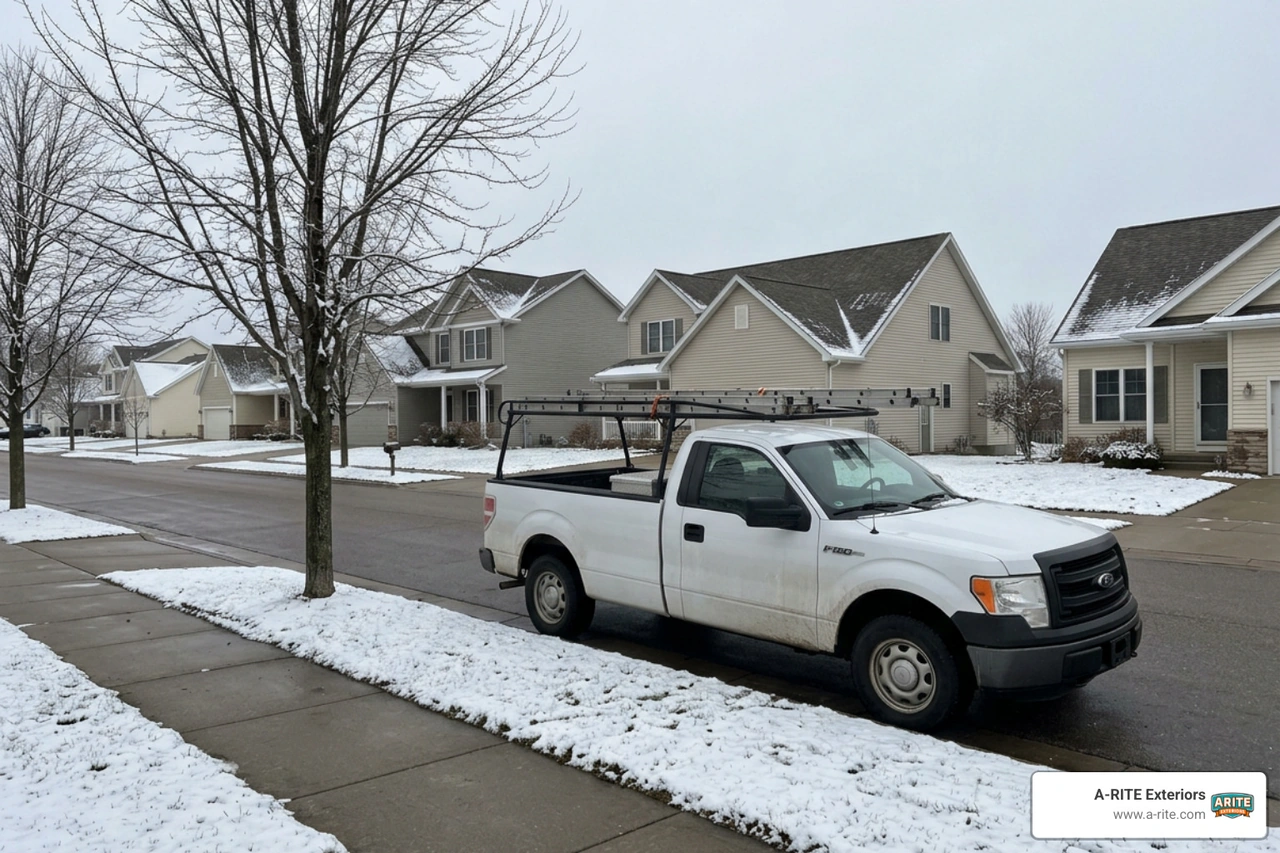
- Unmarked Vehicles and Out-of-State Plates: Service trucks lacking permanent company logos, state licensing numbers, or displaying license plates from distant states.
- High-Pressure Urgency Tactics: Demanding immediate on-the-spot signatures on contingent agreements or "free inspection forms" that actually lock you into a binding construction contract.
- Lack of a Physical Wisconsin Office: Offering only a P.O. box, a temporary hotel address, or a out-of-state phone number with no physical brick-and-mortar storefront or warehouse in Wisconsin.
- Unrealistic Inventory Claims: Promising immediate installation with materials ready on standby while legitimate local suppliers are experiencing standard distribution lead times following a major regional weather event.
Understanding How to Tell a Local Roofer From a Storm Chaser empowers you to make informed decisions for your property. Transient crews often focus on speed and volume rather than proper installation techniques suited for severe winter freeze-thaw cycles and heavy ice loads. When installation shortcuts occur, roof leaks frequently develop during the next spring thaw, long after the transient crew has packed up and moved to another state.
If your home has recently been hit by hail or high winds, knowing who should I call for storm damage roof repair in Wausau or central Wisconsin will ensure your property receives comprehensive, professional care backed by long-term local warranty support.
Why Cheap Storm Repair Work Rarely Stays Cheap
A low door-knock bid or an offer to perform quick repair work rarely delivers true long-term value. Storm chasers frequently cut installation corners to maximize their profit margins before leaving the area. Common shortcuts include:
- Reusing Damaged Flashing: Reinstalling old, bent, or rusted wall and chimney flashing rather than fitting custom-bent, weather-tight flashings.
- Skipping Ice and Water Shield: Omitting high-grade self-adhering leak barriers along eaves and valleys; ice and water shield helps protect against water intrusion if ice dams occur, but it does not prevent ice dams by itself.
- Improper Fastening: Using incorrect nail depth or improper placement, which voids shingle manufacturer wind warranties and leads to blown-off shingles during summer storms.
- Ignoring Roof Decking: Nailing fresh shingles directly over rotted or water-damaged plywood decking rather than replacing compromised structural wood.
When a transient roofer performs substandard work, any initial savings evaporate the first time water penetrates your ceiling. Because out-of-state crews lack permanent local operations, getting them to return to fix a leaking roof is nearly impossible.
Comparing Local Established Contractors and Out-of-State Storm Chasers
| Evaluation Feature | Local Established Wisconsin Contractor | Out-of-State Storm Chaser |
|---|---|---|
| State Licensing | Active Wisconsin Dwelling Contractor & Qualifier licenses verifiable with DSPS | Often uncertified in Wisconsin or operating under temporary permits |
| Physical Location | Permanent local office and physical shop in Central/Northern Wisconsin | Out-of-state address, P.O. Box, or temporary hotel location |
| Insurance Coverage | Direct certificate of general liability & workers' comp sent from insurer | Verbal claims of coverage or unverified out-of-state policies |
| Permits & Inspections | Pulls all required local municipal building permits before starting work | Often skips municipal building permits and inspection steps |
| Manufacturer Support | Certified installer tiers (e.g., GAF Master Elite) with multi-decade labor coverage | Uncertified installers providing basic limited shingle warranties (0 years labor) |
| Warranty Callbacks | Direct local phone lines and permanent crews present for spring thaw service | Unreachable once severe weather season ends in the region |
What Does Wisconsin Law Say About Roofing Contracts and Insurance Claims?
Wisconsin provides strict consumer protection laws designed to safeguard homeowners from predatory contracting practices after natural disasters. Regulations enforced by the Wisconsin Department of Agriculture, Trade and Consumer Protection (DATCP) establish clear rules governing how roofers interact with insurance claims.
Prohibitions on Insurance Deductibles and Claim Negotiations
Under Wisconsin administrative rules and consumer protection guidelines, it is illegal for a contractor to offer to pay, absorb, credit, or waive any portion of a homeowner's insurance deductible. Deductibles are a statutory requirement of your insurance contract; any agreement where a contractor absorbs this cost constitutes insurance fraud.
Additionally, contractors who are not licensed public adjusters or licensed attorneys are strictly forbidden from negotiating an insurance claim directly on behalf of a policyholder. While a qualified roofer can meet with your insurance adjuster on-site to point out structural damage, outline scope details, and provide realistic repair estimates, they cannot act as your legal or insurance representative.
Wisconsin law also mandates that contractors ask property owners whether the proposed repair work is related to an insurance claim prior to executing a construction contract.
Statutory 3-Day Right to Cancel
Wisconsin homeowners receive strong protections if an insurance claim is denied. If you enter into a contract for roofing repairs based on anticipated insurance proceeds, and your insurance company subsequently denies any portion of the claim for that work, you have a statutory right to cancel the contract within three business days of receiving the written insurance denial.
Before signing any documentation, consult state guidance on What Wisconsin homeowners should know before hiring a storm damage contractor. Always contact your insurance carrier directly to initiate your claim and schedule an official inspection before signing binding repair contracts. If you suspect severe weather has impacted your roof, taking time to learn should I inspect my roof after a storm will help you document visible issues safely from the ground.
How Do You Verify a Wisconsin Roofer’s Credentials and Certifications?
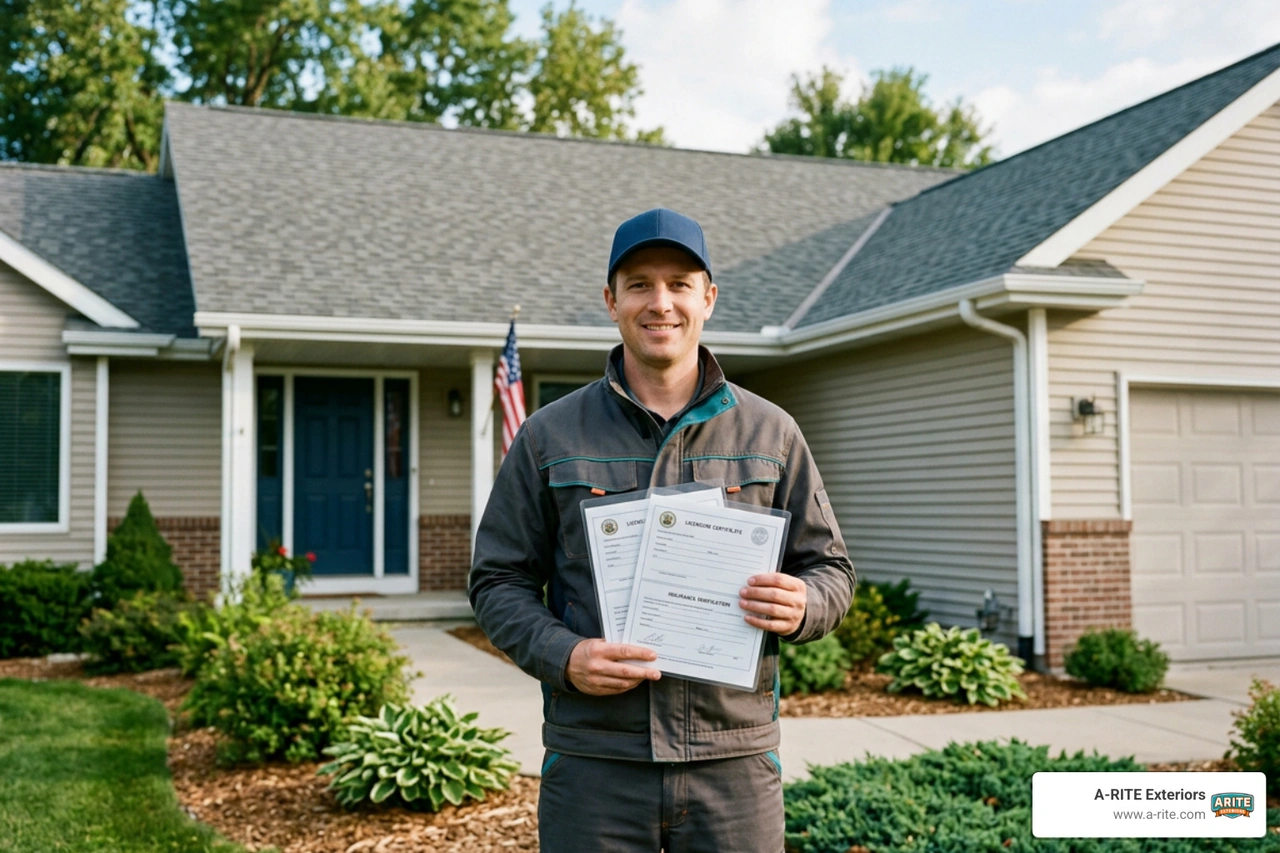
Never rely solely on a verbal claim or a business card when verifying a contractor's legitimacy. Taking a few proactive steps to verify credentials protects your home against liability and ensures high-quality workmanship.
Verifying State Licensing and Insurance Coverage
In the state of Wisconsin, legitimate roofing businesses must hold two primary credentials issued by the Department of Safety and Professional Services (DSPS):
- Dwelling Contractor Certification: The company-level license demonstrating state registration and financial compliance.
- Dwelling Contractor Qualifier Certification: The individual-level credential earned by passing state-mandated continuing education courses on building codes and standards.
In addition to state credentials, request proof of general liability insurance and workers' compensation coverage. Do not accept a printed copy handed to you by the salesperson; ask the contractor's insurance agency to email or mail a Certificate of Insurance directly to you listing your name and address as the certificate holder.
Understanding Manufacturer Certification Tiers and Warranties
Roofing material manufacturers establish tiered certification levels for contractors based on installation quality, business longevity, credit standings, and ongoing training. A contractor's certification level directly dictates the level of warranty protection you can receive:
- Uncertified Installers: A basic limited shingle warranty covers manufacturing material defects but provides zero years of installation labor coverage once the crew leaves your property.
- Certified Contractors: Achieving standard manufacturer certifications allows roofers to offer enhanced protection, such as the GAF Silver Pledge, which provides 10 full years of factory-backed workmanship coverage.
- Master Elite Tier: Fewer than two percent of United States roofers achieve GAF Master Elite Contractor status. Achieving this tier enables a contractor to offer top-tier protection, such as the Golden Pledge Limited Warranty, where workmanship coverage may last 20, 25, or 30 years depending on the qualifying GAF system and warranty terms.
Industry building standards continue to prioritize enhanced resilience against severe weather events. In May 2026, the Insurance Institute for Business and Home Safety (IBHS) reported that its FORTIFIED program had passed 100,000 designations nationwide, with over half earned in the last three years alone. Working with a factory-certified installer ensures your roofing system meets modern structural and weather-resistance guidelines. Reviewing a comprehensive guide on how do I choose a roofing contractor in central Wisconsin will give you added confidence when evaluating candidate credentials.
What Steps Should You Follow When Contracting and Evaluating Roofing Costs?
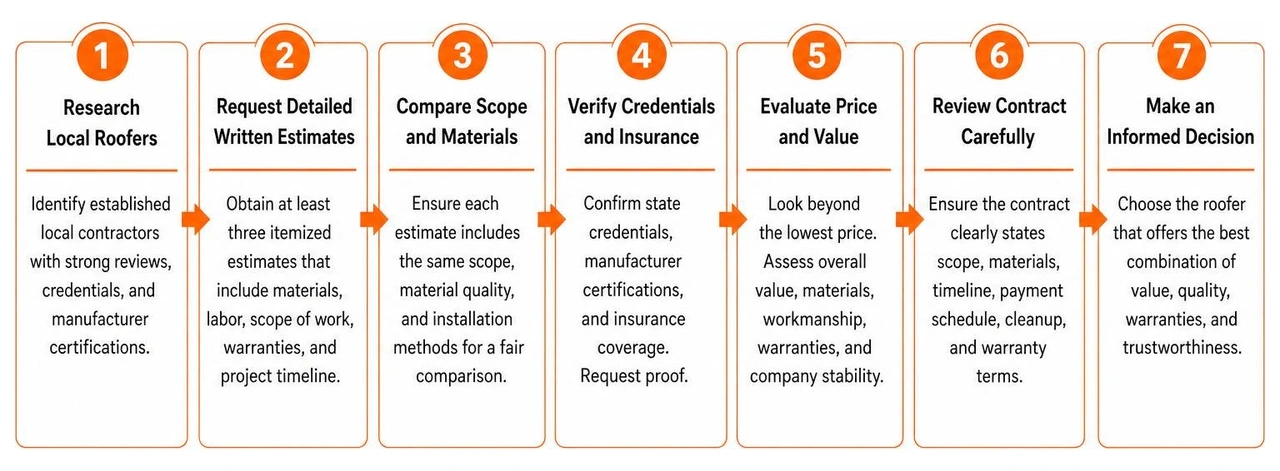
When replacing or repairing a roof, following a systematic evaluation process ensures you receive fair pricing, high-quality materials, and enforceable contract terms.
Gathering Estimates and Understanding Project Pricing
We recommend gathering at least three detailed written estimates from established local contractors before making your final selection. Understanding broader market pricing helps set realistic expectations for your project budget:
- Total Replacement Costs: Complete roof replacement projects typically range from the upper four figures to mid five figures, depending on total square footage, roof pitch, structural decking condition, material selection, and labor complexity.
- Repair Costs: Minor roof repairs can cost thousands of dollars, and severe cases can cost much more depending on underlying structural damage.
- Evaluating Bids: A lower price may reflect differences in materials, scope, cleanup, warranty coverage, or installation details rather than true cost savings.
To ensure apples-to-apples comparisons, review our detailed roofing contractor selection guide when evaluating estimate details across different vendors.
Essential Contract Elements
Every valid roofing contract should clearly document the scope of work and protect your financial rights. Ensure your written agreement includes:
- Detailed material specifications (shingle brand, line, color, underlayment type, ice barrier specifications, and drip edge details)
- Comprehensive scope of work, including tear-off layers, flashings, ridge vents, and decking replacement terms
- Estimated project start date and target completion schedule
- Detailed site protection and daily cleanup standards (magnetic sweeping for nails, property protectiontarps)
- A explicit requirement for lien waivers from all material suppliers and subcontractors upon each payment
Financial Considerations, Rebates, and Tax Guidelines
When planning project financing and energy-efficiency improvements, keep these verified program guidelines in mind:
- Financing: Financing options are available for qualifying homeowners. Loan amounts up to $100,000 unsecured may be available, with final approval, rates, and terms based on lender review and credit qualification.
- Focus on Energy Rebates: Homeowners may qualify for Focus on Energy rebates for qualifying insulation and air-sealing work (such as attic insulation, air sealing, wall insulation, foundation insulation, duct sealing, and qualifying DIY attic insulation and air sealing), not for roof replacement itself. A-RITE Exteriors only provides attic insulation. Rebate amounts and eligibility rules change over time, so homeowners should confirm current Focus on Energy program rules and eligibility before starting work.
- Federal Tax Credits: Regarding the Section 25C Energy Efficient Home Improvement Credit, current IRS guidance confirms availability for qualifying improvements placed in service through December 31, 2025. Homeowners should consult a tax professional regarding current tax credit eligibility.
- Performance Ratings: Architectural shingle performance metrics vary by product, proper installation, attic ventilation, maintenance, and weather exposure. Some architectural shingles are commonly rated up to 110 to 130 mph when installed as part of the required complete system.
To explore full structural replacement options and material packages, explore our professional roofing services built specifically for Wisconsin homes.
What Questions Should You Ask a Roofer Before Hiring Them?
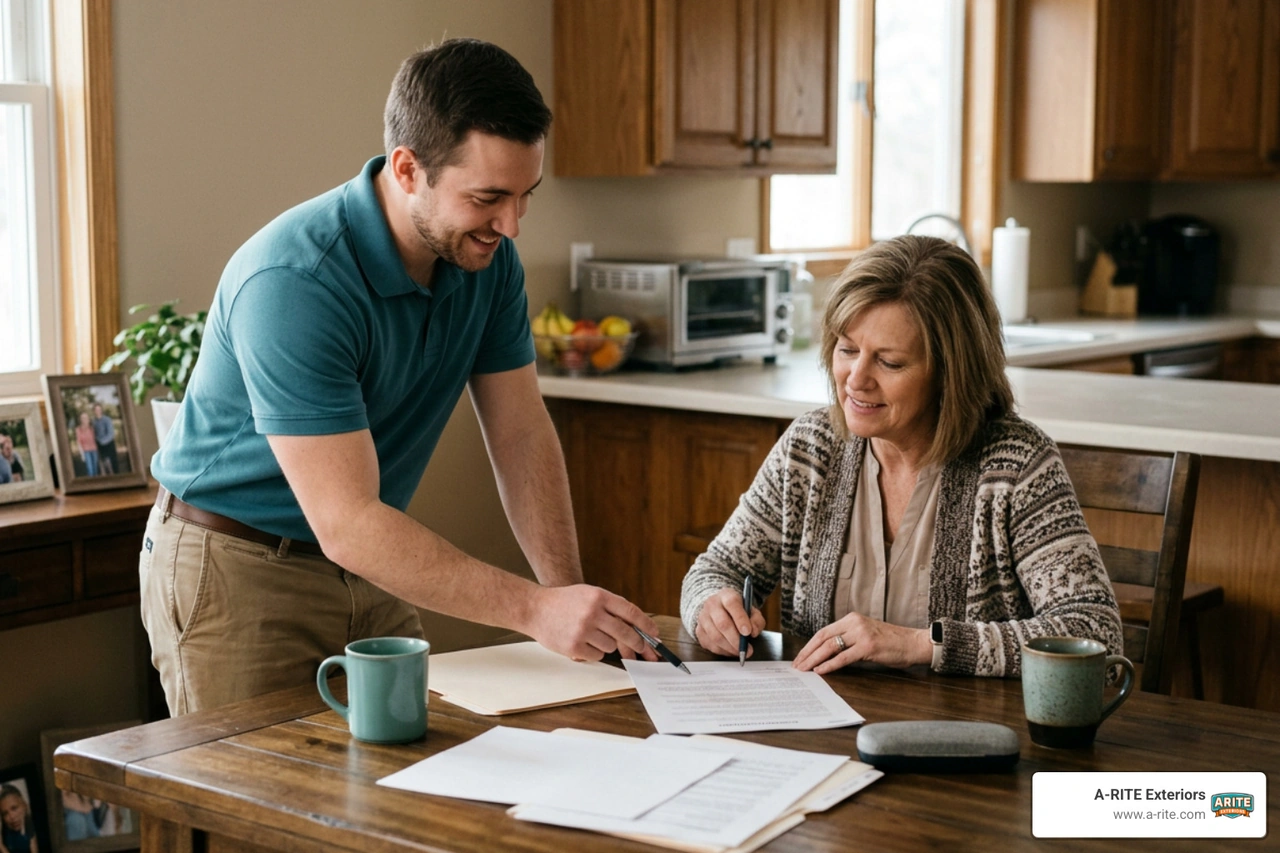
Interviewing potential contractors directly allows you to evaluate their transparency, local experience, and customer service standards before signing a contract.
Essential Direct Questions
Ask every contractor the following four questions before allowing them to inspect your roof or write an estimate:
- "Are you licensed and insured in Wisconsin, and can you provide certificates today?"What to look for: They should state their Wisconsin Dwelling Contractor license numbers without hesitation and arrange for an official insurance certificate to be sent directly from their agency.
- "What physical address in Wisconsin serves as your primary office?"What to look for: A real physical brick-and-mortar address located within traveling distance of your home, not a post office box or temporary residential address.
- "Who handles warranty callbacks, and will your company be accessible next spring?"What to look for: A direct local office line and dedicated service coordinator responsible for handling ongoing warranty inquiries long after installation.
- "Will you pull all required local building permits before starting work?"What to look for: Unqualified crews often attempt to skip municipal building permits to avoid official building inspections. A trustworthy roofer manages all permit submissions with your local municipality.
What to Do If You Suspect a Storm-Chasing Scam
If you realize you have signed an agreement with an aggressive door-to-door roofer or suspect fraudulent practices:
- Immediately cease all verbal communications and request written confirmation of contract status.
- Exercise your statutory 3-day cancellation rights if your insurance claim was partially or fully denied.
- File formal complaints with the Wisconsin Department of Agriculture, Trade and Consumer Protection (DATCP) Consumer Protection Bureau (Hotline: 800-422-7128).
- Submit reports to the Better Business Bureau (BBB), the Federal Trade Commission (FTC), and your local Wisconsin police department or sheriff's office.
If you need a reliable local assessment or want to speak with an established contractor team, please contact us to schedule a consultation.
What Are the Most Frequently Asked Questions About Choosing a Roofer in Wisconsin?
Can a roofing contractor in Wisconsin cover my insurance deductible?
No. Under Wisconsin administrative law and consumer protection statutes, contractors are strictly prohibited from paying, waiving, rebating, or absorbing any portion of a homeowner's insurance deductible. Promising to cover a deductible is illegal and constitutes insurance fraud.
Should I sign a contract with a roofer before my insurance adjuster inspects the roof?
No. You should always notify your insurance provider directly, file your claim, and have an official insurance adjuster inspect the storm damage before executing any binding repair contracts with a contractor.
How do I report a suspected storm chaser or roofing scam in Wisconsin?
You can report fraudulent contractor behavior or high-pressure sales scams directly to the Wisconsin Department of Agriculture, Trade and Consumer Protection (DATCP) by calling their Consumer Protection Hotline at (800) 422-7128 or by filing a complaint online at ConsumerProtection.wi.gov.
How Can You Ensure Long-Term Protection for Your Wisconsin Roof?
Protecting your home from severe weather, ice dams, and seasonal freeze-thaw cycles requires selecting a contractor who stands behind their work year after year. By insisting on active Wisconsin DSPS credentials, verifying direct insurance certificates, choosing factory-certified installer tiers, and insisting on enforceable written contracts, you protect your property investment against transient storm chasers.
At A-RITE Exteriors, we have served homeowners across Central and Northern Wisconsin, including Wausau, Schofield, Weston, Mosinee, Kronenwetter, Stevens Point, Wisconsin Rapids, Merrill, Minocqua, and Green Bay, since 2002. Our weather-resistant exterior solutions combine high-durability roofing, seamless gutters, durable siding, energy-efficient windows, and targeted attic insulation designed to handle Wisconsin's harsher seasonal climates.
When you need an honest evaluation of your roof's condition backed by decades of local service, turn to a team rooted right in your community. Explore our full range of A-RITE Exteriors Roofing Services or contact our office today to schedule your comprehensive roof assessment.