Should You Inspect Your Roof After a Storm? Here Is What to Do First
Should you inspect your roof after a storm? Yes, and sooner is better. Even if your roof looks fine from the driveway, storms can leave damage that does not show up as a leak for days or even weeks.
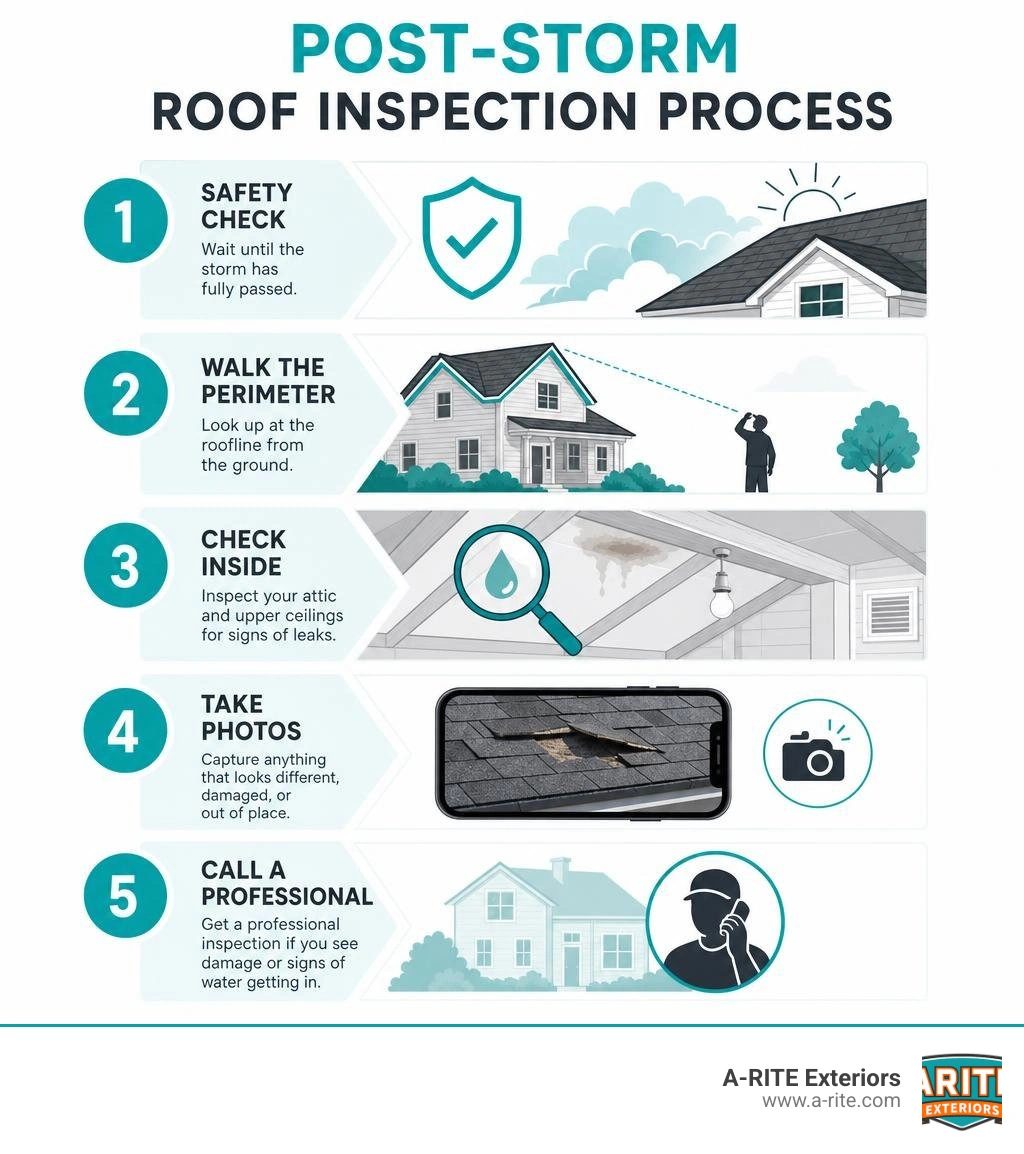
Quick answer:
- Wait until the storm has fully passed and it is safe to go outside.
- Walk the perimeter of your home and look up at the roofline from the ground.
- Check inside your attic and upper ceilings for water stains, wet insulation, or musty smells.
- Take photos of anything that looks different, damaged, or out of place.
- Call a professional if you see missing shingles, dented gutters, lifted flashing, or any sign of water getting in.
You do not need to climb on the roof yourself to do a useful first check. A ground-level walk around your home, combined with a quick look in the attic, can reveal most of the early warning signs.
That said, professional inspectors catch a lot more than a homeowner can see from the ground. Research shows professional inspection protocols can achieve around 90% accuracy in identifying storm damage, compared to roughly 55% for homeowners doing it themselves. Skipping the interior check entirely can miss up to half of active leaks.
I'm Bryan Londerville, founder of A-RITE Exteriors, and I've been helping Central Wisconsin homeowners answer the question of should I inspect my roof after a storm since 2002, having seen how quickly minor storm damage turns into costly interior repairs when it goes unnoticed. In the sections below, I'll walk you through exactly what to look for, when to look, and how to stay safe while you do it.
Why should I inspect my roof after a storm?
Leaving your roof unexamined after a severe weather event is a gamble that rarely pays off. Even if there are no immediate drips in your living room, high winds and heavy hail can compromise your home's primary line of defense. Understanding the signs of storm damage early is the best way to protect your investment and maintain the structural integrity of your property.
When storms roll through Central Wisconsin, they often leave behind hidden leaks. Water has a sneaky way of traveling along rafters and sheathing before it ever pools on a ceiling. If you wait until you see a water spot in your bedroom, the underlying wood may have been rotting for weeks.
Furthermore, storm damage directly impacts your shingle lifespan. Asphalt shingles are manufactured with a protective top layer of mineral granules. These granules shield the asphalt mat from ultraviolet (UV) rays. When hail strikes a shingle, or when high winds flex it, those granules loosen and wash away.
Industry data shows that a 20% loss in granules can cut an asphalt shingle’s lifespan by up to 60%. Once the raw asphalt is exposed to the sun, it dries out, becomes brittle, and cracks. By keeping up with post-storm checks and utilizing professional Services: Roofing, you can catch granule loss and other issues before they lead to premature roof failure.
When should I inspect my roof after a storm?
Timing is everything. You should aim to perform your initial inspection within 24 to 48 hours after the weather clears. This window is critical for two reasons: first, it allows you to connect any discovered damage directly to the specific weather event for insurance purposes; second, it stops minor issues from turning into active leaks during the next rainfall.
Always wait for clear, calm weather before stepping outside to look. Trying to assess damage while wind is still gusting or rain is falling is dangerous and ineffective. For a detailed breakdown of timing and preparation, you can review this guide on When to inspect your roof system.
How should I inspect my roof after a storm safely?
Your physical safety is always the number one priority. No shingle is worth a trip to the emergency room.
- Stay on the ground: The safest way to inspect your roof is with your feet firmly planted on the grass or driveway.
- Use binoculars: A good pair of binoculars allows you to see individual shingles, flashing, and valley areas clearly without climbing.
- Wear safety gear: If you are walking around your yard looking up, wear sturdy, closed-toe shoes to protect your feet from fallen branches, stray nails, or broken glass.
- Practice ladder safety: If you must use a ladder to get a better view of your gutters, always have a spotter hold the base, ensure it is on level ground, and never climb onto the roof surface itself.
- Watch for power lines: Look out for downed utility lines, especially those hidden by fallen tree limbs. Treat every wire as live and dangerous.
Spotting storm damage from the ground and inside your home

A thorough post-storm evaluation does not require high-wire acts. By combining a systematic ground-level perimeter check with an indoor attic investigation, you can spot the vast majority of storm-related issues.
Start by walking slowly around the entire perimeter of your home. Use your binoculars to scan the roof from different angles. Look closely at the gutters, downspouts, and metal flashing around your chimney and vents. Once you have completed the outdoor portion, head inside to check your attic and living space ceilings. If your area was recently hit by hail, it is helpful to understand the process of identifying 4 common signs of hail damage to know exactly what your binoculars should be focusing on.
Ground-level exterior clues
When conducting your ground-level visual check, look for these common indicators of exterior damage:
- Missing shingles: High winds can tear shingles completely off, leaving exposed dark patches of underlayment or bare wood decking.
- Curled, lifted, or split shingles: Wind can break the adhesive sealant strip underneath a shingle, causing it to lift or curl up at the edges.
- Dented gutters and downspouts: Gutters are excellent indicators of hail. If your metal gutters have visible dings and dents, your shingles likely took a beating too.
- Granule accumulation: Check your gutter downspout exits. If you see piles of dark, sand-like granules on the ground or inside your gutters, your shingles have lost a portion of their protective coating.
For a deeper look at what to check before contacting a professional, you can read more about Signs Your Roof Is Damaged After a Storm: What to Check Before Calling a Contractor (A Nation of Moms).
Interior and attic warning signs
Do not stop at the exterior. Some of the most telling signs of storm damage are found inside your home. Take a flashlight and head up to your attic or top floor to check for:
- Water spots and ceiling stains: Look for yellow, brown, or gray rings on your drywall ceilings and upper walls.
- Wet insulation: Feel the insulation in your attic. If it is damp or matted down, water is finding a way through the roof deck.
- Daylight through the decking: Turn off your flashlight while inside the attic. If you see pinpricks of daylight shining through the wood roof boards, you have holes that require immediate attention.
- Musty or damp smells: A sudden musty odor in your attic or upper-floor closets is a strong indicator of trapped moisture and potential mold growth.
Skipping these indoor checks can lead to major issues, as water often pools in the attic long before it drips into your living spaces.
How different weather events and roof types affect your home
Not all storms damage a roof in the same way. A high-wind event creates different patterns of destruction than a heavy hailstorm or a cold Wisconsin winter freeze. Similarly, the material your roof is made of determines how it responds to these forces.
| Storm Type | Common Roof Damage | Affected Materials |
|---|---|---|
| High Winds | Lifted shingles, broken seal strips, missing sections, damaged flashing | Asphalt shingles, metal panels, wood shakes |
| Hail | Bruised spots, granule loss, fractured mats, cracked tiles, dented metal | Asphalt shingles, clay/concrete tiles, metal roofing |
| Heavy Rain | Active leaks, pooled water on flat sections, gutter overflow | All roofing types, especially flat or low-slope sections |
| Snow & Ice | Ice dams, structural sagging, backed-up meltwater, split seams | All roofing types, particularly at the eaves and valleys |
If you live in Portage, Marathon, or surrounding counties, you are likely familiar with how unpredictable our weather can be. If you suspect your home has been hit by a recent storm, you can read our localized guide on Hail Damage Wausau.
Wind, hail, and winter storm patterns
During a windstorm, the edges of your roof are the most vulnerable. Wind catches loose shingles, breaking their adhesive seals and peeling them back. Once a seal is broken, the shingle can flap in the wind, crack, or blow away entirely.
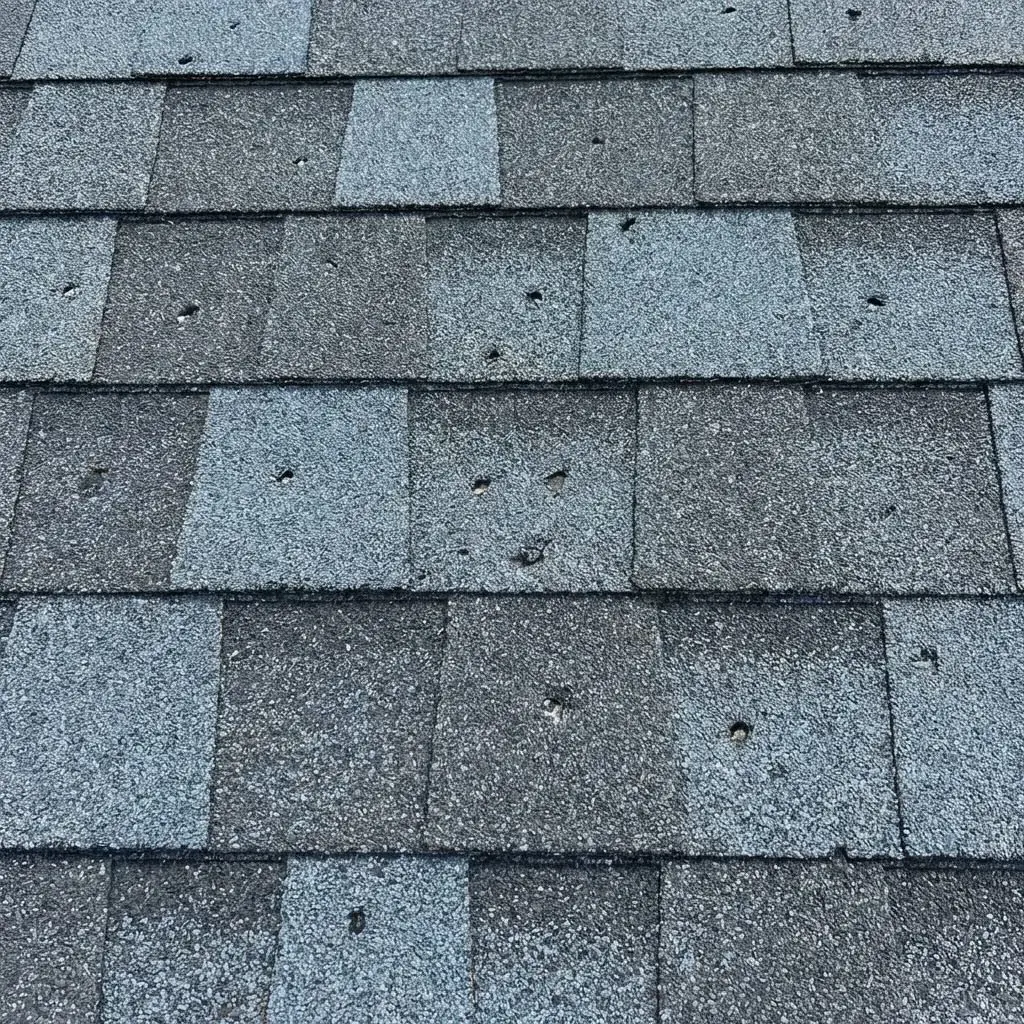
Hail damage is more random. It looks like dark, round bruises on asphalt shingles where granules have been crushed into the asphalt mat. Hail as small as 1 inch in diameter can cause significant functional damage.
In the winter, snow and ice present a different threat. When heat escapes from your attic, it can melt the snow on your roof. This meltwater runs down to the cold eaves and freezes, forming an ice dam. Ice dams can back water up under your shingles, leading to hidden leaks. If you are dealing with winter weather issues, consulting a local professional can help you understand how cold weather affects your roof system.
Material-specific vulnerabilities
Different roofing materials react uniquely to storm forces:
- Asphalt shingles: Vulnerable to granule loss, wind uplift, and hail bruising.
- Metal roofing: Highly wind-resistant, but can sustain cosmetic or functional dents from large hail.
- Clay and concrete tiles: Strong, but can crack or break if struck by heavy hail or falling tree limbs.
- Wood shakes: Can split along the grain under heavy hail impact or warp after repeated wet-and-dry cycles.
Navigating repairs, insurance claims, and contractor red flags

Finding storm damage can be stressful, but taking organized, deliberate steps will help you navigate the repair and insurance process smoothly. Knowing who to trust and what documentation to gather makes all the difference. If you are wondering about the best local resources, you can read our guide on Who Should I Call for Storm Damage Roof Repair in Wausau or Central Wisconsin.
Documenting damage and filing your claim
If you suspect your roof has storm damage, start documenting it immediately. A well-organized file is your best asset when dealing with an insurance adjuster.
- Create a photo log: Take clear, date-stamped photos of any damage you can see from the ground, as well as any water stains inside your home.
- Write a storm timeline: Note the exact date and time of the storm, and save any local weather alerts or news reports about hail or high winds in your area.
- Review your policy: Understand your deductible and coverage limits before filing.
- File promptly: Most insurance policies have specific timeframes within which you must file a claim after a storm occurs.
For official guidance on dealing with property damage, you can consult the Storm Damage | Building Inspection | City of Madison, WI resources, or read about real homeowner experiences in this Wisconsin Rapids State Farm roof replacement after hail... discussion.
Deciding between roof repair and full replacement
Not every damaged roof needs to be completely replaced. The decision between a targeted repair and a full replacement usually comes down to three factors: the age of your roof, the extent of the damage, and whether the damage is functional or cosmetic.
If your roof is under 10 years old and has only lost a few shingles in a localized area, a professional repair is often the most practical solution. However, if your roof is over 15 to 20 years old, or if more than 25% of the roof surface has sustained functional damage, a full replacement is often the safer, more cost-effective choice in the long run.
To explore your options, you can look into professional Services: Repairs.
Avoiding out-of-area contractors
After a major storm, out-of-area contractors often travel into affected neighborhoods, knocking on doors and offering quick, cheap repairs. While some may be legitimate, many lack the proper local licensing, insurance, and long-term commitment to our community.
- Ask for proof of licensing and insurance: A reputable local contractor will always provide these documents willingly.
- Check local references: Look for reviews from homeowners in your immediate area.
- Get everything in writing: Never agree to work based on a verbal estimate or high-pressure sales tactics.
- Consider future support: Some out-of-area contractors may be harder to reach later if warranty or service issues come up.
Frequently Asked Questions about post-storm roof inspections
Can hail damage a roof even if there are no active leaks?
Yes. Hail damage is often functional rather than immediately structural. A hail strike can fracture the underlying fiberglass mat of an asphalt shingle without tearing it completely open. Over time, the sun's UV rays and normal rainfall will degrade the damaged area, eventually leading to a leak months or even years down the road. A professional inspection is the best way to catch these hidden issues early.
Should I call my insurance company or a roofer first?
It is usually best to have a reputable local roofing contractor inspect your roof before you file an official insurance claim. A professional roofer can verify whether actual, functional damage exists, document it with clear photos, and help you determine if the repair costs will exceed your policy deductible. This prevents you from filing unnecessary claims that could affect your insurance record.
Is cosmetic storm damage covered by homeowners insurance?
In most cases, homeowners insurance is designed to cover functional damage that affects the roof’s ability to shed water and protect your home. Superficial dents on metal roofing or minor shingle scuffs that do not compromise the material's performance are often classified as cosmetic and may not be covered, depending on the specific terms of your policy.
Conclusion
Taking the time to inspect your roof after a storm is one of the simplest, most effective ways to protect your home from long-term water damage. By starting safely on the ground, checking your attic, and working with a trusted local professional, you can address minor issues before they turn into costly headaches.
At A-RITE Exteriors, we have spent nearly a quarter of a century helping our neighbors in Wausau, Stevens Point, Minocqua, and throughout Central Wisconsin keep their homes safe and dry. If you suspect your roof has sustained storm damage, or if you need assistance preparing your home for the next season, we are here to help.
For reliable, local service and peace of mind, you can Schedule ice dam removal or roof support with our team. Trust the Hawk on Your Block.