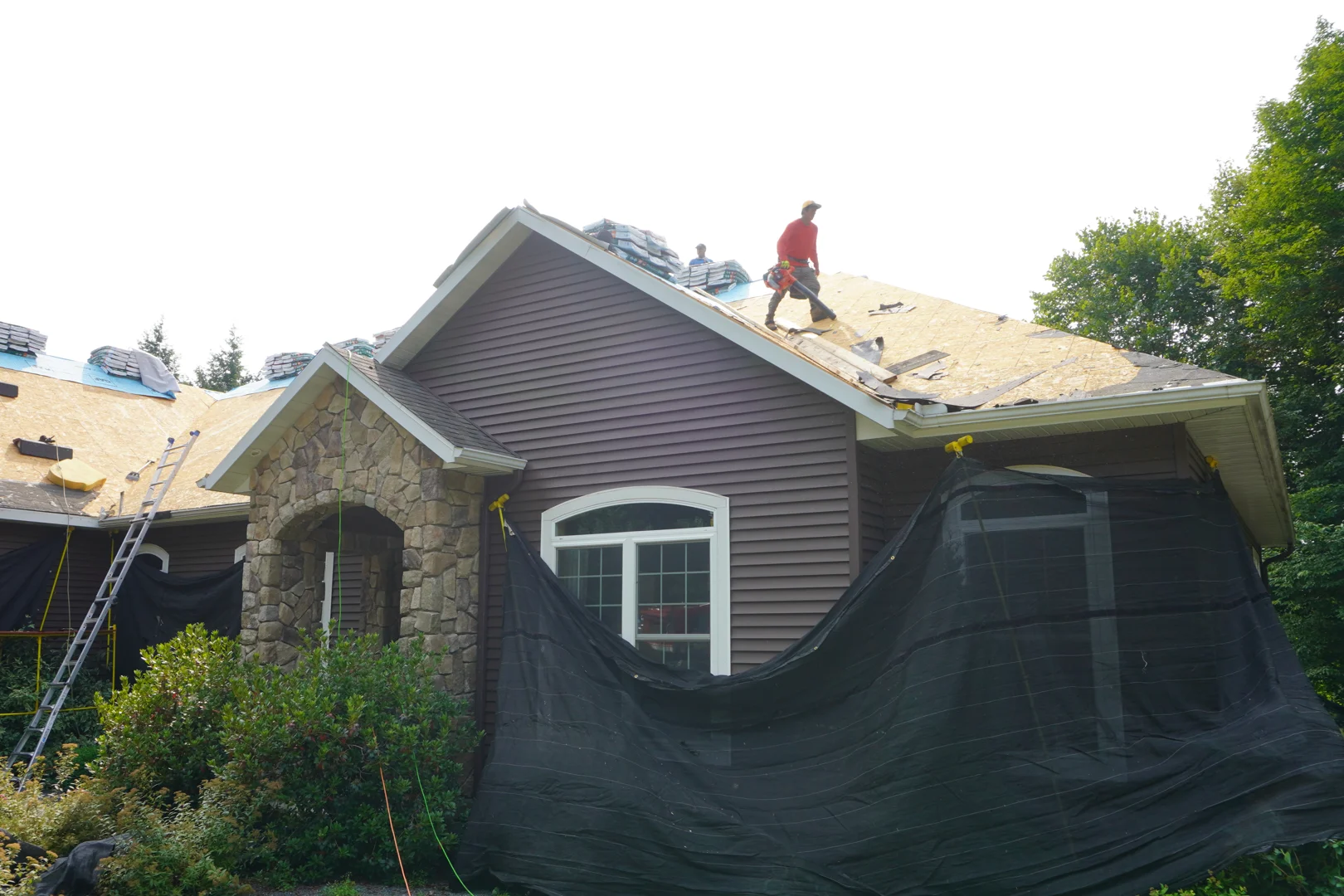
Should I Replace My Roof Before Selling My House in Central Wisconsin? Key Factors to Evaluate
You should replace your roof before selling your house in Central Wisconsin when the roof has active leaks, widespread missing or cracked shingles, advanced granule loss, sagging roof deck lines, or structural damage that would fail a buyer's home inspection or block mortgage and insurance approval. If the roof is generally sound with only isolated wear, targeted repairs or a roof certification may be enough. Selling as-is can make sense when the home needs extensive repairs elsewhere or you lack the cash for a full replacement.
When you prepare to put your property on the market in communities like Wausau, Stevens Point, Merrill, or Wisconsin Rapids, you are competing against homes where buyers expect shelter built to handle harsh northern winters. Deciding whether to invest in a full teardown or list the property in its present state requires balancing the physical state of the building, neighborhood comparable sales, remaining equity, and local buyer psychology.
In Central Wisconsin, buyers are value-conscious and practical. When they pull up to a house, their immediate visual impression sets the emotional tone for the rest of the showing. Because the roof surface makes up a large share of a home's visible exterior facade, an aged, streaked, or deteriorating roof immediately signals deferred maintenance throughout the rest of the property. Evaluating key factors beforehand helps you prevent painful price cuts later in the transaction.
Signs That Answer: Should I Replace My Roof Before Selling My House in Central Wisconsin?
A roof does not always need to be actively dripping into your living room to warrant replacement before a sale. Subtler physical warnings often tell home inspectors and appraisers that the system is past its functional prime.
Key physical warning signs include:
- Heavy granule loss: Bald spots on asphalt shingles or piles of colored granules gathering in gutters indicate the protective mineral layer has eroded, leaving the asphalt mat vulnerable to UV exposure.
- Curling, cupping, or clawing shingles: Shingles that curl at the edges or buckle in the middle are brittle and prone to blowing off during high-wind events.
- Widespread missing or cracked shingles: Isolated wind-blown shingles can be patched, but widespread brittleness means the adhesive seals have failed system-wide.
- Sagging roof deck lines: A wavy roofline often points to saturated, rotting OSB or plywood decking underneath, which can cost thousands of dollars, and severe cases can cost much more to remediate if structural rafters or trusses are compromised.
- Interior moisture markers: Water stains along ceiling corners, damp insulation in the attic, or dark water trails along chimney masonry. Understanding the signs of hidden roof damage helps you find problems before a buyer's private home inspector exposes them.
- System age: Standard 3-tab shingles typically last 15 to 20 years under normal conditions, while architectural shingles commonly perform for 20 to 25 years or more. If you are evaluating an 18-year-old roof, it is operating near the end of its typical service life, which triggers heightened scrutiny from mortgage underwriters and insurance adjusters.
How Central Wisconsin Weather Accelerates Roof Failure
Central Wisconsin experiences aggressive seasonal shifts. From sub-zero January temperatures in Minocqua and Tomahawk to humid 90-degree summer heat in Green Bay and Weston, roofing materials expand and contract constantly through severe freeze-thaw cycles.
Winter brings heavy snow loads. When a home lacks balanced attic ventilation and sufficient insulation, heat escapes from the living spaces into the attic cavity. This warm air melts the bottom snow layer on the roof deck. The runoff flows down toward the cold eaves, gutters, and overhangs, where it refreezes into thick ice dams. As water backs up behind the ice dam, it works upward underneath the shingle laps, soaking the underlayment and rotting the roof sheathing.
Proper winterization requires an integrated system. Choosing the best roofing system for Wisconsin weather means considering durable architectural shingles, balanced intake and exhaust ventilation, and cold-climate underlayment details. Ice and water shield helps protect against water intrusion if ice dams occur, but it does not prevent ice dams by itself. When buyers evaluate your listing in late autumn or mid-winter, evidence of past ice dams, such as rusted drip edges or water-stained soffits, can instantly sink their confidence.
Return on Investment and Financial Impact of a New Roof
One of the most common misconceptions among sellers is that pre-listing capital improvements must return dollar-for-dollar profit at closing. In reality, major exterior structural updates act as value preservation tools that defend your asking price and eliminate financing roadblocks.

According to national remodeling benchmarks and regional cost-versus-value studies, replacing a roof yields strong returns compared to discretionary luxury remodels. The 2024 Remodeling Impact Report from the National Association of Realtors notes that a new roof replacement recovers roughly 100% of its cost at resale when replacing a completely worn-out or leaking system that otherwise blocks a transaction.
| Roofing Material Scope | Typical Cost Range | Average Resale Value Added | Estimated Regional ROI |
|---|---|---|---|
| Midrange Asphalt Shingles | Upper four figures to mid five figures | $17,461 | 56.9% |
| Standing Seam Metal Roofing | Upper four figures to mid five figures or more, depending on scope | $24,034 | 48.1% |
| High-ROI Exterior Fixes (Garage Door) | $2,000 to $4,500 | ~$3,880 to $8,700 | ~194% |
| Interior Painting (Whole House) | $1,500 to $4,500 | ~$1,500 to $9,000 | 100% to 200% |
Financial ROI: Should I Replace My Roof Before Selling My House in Central Wisconsin?
When examining the numbers, asphalt shingle replacements generally yield higher financial efficiency for resale than premium metal systems. While standing seam metal roofs deliver outstanding multi-decade weather protection and shedding capability for northern snow belts, their higher upfront investment yields a lower percentage return at sale (around 48.1% compared to 56.9% for asphalt shingles) because standard residential appraisal models rarely credit the full cost premium of metal over dimensional shingles.
To understand total out-of-pocket costs, review roof replacement costs in Central Wisconsin. Roof replacements typically range across upper four figures to mid five figures, and the final price depends on roof size, pitch, number of layers, decking, materials, and labor. A-RITE offers financing through Service Finance, and example terms are available on its financing page. Financing options are available for qualifying homeowners. Loan amounts up to $100,000 unsecured may be available, with final approval, rates, and terms based on lender review and credit qualification. Financing is subject to credit approval.
Investing in necessary structural items protects your baseline equity. For sellers looking to optimize net proceeds, pair essential roof repairs with proven, budget-conscious curb appeal improvements, such as a new garage door, fresh neutral interior paint, and clean landscaping mulch. Combining these exterior improvements addresses what buyers care about most: safety, structural integrity, and move-in readiness. To understand how buyers often rank these updates, talk with a trusted local real estate professional about smart fixes that matter to buyers in Central Wisconsin.
Upfront Replacement Costs vs. Buyer Concessions and Price Drops
When an older roof with obvious defects goes live on the MLS, buyers rarely calculate repair estimates neutrally. Instead of deducting the real-world contractor cost, prospective purchasers apply a heavy "risk discount."
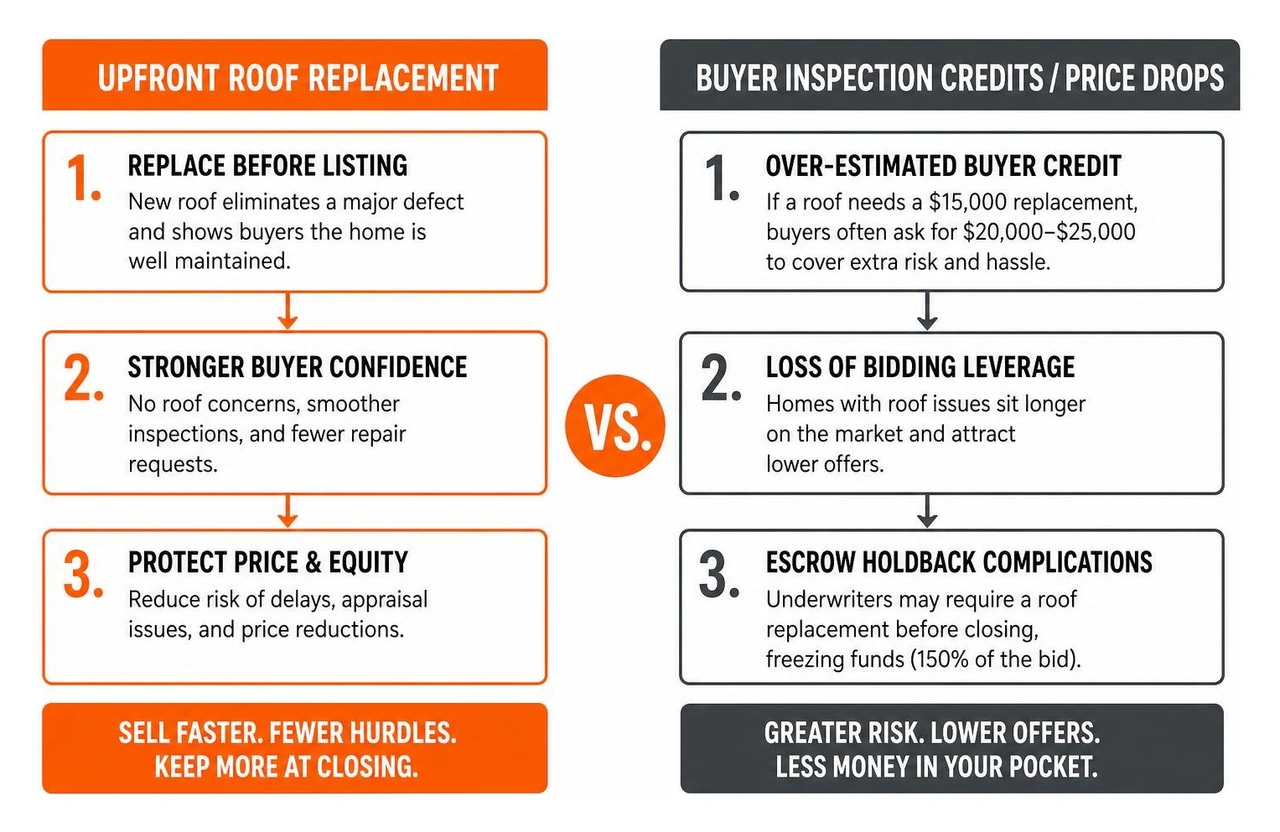
Consider what happens during standard contract negotiations:
- The Over-Estimated Buyer Credit: If a roof needs replacement, a nervous buyer may ask for a concession above the contractor bid to cover unexpected structural rot, schedule delays, or the hassle of managing contractors after moving in.
- Loss of Bidding Leverage: Listings with severe deferred maintenance sit on the market longer in places like Mosinee, Kronenwetter, or Plover. As days on market accumulate, buyers assume something is wrong and submit low-ball cash offers.
- Escrow Holdback Complications: If an underwriter demands a roof replacement prior to loan funding, sellers may face stressful escrow holdbacks where more than the replacement bid is frozen from their closing proceeds.
Knowing what is included in a roof replacement estimate helps you evaluate true contractor scope, including ice barrier underlayments, chimney counterflashing, drip edges, waste disposal, and manufacturer warranties, giving you hard data rather than speculative buyer demands.
Buyer Financing, Insurance Mandates, and Legal Disclosures
Beyond market appeal and price negotiation, your roof directly affects whether a buyer's bank will fund their loan and whether an insurance company will write an active property hazard policy.
Loan Approvals: FHA, VA, and Conventional Mortgage Standards
A substantial portion of Central Wisconsin buyers utilize government-backed financing programs, including Federal Housing Administration (FHA), Department of Veterans Affairs (VA), and United States Department of Agriculture (USDA) rural development loans.
These programs enforce strict Minimum Property Standards (MPS):
- Two-Year Useful Life Rule: FHA and VA appraisers must certify that the roof shows no active leaks and possesses a reasonable remaining physical lifespan, typically defined as at least two to three years of functional service.
- Safety and Structural Soundness: Missing shingles, soft decking spots, rotted fascia boards, and failing valley flashings are classified as immediate safety hazards. Appraisers will issue a "subject-to-repair" requirement, halting the loan closing until repairs are executed and re-inspected by a licensed contractor.
- Conventional Appraisals: Even standard Fannie Mae and Freddie Mac conventional loans can stall if the appraiser flags severe curling or structural sagging as a threat to the collateral value of the property.
To explore how these financing regulations interact with real estate transactions across the state, talk with your lender, real estate agent, or attorney about structural repairs and pre-sale remodels in Wisconsin. You can also review FHA minimum property standards for additional context on roof condition requirements.
Insurance Underwriting and Policy Restrictions in Central Wisconsin
In recent years, property and casualty insurance carriers across Wisconsin have tightened roof underwriting requirements. Many national and regional insurers now decline to write new homeowner policies on properties with asphalt shingle roofs that exceed 15 to 20 years of age, regardless of whether an active leak exists.
When an insurer inspects a property via satellite imagery or physical drive-by:
- They may issue a conditional binder requiring the roof to be replaced within 30 to 60 days of closing.
- They may switch coverage from full Replacement Cost Value (RCV) to Actual Cash Value (ACV), paying only depreciated pennies on the dollar in a future hail storm.
- If the buyer cannot secure an acceptable hazard insurance policy, their mortgage lender will refuse to clear the file for closing.
Wisconsin Seller Disclosure Laws and Pre-Listing Inspections
Under Wisconsin Statute Chapter 709, residential sellers must complete a formal Real Estate Condition Report. State law mandates the honest disclosure of all known "material adverse facts" and structural defects that affect the property's health, safety, or value.
If your roof has leaked during spring thaws or you have suffered recurring ice dams along the soffits, you are legally required to disclose these issues in writing. Failing to disclose known water intrusion can expose you to post-closing lawsuits for misrepresentation.
To protect yourself, consider ordering a pre-listing roof inspection ($300 to $500). An upfront professional assessment lets you discover hidden issues, perform targeted repairs on your own schedule, or attach contractor estimates directly to your disclosure documents. For additional guidance, talk with your real estate agent or attorney about how to sell a house that needs a new roof in Wisconsin.
Replace, Repair, or Sell As-Is: Choosing Your Pre-Sale Strategy
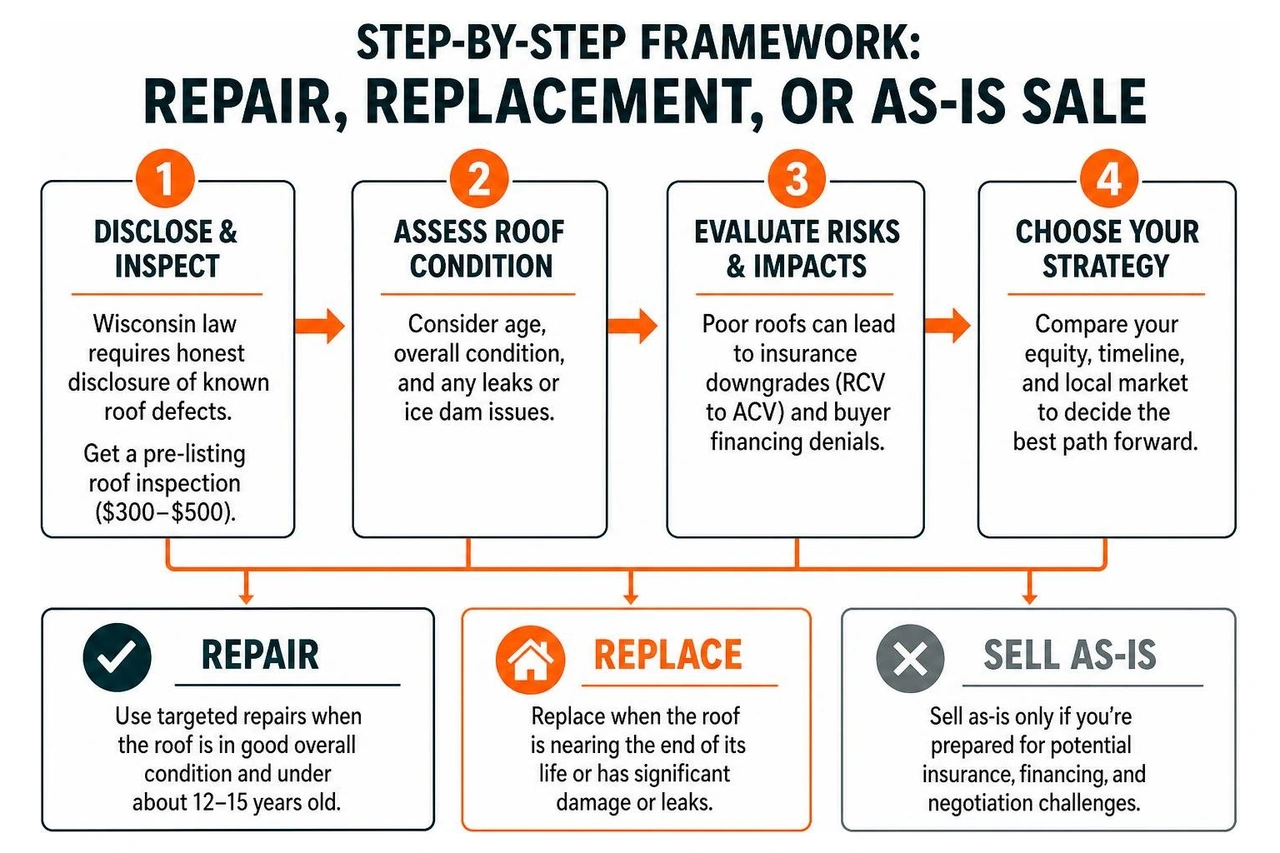
Every homeowner's financial standing and timeline are unique. Choosing whether to fully re-roof, conduct strategic repairs, or market the home as-is comes down to assessing your equity, timeline, and neighborhood comps.
When Targeted Repairs Make More Sense Than Full Replacement
A complete replacement is not always required to achieve a clean inspection and a successful closing. If the shingle system has good overall pliability and is less than 12 to 15 years old, targeted maintenance is often the most cost-effective path.
Targeted repairs work best when:
- Damage is confined to isolated issues, such as a few wind-blown ridge caps or compromised rubber pipe boots around plumbing vents.
- Wall and valley step-flashings need resealing or remounting around dormers or chimneys.
- A reputable local roofing contractor can perform repairs and supply a written report verifying that the roof remains structurally sound with several years of remaining service life.
To evaluate your roof's condition, learn how to tell whether a roof needs repair or complete replacement.
When Selling As-Is Is the Smarter Financial Route
Selling "as-is" means marketing the property in its current physical condition with no seller-funded repairs or closing allowances. While this reduces upfront out-of-pocket expenses, it requires setting an asking price that reflects needed updates.
Selling as-is is typically advisable if:
- Major repairs are needed throughout: The home requires an overhaul of the HVAC system, foundation, electrical panel, and plumbing, making a standalone roof replacement insufficient to attract conventional retail buyers.
- Equity or cash constraints: You lack the liquid capital to finance roof repairs upfront and prefer not to take on short-term project debt.
- Inherited or estate properties: The executor lives outside Central Wisconsin (such as in Boulder Junction, Lac du Flambeau, or Lake Tomahawk) and needs a quick, clean transaction without managing contractors.
- Targeting cash investors: Cash buyers and renovation investors calculate repair expenses into their acquisition models and do not rely on strict bank appraisals.
Frequently Asked Questions About Selling a House with an Aging Roof
Will an old roof fail a buyer’s home inspection?
A home inspector does not issue a formal "pass" or "fail" grade. Instead, they compile an itemized report documenting the age, observable defects, remaining life expectancy, and moisture indicators of the roofing assembly. However, if the inspector flags active wood rot, major granule depletion, or missing flashing, the buyer will typically use those findings as leverage to request significant repair credits, price cuts, or a mandatory replacement prior to closing.
What is a roof certification and can it save my sale?
A roof certification is an official, written statement from a licensed roofing contractor certifying that the roof has been inspected, is currently free from active leaks, and has an estimated remaining lifespan of at least 2 to 5 years. For homes with 15- to 18-year-old roofs that remain in good physical condition, a certification can satisfy FHA, VA, and conventional mortgage underwriters without requiring the seller to fund a full replacement.
Does a new roof improve curb appeal enough to speed up a sale?
Yes. In Central Wisconsin, where single-family homes, ranches, and split-levels often feature prominent, forward-facing roof pitches, the roof represents a large share of the home's street-level appearance. A clean architectural shingle roof with crisp ridge lines and new drip edges can reassure prospective buyers that the home is weather-tight, which may help reduce average days on market and improve showing activity.
Conclusion
Deciding whether to replace your roof before selling your home in Central Wisconsin depends on balancing condition, financing rules, and net financial return. If your roof suffers from active leaks, extensive hail or storm damage, advanced granule loss, or structural sagging, replacing it before listing protects your equity, satisfies buyer mortgage lenders, and prevents deals from falling through. Conversely, if the roof has minor, isolated wear, a targeted repair paired with a pre-listing inspection may preserve your cash and keep your transaction moving forward.
When vetting estimates, keep in mind that a lower price may reflect differences in materials, scope, cleanup, warranty coverage, or installation details. Always work with licensed, established local professionals who understand cold-climate exterior construction.
If you are preparing to list your property anywhere across Central Wisconsin, including Wausau, Schofield, Weston, Rib Mountain, Rothschild, Mosinee, Stevens Point, or Green Bay, our team is here to help you evaluate your exterior systems. Explore our professional Central Wisconsin roofing services to schedule an honest roof assessment and move toward a confident, profitable closing.