How Does the Age of Your Roof Impact Its Remaining Lifespan?
When evaluating an 18-year-old roof, age is the single most predictive factor in determining how much useful life remains. However, how gracefully a roof reaches age 18 depends heavily on the specific material installed on your home.
Roofing Material Lifespan Breakdown
Different roofing materials wear down at vastly different rates:
- 3-Tab Asphalt Shingles: Standard 3-tab asphalt shingles have a typical expected lifespan of 15 to 20 years. At 18 years old, a 3-tab shingle roof is commonly at or past the end of its functional service life. The asphalt binders have dried out, making the shingles brittle, prone to wind uplift, and vulnerable to moisture penetration.
- Architectural Asphalt Shingles: Dimensional or architectural shingles commonly carry manufacturer ratings of 25 to 30 years or more. At 18 years, an architectural shingle roof has entered its late service-life window (around 60 to 70% of its total lifespan). While it may still have functional life remaining, its resistance to severe weather declines steadily each year. Furthermore, some architectural shingles are rated up to 110 to 130 mph when installed as part of the required system, but that wind resistance commonly degrades as shingles age and lose adhesion.
- Standing Seam Metal Roofing: Metal roofing systems commonly last 40 to 70 years. At 18 years, a properly installed metal roof is effectively in its prime, provided sealants and fasteners are inspected periodically.
The 80% Lifespan Rule
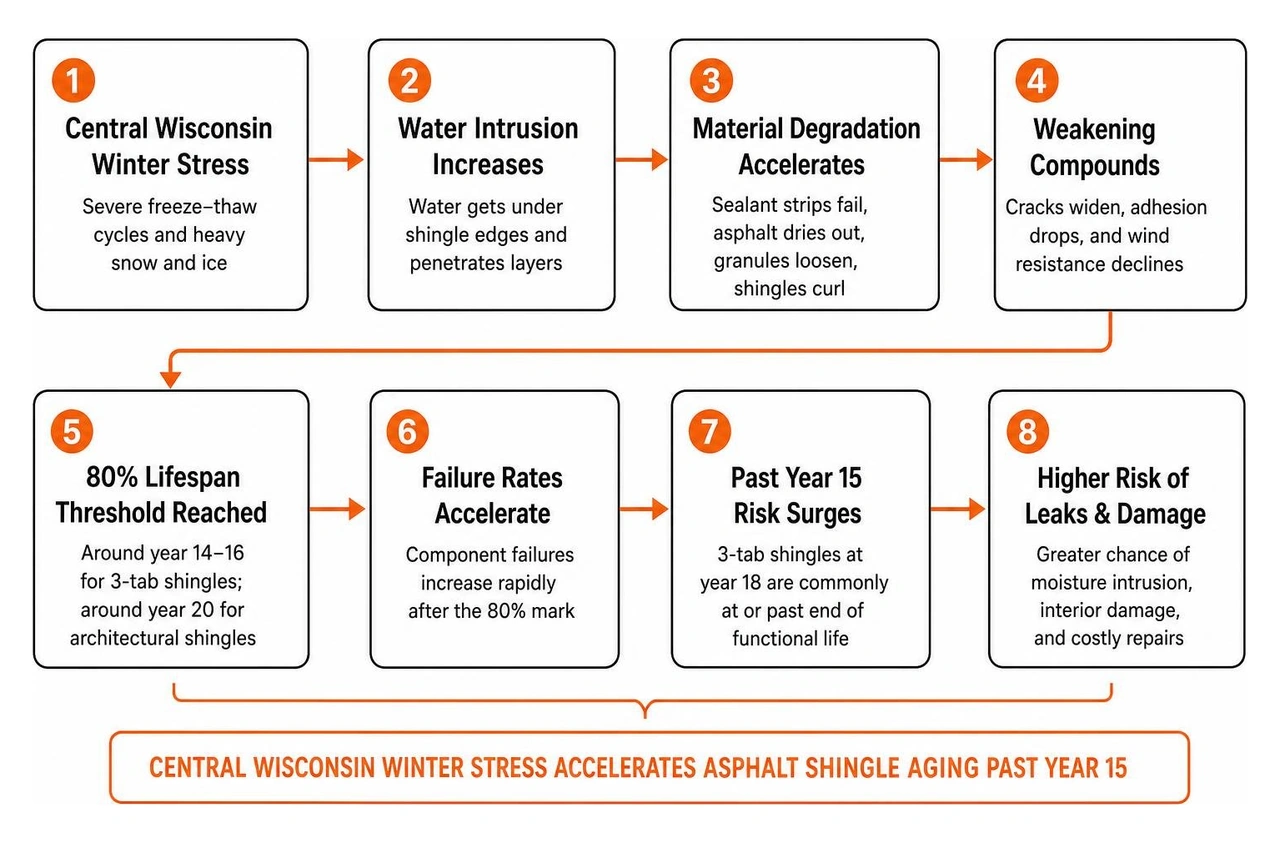
In the roofing industry, the 80% Lifespan Rule is a recognized benchmark for evaluating risk. Once a roofing system reaches 80% of its expected material lifespan, component failure rates accelerate rapidly.
For a 3-tab asphalt shingle roof with an average 18-year life expectancy, hitting year 14 to 16 marked the 80% threshold. At year 18, you are operating on borrowed time. For architectural shingles with a 25-year service window, year 20 represents the 80% mark, meaning an 18-year-old architectural roof is approaching that steep acceleration curve.
According to resources on Understanding Residential Roof Repairs How Do I Know if my Roof Needs to be Replaced , replacing a system near the end of its functional life is frequently more economical than patching recurring failures. Actual performance always varies by product, installation, ventilation, maintenance, and weather exposure.
Central Wisconsin Climate Acceleration
National average lifespans rarely apply directly to homes in Central Wisconsin communities like Wausau, Stevens Point, Green Bay, and Minocqua. Our severe weather patterns subject roofing materials to intense localized stress:
- Freeze-Thaw Cycles: Fall and spring bring daily oscillations above and below freezing. Water trapped under aging, curled shingle edges expands as it freezes, breaking sealant strips and widening micro-cracks in the asphalt substrate.
- Ice Dam Formation: Heavy winter snow loads combined with heat escaping into uninsulated or poorly ventilated attics create ice dams along eaves. Water backs up under 18-year-old shingles where underlayment membranes may have already degraded.
- Thermal Shock: Extreme temperature swings from sub-zero winter nights to direct sun exposure cause asphalt shingles to expand and contract rapidly, expediting asphalt granule shedding.
Because of these environmental pressures, an 18-year-old roof in Central Wisconsin often exhibits physical wear equivalent to a 22-year-old roof in a milder climate zone. Understanding What is the Best Roofing System for Wisconsin Weather helps ensure your home stays protected against our regional climate realities.
What Physical Signs Indicate Your 18-Year-Old Roof Needs Immediate Replacement?
Visual inspections from the ground, inside the attic, and along the roofline reveal whether your 18-year-old roof can safely wait or requires immediate action.
Exterior Shingle Warning Signs
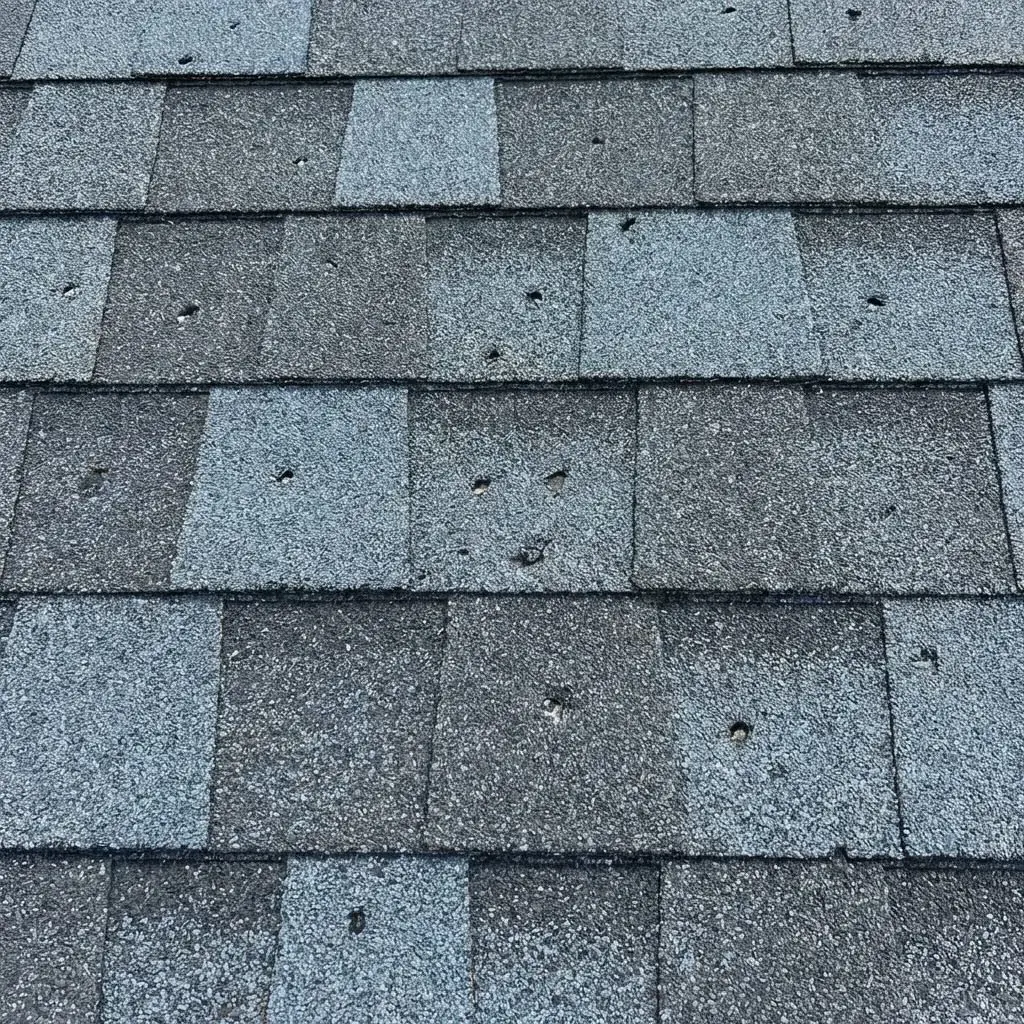
- Curling, Cupping, and Clawing: As asphalt shingles lose volatile oil compounds over 18 years of sun exposure, they shrink and turn upward at the edges (cupping) or bubble up in the middle (clawing). Curled edges catch winter winds, leading to blown-off shingles.
- Heavy Granule Loss ("Roof Sand"): Asphalt granules protect the underlying petroleum-based membrane from UV radiation. Check your rain gutters and downspout discharge zones. A thin coating of sediment is normal on new roofs, but heavy accumulation resembling coarse black sand indicates that shingle cores are directly exposed to sunlight.
- Missing or Fractured Shingles: If storm winds repeatedly break off brittle sections, spot repairs become temporary band-aids that leave surrounding aged shingles vulnerable.
Structural and Flashing Failures
- Sagging Roofline: Stand across the street and sight along your roof planes and ridge lines. A dip or waviness often indicates structural decking rot beneath the shingles caused by long-term moisture intrusion.
- Deteriorated Flashing: Flashings around chimneys, vent pipes, valleys, and sidewalls rely on rubber boots and metal sealants. After 18 years, rubber pipe boots frequently crack and split due to weather exposure, providing direct pathways for rain and ice melt.
- Persistent Moss and Algae: While surface algae (dark streaks) is primarily cosmetic, thick moss growth acts like a sponge, holding moisture against shingle surfaces. During winter freeze-thaw cycles, trapped moisture beneath moss expands and breaks the shingle bond.
Hidden Interior and Attic Warning Signs
Inspecting your attic interior on a bright sunny day, and immediately following a rainstorm or winter thaw, provides crucial evidence:
- Visible Daylight: Turn off attic lights and look upward toward the roof boards. Pinpricks of daylight through sheathing boards signal penetrated underlayment and missing shingles.
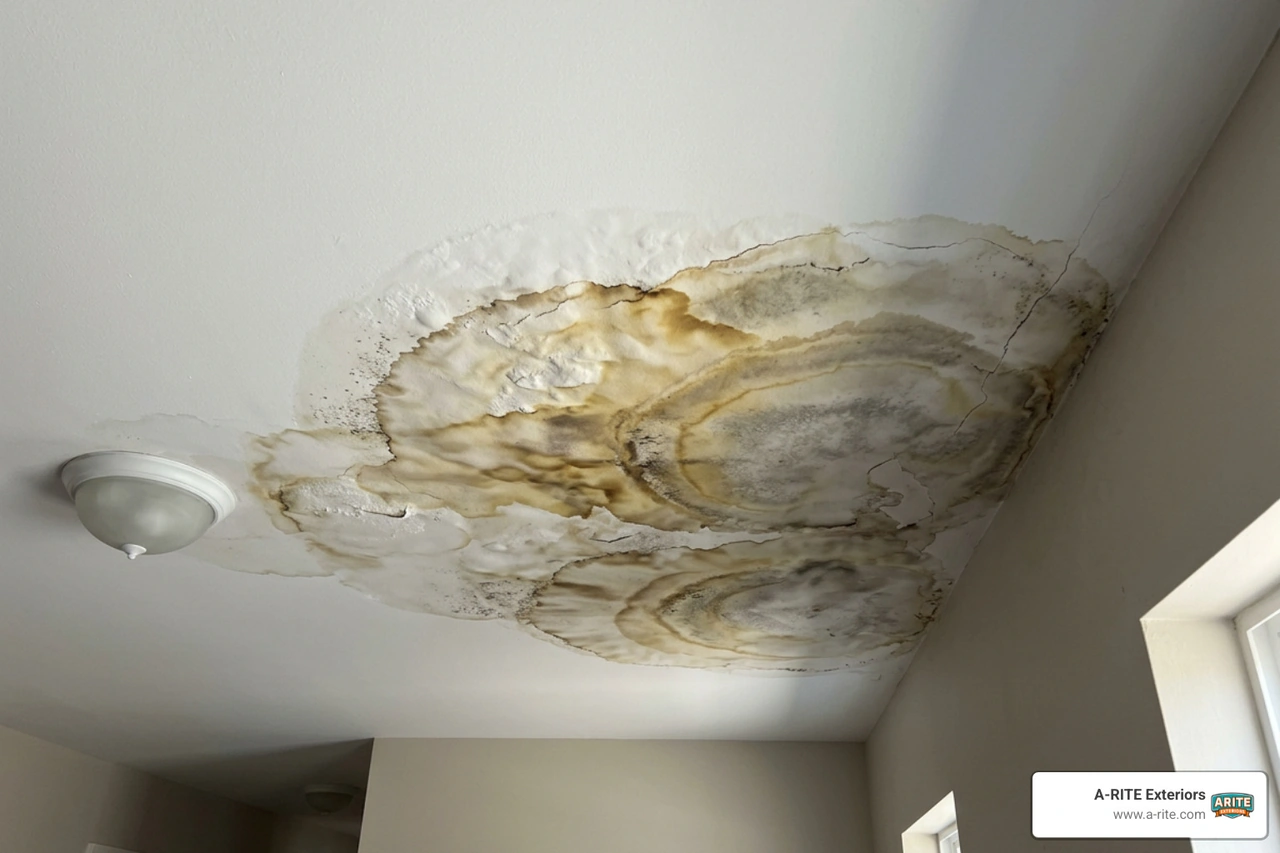
- Ceiling and Wall Moisture Stains: Water spots, discolored drywall, or flaking paint on top-floor ceilings signal active roof leaks that may be traveling along roof rafters before dripping down.
- Degraded Attic Insulation: Wet or matted attic insulation loses its thermal resistance (R-value). Moisture leaking into attic spaces increases heating costs and accelerates ice dam formation.
Reviewing our guide on Signs of Hidden Roof Damage will help you catch subtle issues before they turn into major structural repairs. Homeowners often ask How Often Should Roofs Be Inspected; for any roof over 15 years old, professional twice-yearly inspections (spring and fall) are strongly recommended.
Should You Repair or Replace an 18-Year-Old Roof?
Deciding whether to patch a leak or replace the entire system comes down to simple math and material science.
The 30% and 50% Rule Framework
Two financial benchmarks guide smart roofing decisions:
- The 30% Damage Area / Cost Rule: If localized storm damage affects 30% or more of your total roof surface, or if a repair quote equals 30% or more of a complete replacement estimate, a full replacement is almost always the more cost-effective choice. Patching large areas leaves remaining 18-year-old sections prone to failure shortly after.
- The 50% Rule: If a major repair quote reaches or exceeds 50% of the cost of a brand-new roof replacement, full replacement is the mathematically superior choice. Investing half the price of a new system into an 18-year-old structure does not reset your warranty or extend overall system lifespan.
Cumulative Repair Spend vs. Replacement Value
Homeowners often fall into a "repair-and-repeat" trap on aging roofs. Repeatedly paying for individual fixes, such as patching a valley leak, replacing blown-off shingles, or re-sealing chimney flashing, can quickly add up to substantial cumulative expenses over time. That money could have been applied directly toward a fully warrantied replacement system.
Why Overlaying (Re-Roofing) Is a Bad Idea at 18 Years
Some homeowners consider installing a second layer of shingles over old ones to save on tear-off costs. On an 18-year-old roof, this practice is strongly discouraged:
- Trapped Heat and Moisture: Old, curled shingles create an uneven base that traps heat and moisture, accelerating breakdown of the new layer.
- Excess Weight: Two layers of asphalt shingles place heavy stress on roof trusses, especially during Central Wisconsin winters with heavy snow loads.
- Concealed Decking Damage: Overlaying prevents contractors from inspecting the wooden roof deck for rotted plywood or mold.
- Voided Warranties: Most major shingle manufacturers void or severely restrict system warranties when shingles are installed over an old, deteriorated layer.
To learn more about structural risks, read our article on Why You Should Not Roof Over Existing Shingles.
| Factor | Minor Roof Repair | Complete Roof Replacement |
|---|---|---|
| Ideal Roof Age | Typically 0-12 years old | Typically 15+ years old (or at 80%+ lifespan) |
| Damage Scope | Isolated to single area (<10-15% surface) | Widespread, multi-slope, or systemic failure |
| Expected System Lifespan Added | Temporary fix (2-5 years on aged shingles) | Resets functional lifespan (25-30+ years) |
| Decking Inspection | Impossible without removing large areas | Complete tear-off allows full inspection & repair |
| Warranty Protection | Limited labor guarantee on patch area | Full manufacturer system & workmanship warranties |
| Insurance Impact | Does not alter overall roof age or policy status | Restores Replacement Cost Value (RCV) eligibility |
| Shingle Color Match | Poor (aged shingles fade from UV exposure) | Perfectly uniform color and appearance across roof |
How Does an 18-Year-Old Roof Affect Your Homeowners Insurance and Financial Risk?
Many homeowners assume they can wait until a leak occurs before replacing an 18-year-old roof. However, insurance carrier policies and secondary structural risks make waiting a high-risk financial strategy.
Insurance Policy Coverage Transitions: RCV to ACV
As highlighted in current home insurance guides on When to Replace Your Roof: Signs to Watch Out For, ... , major insurance carriers actively monitor roof age. Between 15 and 20 years of age, many insurance policies automatically transition roof coverage from Replacement Cost Value (RCV) to Actual Cash Value (ACV):
- Replacement Cost Value (RCV): The insurance company pays the full cost to replace your damaged roof with new materials of similar quality, minus your deductible.
- Actual Cash Value (ACV): The insurer depreciates the payout based on the roof's age and condition. On an 18-year-old roof depreciated by 80%, an insurance payout following a storm event may cover only a tiny fraction of total replacement costs, leaving you responsible for the remainder out of pocket.
Additionally, home insurance companies routinely conduct aerial drone or drive-by inspections. If an insurer notes curling shingles or severe granule loss on an 18-year-old roof, they may issue a non-renewal notice or require a full roof replacement within 30 to 60 days to maintain policy coverage.
The Hidden Financial Risks of Waiting for a Leak
Waiting for an active leak to force a replacement often transforms a straightforward roofing project into an expensive interior restoration project:
- Rotted Roof Decking: When water leaks beneath aging shingles, plywood decking softens and rots. Replacing damaged decking during a tear-off adds necessary scope to the project, as damaged 4x8 plywood sheets must be replaced.
- Interior Drywall and Painting Repairs: Water leaking through attic spaces stains ceilings, ruins insulation, and damages drywall. Interior ceiling and drywall repair can cost thousands of dollars, and severe cases can cost much more depending on room size and finishes.
- Attic Mold Remediation: Trapped moisture in warm attic spaces creates ideal conditions for mold growth. Professional mold remediation can cost thousands of dollars, and severe cases can cost much more to safely eliminate spores from attic rafters and insulation.
- Emergency Replacement Surcharges: Emergency leak repairs during peak winter or post-storm periods carry premium labor rates. Emergency service installations commonly cost 20–40% more than planned, scheduled replacements due to immediate weatherproofing logistics and emergency crew mobilization.
Does Replacing an 18-Year-Old Roof Make Financial Sense If You Plan to Sell Soon?
If you plan to put your home on the market within the next 1 to 3 years, deciding whether to replace an 18-year-old roof requires evaluating return on investment (ROI) against real estate transaction risks.
Resale Return on Investment (ROI)
According to regional real estate research and national cost-vs-value data, a new architectural shingle roof replacement recovers approximately 60% to 70% of its upfront cost in direct home resale value. However, the true value of a new roof prior to selling goes far beyond immediate cost recovery.
Real Estate Buyer and Lender Expectations
In today's housing market, an 18-year-old roof represents an immediate red flag for prospective home buyers, real estate inspectors, and mortgage lenders:
- Home Inspection Contingencies: Buyers' home inspectors will flag an 18-year-old asphalt roof as "near end of life." Buyers routinely use this finding to demand substantial price concessions ($10,000 to $20,000 credit) or insist on full replacement before closing.
- Mortgage Approval Delays: FHA, VA, and conventional mortgage underwriters frequently require a roof to have a minimum of 2 to 3 years of remaining useful life to approve buyer financing. An inspector's report stating an 18-year-old roof has reached end-of-life can halt loan underwriting entirely.
- Insurance Acquisition for Buyers: Buyers cannot secure homeowners insurance on a house with an end-of-life roof. Without active insurance, lenders will not close the loan.
Strategic Decision Matrix for Sellers
- If selling within 12 months with NO active leaks: If an independent inspection confirms the roof is physically sound with no interior moisture, targeted maintenance and providing a professional inspection report may allow you to list as-is. However, be prepared for buyer credit negotiations.
- If selling within 1 to 3 years OR active wear is present: Replacing the roof proactively eliminates buyer objections, accelerates sale velocity, protects asking price, and allows you to market the home with a desirable feature: a brand-new, warrantied roofing system.
How Do You Choose a Roofing Contractor and Get Accurate Quotes?
Selecting a qualified, reputable roofing contractor ensures your investment delivers decades of reliable protection against Wisconsin's climate.
Steps to Getting Accurate Estimates
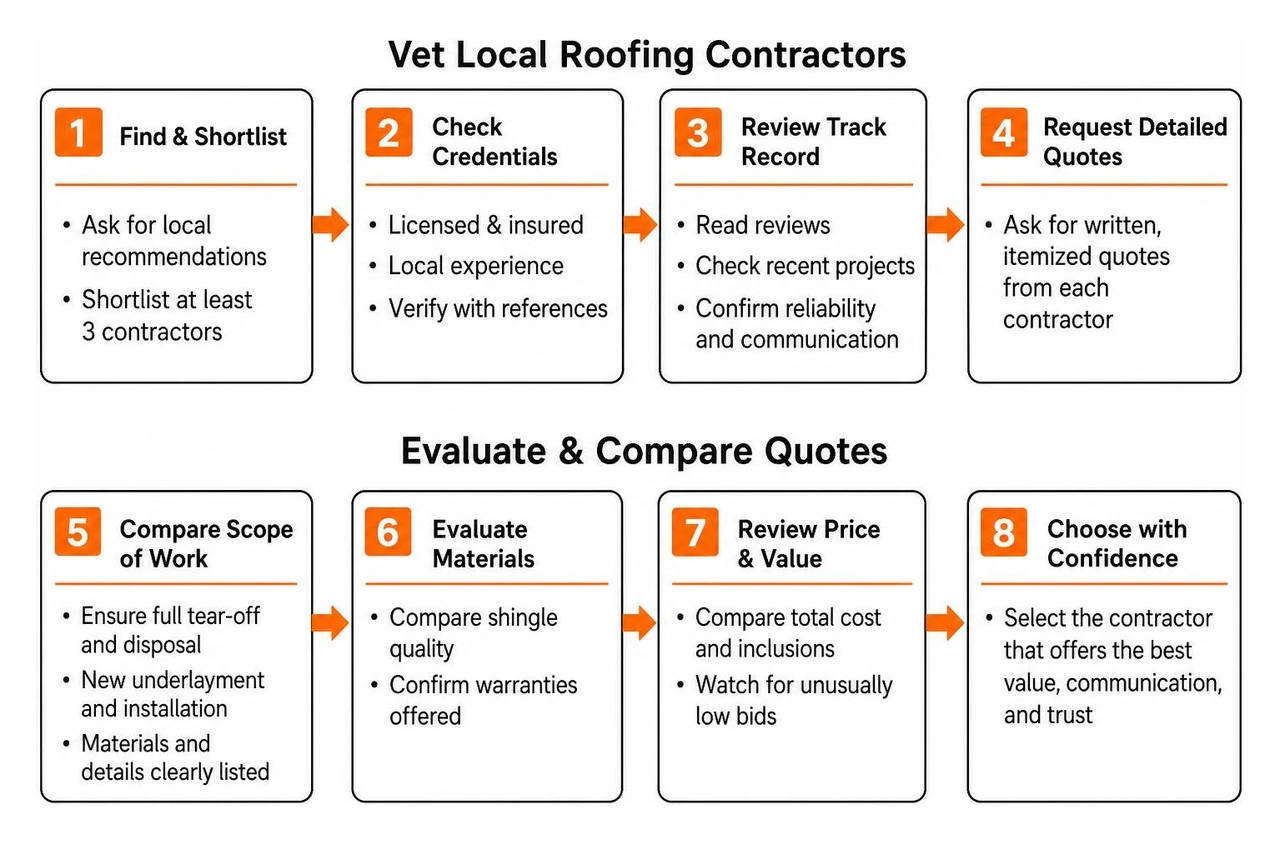
When requesting bids for an 18-year-old roof replacement, gather at least three detailed, itemized quotes. A professional estimate should explicitly outline:
- Full tear-off and disposal of existing shingle layers and underlayment
- Dumpster and site cleanup fees
- Specific brand and product lines for architectural shingles, ice and water shield membranes, and synthetic underlayment
- Installation of new drip edge, valley flashings, chimney flashings, and ridge ventilation
- Exact unit pricing for replacing any rotted plywood decking discovered during tear-off
When reviewing quotes, keep in mind that a lower price may reflect differences in materials, scope, cleanup, warranty coverage, or installation details.
Essential Contractor Vetting Checklist
Protect your home by verifying these credentials before signing any roofing agreement:
- Licensing: Confirm active state contractor licensing (such as Wisconsin DSPS credentialing).
- Insurance Verification: Request certificates of general liability insurance and workers' compensation coverage sent directly from the contractor's insurance agency.
- Manufacturer Certifications: Top-tier manufacturers (like GAF or Owens Corning) certify contractors who meet strict installation quality and training standards. Certified contractors can offer extended non-prorated system warranties.
- Local Reputation and Physical Presence: Choose established local companies serving communities like Wausau, Schofield, Stevens Point, Marshfield, and Minocqua rather than out-of-state storm chasers.
Evaluating Comprehensive Exterior Upgrades
When replacing an 18-year-old roof, evaluating related building envelope components saves money on labor:
- Attic Insulation: Proper attic insulation levels prevent interior heat from reaching the roof deck, reducing ice dam formation. Homeowners may qualify for Focus on Energy rebates for qualifying insulation and air-sealing work (such as attic insulation, air sealing, wall insulation, foundation insulation, duct sealing, and qualifying DIY attic insulation and air sealing), not for roof replacement itself. Rebate amounts and eligibility rules change over time, and homeowners should confirm current program rules before starting work.
- Energy Tax Credits: Approved neutral sources for pricing, financing, rebates, and tax credits include IRS, ENERGY STAR, EPA, Focus on Energy, USDA, Wisconsin DSPS, GAF, Owens Corning, and BBB. Regarding Section 25C (Energy Efficient Home Improvement Credit), IRS guidance showed it was available through December 31, 2025; consult current IRS guidance and always consult a tax professional when evaluating tax credits or Section 25C. A-RITE Exteriors provides attic insulation services to optimize roof performance.
- Gutters and Ventilation: Installing seamless gutters and proper ridge or soffit ventilation ensures moisture drains away efficiently and protects your foundation.
Why Choose A-RITE Exteriors?
At A-RITE Exteriors, we bring over two decades of local Central Wisconsin experience to every project. We specialize in roof-first, weather-resistant solutions built specifically to handle winter ice, heavy snow, and high winds.
Our team provides honest, detailed assessments to help you decide whether replacement or monitoring is right for your home. Learn how to navigate your choice in our guide on How Do I Choose a Roofing Contractor in Central Wisconsin.
To explore project costs instantly, try our Instant Roof Quote tool. If you are exploring payment options, Financing options are available for qualifying homeowners. Loan amounts up to $100,000 unsecured may be available, with final approval, rates, and terms based on lender review and credit qualification.
Frequently Asked Questions about 18-Year-Old Roof Replacement
Can an 18-year-old roof last a few more years if there are no active leaks?
If your roof consists of standard 3-tab asphalt shingles, waiting at 18 years carries substantial risk, as the asphalt core is commonly dried out and susceptible to sudden wind damage or leak development during winter storms. If your roof has architectural shingles and an inspection confirms sealants are intact, flashings are sound, and there is no interior attic moisture, it may last 2 to 5 more years with annual monitoring. However, proactive replacement avoids emergency rates and secondary water damage.
How much does it cost to replace an 18-year-old roof in 2026?
A full replacement with quality architectural asphalt shingles in Central Wisconsin typically ranges from $12,000 to $22,000 for an average single-family home (upper four figures to mid five figures for smaller or larger complex projects). Final pricing depends on total square footage, roof pitch, number of existing layers to tear off, plywood decking repairs, flashing requirements, and chosen material grades.
Will replacing an 18-year-old roof lower homeowners insurance premiums?
Yes, installing a new roof often qualifies homeowners for insurance discounts, particularly when upgrading to impact-resistant architectural shingles or modern roofing systems. Beyond direct premium discounts, replacing an 18-year-old roof restores full Replacement Cost Value (RCV) policy status, ensuring complete financial protection against future storm events.
Conclusion
An 18-year-old roof sits at a critical crossroads. While age alone provides a strong signal, especially for standard 3-tab shingles operating past their design life, the decision to replace now versus wait depends on physical wear signs, insurance policy requirements, climate exposure, and financial repair-to-replacement ratios.
Replacing an aging roof before severe leaks develop provides complete peace of mind, preserves structural decking, improves home energy performance, and protects your property value. Delaying replacement often leads to costly emergency service fees and interior water damage.
If your roof is 18 years old and you want an honest, expert assessment from local professionals who understand Central Wisconsin weather, contact our team at A-RITE Exteriors today. Explore our complete line of weather-resistant Roofing Services or schedule your professional inspection to protect your home for decades to come. Trust the Hawk on Your Block!