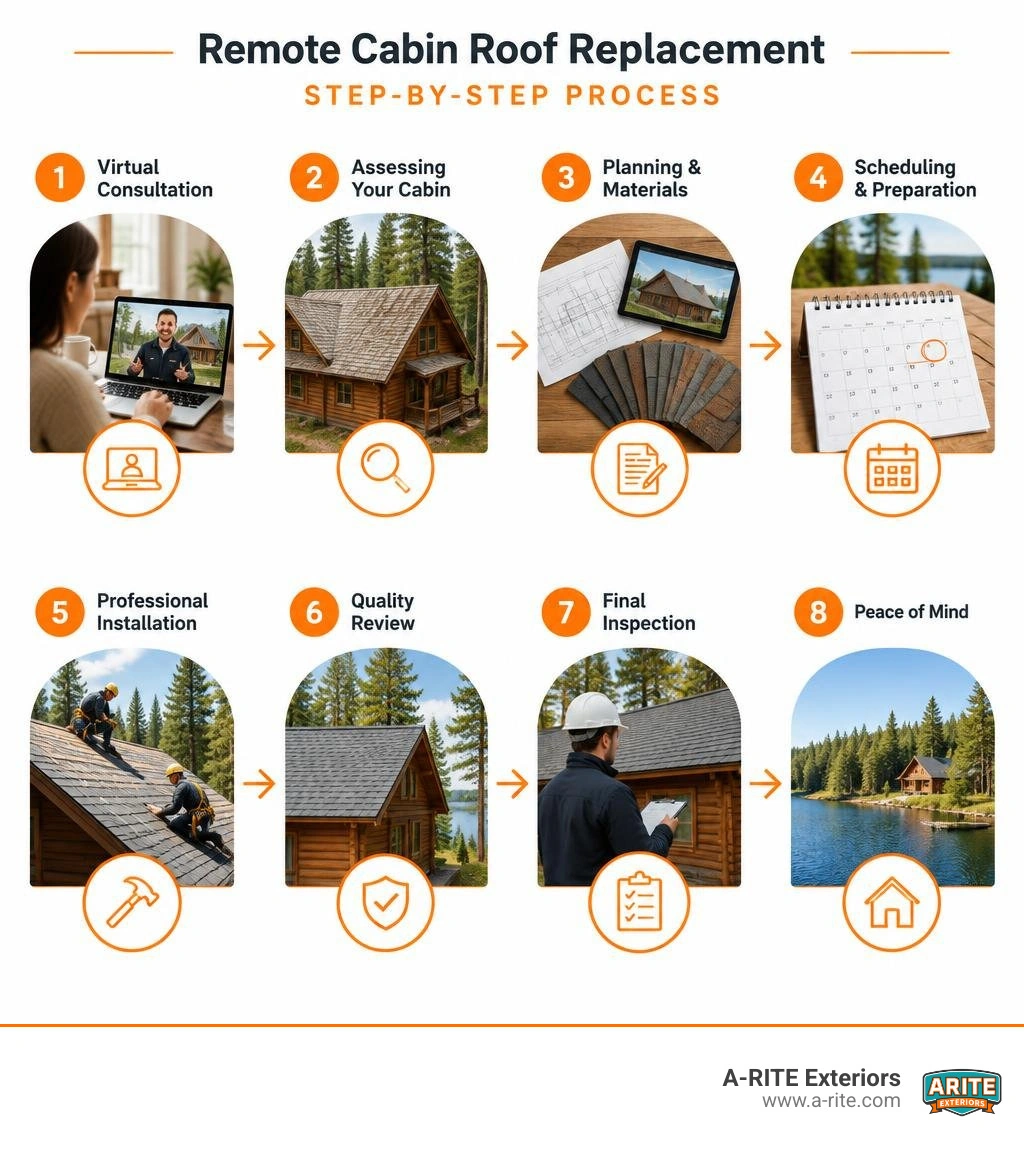
What Are the First Steps in Planning a Remote Cabin Roof Replacement?
To coordinate a remote roof replacement for your Minocqua or Northwoods cabin, start by vetting local contractors equipped for virtual management, setting up digital contracts and milestone photo verifications, preparing site logistics remotely, and establishing clear change-order authorizations before work begins. This structured approach keeps the project moving even when you live hours away in southern Wisconsin, Illinois, or Minnesota and cannot simply look out the window each morning to check the shingles or step outside to talk to the project manager.
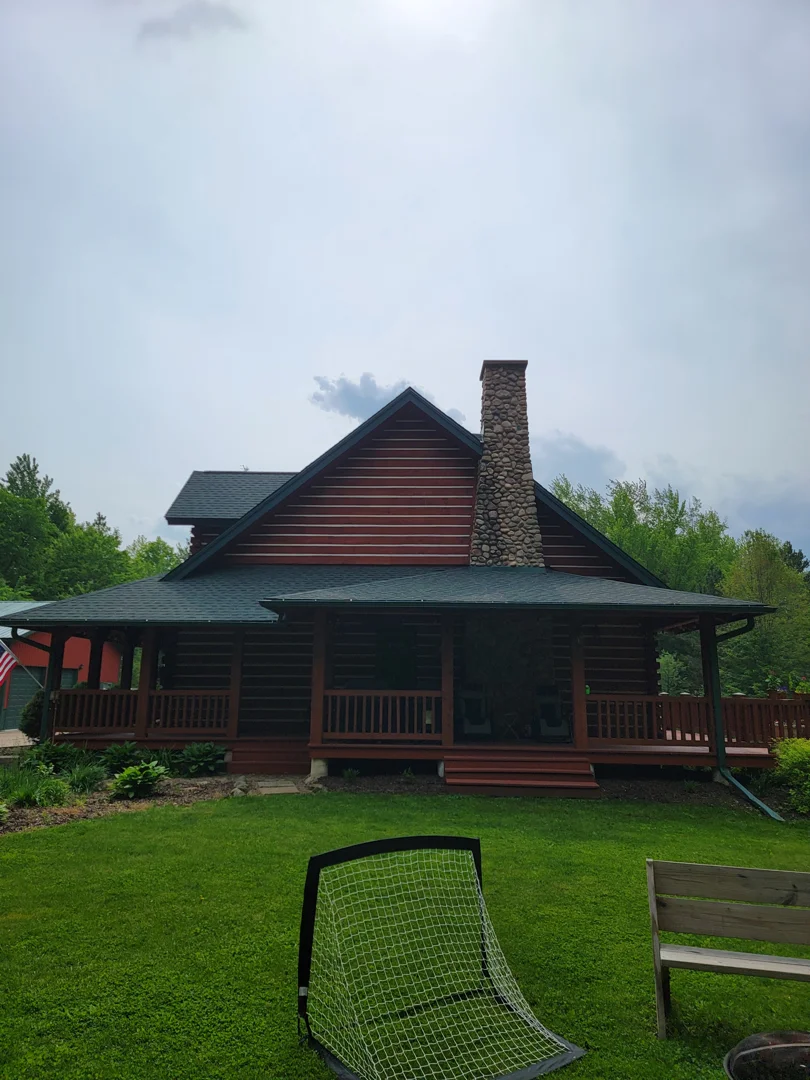
Planning starts with a realistic evaluation of your cabin's current condition. Before jumping into a full replacement, determine whether the existing structure requires a complete tear-off or targeted maintenance. We often help property owners evaluate their options using our guide on repairing versus replacing your cabin roof. If your shingles are curling, losing significant granules, or approaching 20 years of exposure to Northwoods winters, a full replacement is usually the safest investment to prevent interior leaks while the property sits vacant.
Typical Northwoods cabin roofing projects range from the upper four figures to mid five figures. The final investment depends heavily on roof size, pitch, number of existing shingle layers, decking integrity, architectural style, and material choice. Cabins in Vilas and Oneida Counties frequently feature complex structural details, such as steep A-frame pitches, multiple valleys, dormers, and heavy snow loads, along with dense tree overhangs that drop organic debris and trap moisture against the roof surface.
Timelines require early planning. In Northern Wisconsin, the optimal construction window runs from late spring through mid-autumn. Securing a slot on a reputable contractor’s schedule, completing digital measurements, selecting materials, and ordering supplies typically takes two to four weeks before a crew ever arrives on-site.
How Do You Find and Vet a Reliable Roofing Contractor from a Distance?
Hiring a contractor without meeting in person requires a structured vetting process. You need a team that not only builds durable, weather-resistant roofs but also possesses established systems for remote project coordination.
Start by verifying core credentials:
- State Licensing: Ensure the contractor holds an active Wisconsin Dwelling Contractor qualification through the Wisconsin Department of Safety and Professional Services (DSPS).
- Insurance Coverage: Request current certificates for both general liability and workers' compensation insurance sent directly from their carrier.
- Local Physical Presence: Confirm the company operates permanent facilities and full-time crews in Central and Northern Wisconsin rather than traveling storm-chasers.
- Reputation: Check independent homeowner reviews and local track records across platforms like roofing contractors to compare on Yelp and the Better Business Bureau (BBB).
When interviewing prospective contractors, ask direct questions about their remote processes:
- How do you assess roof dimensions and decking condition without me on-site?
- What technology do you use to share daily photo and video progress reports?
- How are unexpected structural repairs documented and authorized before work proceeds?
- How do you coordinate heavy material drop-offs on narrow, wooded cabin roads?
Every proposal you review should be comprehensive and fully itemized. Reviewing what is included in a roof replacement estimate ensures you can cross-examine line items for tear-off, underlayment type, ice and water shield square footage, drip edge, flashing, ventilation, and cleanup. Applying clear standards for choosing a roofing contractor in Central Wisconsin helps you identify teams that treat long-distance communication as a core service, not an afterthought.
If you encounter broad price variations among proposals, a lower price may reflect differences in materials, scope, cleanup, warranty coverage, or installation details.
What Technology Should Your Remote Contractor Use?
A modern contractor should eliminate the guesswork of long-distance remodeling through specialized technology:
- Satellite and Aerial Drone Imagery: High-resolution aerial scanning allows estimators to calculate surface area, slope, and waste factors down to the inch without needing interior access or disturbing your schedule.
- Cloud-Based Signatures and Secure Payments: Digital contracts and milestones allow you to review scopes, sign authorizations, and execute milestone payments securely from your computer or phone.
- Real-Time Visual Walkthroughs: Through shared cloud albums, messaging threads, and video check-ins, your contractor should provide daily updates showing tear-off, bare decking, underlayment, and completed shingle courses.
How Do You Prepare Your Northwoods Property and Manage Site Logistics Remotely?
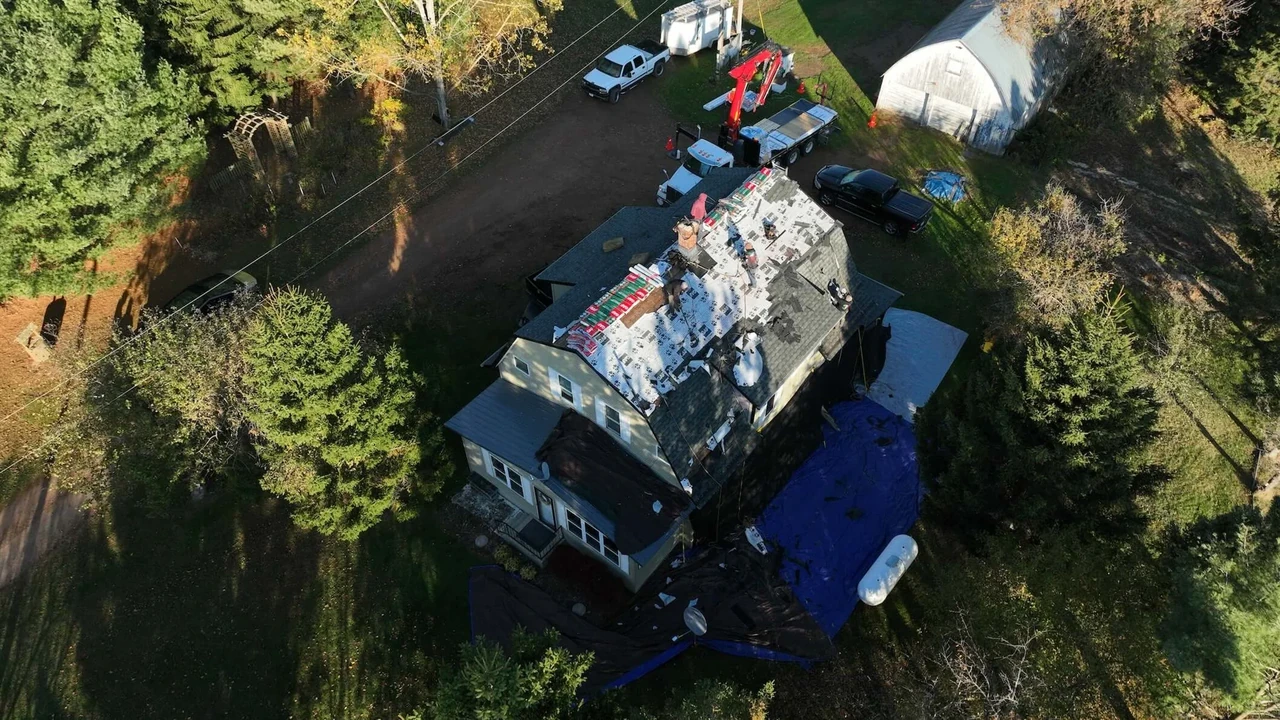
Logistical preparation is essential when managing a roofing project on a remote or lakeside parcel in Arbor Vitae, Lake Tomahawk, St. Germain, or Hazelhurst. Northwoods properties often feature private gravel roads, low-hanging pine canopies, and sensitive environmental zones.
Use our roof replacement home preparation guide to structure your pre-construction checklist:
- Site Access and Road Coordination: Inform your contractor of any fire numbers, gate codes, seasonal weight limits, or steep switchbacks. If your cabin is located on a private shared easement, notify neighboring owners in advance regarding delivery vehicle traffic.
- Material and Dumpster Placement: Identify firm ground for heavy dumpster placement and shingle drop zones. Ensure staging areas stay clear of buried septic tanks, drain fields, wellheads, and shoreline vegetation buffers.
- Protecting Cabin Grounds: Before the crew arrives, store patio furniture, grills, and water toys inside a shed or garage. Cover exterior hot tubs, and move fragile items near interior walls, as vibrations from roof hammering can cause wall decor to shift.
- Designating a Local Key-Holder: Connect your roofing project manager with a trusted neighbor, local caretaker, or property management contact who holds a physical key in case unexpected interior or electrical access is required.
- Utilities: Ensure external power outlets and exterior water spigots are switched on and functional so the crew has reliable access for equipment and cleanup.
How Can You Monitor Construction Quality and Handle Unforeseen Damage from Afar?
Replacing a roof remotely requires complete visibility into every phase of the project, especially once the old shingles are removed.
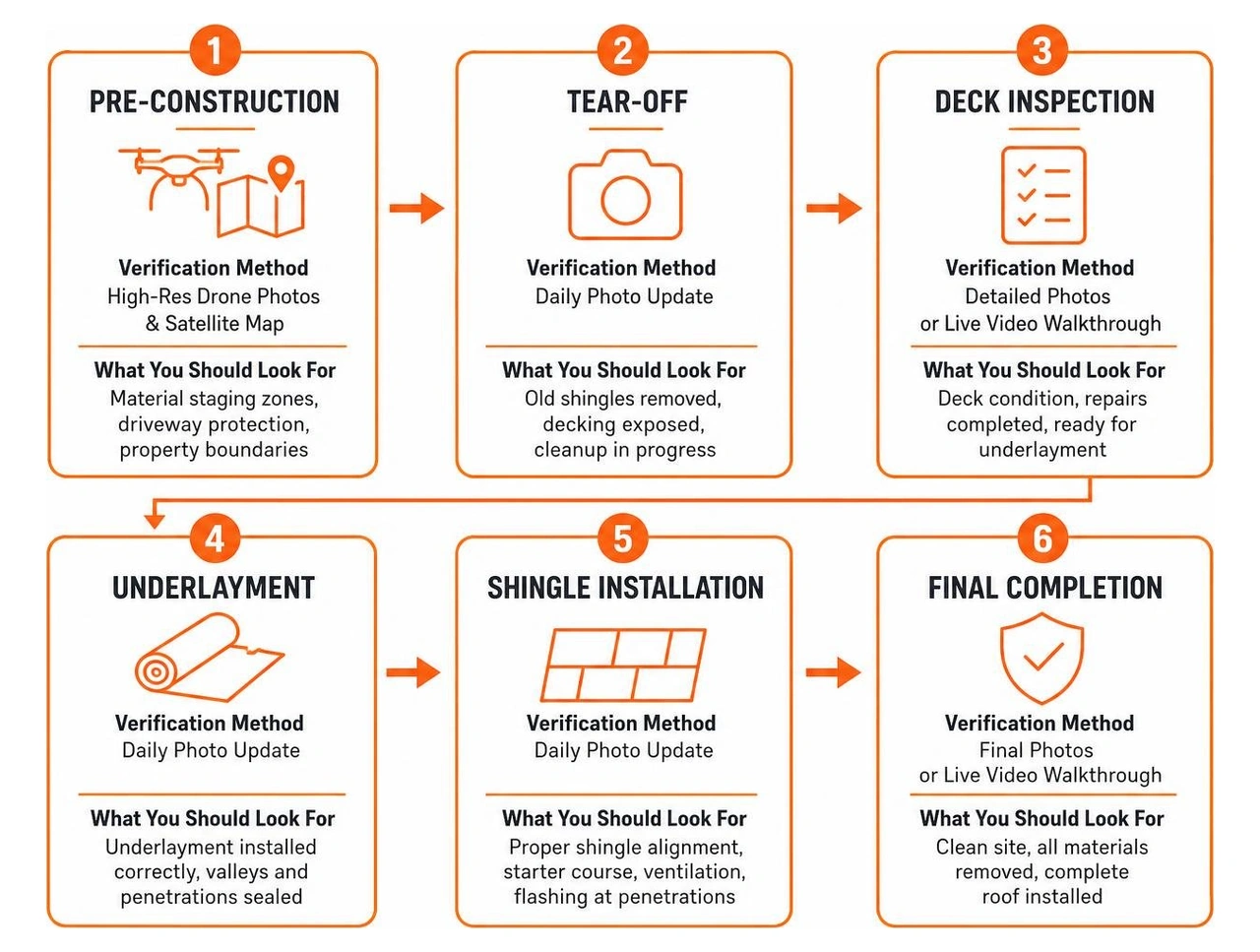
Remote Communication & Milestone Verification
| Project Milestone | Verification Method | What You Should Look For |
|---|---|---|
| Pre-Construction | High-Res Drone Photos & Satellite Map | Material staging zones, driveway protection, property boundaries |
| Teardown / Decking | Real-Time Digital Photos & Video Call | Sound wood sheathing, absence of rot, solid rafters, clean surface |
| Weather Barrier | Close-Up Component Photos | Ice & water membrane extended up eaves and valleys, synthetic underlayment |
| Flashing & Vents | Detailed High-Angle Photos | Step flashing around chimneys/dormers, ridge vent installation |
| Post-Job Cleanup | Drone Overview & Ground-Level Video | Ground clear of debris, magnetic nail sweeps on gravel and pine needles |
Hidden water intrusion beneath old shingles can cost thousands of dollars, and severe cases can cost much more if rotted decking, insect damage, or weakened rafters go unaddressed. When the crew strips the old roof, your project manager should immediately transmit clear photos of the bare wood sheathing.
To prevent budget surprises, establish clear change-order authorization limits before work starts. Agree in writing that any rotted sheet replacement or structural repairs beyond a pre-set allowance require direct photo documentation and your explicit digital or verbal sign-off before proceeding.
Cold-Climate Installation Standards
Because Northwoods cabins endure harsh freeze-thaw cycles and thick snow accumulation, verify that your contractor installs critical cold-climate details:
- Ice and Water Barrier Protection: Self-adhering, waterproof membranes applied along all eaves (extending at least 24 inches past the interior heated wall line), throughout valleys, and around skylights and chimneys; ice and water shield helps protect against water intrusion if ice dams occur, but it does not prevent ice dams by itself.
- Heavy-Duty Fastening and Wind Resistance: Architectural shingles installed with proper nail patterns; some architectural shingles are rated up to 110 to 130 mph when installed as part of the required system.
- Balanced Attic Ventilation: Continuous ridge vents combined with clear soffit intake vents to keep roof deck temperatures consistent and reduce winter ice buildup.
- Thorough Magnetic Sweep: Cabins surrounded by soft soil, pine needles, and gravel require multiple passes with industrial rolling magnets to ensure stray nails are removed from driveways, parking areas, and walkways leading to docks.
What Seasonal Factors and Local Permits Impact Roofing in Vilas and Oneida Counties?
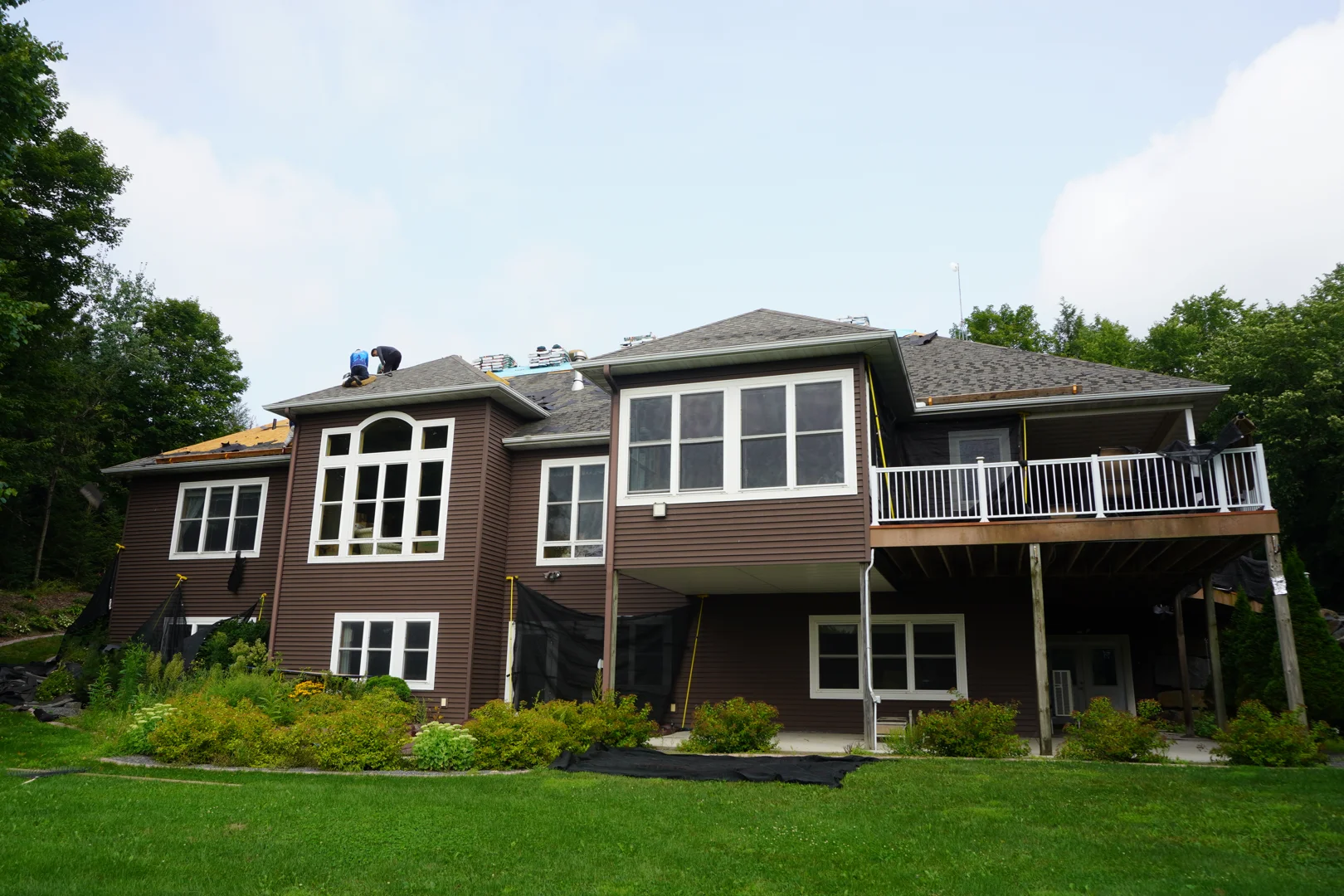
Northern Wisconsin experiences distinct seasonal shifts that dictate roofing schedules:
- Spring Thaw & Frost Laws (March – May): Local townships and county highway departments enforce seasonal weight limits on secondary and gravel roads during the spring thaw. Heavy shingle delivery trucks and dump trailers cannot travel on restricted roads during this period, making late spring the earliest practical window for most remote projects.
- Early Summer Insects (Late May – June): Black flies, ticks, and mosquitoes reach peak activity in wooded and shoreline areas. Experienced local crews account for these conditions with early-morning working hours and insect management, though weather remains favorable for roofing.
- Prime Season (July – October): Warm summer and early autumn days provide ideal conditions for thermal shingle sealing. Ambient solar heat allows shingle adhesive strips to bond fully before cold weather arrives.
- Autumn Freeze & Winter Snowpack (November – March): Falling temperatures require specialized cold-weather shingle handling to prevent brittleness, while heavy snow cover eventually closes out routine replacements until spring.
Permits, Shoreland Zoning, and Insurance
Before work begins, confirm that all regulatory requirements are met:
- Township and County Building Permits: Vilas County, Oneida County, and their respective civil townships enforce specific building and zoning codes. Reputable contractors pull required permits on your behalf and schedule necessary municipal inspections.
- Shoreland Zoning Setbacks: Cabins located within shoreland protection zones (typically within 1,000 feet of a lake or 300 feet of a navigable river) are subject to environmental regulations. Ensure material staging and dumpster storage do not disturb protected shoreline buffers or native vegetation.
- Insurance Coordination: If your roof replacement is tied to storm, hail, or falling tree damage, confirm that your contractor can provide line-item photographic documentation that matches the standard claims formatting required by your insurance carrier.
Frequently Asked Questions About Northwoods Cabin Roof Replacements
How do roofing crews handle material delivery on long, narrow, or wooded Northwoods driveways?
Professional contractors conduct pre-delivery site assessments using satellite imagery to identify overhead power lines, low-hanging oak and pine branches, and sharp driveway bends. For tight cabin access roads, crews coordinate smaller shuttle trucks or utilize specialized boom trucks to place materials directly onto the roof deck or designated ground zones, avoiding private road blockages and protecting underground septic lines.
Do I need to be present at my Minocqua cabin on the day of roof installation?
No. When working with an established exterior specialist, you do not need to be on-site. The contractor will coordinate exterior power and water access, verify site boundaries, manage debris containment, and keep you informed via real-time photo and video milestones from tear-off to final magnetic sweeping.
What roofing materials perform best against harsh Northern Wisconsin winters and heavy snow?
Class 4 impact-resistant architectural asphalt shingles and standing-seam metal roofing offer dependable protection against severe Northwoods weather. These systems perform best when backed by full-coverage ice and water underlayment along eaves, valleys, and roof penetrations to resist the moisture buildup and freeze-thaw cycles common in Vilas and Oneida Counties.
How Can You Get Started on Your Cabin Roof Replacement Today?
Replacing your Northwoods roof from a distance does not have to be stressful. By choosing an experienced regional team, leveraging modern virtual tools, and establishing clear communication protocols, you can protect your lakeside retreat for decades while remaining in your everyday routine.
At A-RITE Exteriors, we deliver complete exterior roofing services engineered specifically for Northern Wisconsin’s extreme freeze-thaw cycles, high winds, and heavy winter snowpacks. We treat your second home with the same precision and care as our own, providing transparent milestone updates, digital contracts, and meticulous site cleanup.
To plan your project budget, explore our guide on how roof replacement costs are determined.
Financing options are available for qualifying homeowners. Loan amounts up to $100,000 unsecured may be available, with final approval, rates, and terms based on lender review and credit qualification. A-RITE offers financing through Service Finance, and example terms are available on its financing page. Financing is subject to credit approval.
If you are considering energy efficiency upgrades alongside your project, note that A-RITE Exteriors only provides attic insulation. Homeowners may qualify for Focus on Energy rebates for qualifying insulation and air-sealing work (such as attic insulation, air sealing, wall insulation, foundation insulation, duct sealing, and qualifying DIY attic insulation and air sealing), not for roof replacement itself. Rebate amounts and eligibility rules change over time, and homeowners should confirm current program rules before starting work. Regarding federal tax credits, current IRS guidance shows Section 25C was available for qualifying improvements placed in service through December 31, 2025; always consult a tax professional for current tax advice.
Ready to secure your cabin with a weather-tested roofing system? Contact our team today to schedule your remote digital roof assessment and get an itemized estimate for your Minocqua property.