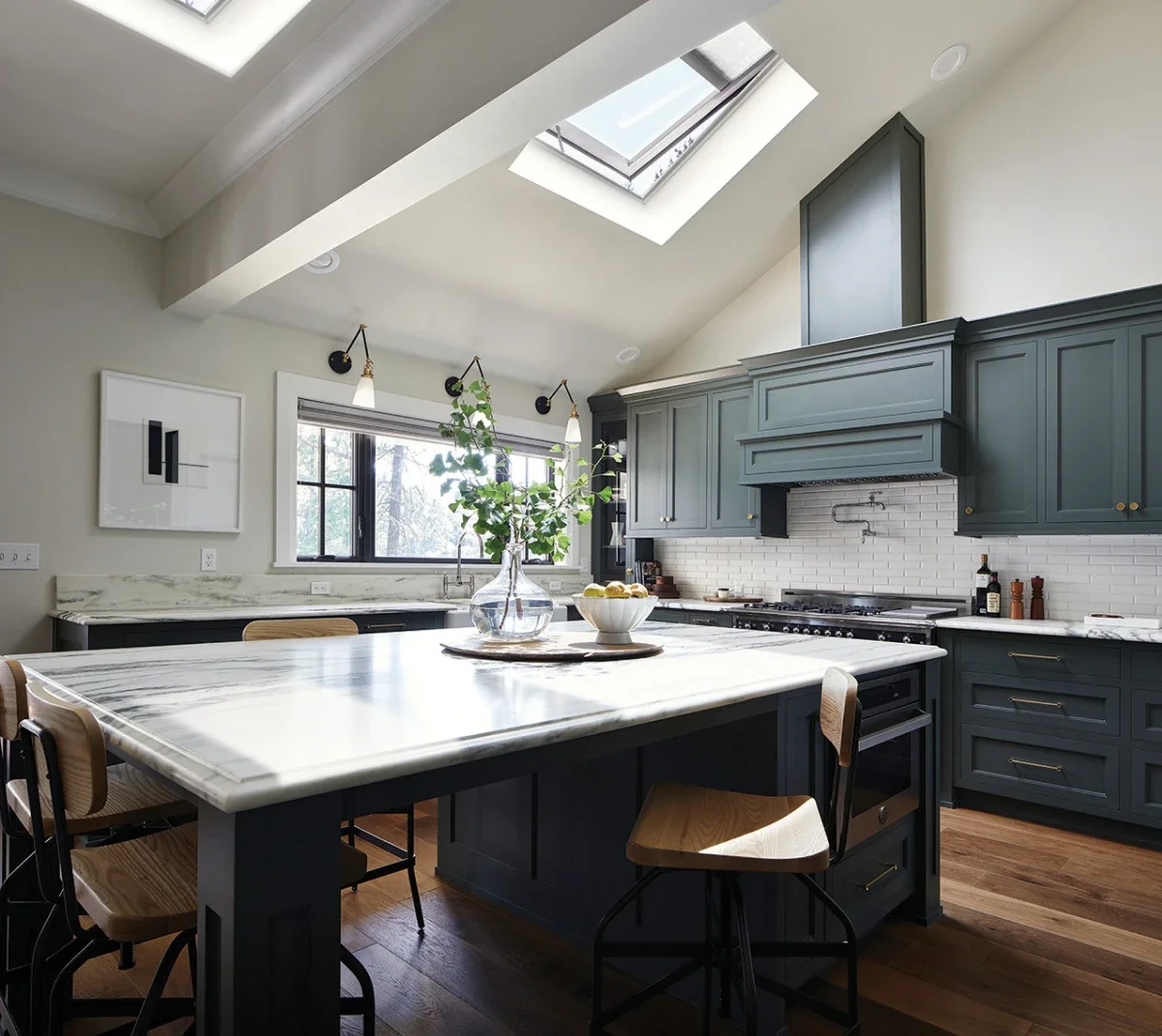
What Is the Core Difference Between Fixed and Vented Skylights?
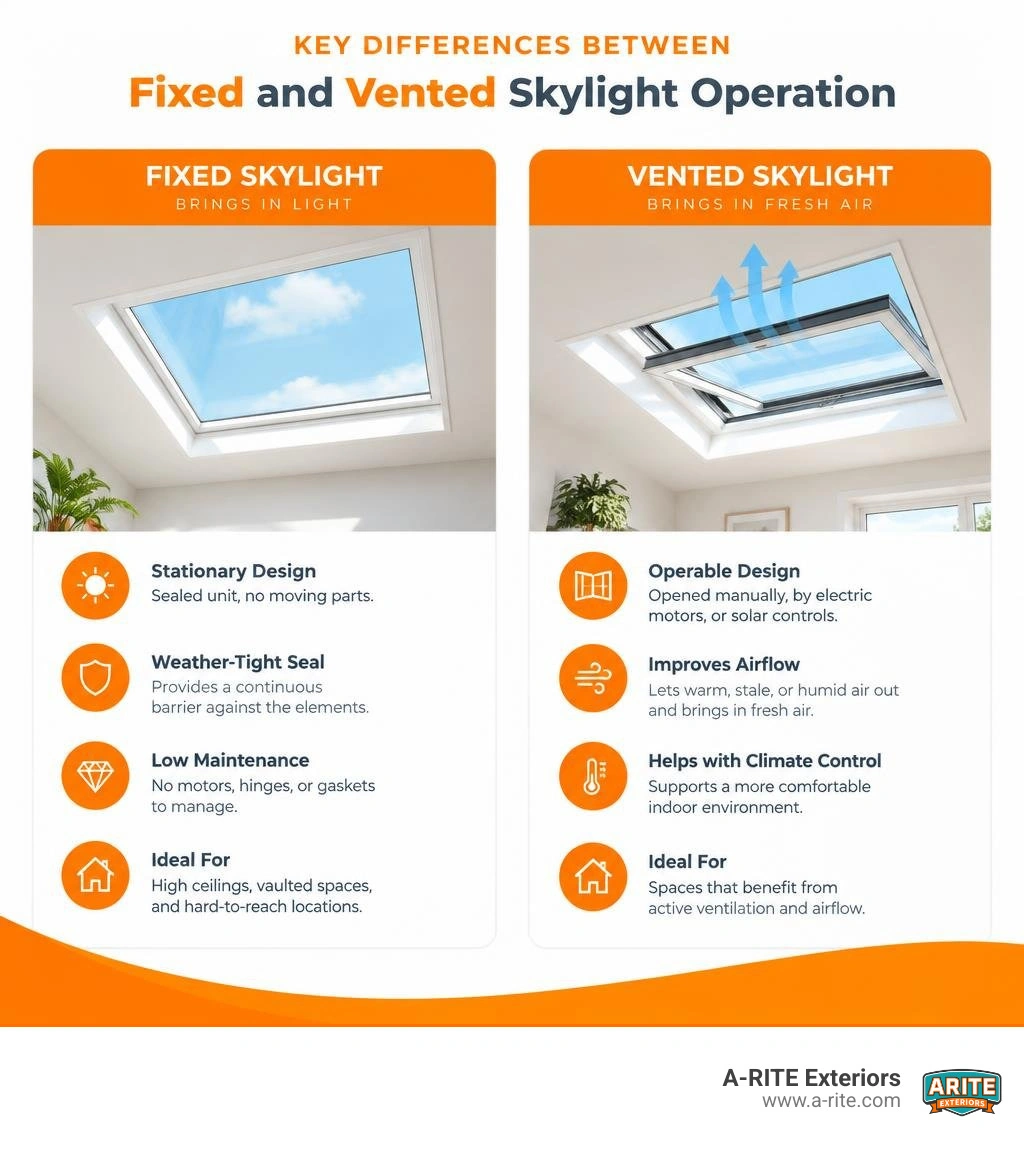
The primary difference between fixed and vented skylights comes down to operability. A fixed skylight is a stationary, factory-sealed glazing unit engineered exclusively to bring natural daylight into an interior space. Because it does not open, there are fewer parts that can wear out.
In contrast, a vented skylight acts as an operable roof window. It is built on a hinged frame assembly that can be opened manually, via hardwired electric motors, or through solar-powered controls. This allows warm, stale, or humid air to escape through the roofline while drawing in fresh outdoor air.
Choosing between the two involves balancing mechanical simplicity and upfront cost against active airflow and climate control.
How Do Fixed Skylights Function?
Fixed skylights consist of a heavy-duty frame surrounding an insulated glass unit (IGU) secured directly to your roof deck or an elevated curb. Because they have no hinges, motors, or opening sash, there is less to maintain.
With no mechanical components subject to wear and tear, fixed units are reliable choices for high ceilings, vaulted spaces, and hard-to-reach locations where you want abundant natural lighting without having to manage window controls or motorized operators.
How Do Vented Skylights Function and Operate?
Vented skylights utilize an operable sash connected to a base frame via heavy-duty perimeter hinges and compression gaskets. When opened, the sash lifts outward from the bottom or side, creating a ventilation chimney at the highest point of the room. Homeowners can select from three primary drive mechanisms:
- Manual Vented Skylights: These units open and close using a smooth-turning gear mechanism driven by a hand crank or a telescopic control rod. They offer an affordable way to add airflow, though reaching high ceilings with an extension pole can take extra effort.
- Electric Vented Skylights: Electric venting skylights open with a small motor, controlled by a remote or app, according to VELUX. They need a power source.
- Solar-Powered Vented Skylights: These units feature an integrated photovoltaic panel and an onboard rechargeable battery pack that powers an internal motor. Because they run on solar power, they do not need household wiring run to them. VELUX says its solar and electric venting skylights have a rain sensor that closes the skylight when rain starts.
What Is a Tubular Skylight?
Rather than using a full skylight opening, a tubular model channels daylight through a reflective tube to a lens in the ceiling. VELUX makes these as Sun Tunnel skylights, in flexible and rigid versions. A flexible tunnel can bend around things in the attic, and a rigid tunnel works best when there is a straight path from the roof to the ceiling.
Reviewing the different types of skylights helps clarify frame styles and profile options for different roof designs.
Which Rooms in Your Home Benefit Most from Fixed vs Vented Skylights?
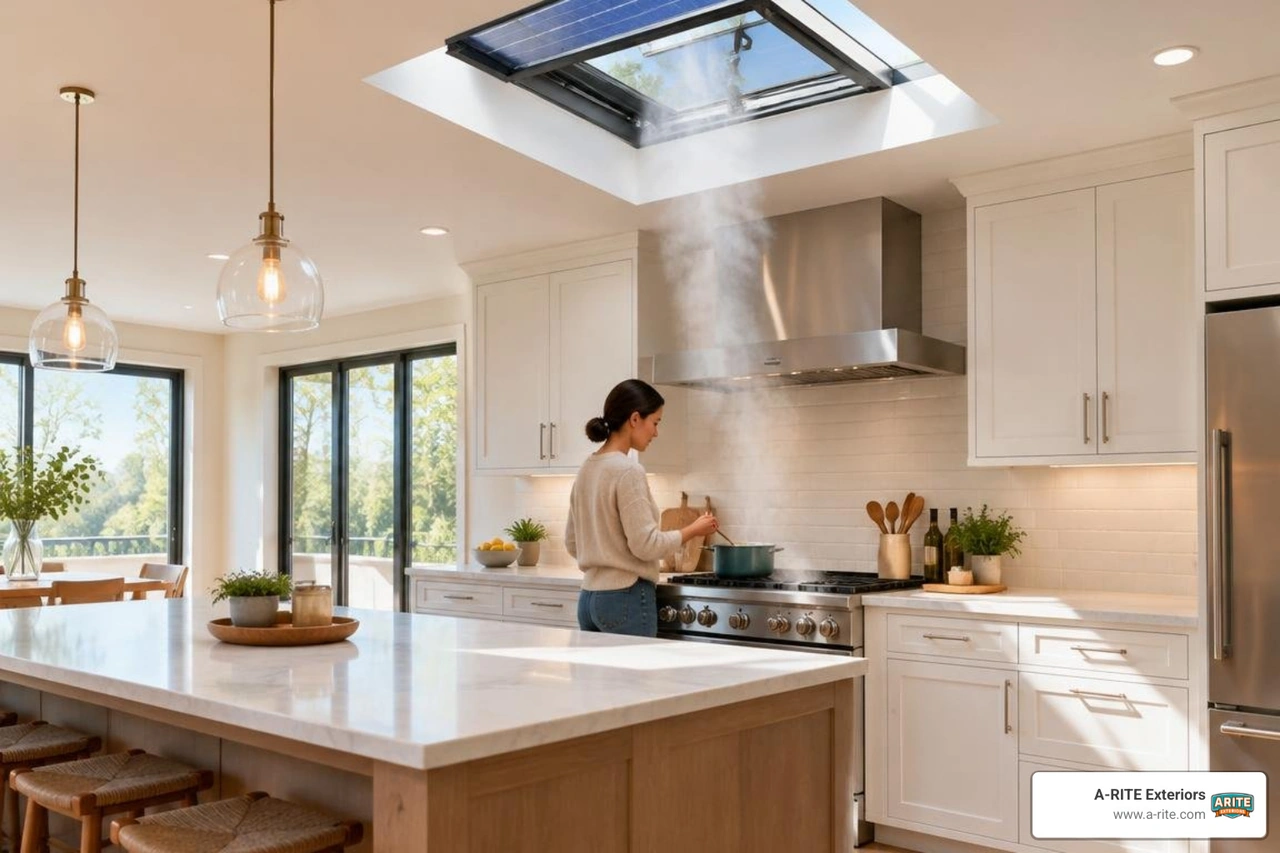
Matching the right skylight to the right room comes down to understanding daily moisture generation, heat accumulation, and ceiling height.
When Should You Choose Fixed Skylights?
Fixed skylights perform best where daylight is the priority and moisture buildup is low:
- Hallways and Stairwells: Windowless interior staircases and central corridors often stay dim during daytime hours. A fixed skylight brightens the floor plan without requiring window adjustments.
- Living Rooms and Great Rooms: In homes with vaulted or cathedral ceilings, fixed skylights evenly distribute natural light across large architectural volumes.
- Walk-In Closets and Dressing Rooms: Overhead natural lighting accurately displays clothing colors without introducing outdoor dust, drafts, or humidity.
- High, Inaccessible Ceilings: For very high ceilings where you do not need active ventilation, fixed units eliminate the need to run mechanical rods or wire electrical controls.
When Should You Choose Vented Skylights?
Vented skylights are better suited for spaces that generate excess heat, steam, and airborne particles:
- Bathrooms and En Suites: Daily showers generate substantial steam. A venting skylight exhausts moisture vertically, which can help with bathroom moisture.
- Kitchens: Cooking releases heat, grease vapors, and lingering odors. An open skylight can let cooking heat and steam out.
- Upper-Floor Bedrooms and Finished Attics: Because heat rises, upper-story bedrooms and loft spaces can trap warmth during summer months. Opening a vented skylight releases that trapped hot air quickly.
How Do Energy Efficiency, Ventilation, and Maintenance Compare?
Energy efficiency and weather resistance depend on high-quality thermal glazing and proper roofline integration. Most skylights use glass with a low-E coating, according to VELUX, which helps with heat gain and heat loss.
According to IKO, a deck-mounted skylight sits flush with the roof and is flashed directly into it, while a curb-mounted skylight sits higher on a raised curb.
Proper skylight installation also helps preserve building envelope airflow. Managing attic temperatures and warm air bypasses is essential, as unmanaged heat loss can lead to winter issues like attic ventilation problems and ice dams.
Thermal Performance and Natural Cooling
During hot weather, vented skylights take advantage of natural convection, commonly known as the chimney or stack effect. Because warm air naturally rises to the highest point in your home, opening an upper-level venting skylight while keeping a lower-level window cracked creates a natural vacuum.
Cool outdoor air is drawn into the lower level while warm indoor air vents out through the roof. This airflow can help cool upper rooms on mild days.
A fixed skylight has no opening parts. To maximize winter energy retention on both fixed and vented units, homeowners often pair them with factory-fitted cellular blackout or light-filtering shades, which add an insulating air barrier directly beneath the glazing.
Maintenance Requirements and Weather Resistance
Fixed skylights require minimal ongoing maintenance. With no mechanical linkages or opening gaskets, care generally involves keeping the glass clean and checking the perimeter roof sealant during regular inspections.
Vented skylights require slightly more periodic attention:
- Gasket Conditioning: The rubber compression gaskets along the sash should be visually inspected annually to ensure they remain flexible, clean, and free of roof debris.
- Screen Cleaning: Insect screens should be removed and dusted periodically to ensure steady airflow.
How Do Costs Compare?
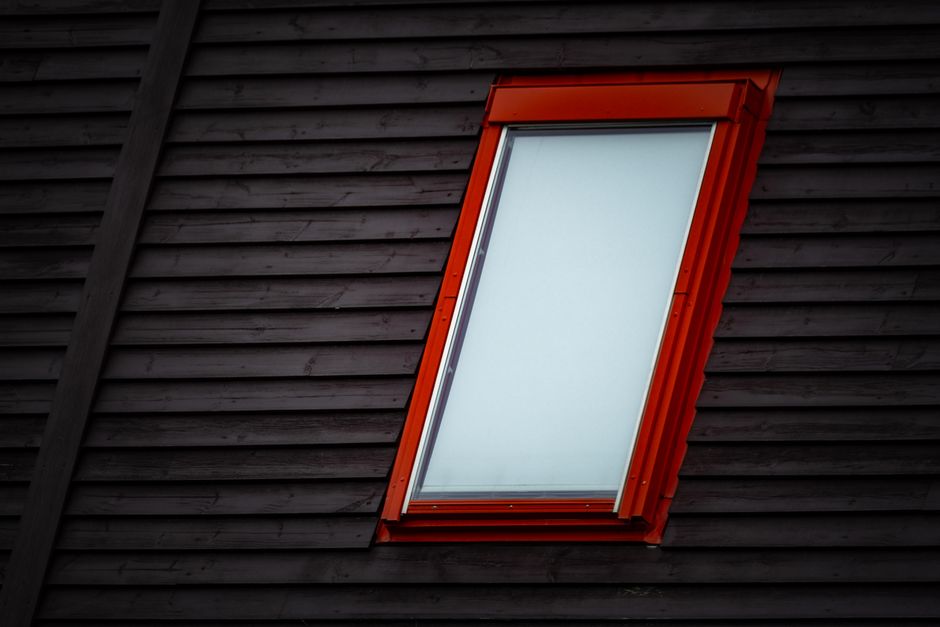
Fixed skylights usually cost less than venting skylights, and electric or solar venting models usually cost more than manual ones. Total cost also depends on the size, whether a light shaft has to be built inside, and the flashing and roof work. If you are planning a new roof, replacing your skylight during a roof replacement can make sense because the roof is already open.
Financing options are available for qualifying homeowners. Loan amounts up to $100,000 unsecured may be available, with final approval, rates, and terms based on lender review and credit qualification. A-RITE offers financing through Service Finance.
How Do You Choose the Best Skylight for Wisconsin Weather?
Central Wisconsin homes must handle severe sub-zero temperatures, heavy snow accumulation, winter ice dams, spring thunderstorms, and humid summers. Choosing the right skylight requires hardware and installation practices built to handle these regional shifts.
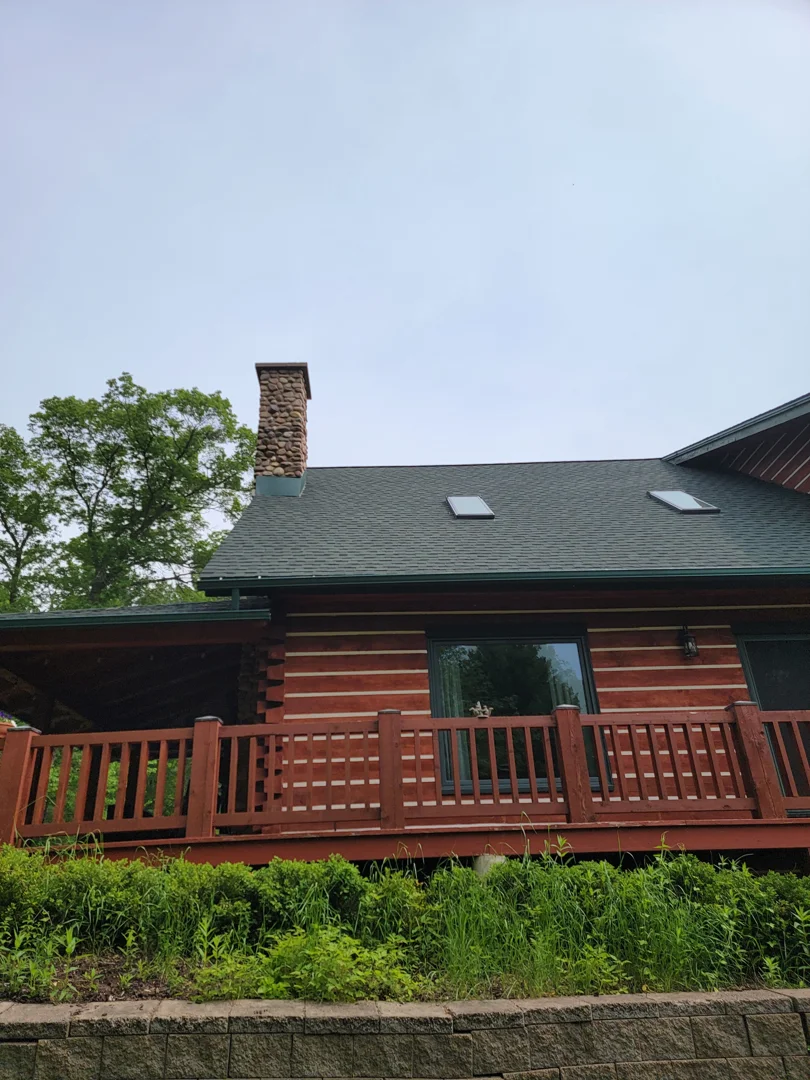
When selecting and detailing skylights for local roof systems, keep the following priorities in mind:
- Glass: Ask what glass comes in the skylight you are considering, since it affects comfort and how the skylight handles winter.
- Flashing: A skylight should be installed with the flashing kit made for it, not just caulk. A-RITE Exteriors installs VELUX skylights with VELUX flashing.
- Curb or Deck Mount: Some roofs call for a skylight on a raised curb. Your installer can explain which fits your roof.
- Roof Integration: The skylight assembly must tie cleanly into the best roofing system for Wisconsin weather to protect against seasonal moisture and temperature swings.
A-RITE Exteriors is a GAF Master Elite contractor.
What Are the Most Common Questions About Fixed vs Vented Skylights?
Do Vented Skylights Leak More Easily Than Fixed Skylights?
Installed correctly, vented skylights handle weather well. Leaks around skylights often come from flashing or underlayment problems rather than from the opening sash itself.
Electric and solar venting skylights with a rain sensor close on their own when rain starts.
Is It Worth Upgrading to a Solar-Powered Vented Skylight?
It depends on the room. A solar venting skylight does not need wiring run to it, and you can open it with a remote, which helps on high ceilings. It costs more than a manual or fixed skylight.
Can a Fixed Skylight Be Converted into a Vented Skylight Later?
Usually not. If you want a skylight that opens, you would replace the fixed unit with a venting one and use the flashing kit made for it.
How Can You Get Started on Your Skylight Installation?
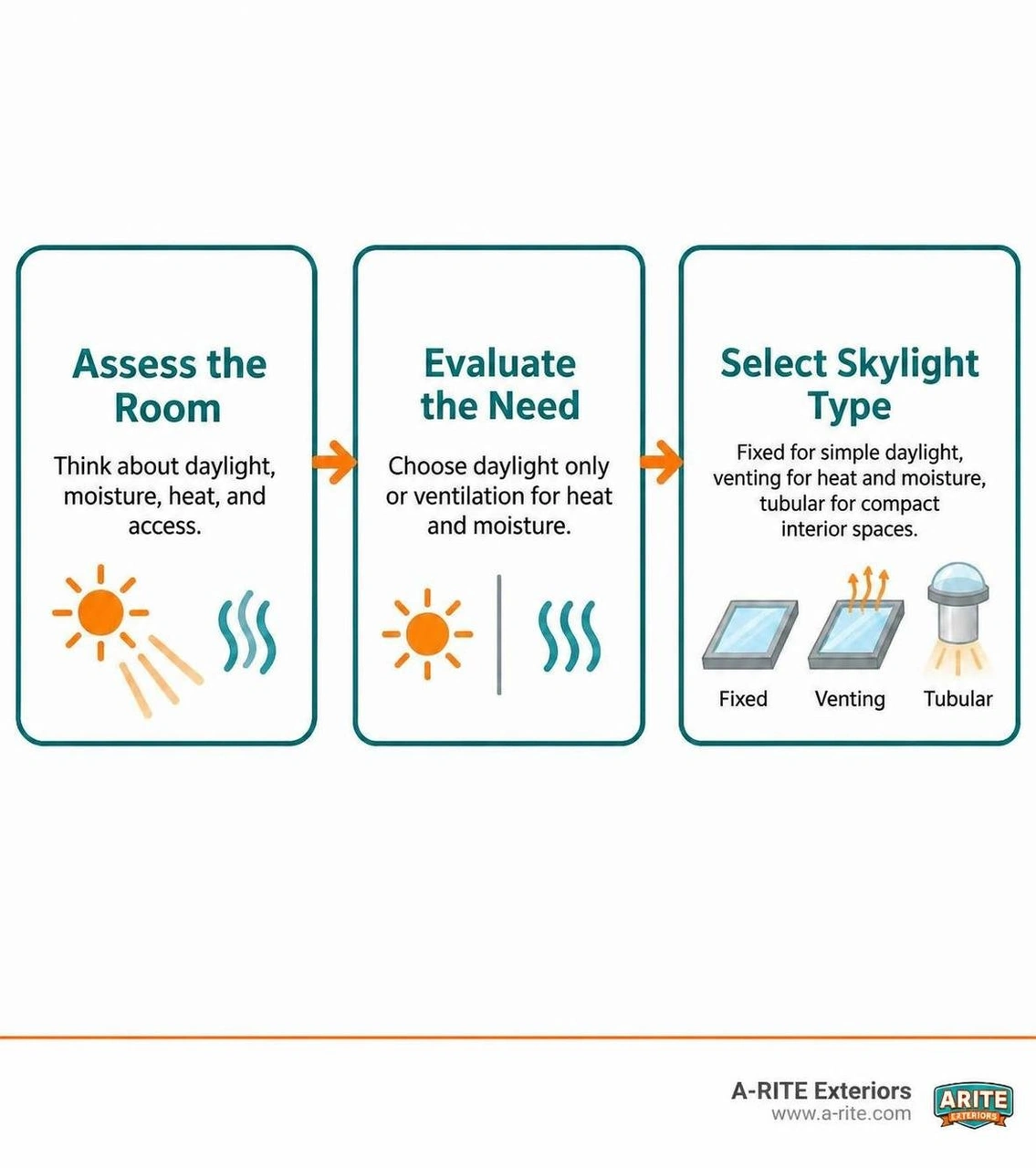
Choosing between fixed, vented, and tubular skylights comes down to your primary goals for each space:
- If you want simple daylighting in a hallway, stairway, or high vaulted living room, a fixed skylight is a simple, lower-cost choice.
- If you need to manage moisture, heat, and humidity in a kitchen, bathroom, or upper-story bedroom, a venting skylight lets heat and moisture out.
- If you are illuminating a compact space like an interior closet or laundry room, a tubular skylight can bring in daylight without a full skylight opening.
A-RITE Exteriors serves homeowners across Central Wisconsin, covering the Highway 51 corridor from Stevens Point north to Minocqua, including Wausau, Schofield, Weston, Mosinee, Merrill, Tomahawk, Rhinelander, and surrounding communities, and can also serve Wisconsin Rapids. We pull the building permit on our roof replacement jobs when the town requires one.
Contact our team today to request a free estimate and find the right skylight for your home.