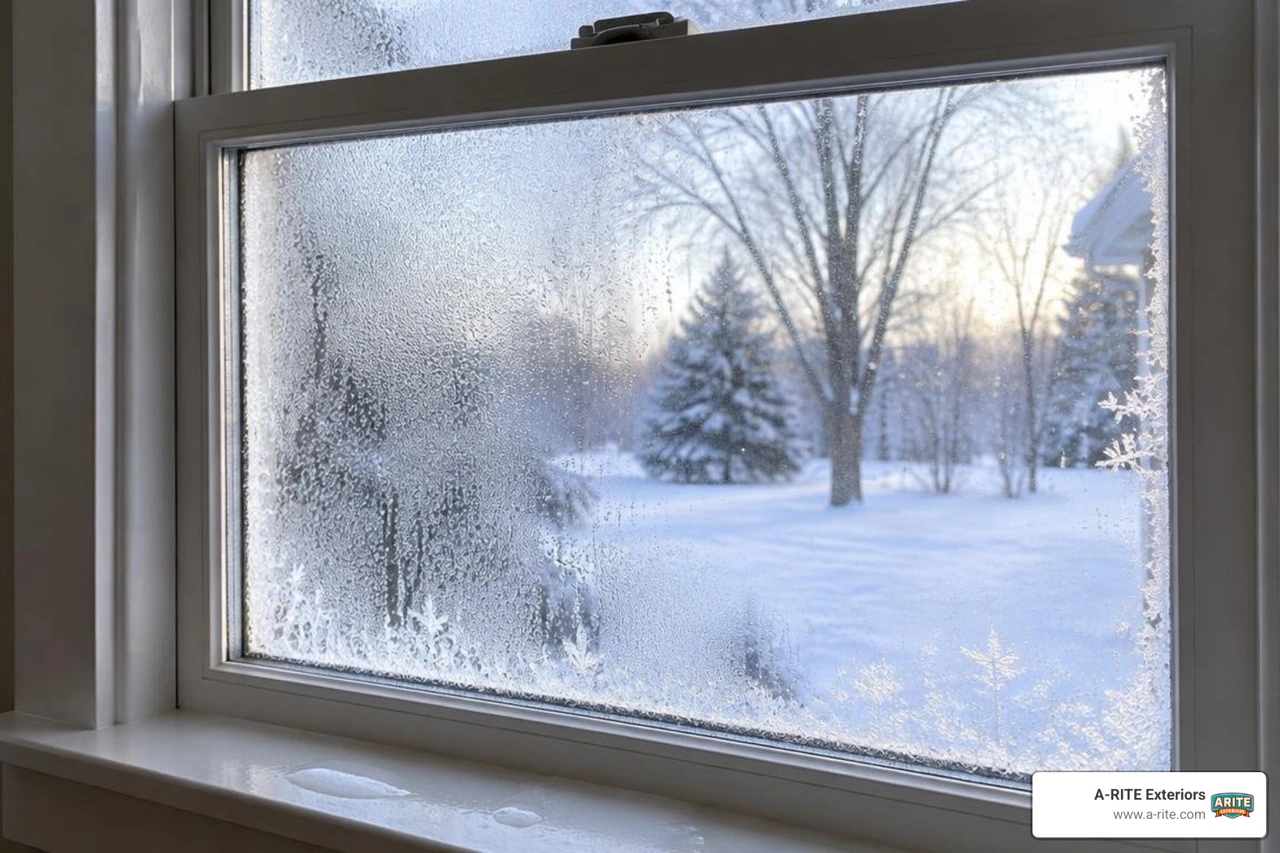
Condensation on Windows in Winter: What It Means
Water or frost on the inside of a window usually means warm, moist indoor air is meeting cold glass. To reduce it, run kitchen and bathroom exhaust fans, open blinds so warm air can reach the glass, and turn down your humidifier if you use one. Check indoor moisture with an inexpensive hygrometer, and wipe up water before it soaks into the sill.
Where the moisture sits matters. Dew on the outside is usually harmless. Fog between the glass panes often points to a failed seal. If indoor moisture keeps returning after you control humidity, or you notice soft sills, peeling paint, or drafts, the window may need professional attention.
I’m Bryan Londerville, owner of A-RITE Exteriors. My work helping Central Wisconsin homeowners with windows and the rest of their home’s exterior has shown me why it pays to sort out what condensation on windows in winter is telling you before deciding what to fix.

Whether you are searching for replacement windows near you or trying to figure out why your windows are drafty, understanding what causes winter condensation helps you protect your home.
What Causes Condensation on Windows in Winter?
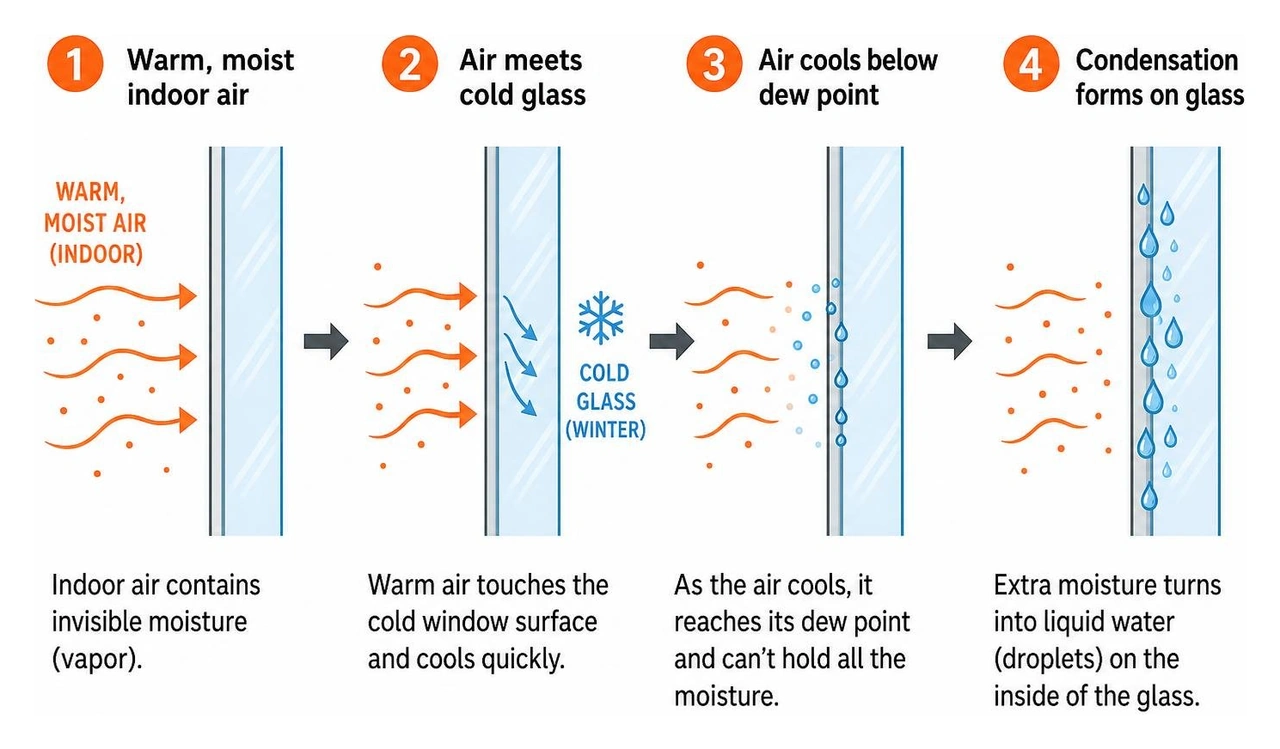
Winter condensation comes down to simple physics. Air holds moisture as an invisible vapor. Warm air can hold much more water vapor than cold air. When that warm, moist indoor air bumps into a chilled surface like your window glass, the air right next to the glass cools down fast.
Once the air reaches its dew point, it can no longer hold all that moisture. The extra vapor turns into liquid water droplets right on the glass. According to Natural Resources Canada guidance on condensation, this happens whenever the glass surface temperature drops below the dew point of your indoor air.
In places like Central Wisconsin, where winter temperatures frequently drop below freezing, the outer glass pane gets very cold. That deep chill lowers the temperature of the entire window assembly. If your home has plenty of indoor humidity, your windows become the easiest place for that moisture to collect.
Daily Household Habits and Condensation on Windows in Winter
You might wonder where all that indoor moisture comes from in the first place. Everyday living adds a surprising amount of water into your indoor air.
Common sources of household moisture include:
- Breathing and sweating: According to the Glass and Glazing Federation, two sleeping adults release about 1 liter of moisture into the air over an 8-hour period.
- Cooking: Boiling water and using an unvented gas stove releases steam into your kitchen. The Glass and Glazing Federation notes that an average gas stove can add around 1 liter of moisture per hour of use.
- Showers and baths: Running hot water fills bathrooms with steam that quickly spreads into nearby hallways and bedrooms.
- Drying clothes and laundry: Hanging clothes inside or using a dryer with a leaky vent adds a lot of moisture to your living space.
- Humidifiers and houseplants: Running central or portable humidifiers on high settings, along with watering large plant collections, steadily pumps moisture into your rooms.
How Temperature and Insulation Affect Glass Surfaces
The type of glass in your home plays a major role in whether moisture forms. Old single-pane windows have almost no insulation value. The glass gets nearly as cold as the outdoor air, which leads to heavy sweating or thick frost whenever indoor humidity rises.
Modern double-pane and triple-pane windows use insulating layers of air or inert gas between the glass sheets. These units often feature warm-edge spacers and low-emissivity coatings to slow down heat transfer. This keeps the interior pane much warmer than an old single pane of glass. However, if indoor humidity stays too high during a bitter cold snap, even energy-efficient glass can drop below the indoor dew point along its outer edges.
Where Window Condensation Appears and What It Means
Not all window moisture is created equal. The exact spot where the water gathers tells you what is causing the issue and whether your windows are working properly.
| Location of Moisture | What Causes It | Is It a Problem? | What You Should Do |
|---|---|---|---|
| Inside Surface | High indoor humidity meeting cold interior glass | Yes, if left sitting on frames and wood sills | Run exhaust fans, open blinds, and lower indoor humidity |
| Outside Surface | Warm, humid outdoor air meeting a cold exterior pane | Usually not; it often means your windows insulate well | Let the morning sun burn it off naturally |
| Between the Panes | Failed perimeter seal on an insulated glass unit | Yes, the window has lost its insulating seal | Plan to replace the glass unit or the whole window |
Condensation on the Inside Surface
Moisture on the room side of your glass is the most common winter frustration. It happens when indoor humidity is too high for the outdoor temperature, or when air cannot move freely across the glass.
Closed heavy drapes, tightly pulled blinds, and deep window sills trap pockets of cold, stagnant air against the glass. As that trapped air cools down, water droplets form on the pane. While this is usually a humidity issue rather than a broken window, letting water pool on wood sills day after day can lead to stained trim and peeling paint.
Condensation on the Outside Surface
Seeing water droplets or dew on the outside of your glass can be surprising, but it is actually a great sign. As noted in a BBC Weather explanation of exterior window condensation, this happens on cool, clear mornings when outdoor humidity is high.
High-performance windows keep heat inside your home where it belongs. Because heat is not escaping through the window, the outer glass pane stays cold. When the outside air warms up slightly, moisture naturally condenses on that cold outer pane just like dew on your lawn. Once the sun rises and warms the glass, the moisture evaporates on its own.
Moisture and Fog Between the Glass Panes
If you see fog, hazy streaks, or water droplets between the two panes of glass that you cannot wipe away from either side, your window has a broken seal.
Double-pane windows are sealed at the factory with an airtight spacer holding a drying agent called a desiccant. Over years of seasonal expansion and contraction, that seal can crack. Outside air slowly enters the space between the panes, saturating the drying material. Once that happens, moisture stays trapped inside the glass unit permanently, signaling that it is time to look at replacement options.
How to Reduce and Prevent Indoor Window Moisture
Managing indoor moisture takes a balance between daily habits and proper home airflow. You do not need expensive equipment to keep your glass clear during winter.

Simple Steps to Stop Condensation on Windows in Winter
You can make a noticeable difference in indoor moisture by taking a few everyday steps:
- Run exhaust fans regularly: Turn on your bathroom fan during showers and leave it running for a while afterward. Always use your range hood fan while boiling liquids or cooking on the stove.
- Open window coverings during the day: Raise your blinds and pull back heavy curtains to let warm room air circulate against the glass. Sunlight also helps warm the interior pane.
- Turn down your humidifier: If your furnace has a built-in humidifier, lower the dial when outdoor temperatures drop. Turn off portable room humidifiers if you see moisture gathering on windows.
- Track indoor humidity with a hygrometer: Place an inexpensive digital humidity monitor in a central room. This gives you an accurate reading so you know when your air is getting too damp.
- Keep air moving: Run ceiling fans on low in a clockwise direction to push warm air down and keep air circulating across exterior walls and windows.
Recommended Winter Indoor Humidity Levels
When outdoor temperatures drop into freezing territory, your indoor humidity needs to drop as well. Humidity that feels comfortable in the fall can cause heavy condensation on your glass once it is well below freezing outside.
FGIA recommends keeping indoor relative humidity at or below 40% when outdoor temperatures are between 20°F and 40°F (-7°C to 4°C) to help reduce moisture risk. When outdoor temperatures plunge below -20°F (-29°C), FGIA recommends keeping indoor relative humidity at or below 15% to help prevent frost and condensation on interior glass.
Signs Your Windows Need Professional Repair or Replacement
Sometimes managing indoor humidity is not enough. If your windows are old, drafty, or poorly insulated, you may continue to deal with persistent water issues that point to structural wear.
Chronic Moisture Damage and Frame Rot
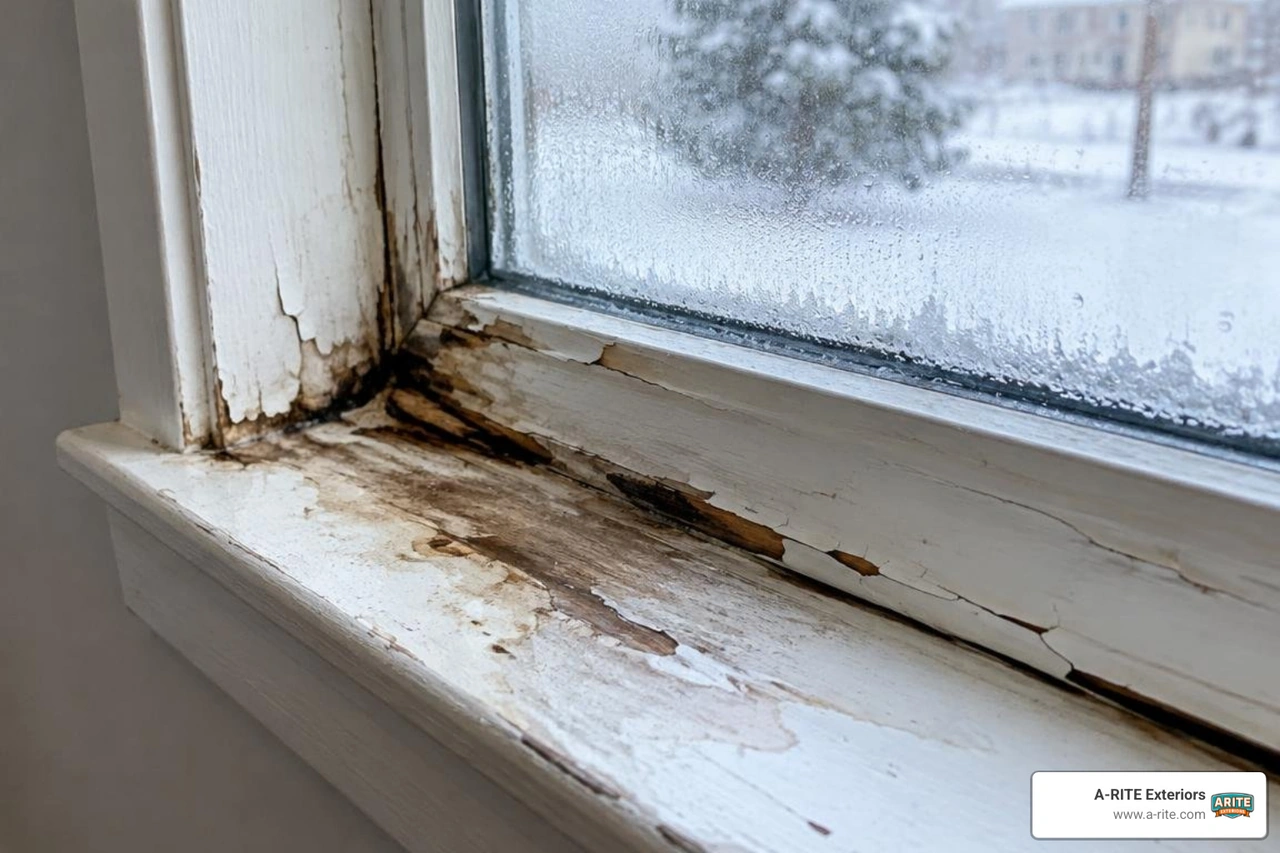
Water that drips down your glass every morning will eventually soak into the surrounding wood and drywall. Over time, this constant dampness causes visible damage around your openings.
Watch for these warning signs:
- Wood sills or sash corners that feel soft or spongy to the touch
- Peeling, bubbling, or cracked paint on the window frame
- Dark water stains on the sill, trim, or nearby drywall
- Ice forming frequently along the bottom corners of the interior glass
When window frames absorb water year after year, repairs become difficult. If you notice signs of structural wear, it helps to understand when it is time to replace your windows so you can protect your wall framing from hidden moisture damage.
Broken Seals and Persistent Drafts
If your windows feel cold to the touch and let chilly outdoor air leak into your living space, the weatherstripping or assembly may be failing. Homeowners often ask, "why are my windows drafty?" and the answer usually comes down to worn seals, warped sashes, or aging single-pane glass.
When a window leaks air, the glass surface stays far colder than it should. That makes interior condensation happen even at low indoor humidity levels. Combining drafty frames with permanent fogging between the panes often means replacing the window is the most practical long-term fix.
Frequently Asked Questions About Window Condensation
Is interior window condensation in winter always a bad sign?
Not necessarily. Occasional light fogging along the bottom edge of a window after a long shower or while cooking a large holiday meal is normal. It simply means indoor humidity briefly spiked. It becomes a problem only when heavy moisture collects daily, runs down the glass, and puddles on your sills.
Why do my new energy-efficient windows have condensation on the outside?
Exterior condensation is usually a sign that your new windows are doing their job. Modern energy-efficient glass stops heat from escaping your home, leaving the outer pane cold. On calm, humid mornings, dew forms on the exterior surface just as it does on grass or your car windshield. It causes no harm and clears up as the day warms.
Can I fix condensation between double-pane window glass?
Moisture trapped between the panes cannot be wiped clean or repaired with a simple DIY fix. It means the airtight seal around the insulated glass unit has failed and the internal drying agent is saturated. You will need to replace either the sealed glass unit or the entire window assembly to restore clear views and proper energy efficiency.
Conclusion
Winter window moisture can be an annoying surprise, but knowing where it forms helps you take the right steps. Running your exhaust fans, opening your blinds, and keeping indoor humidity at safe winter levels can solve many indoor condensation issues.
When you notice permanent fog between the glass panes, soft wood sills, or chilly drafts that never go away, it may be time to upgrade your home with modern, energy-efficient glass. At A-RITE Exteriors, we help Central Wisconsin homeowners choose replacement windows, including Pella windows.
If you suspect your windows have failed seals or need an upgrade, explore our window replacement services and contact our friendly team today to schedule a free estimate. Financing options are available for qualifying homeowners. Loan amounts up to $100,000 unsecured may be available, with final approval, rates, and terms based on lender review and credit qualification.