What Are the Most Common Signs That Your Windows Need Replacing?
When windows begin to fail, they rarely do so silently. Recognizing the warning signs early allows you to address problem units before rot spreads to structural wall framing or heating costs skyrocket. According to data highlighted by ENERGY STAR, windows represent roughly 8% of a home's exterior envelope but can account for up to 45% of total heat gain and loss.
In Central Wisconsin communities like Wausau, Stevens Point, and Minocqua, winter performance is the ultimate test for any window. Here are the primary red flags indicating your windows have passed their practical lifespan:
- Persistent Drafts: If you feel a noticeable temperature drop or air movement standing near a closed window, the weatherstripping, sashes, or frame seals have degraded. Check out our guide on Why Are My Windows Drafty to learn how air leaks form around older window perimeters.
- Condensation Between Panes: Moisture, fogging, or a milky film trapped inside double- or triple-pane glass means the perimeter seal has permanent damage, letting dry insulating gas escape.
- Operational Sticking or Jamming: When sashes bind, warp, or require immense effort to open and close, the window frame or track has shifted or distorted.
- Unexplained Spikes in Heating Bills: An uncharacteristic increase in monthly utility costs during winter often points directly to thermal energy escaping through inefficient window units.
- Visible Rot or Water Damage: Soft wood, peeling paint, or dark water staining along sashes, sills, or surrounding drywall indicates water intrusion that threatens your home's framing.
Learning how to decide what windows need to be replaced in your home involves evaluating whether individual units suffer from isolated wear or systemic thermal failure.
What physical signs indicate frame damage?
Physical frame damage often shows up first on wood sills and bottom sash rails where snow, ice, and rainwater accumulate. You can test suspect wood by pressing a screwdriver gently into the frame; if the wood feels soft or spongy, rot has taken hold.
On vinyl or metal windows, extreme freeze-thaw cycles commonly cause frame distortion, cracking, or bow along the side jambs. Once frame geometry shifts out of square, sashes cannot form a tight weather seal against the frame weatherstripping, leaving permanent gaps for icy wind to pass through.
How does seal failure affect energy efficiency?
Modern multi-pane windows rely on an insulated glass unit (IGU) sealed around the edges to trap dry air or inert argon gas between the glass layers. Argon gas provides significantly greater thermal resistance than standard atmospheric air.
When an IGU seal fails:
- The insulating argon gas escapes into the atmosphere.
- Moist ambient air enters the space between the panes.
- Water vapor condenses on the cold interior glass surfaces, producing permanent haze or water droplets.
Because trapped moisture cannot be wiped away from inside an IGU, seal failure permanently ruins the window's insulating performance, turning multi-pane glass into a major source of winter heat loss.
Can old windows increase outside noise levels?
Yes. Single-pane windows or multi-pane units with compromised perimeter seals provide minimal acoustic insulation. If traffic, snowblowers, or neighborhood activity sound almost as loud inside your living room as they do outdoors, your glass package is underperforming.
Upgrading to modern multi-pane windows equipped with varying glass thicknesses or specialized acoustic glazing can reduce outdoor noise transmission by 35 to 50 decibels. For comprehensive diagnostic criteria, review Signs Your Windows Need Replacing: A Homeowner's Guide.
Should You Repair or Replace Your Existing Windows?
Deciding whether to repair or replace failing windows comes down to structural integrity, age, and overall repair costs. As a general industry standard, we recommend applying the 50% rule: if repairing a window costs more than half the price of a brand-new replacement unit, investing in full replacement is typically the smarter economic choice.
| Issue / Symptom | Recommended Action | Typical Rationale |
|---|---|---|
| Broken balance springs or tilt latches | Repair | Inexpensive hardware swap on an otherwise sound frame. |
| Worn exterior weatherstripping | Repair | Surface recaulking and fresh weatherstripping restore draft control. |
| Failed IGU seal (fogged glass) | Glass Replacement or Unit Replacement | Single glass insert replacement is viable if the frame is sound; otherwise replace unit. |
| Rotted frame or structural opening | Full Replacement | Decay inside wall framing requires full-frame tear-out and structural restoration. |
| Single-pane glass construction | Full Replacement | Single-pane units are thermal liabilities that cannot match modern energy standards. |
In addition to financial thresholds, consider emergency egress requirements. Bedroom windows must open smoothly and stay open independently to satisfy local building safety codes for emergency exit pathways. Sashes that are painted shut, nailed shut, or propped up with wooden sticks present serious safety hazards.
Homeowners evaluating long-term remodeling plans can review When To Replace Your Windows: Signs, Timing, And How To Decide (2026) - Forshaw Of St. Louis for additional decision matrices.
When is window repair a viable option?
Window repair commonly makes sense for isolated issues on relatively modern windows (under 15 years old) where the main frame and sashes remain structurally sound and free from decay. Minor hardware repairs include:
- Replacing broken sash locks, handles, or cranks
- Installing new balance shoes or tension springs so double-hung sashes stay open
- Replacing cracked single glass panes on intact frames
- Reapplying exterior caulking and replacing worn perimeter weatherstripping
When is full window replacement necessary?
Full replacement becomes essential when windows are over 20 years old, feature outdated single-pane glass, or suffer from widespread frame rot. Continuous water leaks around window perimeters often damage subfloor framing, wall studs, and exterior wall sheathing beneath siding. Left unaddressed, uncorrected structural water intrusion can cost thousands of dollars, and severe cases can cost much more.
Replacing failing windows system-wide across your home restores uniform thermal performance, streamlines building envelope airtightness, and elevates curb appeal.
How Long Do Different Types of Windows Last and Which Material Is Best?
Window lifespans vary by frame material, manufacturing quality, installation precision, ventilation, routine maintenance, and severe weather exposure. Central Wisconsin climate conditions, characterized by freezing winter temperatures, heavy snow accumulation, and summer humidity, place heavy demands on exterior frame materials.
| Frame Material | Typical Lifespan | Maintenance Level | Thermal Insulation | Severe Winter Performance |
|---|---|---|---|---|
| Vinyl | 20 to 40 years | Very Low | High (Foam-Filled) | Good (May contract in extreme sub-zero cold) |
| Fiberglass | 30 to 50+ years | Very Low | Excellent | Superior (Zero thermal expansion stress) |
| Wood | 15 to 60+ years | High (Requires Paint/Stain) | Excellent | High (Requires strict exterior moisture sealing) |
| Aluminum | 30 to 50+ years | Low | Fair (Requires Thermal Break) | Moderate (High frame heat conductivity) |
Which window material handles Wisconsin winters best?
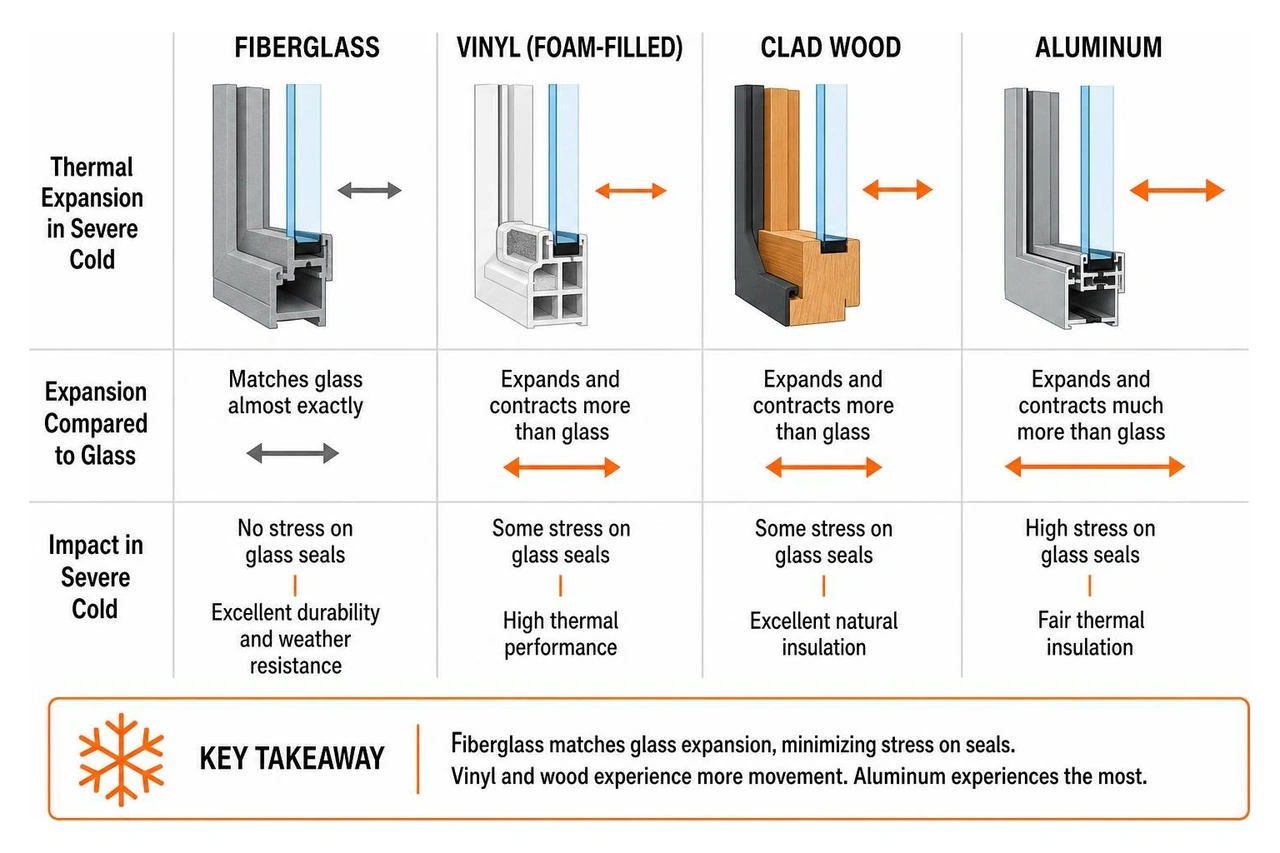
When selecting window frame materials for Central Wisconsin homes, resisting severe thermal shock during rapid freeze-thaw cycles is paramount.
- Fiberglass Windows: Fiberglass stands out as an exceptional performer for northern climates. Because fiberglass is composed of silica sand, it expands and contracts at virtually the exact same rate as window glass itself. This eliminates stress on glass seals during sub-zero cold snaps, delivering outstanding long-term durability and weather resistance.
- Foam-Filled Vinyl Windows: Quality vinyl windows feature multi-chambered frame designs that can be injected with insulating foam core fills. High-grade vinyl requires zero painting and provides strong thermal barrier properties at an approachable price point. However, standard vinyl typically experiences 10% to 15% thermal efficiency loss after 15 to 20 years of intense weather exposure.
- Clad Wood Windows: Solid wood offers supreme natural insulation against freezing cold. Modern clad wood windows feature extruded aluminum or vinyl exterior armor to protect the inner wood frame from snow, ice, and rain exposure.
How Much Does Window Replacement Cost and Will It Lower Your Energy Bills?
Understanding window replacement economics requires evaluating both upfront installation pricing and long-term utility savings.
Primary factors influencing window replacement expenses include:
- Window Size and Style: Standard double-hung windows are generally most affordable, while custom picture windows, bay windows, or heavy casements carry higher material fees.
- Glass Options: Adding triple-pane glass packages, specialty Low-E coatings, or acoustic laminate layers increases per-unit material costs.
- Frame Material: Standard white vinyl represents the budget-friendly tier, whereas custom fiberglass, aluminum, or wood-clad systems sit in premium price ranges.
- Installation Method: Insert window replacement (retrofitting new sashes into existing sound frames) costs less labor than full-frame tear-out installation, which involves replacing interior trim, sills, and exterior flashing back to rough openings.
Standard replacement window units typically cost between $300 and $1,200 per window, with standard installed costs running $500 to $1,200 per unit. Premium architectural window systems installed with full-frame removal generally range from $750 to $1,600 or more per opening. For a standard 10-window whole-home replacement project, homeowners commonly spend between $3,000 and $12,000 for mid-tier vinyl installs, up to $20,000 for custom architectural frames.
If you're looking for local installation expertise, searching for trustworthy Replacement Windows Near Me connects you with local contractors who understand local municipal codes and severe weather demands. Homeowners researching regional service options can review industry benchmarks in When to Replace Windows in Your Home.
Financing options are available for qualifying homeowners. Loan amounts up to $100,000 unsecured may be available, with final approval, rates, and terms based on lender review and credit qualification.
When comparing contractor quotes, keep in mind that a lower price may reflect differences in materials, scope, cleanup, warranty coverage, or installation details.
What factors drive up replacement window expenses?
Unforeseen structural repairs discovered during frame tear-outs represent a primary driver of project cost increases. When old windows leak unnoticed over several years, water infiltrates wall cavities, rotting rough framing studs, sills, and subfloors. Structural restoration can cost thousands of dollars, and severe cases can cost much more.
Custom archtop designs, tempered safety glass requirements near floor level, and historical divided-light grille mandates also elevate manufacturing expenses.
How quickly do new energy-efficient windows pay for themselves?
According to industry data compiled by the U.S. Department of Energy and ENERGY STAR, replacing drafty single-pane or aged double-pane windows with modern ENERGY STAR certified units delivers an average 10% to 15% reduction in annual heating and cooling expenses, translating to approximately $510 per year in direct utility bill savings for typical homes.
Beyond monthly energy bill savings, replacement windows deliver substantial resale value recoupment. According to national real estate cost vs. value data, homeowners commonly recoup 60% to 80% of window replacement costs at home resale, with vinyl window replacement specifically recouping an average of 67% to 72%.
Regarding federal tax incentives: IRS guidance showed that Section 25C (Energy Efficient Home Improvement Credit) tax credits were available through December 31, 2025. Homeowners should not present Section 25C as active for 2026 or beyond unless confirmed by current IRS guidance, and we always recommend consulting a tax professional regarding tax credit eligibility.
For energy efficiency upgrades, Homeowners may qualify for Focus on Energy rebates. Focus on Energy rebates are for qualifying insulation and air-sealing work (such as attic insulation, air sealing, wall insulation, foundation insulation, duct sealing, and qualifying DIY attic insulation and air sealing), not for roof replacement itself. Rebate amounts and eligibility rules change over time, and homeowners should confirm current program rules before starting work. While Focus on Energy covers various whole-home air-sealing measures, A-RITE Exteriors specifically specializes in professional attic insulation services.
What Is the Best Timing and Strategy for Your Window Replacement Project?
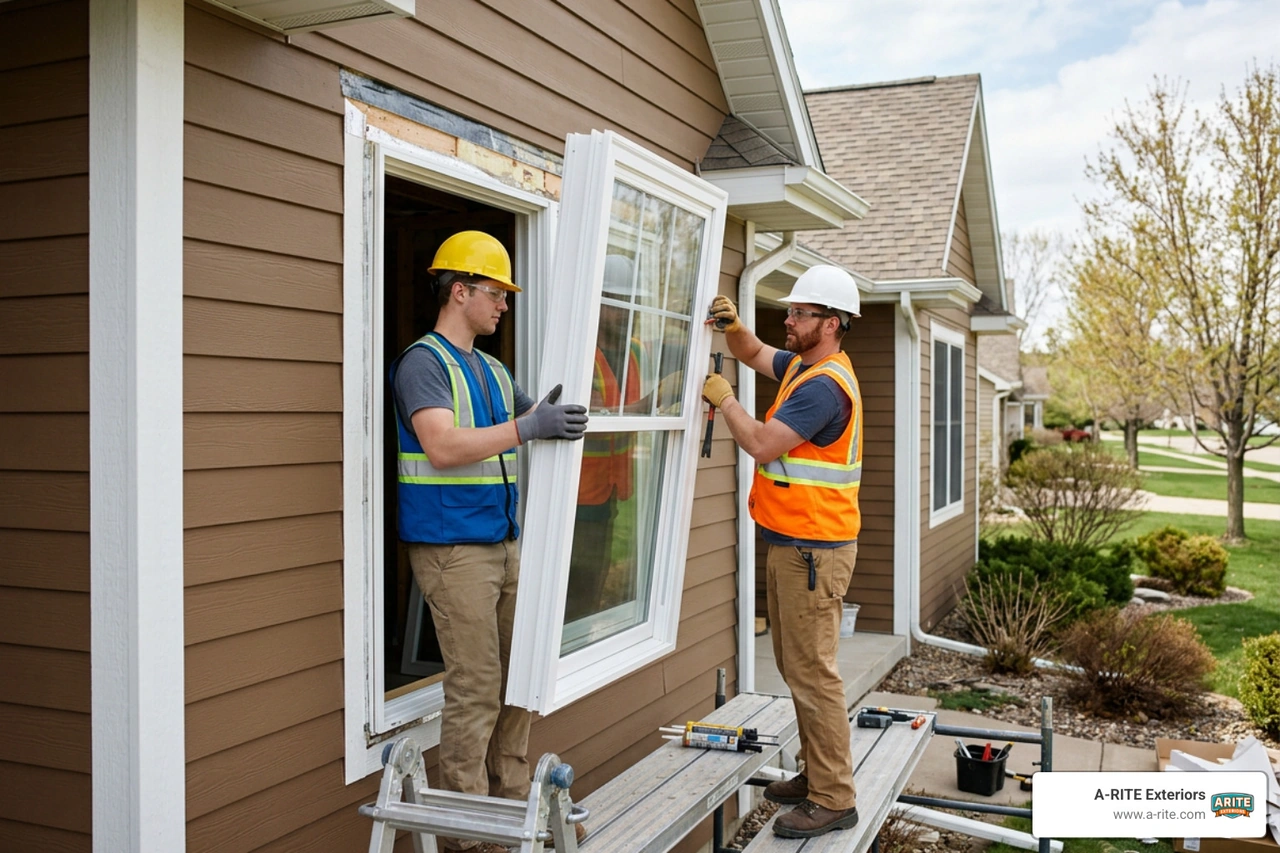
Spring and fall offer moderate ambient temperatures that make installation comfortable, but experienced exterior contractors perform routine window replacements year-round in Central Wisconsin, even during winter months. Professional crews work on one window opening at a time, keeping interior room doors closed to minimize thermal loss and draft exposure inside your living space.
However, project planning requires accounting for custom manufacturing lead times. Custom-built replacement windows typically take 6 to 12 weeks from initial field measurements to job site delivery. Homeowners noticing severe window drafts during November cold snaps should initiate contractor consultations promptly to schedule winter or early spring installation.
When planning scope, undertaking a whole-home replacement (10+ windows at once) often qualifies for a 5% to 15% volume discount compared to ordering windows individually. Whole-home projects also restrict contractor setup, dust, and disruption to a single 1 to 3 day period.
If budget considerations require a phased replacement strategy:
- Phase 1: Replace rotted, non-functional, or broken units that pose structural or safety risks first.
- Phase 2: Upgrade south- and west-facing elevations, which endure maximum direct sunlight exposure, solar heat gain, and intense thermal stress.
- Phase 3: Address north- and east-facing windows to complete your building envelope's weather seal.
Explore our dedicated Services - Windows page to review custom window styles and options built for Wisconsin homes. If you're coordinating multi-trade exterior renovations, learn Who Can Help With Roofing Gutters Siding Windows and Insulation Near Me to streamline your contractor selection.
How should homeowners prepare for installation day?
Preparing your home interior and exterior before installation crews arrive ensures smooth, safe execution:
- Clear interior furniture and belongings back at least 3 to 5 feet from window openings.
- Remove all interior window treatments, including blinds, shades, curtains, and mounting hardware.
- Take down nearby wall art, framed photos, or glass decor that could slip due to installation vibrations.
- Trim outdoor bushes, branches, or tall shrubs near exterior window work areas.
- Keep household pets secured safely in designated rooms away from active work zones.
What Are the Most Frequently Asked Questions About Replacing Windows?
How long does the window installation process take?
For standard retrofit insert replacements, professional window technicians take approximately 1 to 2 hours per window opening. Complete full-frame replacement installations take roughly 2 to 3 hours per unit due to exterior trim, flashing, and interior casing labor. A whole-home replacement covering 10 to 15 windows is typically completed on site in just 1 to 3 workdays.
Do window replacement projects require local building permits?
Municipal building permit rules vary across Wisconsin communities. Standard pocket insert replacements that keep existing structural framing intact may not require permits in certain jurisdictions. However, full-frame tear-outs, changing window opening dimensions, or modifying structural headers almost universally require municipal permits and building code inspections. Reputable contractors manage local permitting processes on your behalf.
How do low-emissivity (Low-E) glass coatings work?
Low-E glass coatings consist of microscopically thin, non-toxic metal oxide layers applied directly to internal glass surfaces. In winter, Low-E coatings reflect interior room heat back inside, preventing furnace warmth from escaping through the glass. In summer, Low-E coatings reflect long-wave solar heat back outside, reducing cooling demands and protecting interior furniture from UV fading.
Why Should You Choose A-RITE Exteriors for Your Window Replacement?
Knowing when to replace your windows is essential for maintaining home comfort, helping lower heating expenses, and protecting structural framing from moisture damage. Signs like persistent draftiness, fogged glass seals, rotted sills, and sticking sashes indicate it's time to upgrade to modern, weather-resistant replacement windows built for Wisconsin winters.
At A-RITE Exteriors, we bring a comprehensive, roof-first perspective to exterior home protection. Serving communities from Marathon and Wood counties up through the Northwoods, including Wausau, Schofield, Weston, Mosinee, Stevens Point, Wisconsin Rapids, Merrill, Minocqua, and Green Bay, our expert crews install high-performance windows, asphalt shingle roofs, seamless gutters, durable siding, and energy-saving attic insulation.
Whether you need a single emergency window replacement or a comprehensive whole-home exterior upgrade, our team delivers honest field evaluations, premium weatherproofing craftsmanship, and reliable long-term warranties.
Ready to protect your home with high-performance, energy-efficient windows? Visit our A-RITE Exteriors Windows Services page or return to the A-RITE Exteriors Home Page to schedule your professional home inspection and estimate today!