Protect Your Roof, Gutters, and Attic Before Central Wisconsin Winter
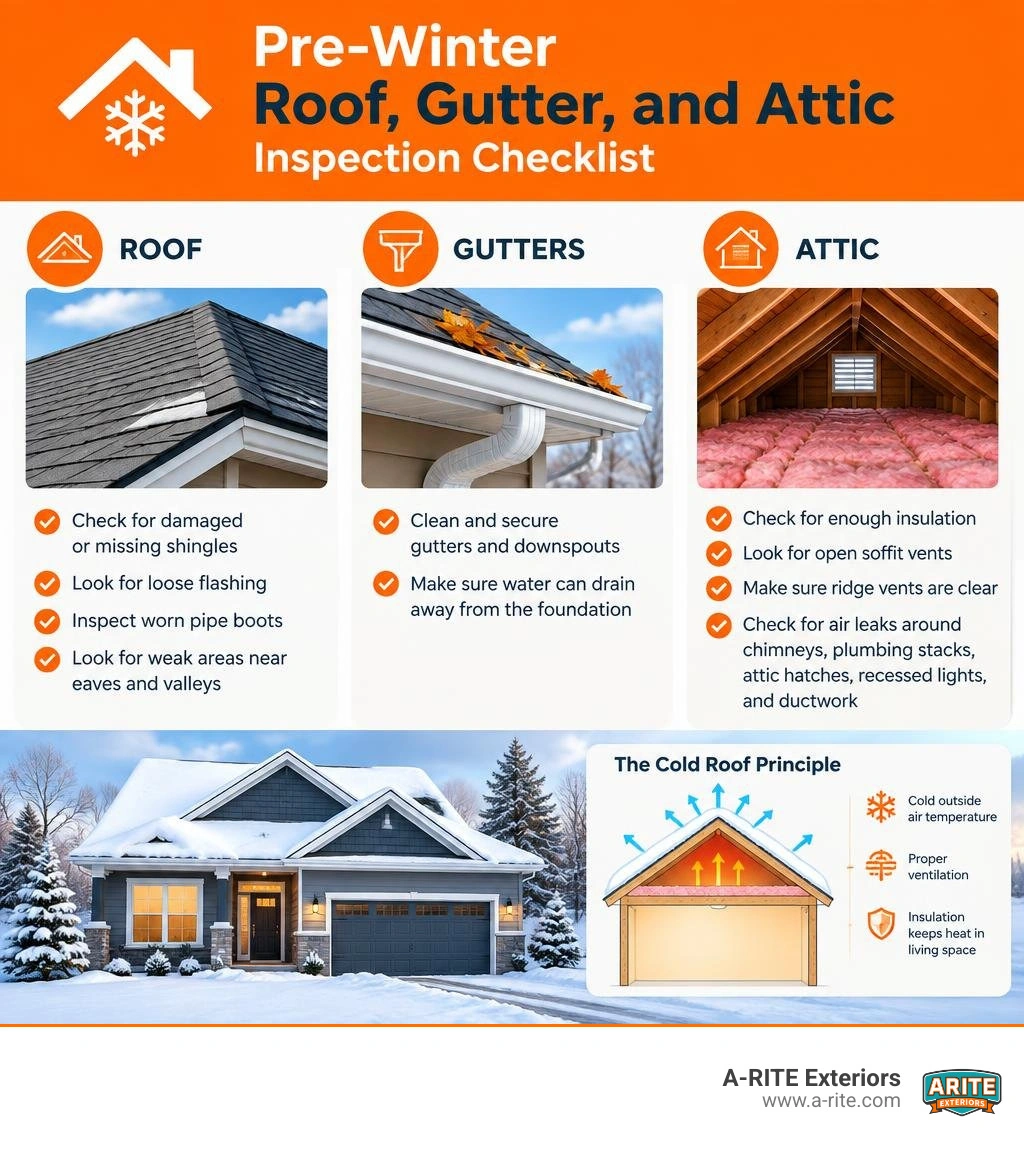
Before winter, inspect your roof for damaged or missing shingles, loose flashing, worn pipe boots, and weak areas near eaves and valleys. Clean and secure gutters and downspouts, make sure water can drain away from the foundation, and check the attic for enough insulation, open soffit vents, clear ridge vents, and air leaks around chimneys, plumbing stacks, attic hatches, recessed lights, and ductwork.
These checks matter because a warm attic can melt snow on the roof. That water can refreeze at the colder eaves and form an ice dam. The result may be roof leaks, wet insulation, damaged gutters, and interior water stains. Water damage from ice dams can cost thousands of dollars, and severe cases can cost much more.
A quick pre-winter inspection helps you catch small issues before Central Wisconsin snow, wind, and freeze-thaw cycles put them to the test. Start early enough to schedule repairs or attic insulation work before steady snow arrives. For broader background on how ice dams form and how to reduce the risk, the Ice dam overview from Wikipedia explains the basic mechanics.
I am Bryan Londerville, founder and owner of A-RITE Exteriors, and since 2002 I have helped Central Wisconsin homeowners understand what should I check on my roof, gutters, and attic before winter in Central Wisconsin? From roofing and gutter drainage to attic insulation, ventilation, and ice dam removal, our work focuses on finding the root cause and explaining practical next steps.
Preparing the Attic: Insulation, Air Sealing, and Ventilation
When preparing your home for a Wisconsin freeze, the attic floor serves as your primary defense line. A well-performing attic works under the "cold roof" principle: the temperature inside your attic space should closely match the outside air temperature. When conditioned heat escapes from your living quarters into the attic, it warms the underside of the roof decking, initiating an erratic melt cycle under the snowpack.
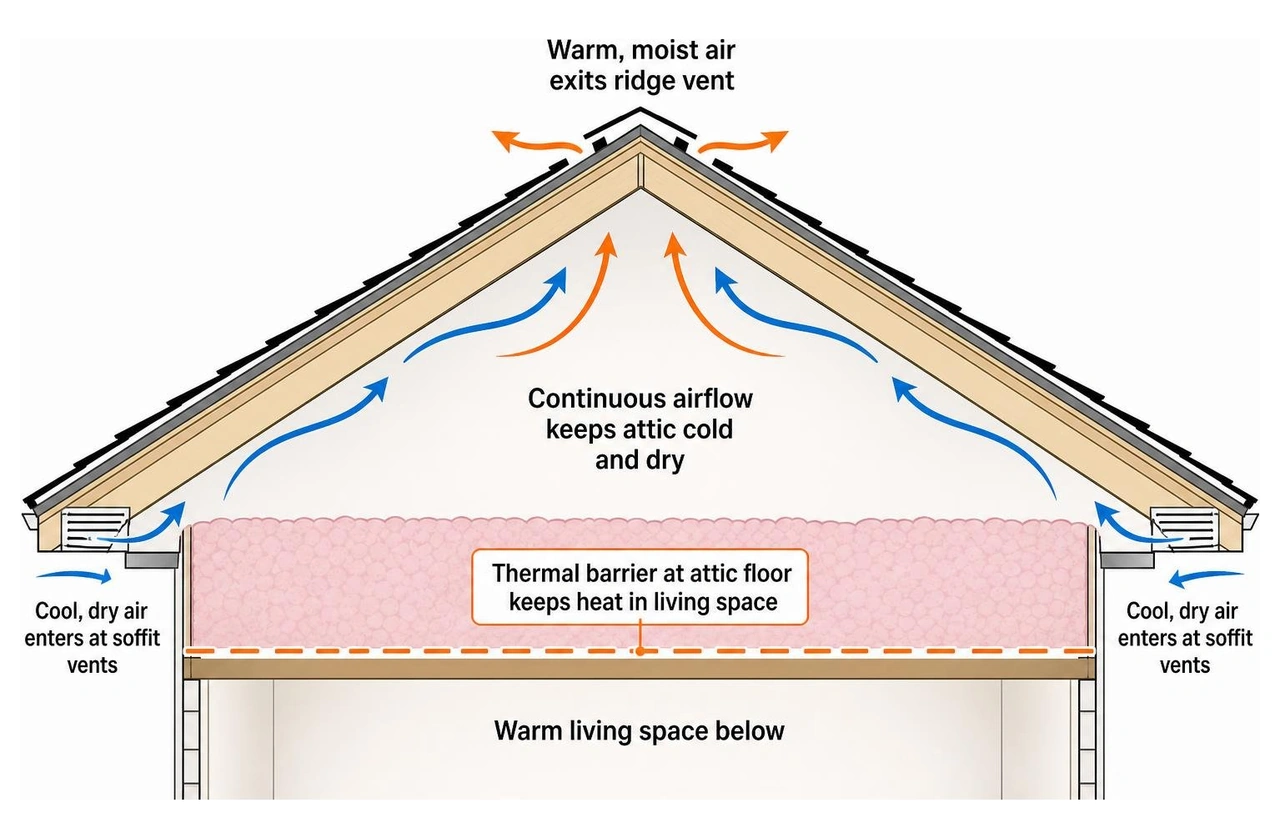
Ensuring an unbroken thermal barrier requires understanding attic insulation R-value requirements. In our cold climate zone, meeting adequate thermal resistance keeps heat where it belongs, inside your heated living spaces.
Attic Insulation and Airflow: What Should I Check on My Roof, Gutters, and Attic Before Winter in Central Wisconsin?
To verify your attic is ready for sub-zero weather, grab a measuring tape and step up into the attic hatch. Measure the depth of your existing insulation across several spots. Loose-fill fiberglass or blown-in cellulose often settles over time, losing effective thermal resistance.
Review the recommended R-factor for Wisconsin homes to ensure your attic meets the R-49 to R-60 standard common for our climate. If your insulation sits below or level with the floor joists (typically under 10 to 14 inches), your attic lacks adequate coverage. Uneven insulation depth creates localized warm spots on the roof above, leading to uneven snowmelt that fuels ice dam formation.
Sealing Air Leaks and Clearing Intake Ventilation
Insulation alone cannot stop warm air from escaping if open pathways exist. Major thermal bypasses occur around:
- Chimney chases and masonry penetrations
- Plumbing vent stacks
- Recessed can lighting housings
- Attic access hatches and pull-down stairs
- Open gaps around HVAC ductwork
Seal these gaps with code-appropriate air-sealing materials before winter sets in. Pair this air sealing with unobstructed intake and exhaust airflow. Continuous soffit vents must remain open; ensure blown insulation has not buried your soffit baffles.
Balanced airflow pulls crisp air through the soffits and exhausts warm, moist air out the ridge vent. Proper attic ventilation and ice dam prevention work together to keep the roof deck cold.
Homeowners may qualify for Focus on Energy rebates. These rebates apply to qualifying insulation and air-sealing work (such as attic insulation, air sealing, wall insulation, foundation insulation, duct sealing, and qualifying DIY attic insulation and air sealing), not for roof replacement itself. Rebate amounts and eligibility rules change over time, so confirm current program rules before starting your project.
What Should I Check on My Roof, Gutters, and Attic Before Winter in Central Wisconsin?

A thorough exterior inspection reveals physical vulnerabilities that heavy snow loads and freeze-thaw cycles can exploit. Look closely at the transition zones, eaves, and penetrations across the roof plane.
Inspecting Shingles, Flashing, and Underlayment Vulnerabilities
Start from the ground with binoculars or safely from a ladder at the eave line. Look for:
- Shingles with curling corners, cracks, or severe granule loss
- Loose or displaced tabs exposed to high winds
- Cracked rubber boots around plumbing vent stacks
- Loose, rusted, or unsealed step and counter flashing along chimneys and dormers
These flaws often reveal subtle signs of hidden roof damage beneath the surface. Water from backing-up ice can penetrate unsealed seams.
Quality installations use a self-adhering ice and water shield along eaves, valleys, and low-slope intersections. Ice and water shield helps protect against water intrusion if ice dams occur, but it does not prevent ice dams by itself. This waterproof membrane adheres directly to the wood substrate and helps protect underlayment and roof decking if water backs up under the shingles.
Clearing, Pitching, and Securing Gutters and Downspouts
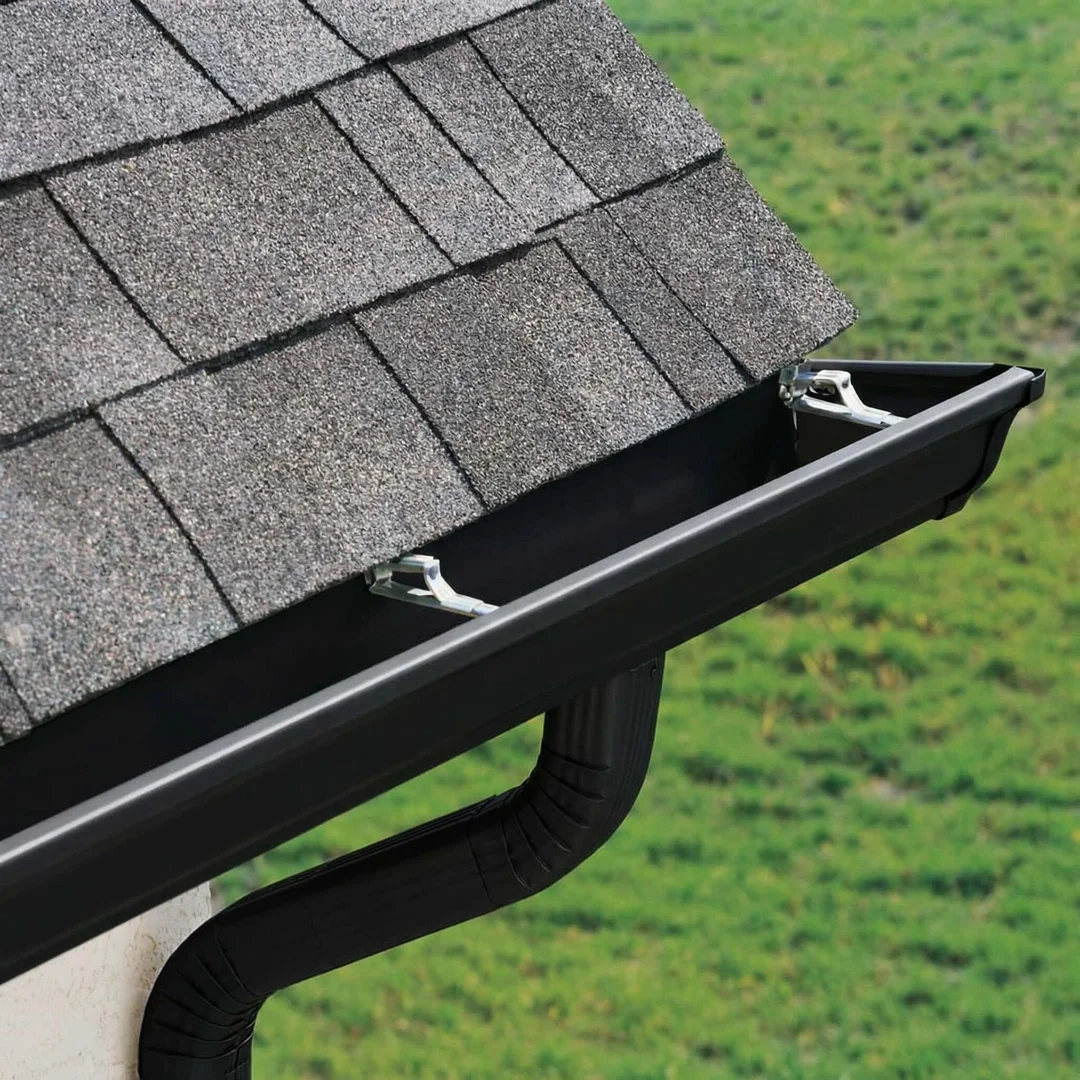
Gutters filled with autumn leaves and pine needles will trap snowmelt. When this standing water freezes, heavy ice expands, pulling gutters loose from the fascia boards and tearing seams.
- Remove all organic debris from gutter troughs.
- Flush channels with a garden hose to verify positive slope toward downspouts.
- Tighten loose gutter spikes, hidden hangers, or fascia brackets.
- Clear downspout elbow joints and install extensions to route drainage at least 4 to 6 feet away from the foundation.
Properly sloped, clean gutters and downspouts help manage runoff and direct water away from the roofline and foundation. If your gutters overflow frequently during heavy fall rains, you may need to choose the proper gutter downspout size to handle rapid winter thaw volume.
Winter Roof Management: Ice Dam Prevention and Damage Detection
Even with great attic air sealing, extreme Wisconsin blizzards followed by bright sun can trigger natural melt-freeze cycles. Choosing one of the best roofing systems for Wisconsin weather provides an engineered layer of defense against seasonal shifts.
Safe Roof Raking Techniques to Protect Shingles
If heavy snowfall accumulates on your roof, use a telescoping roof rake safely from the ground:
- Stand firmly on clear ground away from falling snow paths.
- Extend the rake to reach the lowest 3 to 4 feet of the roof edge.
- Pull snow down in small, manageable layers toward the eave.
- Use a roof rake equipped with small roller wheels or bumpers to keep the metal blade from scraping granules off your shingles.
Never climb onto an icy roof, and avoid hacking at ice dams with axes, hammers, or shovels. Chipping breaks brittle shingles and punctures underlayment. If an ice dam forms and traps standing water, place a pantyhose leg filled with calcium chloride across the dam to melt a safe drainage channel. Avoid standard rock salt, which corrodes metal flashings and harms siding.
Identifying Early Warning Signs of Ice Dam Intrusion
Keep a close eye on your living spaces during extended freezing spells. Watch for:
- Water stains or yellow rings expanding on ceilings and upper-level walls
- Peeling interior paint, bubbling drywall tape, or sagging plaster
- Moisture, frost, or dripping nail heads in the attic
- Saturated, compressed attic insulation
Catching these signs early prevents widespread structural rot, hidden mold growth, and damaged drywall.
Frequently Asked Questions About Pre-Winter Exterior Checks
What Should I Check on My Roof, Gutters, and Attic Before Winter in Central Wisconsin to Prevent Ice Dams?
Focus on the three main factors: insulation depth, air leakage, and ventilation. Make sure your attic floor has sufficient insulation, seal air bypasses around penetrations and hatches, and confirm that soffit baffles and ridge vents are free of debris. Pair these attic steps with clean gutters and a snow rake routine to manage heavy edge accumulation.
Can I install an ice and water shield without completely replacing my roof?
A true ice and water shield must adhere directly to the bare roof decking to create a waterproof barrier. It helps protect against water intrusion if ice dams occur, but it does not prevent ice dams by itself. You cannot slide it beneath existing shingles effectively without tearing off the lower courses. While localized repairs in valleys or along eaves can incorporate new membrane sections during targeted renovations, full perimeter ice and water shield coverage is applied during a complete roof replacement.
How do I know if my gutters need repair or replacement before winter arrives?
Look for sagging sections, pulled-out hangers, persistent standing water, rusted joints, or water stains on your fascia boards. If gutters leak at multiple seams or pull away from the roofline when carrying weight, repair or replace them before heavy ice increases the load.
Conclusion
Taking the time to check your roof, clear your gutters, and seal your attic before winter protects your home against costly structural repairs. A well-insulated attic, open intake ventilation, and secured drainage protect your roof deck from harsh freeze-thaw cycles.
When evaluating exterior updates, keep in mind that a lower price may reflect differences in materials, scope, cleanup, warranty coverage, or installation details. For major investments, A-RITE offers financing through Service Finance, and example terms are available on its financing page. Financing options are available for qualifying homeowners. Loan amounts up to $100,000 unsecured may be available, with final approval, rates, and terms based on lender review and credit qualification. If you plan to claim energy-efficiency tax credits, note that Section 25C (Energy Efficient Home Improvement Credit) guidance shows it was available for qualifying improvements placed in service through December 31, 2025; always consult a tax professional for current credit availability.
If your pre-winter inspection reveals worn shingles, ventilation issues, or persistent ice dam concerns, turn to our team for professional roofing services built to protect your home through every Wisconsin winter.