Can Missing Shingles Cause Water Damage?
If you're asking, "can missing shingles cause water damage?" the answer is yes. Even one missing shingle can let wind-driven rain reach exposed fasteners or slip beneath nearby shingles. You may not see a ceiling stain right away, but moisture can reach the roof deck or attic first.
Act before the next rain or snowfall. Stay off the roof, take photos from the ground, check the attic for damp spots if it is safe to do so, and arrange a roof inspection.
I'm Bryan Londerville, owner of A-RITE Exteriors, and I've spent years helping Central Wisconsin homeowners answer this question. I focus on finding where water may be getting in so homeowners can understand whether they need a small repair or a broader roof fix.
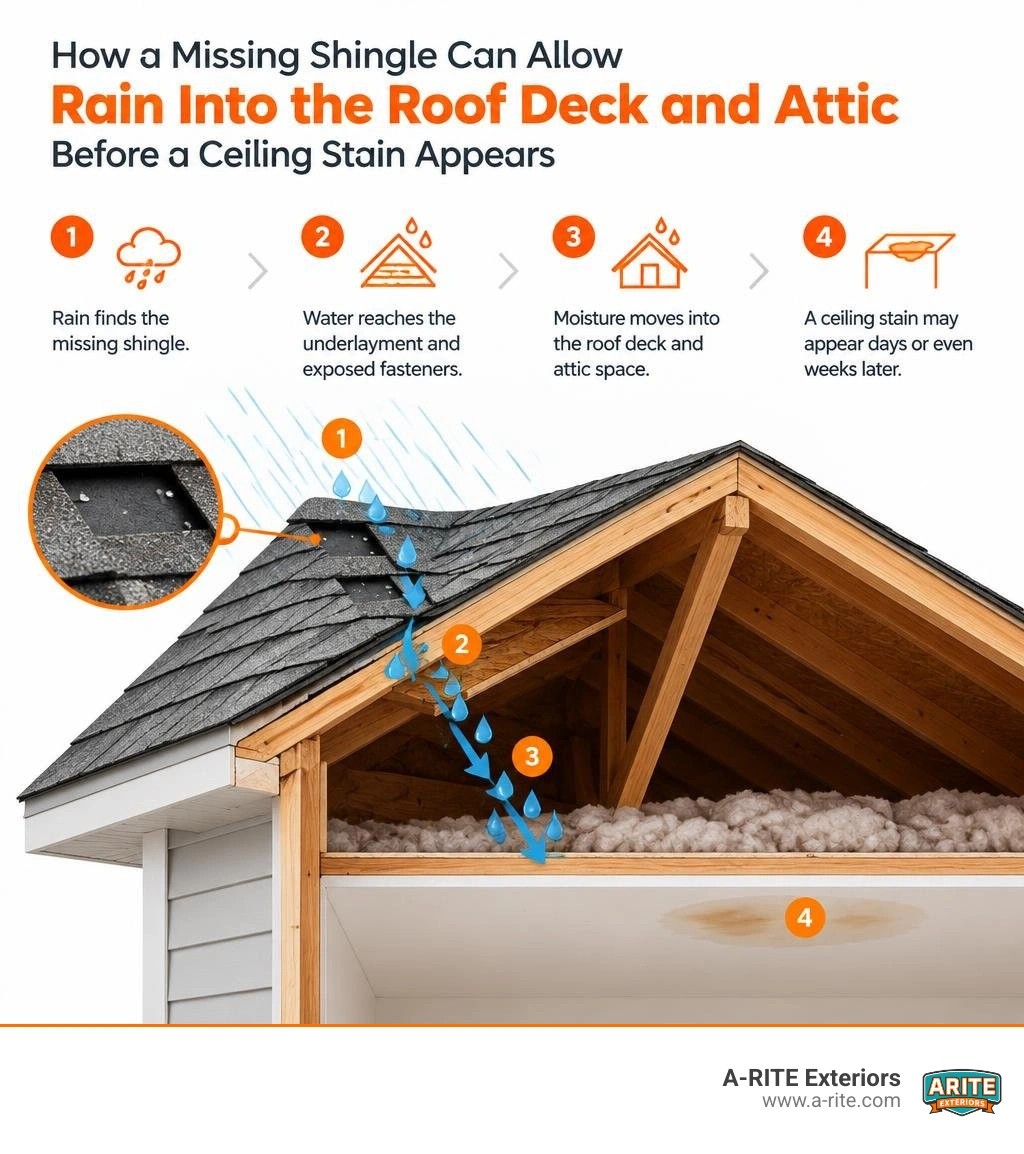
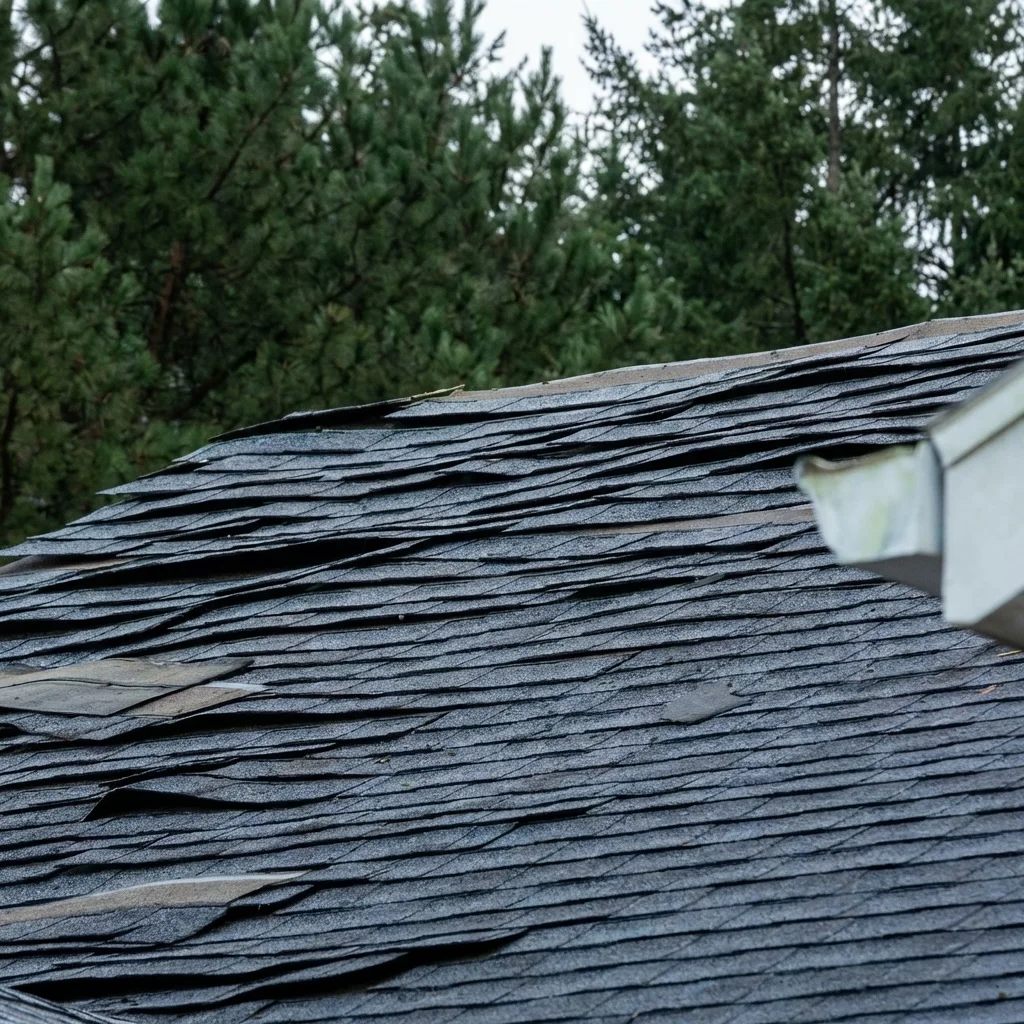
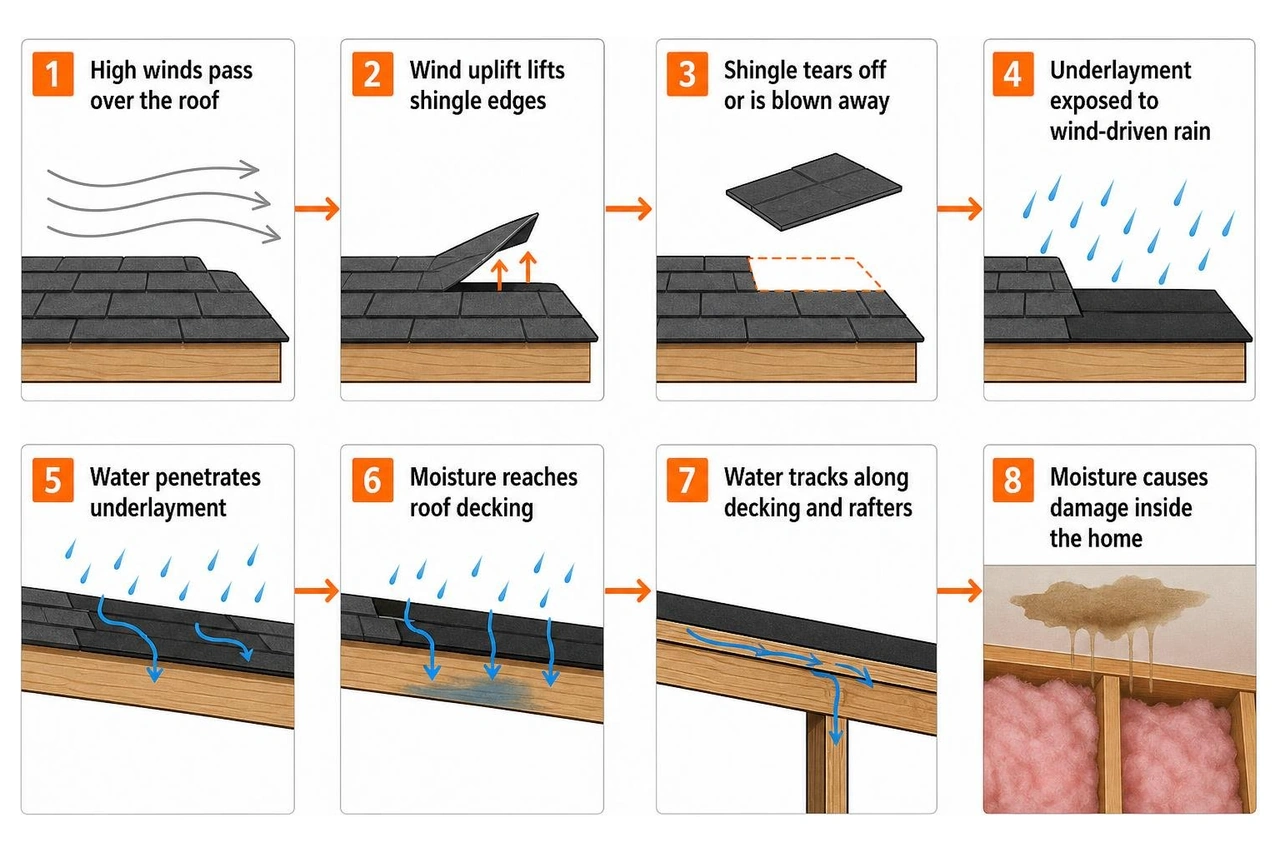
When an asphalt shingle tears off, it leaves an open path for moisture. Asphalt shingles are designed to work together as an overlapping water-shedding system. When a single piece is torn away, the protective barrier is broken. Wind-driven rain immediately hits the underlying roofing felt or synthetic underlayment. While underlayment offers secondary protection, it is water-resistant rather than fully waterproof, and it can break down when it is left exposed to sun, wind, and rain.
Even if you are only wondering whether you should worry about a small roof leak, unsealed fastener holes and exposed seam edges can pull water directly down into your home. When rain gets behind the underlayment, it directly reaches the wood decking, accelerating wood rot and weakening the roof structure. What could have been a simple roof repair can turn into interior damage if water reaches drywall, insulation, or wiring.
Can Missing Shingles Cause Water Damage Even If There Is No Visible Interior Leak?
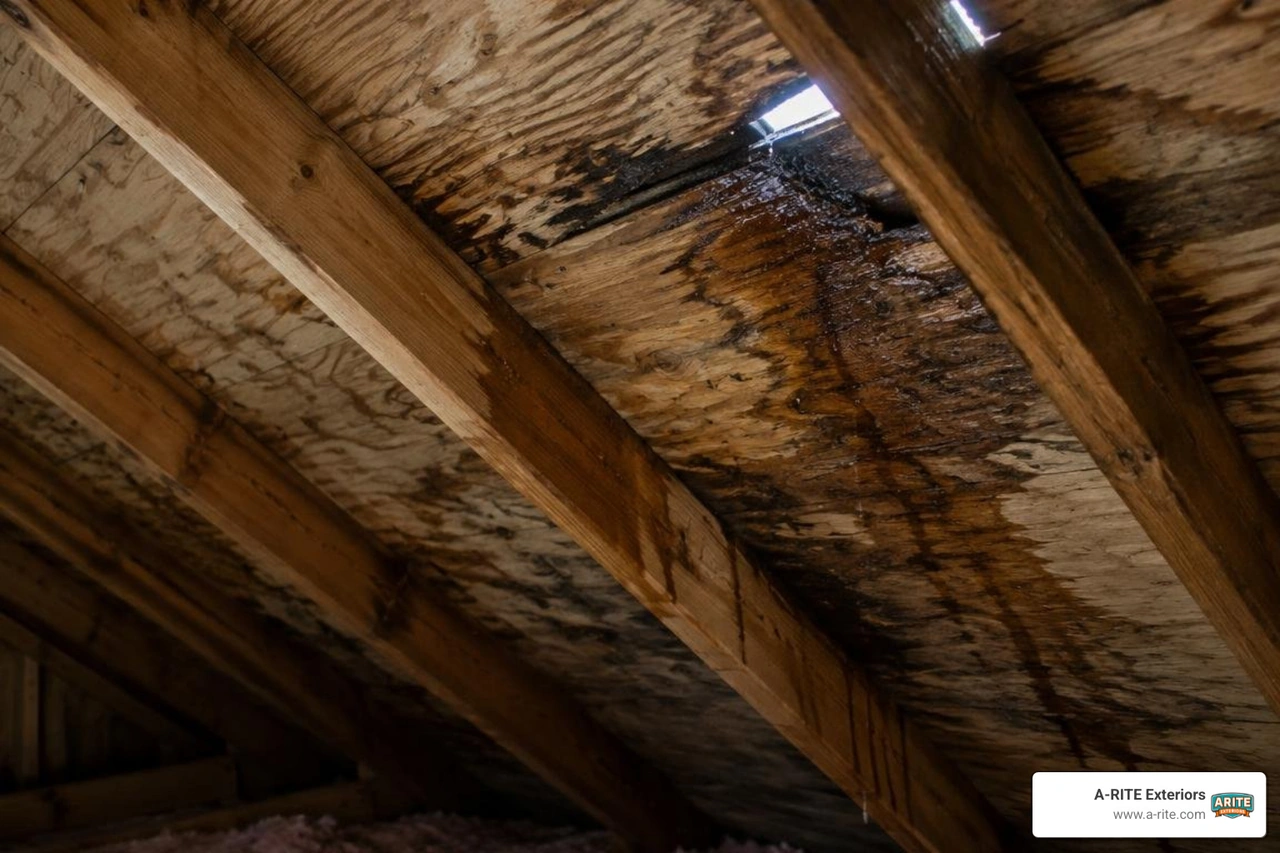
Many homeowners assume that because there is no water dripping onto their living room rug, their roof is performing fine. In reality, water rarely travels in a straight vertical line. When moisture enters through a missing shingle gap, it often trickles down the roof deck, tracks along rafters, or follows electrical conduit across your attic floor before collecting in low spots.
Recognizing the early signs of hidden roof damage helps you catch moisture before it saturates your ceiling drywall. Drywall soaks up water quietly until it stains or sags. By the time a visible yellow or brown ring appears on your ceiling paint, moisture may have been trapped in your attic framing for days or weeks.
Can Missing Shingles Cause Water Damage to Attic Insulation and Decking?
Attic insulation and structural decking are the first lines of defense damaged by water intrusion. Understanding what is under your shingles and why underlayment matters helps explain how fast materials fail once the surface is breached.
When blown-in cellulose or fiberglass batts become wet, they do not insulate as well because the material compacts and loses its insulating air pockets. Damp insulation can lead to mold. Beneath the insulation, moisture pools against the plywood or oriented strand board (OSB) roof decking. Prolonged moisture exposure softens the wood fibers, causes decking sheets to buckle or delaminate, and eventually leads to structural decay across trusses and rafters.
Why Shingles Blow Off and Where Moisture Infiltrates First
Shingles do not typically fall off without external stressors. The most common cause is severe wind uplift. As strong winds pass over a roof ridge or roof edge, they create low-pressure zones that lift the edges of loose shingles. If the thermal adhesive strip connecting overlapping shingles has weakened with age, the wind can pry the shingle upward, crease the fiberglass mat, and tear the material clean off the roof deck.
In Central Wisconsin, strong winds and big temperature swings put real strain on shingles. Our guide to roof damage from high winds explains what to look for.
Nail Pops and Loose Fasteners
Improper fastener placement and nail pops also leave roofs vulnerable during high winds. If roofing nails were driven too high above the nail strip or overdriven through the asphalt mat during initial installation, the shingle may not hold down as well in high wind. Over time, seasonal thermal expansion and contraction push improperly seated nails upward.
Once lifted, nails punch through the shingle above them, creating small entry points for moisture.
Critical Roof Zones Prone to Leaks
While a missing shingle on a wide, open roof plane is serious, missing pieces in critical architectural zones cause immediate water infiltration:
- Roof Valleys: Valleys channel massive volumes of runoff during downpours. A missing shingle here allows rushing water to run directly beneath the valley lining, resulting in a severe roof leak during heavy rain.
- Penetration Perimeters: Missing or damaged tabs around pipe boots, exhaust vents, and chimneys expose critical flashing junctions. Understanding flashing leaks around chimneys or pipes highlights why perimeter seals must remain intact to prevent water entering the structure.
- Eaves and Rakes: The edges of your roof take the brunt of wind uplift. When rake or starter shingles tear away, wind forces moisture deep under neighboring rows.
- Ridge Caps: Dislodged ridge cap shingles expose the open ventilation gap at the peak of your roof, giving rain a straight drop into your attic.
Warning Signs of Water Intrusion From Lost Shingles
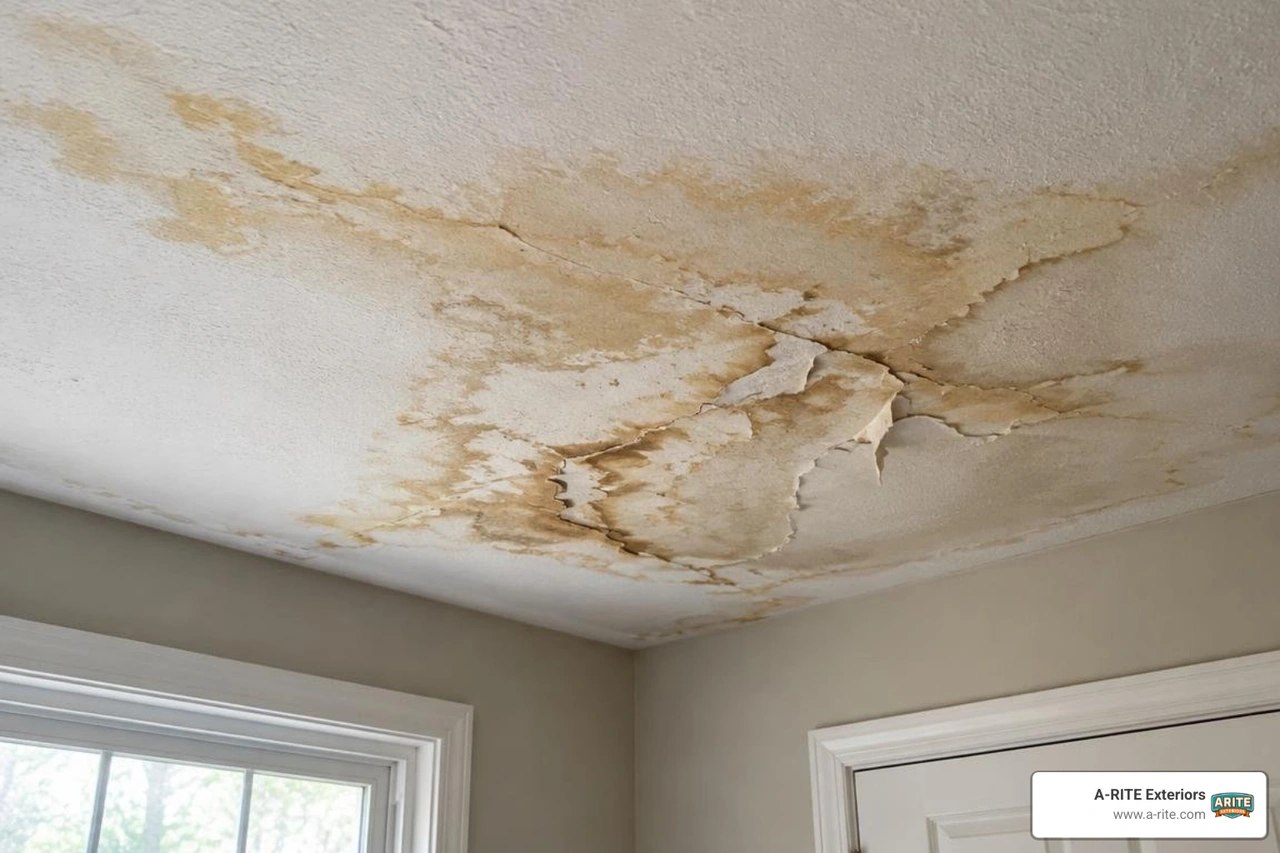
Catching moisture early saves homeowners from extensive structural repairs. Because water moves unpredictably through framing, you must monitor both exterior and interior areas of your home for signs of failure.
Spotting Exterior Clues From the Ground
You do not need to climb onto your roof to identify missing shingles. In fact, climbing a damaged or wet roof is dangerous. Using a pair of binoculars from your yard, check for:
- Exposed Underlayment: Dark, smooth patches or bright synthetic sheets visible where textured, granulated shingles should be.
- Fallen Shingle Pieces: Broken tabs or whole shingles scattered across your lawn, driveway, or patio after a storm.
- Uneven Roof Lines: Lifted or creased shingles that cast irregular shadows across the roof plane.
- Granule Accumulation: Heavy piles of asphalt granules at gutter downspouts, signaling severe shingle erosion and adhesive breakdown.
Identifying Hidden Attic and Ceiling Moisture
Inside your home, moisture signs often begin subtly before turning into active leaks:
- Attic Rust and Stains: Rusted roofing nails protruding through the underside of the roof deck, or dark discoloration tracking along rafters and trusses.
- Damp Insulation Spots: Compressed, wet spots in your blown-in cellulose or fiberglass attic insulation.
- Musty Odors: Persistent damp smells in your upper hallway or attic spaces, indicating trapped humidity and early mold growth.
- Ceiling and Wall Changes: Peeling paint, bubbling drywall seams, or faint brown staining across ceilings.
Immediate Steps to Take After Spotting Missing Shingles
When you realize your roof is missing shingles, acting quickly can help limit the damage. Prioritize personal safety first by remaining on the ground and conducting a visual scan.
Start by documenting all visible damage. Take photos and video of the roof from multiple angles on the ground, and photograph any shingle debris resting in your yard. Next, check your attic for damp spots if it is safe to do so. Once documented, contact a trusted local roofer for an inspection. For more manufacturer-backed safety steps, consult Missing Shingles on Your Roof? Here's What to Do from GAF.
Temporary Protection Before the Repair
If rain or snow is coming before the repair, ask your roofer about temporary protection, such as a tarp. Please do not climb on the roof yourself. Also skip DIY patches made with a lot of roofing cement. Cement over damp wood can trap moisture and push water sideways under nearby shingles.
Repairing Lost Shingles vs Full Roof Replacement: Costs and Decisions
Deciding whether to replace a few shingles or invest in a full roof replacement depends on the overall health, age, and scope of damage across your roof. Homeowners facing this choice should review the key factors in deciding if a roof needs replacement or repair.
| Decision Factor | Minor Shingle Repair | Full Roof Replacement |
|---|---|---|
| Scope of Loss | A few missing shingles in one area | Missing shingles across several slopes |
| Roof Age | Newer roof in good shape | Older roof near the end of its life |
| Surrounding Shingles | Flexible, granules still attached | Brittle, cracking, heavy granule loss |
| Decking | Dry and solid | Soft, rotted, or sagging |
| Color Match | Close match available | Faded shingles make patches stand out |
| Typical Cost | Depends on the damage; ask for a free estimate | Upper four figures to mid five figures |
When Simple Shingle Replacement Is Sufficient
A targeted repair is often the best approach if the damage is localized and the rest of the roof is in strong condition. If a recent windstorm pulled off two or three shingles on a fairly new roof, a roofer can carefully lift the surrounding shingles, remove the damaged fasteners, slide in matching replacement shingles, and hand-seal them. As long as the surrounding shingles remain flexible and the wood decking underneath is dry, a simple repair restores your roof's protective envelope without unnecessary expense.
When Missing Shingles Signal Systemic Roof Failure
Conversely, missing shingles on an older roof often act as a warning sign of widespread failure. As asphalt shingles age, their oils dry out, leaving the asphalt binder dry and brittle. When wind lifts these aged shingles, the tabs snap rather than flex, and the dried adhesive strips fail to reseal.
Attempting to patch a brittle roof often causes neighboring shingles to crack during the repair process. If multiple slopes exhibit missing shingles, widespread granule loss, or decking rot, a full replacement is often the better long-term choice. When budgeting for major projects, the final investment typically falls in the upper four figures to mid five figures, depending on total roof size, pitch, number of layers, decking condition, selected materials, and labor requirements.
Financing options are available for qualifying homeowners. Loan amounts up to $100,000 unsecured may be available, with final approval, rates, and terms based on lender review and credit qualification.
Frequently Asked Questions About Missing Shingles and Roof Leaks
How long can a roof go with missing shingles before leaking?
A roof can start leaking in the next rain. While the exposed underlayment may repel a light mist for a short period, wind-driven rain easily finds nail penetrations and horizontal seams. Furthermore, sun and weather break down exposed underlayment, which leaves the wood decking at risk.
Can I replace a missing shingle myself?
While minor fixes may seem straightforward, DIY shingle repair carries distinct risks. Working on a roof presents severe fall hazards, and walking on older, sun-baked shingles can cause extensive cracking. Additionally, if replacement shingles are nailed improperly or sealed with incompatible adhesives, water can back up beneath the surrounding rows, potentially voiding manufacturer warranties. A professional inspection can help find and fix decking problems.
How much does it cost to fix a few missing shingles?
It depends on how many shingles are missing, your roof's pitch, and whether water reached the decking. A free estimate gives you a clear number. If water has gotten in, water damage repairs can cost thousands of dollars, and severe cases can cost much more. When you compare quotes, a lower price may reflect differences in materials, scope, cleanup, warranty coverage, or installation details.
Conclusion
A missing shingle is more than a cosmetic issue. Even a single exposed fastener or torn tab can give moisture a path to enter your home, risking your attic insulation, ceiling drywall, and structural framing. Prompt action can keep small, manageable repairs from turning into extensive structural restoration projects.
At A-RITE Exteriors, we bring a roof-first approach to protecting homes across Central Wisconsin in every season. Our service area covers Stevens Point north to Minocqua along the Highway 51 corridor and the towns in between, and can also serve Wisconsin Rapids. As a GAF Master Elite contractor and an Owens Corning Platinum Preferred contractor through the end of 2026, our team installs complete roofing systems built for Wisconsin weather. Some architectural shingles are rated up to 110 to 130 mph when installed as part of the required system.
If you have spotted missing shingles or a leak, explore our roofing services or contact us for a free estimate.