A Smarter Way to Insulate Your Wisconsin Attic
If you have been researching ways to lower your heating bills or keep your home more comfortable during harsh Wisconsin winters, you have likely run across the term attic cat. This is the common nickname for AttiCat®, a specialized blown-in fiberglass insulation system developed by Owens Corning. It is designed to quickly, cleanly, and effectively upgrade residential attic spaces.
Here is a quick overview of how this system works and what it offers:
| Feature | Details |
|---|---|
| What is it? | A blown-in fiberglass insulation system by Owens Corning |
| Primary Use | Upgrading or adding insulation to residential attics |
| Installation Speed | A 1,000 sq ft attic can be insulated to R-50 in about 2 hours |
| DIY Suitability | Highly accessible, with portable machines available for rent |
| Certifications | GREENGUARD Gold, formaldehyde-free, 73% recycled content |
| Energy Savings | Can reduce heating and cooling costs by up to 20% |
Many older homes in Central Wisconsin have under-insulated attics. If you can easily see your roof joists, you likely have 8 inches or less of insulation—far below what our cold climate requires. This lack of protection allows expensive heat to escape right through your ceiling.
I'm Bryan Londerville, founder of A-RITE Exteriors. Over the past two decades of helping Central Wisconsin homeowners, I have seen firsthand how upgrading to a reliable blown-in insulation system can dramatically reduce heat loss, prevent ice dams, and bring monthly energy bills back under control. Let's look at how this system works and whether it is the right fit for your home.

Understanding the Attic Cat Insulation System
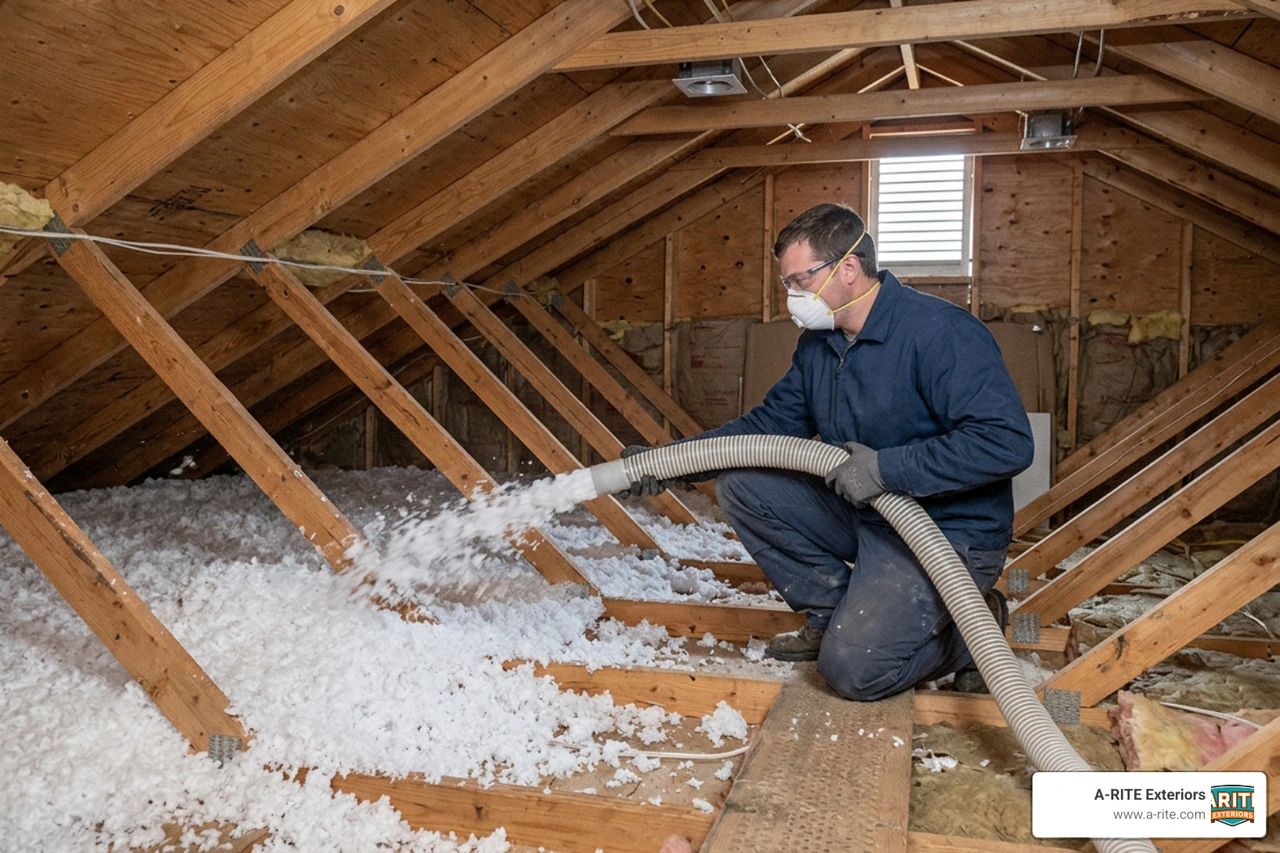
When we talk about the attic cat system, we are referring to the AttiCat by Owens Corning expanding blown-in fiberglass insulation. Unlike traditional insulation methods, this system uses a specialized, portable blowing machine to break up and fluff packaged fiberglass, sending it through a flexible hose directly into your attic space.
Traditional fiberglass batts must be hand-cut and carefully fitted between ceiling joists. This manual fitting often leaves small gaps, especially around electrical boxes, wiring, and structural framing. Because air takes the path of least resistance, these gaps can severely compromise your home's thermal barrier.
Blown-in fiberglass, on the other hand, acts like a seamless blanket. It fills every nook, cranny, and irregular space without requiring the installer to measure and cut individual pieces.
When comparing this system to cellulose (which is made from recycled newspaper treated with fire-retardant chemicals), the material efficiency is striking. One bag of AttiCat® insulation provides the same coverage as three bags of cellulose insulation. This means fewer bags to transport, fewer materials to load into the machine, and a much cleaner application process overall.
Understanding how this system measures up to your home's thermal needs starts with understanding R-value. To learn more about how insulation performance is calculated, check out our guide on What R-Value Means and Why It's Important for Insulation.
Key Benefits of Blown-In Fiberglass for Home Performance
If you want long-term performance from your attic insulation, the material you choose matters. The ATTICAT® PINK® Blown-in Fiberglass Insulation system offers several distinct advantages over other options:
- Settling Resistance: Unlike cellulose, which can pack down and lose up to 20% of its R-value over time, this blown-in fiberglass has virtually no settling. The millions of tiny air bubbles trapped within the pink fiberglass fibers maintain their loft, ensuring your attic preserves its thermal performance for decades.
- Moisture and Mold Resistance: Fiberglass is naturally inorganic, meaning it does not absorb moisture and will not rot, decay, or support mold growth. If moisture does find its way into your attic, fiberglass dries out quickly without losing its structural integrity.
- Fire Safety: Safety is a major priority for any home project. This insulation is non-combustible, boasting a flame spread rating of 0 and a smoke developed rating of 10.
- Thermal Efficiency: The system allows you to achieve precise R-values by simply adjusting the depth of the blown-in material.
To help you visualize the structural differences, here is a breakdown of how the attic cat system compares to other common insulation options:
| Feature | Blown-In Fiberglass (AttiCat®) | Cellulose | Fiberglass Batts |
|---|---|---|---|
| Settling Rate | Negligible (maintains R-value) | High (up to 20% loss over time) | None (but subject to sagging) |
| Moisture Resistance | Excellent (inorganic, dries quickly) | Poor (absorbs water, can rot) | Excellent (inorganic) |
| Installation Speed | Very Fast (approx. 2 hours for 1,000 sq ft) | Moderate | Slow (requires manual cutting) |
| Coverage Quality | Seamless (fills irregular gaps) | Seamless | Gaps common around framing |
| Combustibility | Non-combustible (Flame Spread: 0) | Treated with fire retardants | Non-combustible |
The Step-by-Step Installation Process
The installation process is designed to be fast, straightforward, and minimally disruptive. The machine itself is split into two lightweight pieces, making it easy to transport in a standard vehicle and carry to the job site.

Here is how the physical installation workflow typically unfolds:
- Machine Setup: The blowing machine is positioned outside the home or in a garage. We run a 100-foot, 2.5-inch flexible hose from the machine, through an entryway or window (using protective drop cloths), and directly up into the attic access point.
- Bag Preparation: The insulation bags are designed with an integrated autocutter. We cut the bags in half and push each half-bag directly into the machine's self-feeding hopper.
- Blowing the Insulation: Operating the system requires a two-person team. One person remains at the machine to load the material, while the installer in the attic holds the hose. The attic installer uses a wireless remote control to start and stop the flow of insulation instantly.
- Blowing Technique: The attic installer starts at the furthest corner of the attic and backs toward the attic hatch, blowing the insulation in a steady, sweeping motion.
- Depth Measurement: To ensure we achieve the target R-value, we install vertical attic rulers on the joists before we begin blowing. We place at least one ruler for every 300 square feet of attic space, allowing the installer to verify that the insulation has reached the exact required thickness.
Preparing Your Space for Attic Cat Insulation
Before a single bag of insulation is loaded into the machine, proper attic preparation is absolutely essential. Simply blowing insulation over an unprepared attic can trap air leaks, block ventilation, and lead to moisture issues down the road.
First, we perform comprehensive air sealing. This involves sealing visible air leaks around chimney bypasses, plumbing stacks, electrical wires, and ceiling light fixtures using expanding spray foam or caulk.
Second, we pay close attention to can lights. Non-IC (Insulation Contact) rated recessed light fixtures generate significant heat and require a 3-inch clearance space around them to prevent fire hazards. We install protective covers over these fixtures before insulating.
Third, we must protect the attic's ventilation system. If insulation blocks your soffit vents, fresh air cannot enter the attic, which can lead to condensation and mold growth. We install rafter vents (also called baffles) to keep the soffit vents open and prevent the blown-in insulation from shifting or blowing away.
To determine the ideal depth of insulation for your specific home layout, you can read our detailed guide on What R-Value Insulation Do I Need for Attic.
Safety Protocols for DIY Attic Cat Installers
While the attic cat system is marketed as a DIY-friendly project, working in an attic comes with inherent hazards. If you decide to tackle this project yourself, you must follow strict safety protocols.
Proper Personal Protective Equipment (PPE) is non-negotiable. You should wear a long-sleeved shirt, long pants, safety glasses, protective gloves, and shoe booties. Most importantly, you must wear a NIOSH-approved N95 dust respirator to prevent inhaling loose fiberglass fibers.
When moving around the attic, only step on the solid wooden ceiling joists. Stepping between the joists will cause you to fall straight through the drywall ceiling below.
Additionally, you must maintain a minimum clearance of 2 inches from heat-emitting devices. This includes chimneys, flues, pipes, and active light fixtures. For more detailed safety advice, read through our Safety Tips for Homeowners Working with Insulation.
Environmental Certifications and Health Standards
Modern homeowners want to know that the materials entering their homes are safe for both their families and the environment. The ATTICAT ® EXPANDING insulation system meets some of the industry's most rigorous third-party environmental and health standards.
First, it is GREENGUARD Gold Certified. This certification ensures the product meets strict chemical emissions limits, helping to maintain healthy indoor air quality. It is also validated by UL Environment to be completely formaldehyde-free.
Second, the product has a high recycled content. It is SCS certified to contain 73% recycled material, making it an environmentally responsible choice.
Finally, upgrading your attic insulation has a direct impact on global carbon emissions. By reducing the energy required to heat and cool your home, proper attic insulation can help reduce household greenhouse gas emissions by up to half a ton per year.
Protecting Wisconsin Homes from Ice Dams and Mold
In Central Wisconsin, our homes face extreme seasonal shifts. From freezing winter storms in Wausau and Stevens Point to humid summer days in Green Bay and Appleton, our roofs have to work hard.
During our harsh winters, heat escaping from an under-insulated attic rises to the peak of the roof, melting the snow above. As that melted snow runs down the cold eaves, it freezes, forming a thick ridge of ice known as an ice dam. These ice dams trap water behind them, which can back up under your shingles and leak into your home, leading to costly water damage.

By installing a continuous, thick layer of attic cat blown-in insulation, you keep more heat inside your living spaces. This helps keep your roof deck at a more uniform, cold temperature, reducing uneven snowmelt and helping to mitigate the risk of ice dams.
Furthermore, proper insulation helps prevent warm, moist indoor air from colliding with the cold roof deck. When this collision occurs, condensation can form, creating conditions that support wood rot and mold. Upgrading your insulation helps protect your roof structure, preserve your indoor air quality, and support the lifespan of your entire roofing system.
If you suspect your attic is under-insulated, working with a local professional is the best way to ensure your home is fully protected. Learn more about our regional services by visiting our page on Attic Insulation Contractor Central Wisconsin.
Pricing, Financing, Rebates, and Tax Credits
Upgrading your insulation is an investment that pays dividends through lower monthly utility bills. However, understanding the initial costs, available incentives, and financing options is key to planning your project.

Project Costs
The total cost of an insulation project varies based on your attic's square footage, its layout, and the current level of insulation. While some minor insulation touch-ups are inexpensive, a complete attic retrofit can cost thousands of dollars, and severe cases can cost much more.
When comparing estimates, a lower price may reflect differences in materials, scope, cleanup, warranty coverage, or installation details.
Financing Options
To help make your home improvement projects more manageable, we offer flexible payment solutions. Financing options are available for qualifying homeowners. Loan amounts up to $100,000 unsecured may be available, with final approval, rates, and terms based on lender review and credit qualification.
Rebates and Incentives
Wisconsin homeowners have access to excellent programs designed to offset the cost of energy efficiency upgrades:
- Focus on Energy: Homeowners may qualify for Focus on Energy rebates. These rebates are specifically for qualifying insulation and air-sealing work (such as attic insulation, air sealing, wall insulation, foundation insulation, duct sealing, and qualifying DIY attic insulation and air sealing), not for roof replacement itself. Please note that rebate amounts and eligibility rules change over time, and homeowners should confirm current program rules before starting work.
- Federal Tax Credits (Section 25C): The Energy Efficient Home Improvement Credit under Section 25C was a popular way to claim federal tax credits for energy upgrades. However, current IRS guidance shows it was available for qualifying improvements placed in service through December 31, 2025. It is not currently presented as an active credit for 2026 or beyond unless updated IRS guidance confirms an extension. We always recommend consulting a tax professional to review your eligibility for any federal tax incentives.
Frequently Asked Questions About Attic Insulation
How long does it take to install AttiCat insulation?
The actual blowing process is remarkably fast. For a standard 1,000 square foot attic, we can blow enough insulation to achieve an R-50 rating in as little as 2 hours. Preparing the attic (air sealing, installing baffles, and protecting fixtures) takes additional time, but most professional installations are completed in a single day.
Can I install this insulation system myself?
Yes, the system is designed to be accessible for DIYers. The blowing machine can often be rented from local home improvement centers when you purchase the insulation bags. However, navigating a cramped, hot, or freezing attic, performing proper air sealing, and handling heavy hoses can be physically demanding and technically challenging. Hiring a professional ensures that safety hazards are managed and that the insulation is applied evenly without blocking critical ventilation paths.
How does blown-in fiberglass handle moisture?
Fiberglass is highly moisture-resistant. Because it is made of spun glass, it does not absorb water or hold onto moisture. If a minor leak occurs, the fiberglass will dry out without settling or losing its thermal R-value. However, ensuring you have a proper vapor retarder and adequate ventilation is still essential to prevent moisture from pooling in your attic framing.
Conclusion
Upgrading your attic insulation is one of the most cost-effective ways to protect your home, lower your energy bills, and stay comfortable through Central Wisconsin's freezing winters and humid summers. The attic cat system offers a clean, fast, and highly efficient solution to under-insulated attics, providing seamless thermal coverage that will not settle or degrade over time.
While DIY installation is possible, partnering with an experienced local contractor ensures that your attic is properly air-sealed, ventilated, and insulated to meet local building codes. At A-RITE Exteriors, we build weather-resistant solutions designed to withstand Wisconsin's toughest storms.
Ready to make your home more comfortable and energy-efficient? Contact us today to learn more about our A-RITE Exteriors Insulation Services and schedule your attic assessment.