What You Need to Know About Local Roof Replacement
Local roof replacement is one of the biggest home improvement decisions you will make. Here is a quick overview of what most Wisconsin homeowners need to know before getting started:
| Topic | Quick Answer |
|---|---|
| Average cost range | $5,890 to $12,800 for most homes; larger or premium roofs can cost significantly more |
| How long it takes | Most residential replacements are done in 1 to 3 days |
| Best materials for Wisconsin | Asphalt shingles are the most common; impact-resistant options hold up well against hail and wind |
| Do you need a permit? | Permit requirements vary by municipality; your contractor should help you confirm local rules |
| Signs you need replacement | Shingles curling or missing, active leaks, granule loss, roof age over 20 years, sagging deck |
| Insurance coverage | May apply if damage is caused by a covered event like hail or wind, not normal wear and tear |
| First step | Schedule a free inspection with a licensed local contractor |
Your roof is one of the most important parts of your home. It keeps out rain, snow, ice, and wind. When it starts to fail, the problems do not stay on the roof. Water finds its way in, and damage spreads to insulation, framing, ceilings, and walls.
For many Wisconsin homeowners, the hard part is not the replacement itself. It is knowing when to replace, who to trust, and what to expect from start to finish. This guide walks you through all of it in plain language.
I am Bryan Londerville, founder of A-RITE Exteriors, and I have been helping Central Wisconsin homeowners navigate local roof replacement since 2002. In that time, I have inspected hundreds of roofs, managed storm damage projects, and worked with homeowners to find the right materials, warranties, and solutions for Wisconsin weather. This guide is built on that experience.
Knowing When to Choose a Local Roof Replacement Over Repairs
Determining whether to repair a specific area or replace your entire roof depends on several factors, including the age of your roof, the extent of the damage, and the frequency of issues. While isolated problems can often be addressed with targeted repairs, widespread issues usually mean it is time for a full replacement.
Here are the primary signs that your home is ready for a new roof:
- Roof Age: Standard asphalt shingle roofs typically last between 20 and 25 years. If your roof is approaching or has passed this mark, it is time to start planning a replacement, even if it looks fine from the ground.
- Shingle Damage: Keep an eye out for curling, buckling, or cracked shingles. These are signs that the shingles have reached the end of their lifespan and can no longer protect your home from moisture.
- Granule Loss: If you find a large amount of dark, sand-like granules in your gutters or at the bottom of your downspouts, your shingles are losing their protective coating. This exposes the underlying asphalt to harsh weather and sun damage.
- Active Leaks: A single leak might be repairable, but multiple leaks in different areas of your home point to systemic failure.
- Structural Sagging: If you notice sagging along the ridge or in the valleys of your roof, this indicates a serious structural issue. It could be a sign of attic insulation, air sealing, ventilation, or drainage issues that have allowed moisture to rot the wood decking beneath.
To help you decide which option is right for your home, consider this comparison:
| Factor | Roof Repair | Roof Replacement |
|---|---|---|
| Roof Age | Usually under 15 years old | Typically over 15 to 20 years old |
| Scope of Damage | Isolated to one area (e.g., minor storm damage or a small leak) | Widespread damage, multiple leaks, or extensive storm damage |
| Cost Comparison | Typically ranges from $380 to $1,800, with most homeowners spending about $1,100 | Typically ranges from $5,890 to $12,800, but can exceed $34,000 for complex roofs |
| Long-Term Value | Extends the life of an otherwise healthy roof | Provides a fresh start with updated materials and new warranties |
When considering your options, you might wonder if you can save money by simply installing new shingles over your old ones. However, this is not a practice we recommend. To understand the risks involved, read our detailed guide on Why You Should Not Roof Over Existing Shingles. Doing a complete tear-off is the only way to inspect the wood decking underneath and ensure your new roof has a solid, long-lasting foundation.
Understanding the Costs and Permitting for Your New Roof
The cost of a local roof replacement can vary widely based on several factors. On average, homeowners spend between $5,890 and $12,800 on a standard roof replacement. However, for larger homes or those requiring high-end materials, costs can range from $11,000 to $34,000, and complex, high-end roofs can cost even more.
The final price of your project is influenced by:
- Roof Size and Pitch: Roofing materials are measured and sold by the "square" (a 100-square-foot area). The steeper your roof, the more difficult and time-consuming it is to install, which increases labor costs.
- Labor Rates: Labor costs generally make up about 60% of the overall project cost, averaging around $2 per square foot for professional installation.
- Material Selection: Standard asphalt shingles are the most affordable option, while metal, cedar shake, or synthetic slate require a larger initial investment.
- Tear-Off Complexity: Removing multiple layers of old roofing or replacing damaged wood decking adds to the total cost.
To get a clearer picture of what your specific project might cost, you can use our Instant Roof Quote tool to receive an estimate designed for your home.
Beyond material and labor costs, you must also consider local building permits. In Wisconsin, permitting rules vary by municipality. For example, some cities require a formal permit and inspection for any reroofing project, while others do not require a permit as long as the project does not involve structural changes or exceeds two layers of roofing material.
When you work with a professional contractor, they will handle the local permitting process for you, ensuring your project complies with all local building codes. Before hiring a team, it is always wise to check their credentials and reputation. You can research local options through resources like the Roofing Contractors near Wisconsin Rapids, WI - BBB directory to verify their standing in the community.
Selecting the Best Materials for Wisconsin Weather
Wisconsin weather can be demanding. Our homes must withstand freezing temperatures, heavy snow accumulation, spring rains, and summer storms. Choosing the right material is key to ensuring your roof protects your home for decades.
Here is a breakdown of the materials most commonly used for a local roof replacement in our region:
Asphalt Shingles
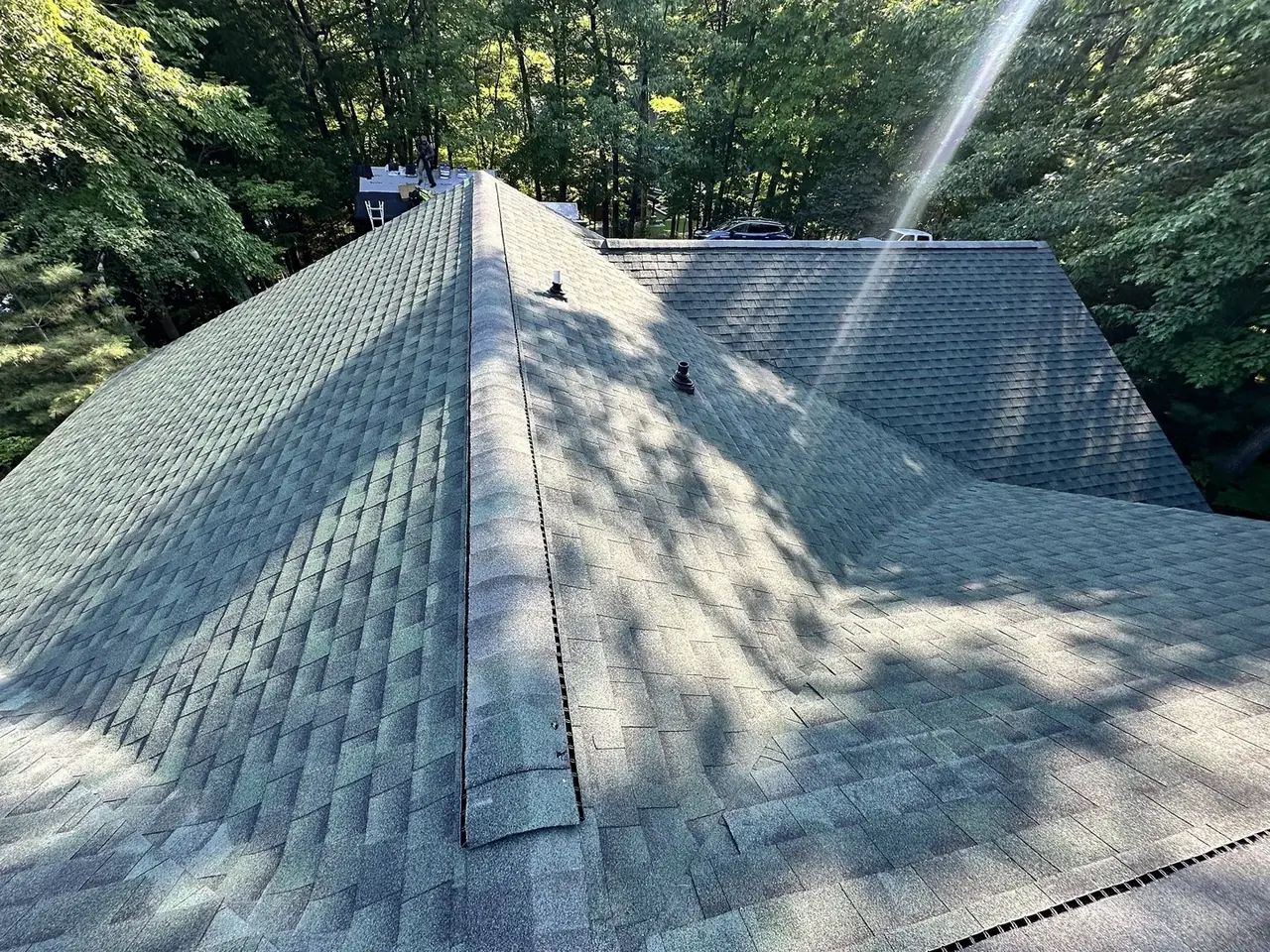
Asphalt shingles are the most popular choice for Wisconsin homes due to their excellent balance of affordability, durability, and style. Modern architectural shingles are designed to withstand winds of up to 130 mph and offer strong impact resistance against hail. If you want to see how this material looks on a local home, check out our project gallery featuring a GAF Barkwood Roof Replacement in Mosinee WI.
Metal Roofing
Metal roofing is highly durable and can last 50 years or longer. It is excellent at shedding snow quickly, which helps prevent heavy snow loads on your home's structure. However, while metal can help shed snow, ice dams are mainly tied to attic heat loss, air sealing, insulation, ventilation, and drainage. Metal roofing represents a larger upfront investment but offers exceptional longevity.
Cedar Shake
Cedar wood roofing provides a classic, natural aesthetic that ages beautifully over time. It offers natural insulating properties and can last 30 years or more with proper maintenance. However, cedar requires regular care to prevent moss and rot, and it is typically more expensive to install than asphalt shingles.
Essential Protective Components
Regardless of the material you choose, a roof in Wisconsin needs more than just shingles to perform well:
- Ice and Water Shield: An ice and water shield helps protect against water intrusion if ice dams occur, but it does not prevent ice dams by itself. It is installed along eaves, valleys, and around chimneys where water is most likely to back up.
- Balanced Attic Ventilation: Proper ventilation keeps your attic cool in the winter and warm in the summer. This helps keep your roof deck closer to the outdoor temperature, which can help reduce ice dam risk and prevent moisture buildup in your attic.
What to Expect During the Local Roof Replacement Process
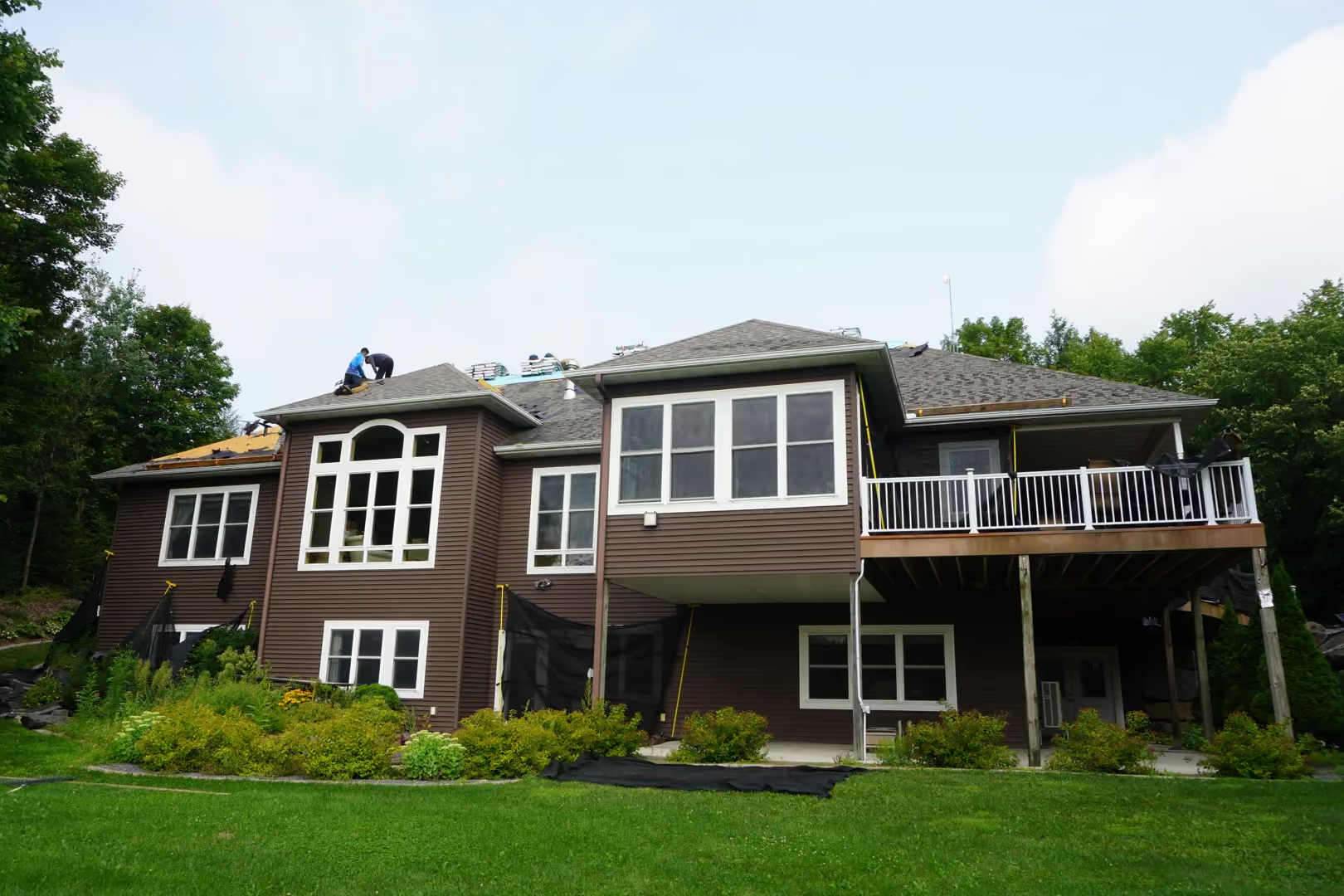
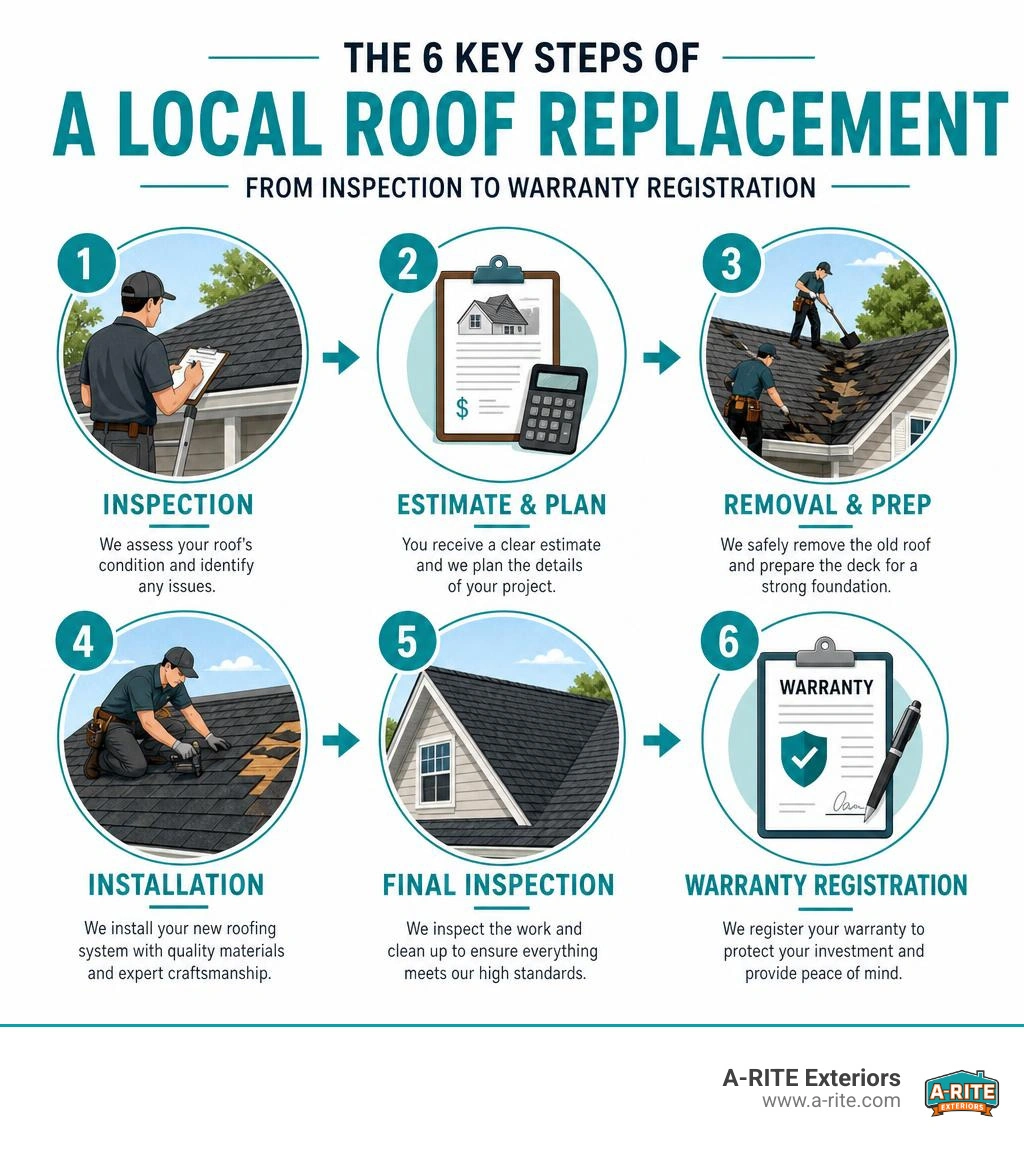
A standard residential roof replacement is a major construction project, but it does not have to be overwhelming. Most projects are completed in 1 to 3 days, depending on the size of your home and the weather. Understanding the steps involved can help you prepare for a smooth experience.
Preparing Your Property for a Local Roof Replacement
Before our crew arrives, there are a few simple steps you can take to protect your belongings and help the project go smoothly:
- Move Vehicles: Park your cars, trucks, and boats on the street or away from the driveway. This keeps them safe from falling debris and leaves the driveway clear for material delivery and the debris trailer.
- Secure Pets: The tear-off and installation process is loud. Keep your pets indoors or make arrangements for them to stay elsewhere during the project to reduce their stress.
- Clear Yard Debris: Move patio furniture, grills, potted plants, and lawn ornaments away from the work zone. This gives the crew room to set up protective tarps and scaffolding.
- Protect Fragile Items: The vibrations from roofing work can rattle walls. It is a good idea to temporarily remove fragile picture frames, mirrors, or loose items from your walls and shelves.
The Installation, Cleanup, and Disposal Process
Once preparation is complete, the physical work begins. We take great care to protect your home and yard throughout the entire process.
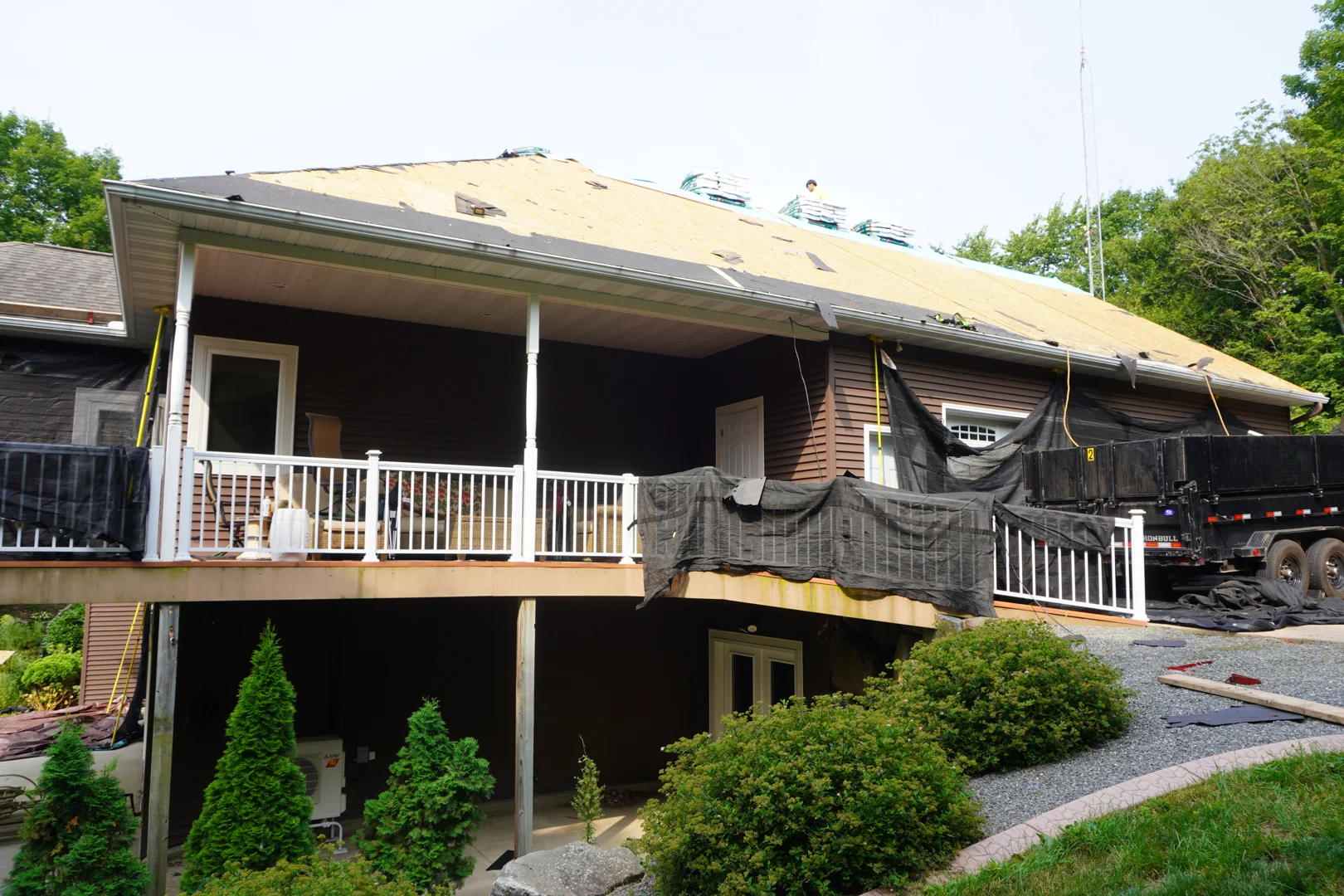
Here is what happens during a typical installation:
- Property Protection: The crew covers your landscaping, siding, windows, and deck with heavy tarps or protective plywood to prevent damage from falling shingles.
- The Tear-Off Stage: We remove all existing roofing layers down to the bare plywood decking. This is the only way to inspect the structural integrity of your roof. If we find rotten or damaged wood, we replace those sheets to ensure a solid foundation.
- Underlayment and Flashing: We install the ice and water barrier along the eaves and valleys, followed by a high-quality synthetic underlayment across the rest of the deck. New drip edges and custom metal flashings are installed around chimneys, pipes, and walls.
- Shingle Installation: The new roofing material is installed using manufacturer-approved fastening methods to ensure full warranty coverage.
- Daily Cleanup and Disposal: All old roofing materials are loaded into a mobile dump trailer and responsibly disposed of. We perform daily cleanup, including using magnetic sweeps across your yard and driveway to pick up stray nails.
- Quality Control Inspection: Once the installation is complete, our project manager performs a final walkthrough to ensure everything meets our high standards and that your property is left clean and tidy.
Navigating Insurance Claims and Warranties
Understanding warranties and insurance can feel complicated, but keeping yourself organized and working with an experienced contractor makes a significant difference.
Knowing How to Choose a Roofing Contractor in Central Wisconsin
Choosing the right partner is the most important decision in your roofing journey. When researching local professionals, look for contractors who emphasize clear communication, proper licensing, local experience, and robust insurance coverage.
To help you evaluate your options, read our guide on Knowing how to choose a roofing contractor in Central Wisconsin.
Always verify that any contractor you consider carries active liability insurance and workers' compensation, helping protect you from liability if an accident occurs on your property. It is also wise to ask clear questions before you sign a contract, such as:
- How will you document the roof condition before work begins?
- What materials and underlayment are included in the estimate?
- Who will be on-site to manage the project?
- How will cleanup, nail pickup, and disposal be handled?
- What manufacturer warranty and workmanship warranty apply to the project?
When comparing warranties, keep in mind that there are two separate types of coverage:
- Manufacturer Warranties: These cover defects in the roofing materials themselves. For example, workmanship coverage may last 20, 25, or 30 years depending on the qualifying GAF system and warranty terms, which is one of GAF's strongest warranty options.
- Workmanship Warranties: These are provided directly by your local contractor and cover the quality of the installation. A-RITE Exteriors stands behind our work with dedicated labor warranties to give you long-term peace of mind.
Managing Storm Damage and Insurance Claims for a Local Roof Replacement
If your roof has been damaged by a sudden windstorm or hail event, your homeowners insurance policy may cover some or all of the replacement costs. However, navigating the claims process requires careful organization.
To learn more about finding the right local support for this process, you can read about Who is the Best Roofing Contractor Near Wausau WI for Roof Replacement.
When dealing with potential storm damage, keep these steps in mind:
- Schedule an Inspection: Have a professional local contractor inspect your roof to document the damage with clear photos and written notes.
- File Your Claim: Contact your insurance provider to file a claim, providing them with the contractor's documentation.
- Adjuster Coordination: Your insurance company will send an adjuster to inspect the roof. We can meet with your adjuster on-site to review the damage together, helping ensure all necessary repairs are included in their scope of work.
Frequently Asked Questions About Local Roof Replacement
How often should I have my new roof inspected?
We recommend having your roof inspected at least once a year, ideally in the fall before the winter snow arrives. It is also wise to schedule an inspection after any major storm involving high winds or hail. Regular inspections help catch minor issues, like a loose flashing or a backed-up gutter, before they can turn into costly leaks.
How long does a typical roof replacement take?
Most standard residential roof replacements are completed in 1 to 3 days. However, the timeline can be affected by the size and complexity of your roof, the weather conditions, and the time of year. If we uncover hidden water damage in your wood decking during the tear-off stage, it may take a little extra time to make those structural repairs properly.
Will my homeowners insurance cover a roof replacement?
Your insurance policy is designed to cover sudden, accidental damage caused by covered events, such as windstorms, hail, or falling trees. It does not cover normal wear and tear, neglect, or roofs that have simply reached the end of their natural lifespan. A professional roof inspection is the best way to determine if the condition of your roof is due to storm damage or age.
Conclusion
A local roof replacement is a significant investment, but it is also one of the most effective ways to protect your home, improve its energy efficiency, and maintain its overall value. By choosing the right materials, preparing your property, and partnering with a licensed, insured local contractor, you can ensure your project is completed smoothly and built to last.
At A-RITE Exteriors, we specialize in weather-resistant roofing, gutters, siding, and attic insulation designed to handle cold Wisconsin winters and heavy summer storms. We pride ourselves on clear communication, clean job sites, and honest guidance from start to finish.
If you are ready to take the first step toward protecting your home, contact us today to learn more about our A-RITE Exteriors Roofing Services or to schedule your free inspection. Trust the Hawk on Your Block.