What Are Class 4 Impact Resistant Shingles and How Do They Work?
For most Central Wisconsin homeowners, Class 4 impact resistant shingles are worth the upgrade when you plan to stay in your home for many years. Many of these shingles use rubberized SBS polymer-modified asphalt and pass the UL 2218 Class 4 test, which drops a 2-inch steel ball on the same spot twice. They also stay more flexible in sub-zero freeze-thaw cycles, which can reduce the hidden bruising and cold-weather cracking that shorten the life of standard architectural roofing.
When we evaluate whether Class 4 impact resistant shingles are worth the investment for Central Wisconsin homes in 2026, we have to look closely at how these shingles are built and tested. A roof in Wausau, Stevens Point, or Minocqua faces intense summer thunderstorms with driving hail, followed months later by sub-zero winter cold and heavy snow loads. Standard roofing materials can become brittle and vulnerable under these extreme seasonal swings.
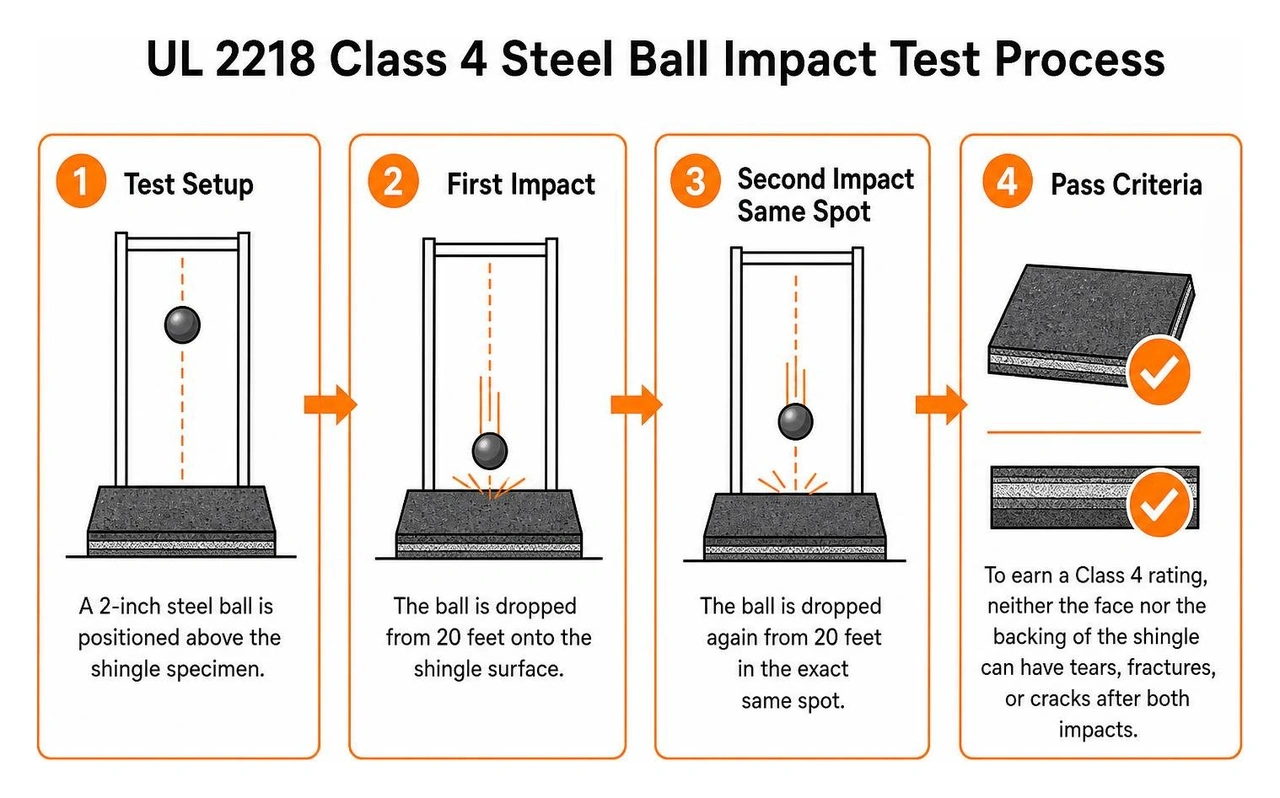
To earn a Class 4 rating, an asphalt shingle must pass the rigorous Underwriters Laboratories (UL) 2218 test. During this standardized laboratory test, technicians drop a 2-inch steel ball from a height of 20 feet directly onto the surface of the shingle twice in the exact same spot. For the shingle to receive a Class 4 certification, neither the face nor the backing of the shingle can exhibit tears, fractures, or cracks after both impacts.
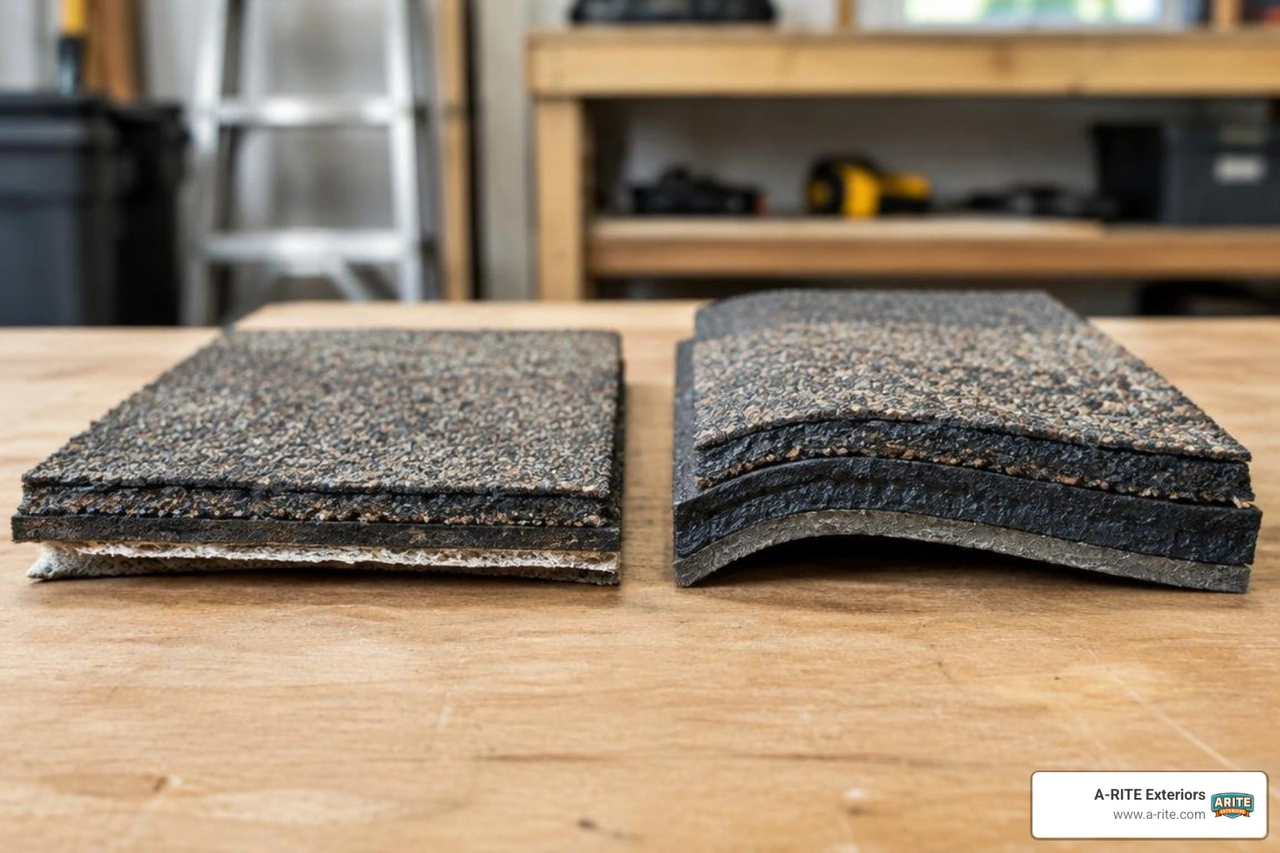
The secret behind why Class 4 shingles survive this impact lies in their chemical formulation. While standard architectural shingles use traditional oxidized asphalt, many Class 4 shingles are manufactured using SBS (styrene-butadiene-styrene) polymer-modified asphalt. Adding SBS polymers creates a rubberized asphalt matrix.
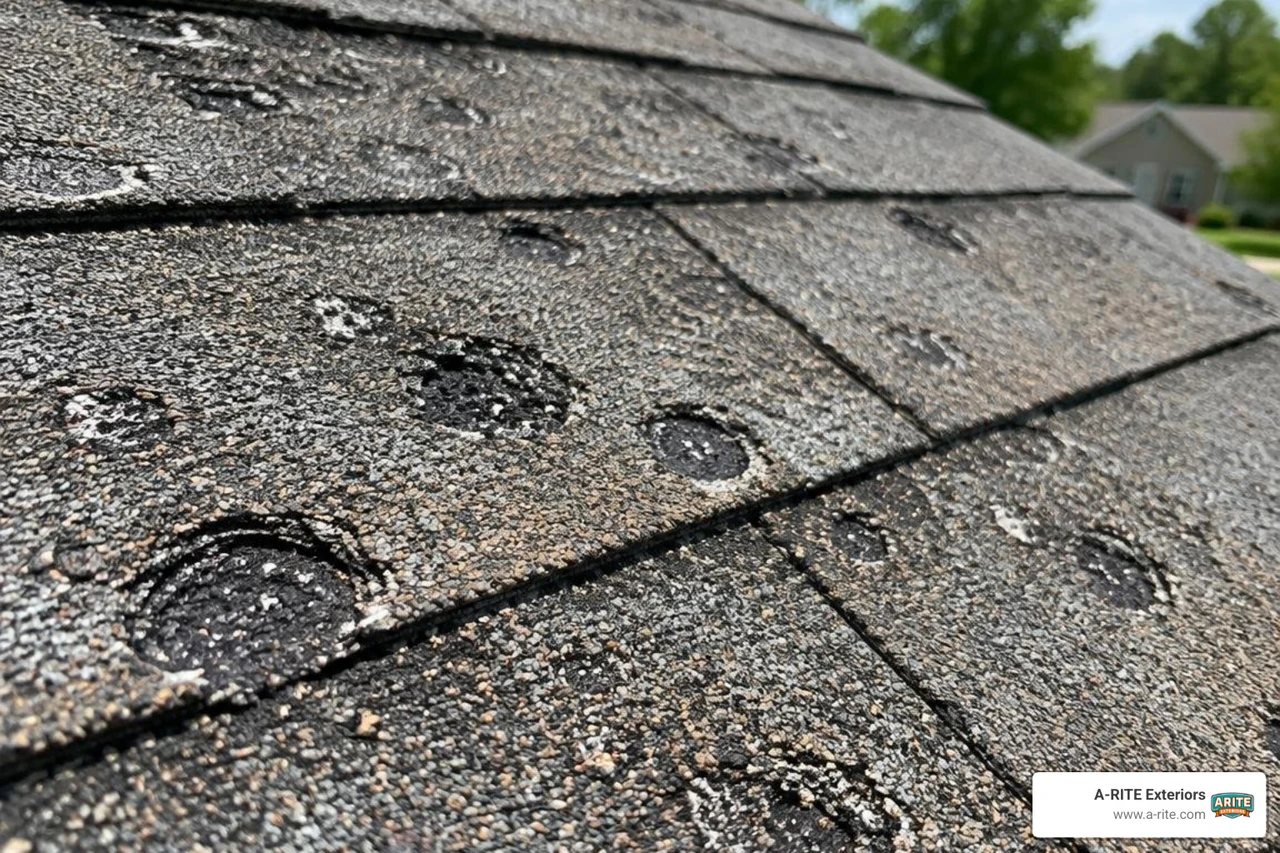
When a hailstone strikes standard asphalt, the rigid, oxidized binder often fractures, dislodging protective ceramic granules and leaving the fiberglass mat exposed. In contrast, polymer-modified asphalt flexes under impact, absorbing and dissipating the kinetic energy of the hailstone before bouncing back to its original shape.
This rubberized composition provides a massive advantage during Central Wisconsin winters. Standard shingles become rigid and brittle when temperatures drop below freezing, making them susceptible to cracking during winter thermal contraction and foot traffic. SBS polymer-modified shingles maintain their rubberized flexibility even in sub-zero conditions, reducing cold-weather fracturing and improving long-term granule retention across decades of freeze-thaw cycles.
Understanding the UL 2218 Testing Scale
The UL 2218 standard categorizes roofing materials into four distinct classes based on their ability to resist steel ball drops without cracking the structural backing:
- Class 1: Withstands a 1.25-inch steel ball dropped from 12 feet.
- Class 2: Withstands a 1.5-inch steel ball dropped from 15 feet.
- Class 3: Withstands a 1.75-inch steel ball dropped from 17 feet.
- Class 4: Withstands a 2.0-inch steel ball dropped from 20 feet (the highest impact classification available for residential asphalt roofing).
For rigid materials like metal or synthetic slate, testing is frequently conducted under the FM 4473 standard, which fires prepared ice balls at high velocity from a pneumatic cannon to simulate realistic hailstorm impacts. For architectural shingles, the UL 2218 Class 4 rating remains the industry gold standard recognized by insurance carriers and building codes.
How Does Central Wisconsin Weather Threaten Standard Asphalt Roofs?
Central Wisconsin experiences severe convective weather patterns every spring and summer. Thunderstorm complexes rolling across Marathon, Portage, and Wood counties often produce localized microbursts, high winds, and severe hail. When storms sweep through open terrain or lake-adjacent properties in communities like Wisconsin Rapids, Mosinee, or Weston, standard roofing systems face intense stress.
Hail strikes on standard architectural shingles cause immediate structural damage that is not always visible from the ground:
- Granule Displacement: Hailstones dislodge the protective ceramic granules that shield the asphalt mat from ultraviolet radiation.
- Hidden Mat Bruising: The impact creates microscopic fractures within the underlying fiberglass mat, breaking the waterproof seal.
- Delamination: Heavy impacts loosen the thermal sealant strip between shingle layers, leaving shingles vulnerable to wind blow-off during the next gust.
When severe weather damages a roof, repairing the structural and interior water damage can cost thousands of dollars, and severe cases can cost much more. Understanding how storms affect roof shingles helps homeowners recognize when a minor storm has compromised their roof's structural integrity.
Convective storm fronts in our region can bring damaging straight-line winds. Standard shingles with compromised sealant bonds easily suffer from wind lift, tab tears, and creasing. Addressing roof damage from high winds promptly is essential to prevent driving rain from reaching the roof deck.
The Freeze-Thaw Factor in Wisconsin
In Central Wisconsin, hail damage rarely stops at surface-level bruising. The real damage accelerates during our late fall, winter, and early spring freeze-thaw cycles.
When hail creates hairline fractures in an asphalt shingle, autumn rain and winter snowmelt seep into those micro-cracks. As temperatures drop below freezing, that trapped moisture freezes and expands. This expansion widens the cracks, further separates the granules, and creates direct pathways for water to penetrate the underlayment. Over multiple Wisconsin winters, what began as minor hail bruising can contribute to premature delamination, rotting roof decking, and active attic leaks, shortening a roof's service life.
What Does a Class 4 Upgrade Cost?
Class 4 impact-resistant shingles cost more than standard architectural shingles.
Overall roof replacement projects generally range from the upper four figures to mid five figures, with the final price depending on roof size, pitch, number of layers, decking condition, materials, and labor. To understand how these components come together, review our guide on how roof replacement costs in Central Wisconsin are calculated.
How Do Class 4 Shingles Compare to Standard Architectural Shingles?
To determine whether Class 4 shingles fit your property, it helps to compare performance specifications directly.
| Feature / Metric | Standard Architectural Shingles | Class 4 Impact-Resistant Shingles |
|---|---|---|
| Impact Standard | Often unrated for impact | UL 2218 Class 4 certified |
| Asphalt Composition | Standard oxidized asphalt | SBS polymer-modified rubberized asphalt |
| Cold-Weather Flexibility | Can become brittle in cold weather | Stays more flexible in cold weather than standard asphalt |
| Wind Resistance Rating | Some rated up to 110 to 130 mph* | Varies by product and installed system |
*Note: Some architectural shingles are rated up to 110 to 130 mph when installed as part of the required system.
When selecting materials, it is important to review the best roofing system for Wisconsin weather to match the shingle design to your roof's architecture and slope.
While Class 4 shingles provide superior protection in many hail events, no asphalt roofing product is entirely hail-proof. Extreme, catastrophic storms can still damage polymer-modified mats. However, Class 4 shingles can reduce cosmetic bruising, granule shedding, and nuisance leaks from moderate storms.
Maintenance and Long-Term Durability
Class 4 polymer-modified shingles deliver distinct operational advantages during everyday property maintenance:
- Foot-Traffic Resistance: SBS shingles resist tearing and scuffing when technicians or homeowners walk on the roof to clean gutters or inspect chimneys.
- Granule Retention: Superior polymer adhesion keeps granules anchored to the asphalt mat, significantly reducing granule runoff into gutters and downspouts.
Is Upgrading to Class 4 Shingles Worth It for Your Central Wisconsin Home?
Evaluating whether to upgrade comes down to your property characteristics, budget, and long-term residency plans.
When Class 4 Shingles Are Worth the Upgrade:
- You plan to stay in your home for many years: You have more time to benefit from the added durability and extended service life.
- Your property is in an exposed or high-risk area: Homes on open lots or ridges get more wind exposure.
When Standard Architectural Shingles May Be the Better Value:
- You plan to relocate within a few years: You may not own the property long enough to benefit from the added durability.
- Project budget constraints are paramount: When upfront capital is the main priority, quality standard architectural shingles installed with a complete manufacturer system provide dependable protection.
The A-RITE Exteriors Roof-First Approach
At A-RITE Exteriors, we take a roof-first approach to exterior remodeling across Central and Northern Wisconsin. We specialize in roofs, gutters, siding, windows, and attic insulation. We install complete, manufacturer-certified roofing systems engineered specifically to withstand Upper Midwest winter freezes, heavy snowpack, and severe summer storms.
When comparing estimates from contractors, a lower price may reflect differences in materials, scope, cleanup, warranty coverage, or installation details. Always review the full scope of work, underlayments, ventilation components, and contractor certifications using our guide on choosing a qualified roofing contractor in Central Wisconsin.
Energy Efficiency and Financing Considerations
- Focus on Energy Rebates: Homeowners may qualify for Focus on Energy rebates. These rebates are for qualifying insulation and air-sealing work (such as attic insulation, air sealing, wall insulation, foundation insulation, duct sealing, and qualifying DIY attic insulation and air sealing), not for roof replacement itself. Rebate amounts and eligibility rules change over time, and homeowners should confirm current program rules before starting work.
- Federal Tax Credits: Regarding Section 25C (Energy Efficient Home Improvement Credit), current IRS guidance shows it was available for qualifying improvements placed in service through December 31, 2025. It should not be assumed as an active credit for 2026 or beyond unless confirmed by current IRS guidance. Always consult a certified tax professional.
- Flexible Payment Solutions: Financing options are available for qualifying homeowners. Loan amounts up to $100,000 unsecured may be available, with final approval, rates, and terms based on lender review and credit qualification. A-RITE offers financing through Service Finance, and example terms are available on its financing page. Financing is subject to credit approval.
Ready to protect your home with an impact-resistant roofing system built for Wisconsin weather? Contact our team today to schedule an evaluation and explore our professional roofing services in Central Wisconsin.
Frequently Asked Questions About Class 4 Shingles in Central Wisconsin
Can Class 4 Shingles Reduce Hail Damage from Severe Storms?
No roofing material is completely immune to damage from extreme severe weather. Class 4 shingles are engineered and tested to withstand impacts from hailstones up to 2 inches in diameter without mat fractures or tears.
However, catastrophic storms with very large hail can strike with enough kinetic energy to crack asphalt mats and dent underlying decking. Class 4 shingles can reduce cosmetic damage, granule stripping, and minor leaks from moderate hail events, but they cannot make a roof immune to damage from historic, record-setting storms.
What Makes SBS Polymer-Modified Asphalt Better for Cold Wisconsin Winters?
Standard architectural shingles rely on oxidized asphalt, which hardens over time and turns brittle during prolonged sub-zero temperatures. When a frozen shingle experiences thermal expansion, heavy snow accumulation, or ice damming, it is prone to micro-cracking and bond failure.
SBS polymer-modified asphalt incorporates rubberized polymers that retain their elasticity across extreme temperature ranges. As outlined in GAF's impact-resistant roof guide, impact-resistant roofing materials are designed to perform better against hail than standard options. Rubberized asphalt bends and flexes under seasonal thermal contraction rather than cracking. This flexibility helps the shingle maintain its watertight integrity, resist wind uplift during winter blizzards, and survive decades of Central Wisconsin freeze-thaw cycles.