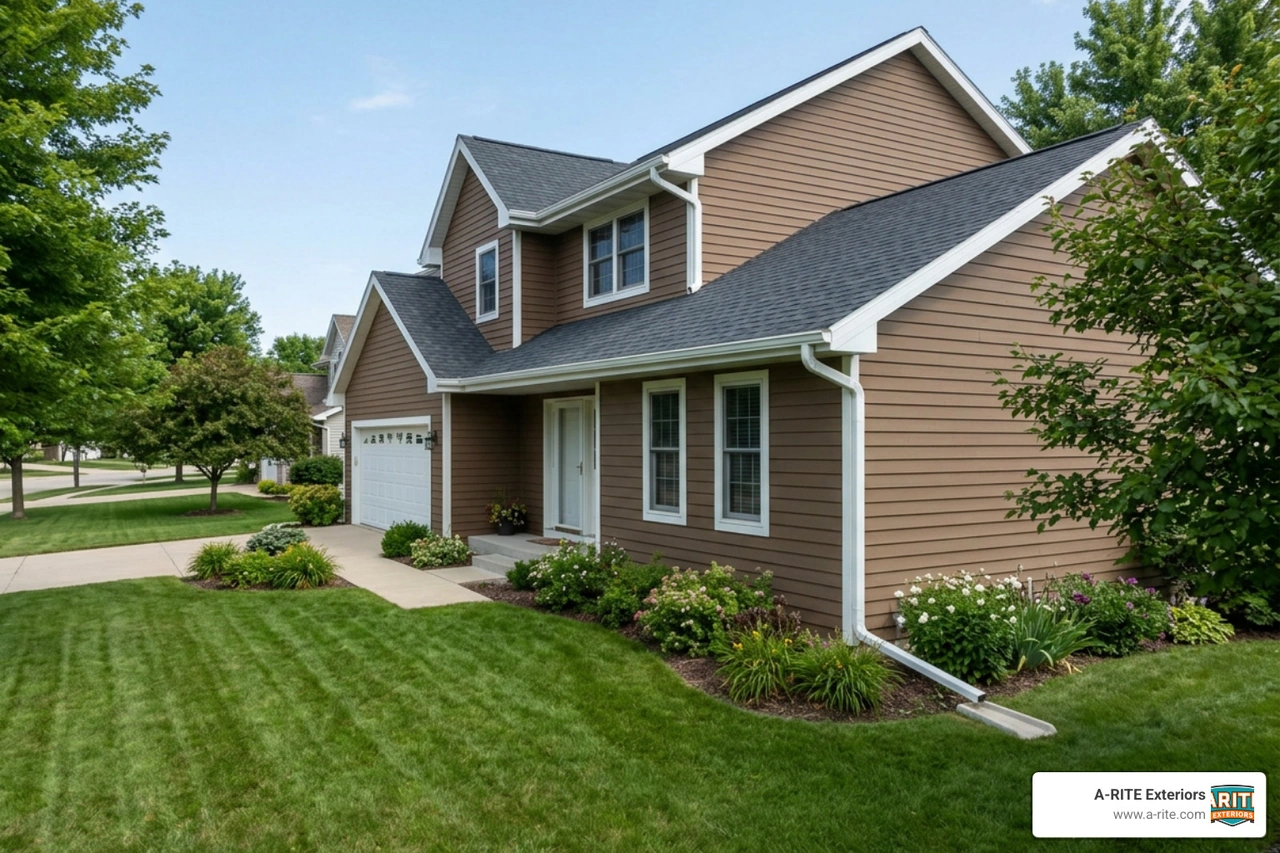
Why Gutters and Downspouts for Roof Drainage Matter More Than You Think
Gutters and downspouts for roof drainage are the first line of defense between your home and serious water damage, yet most homeowners don't think about them until something goes wrong.
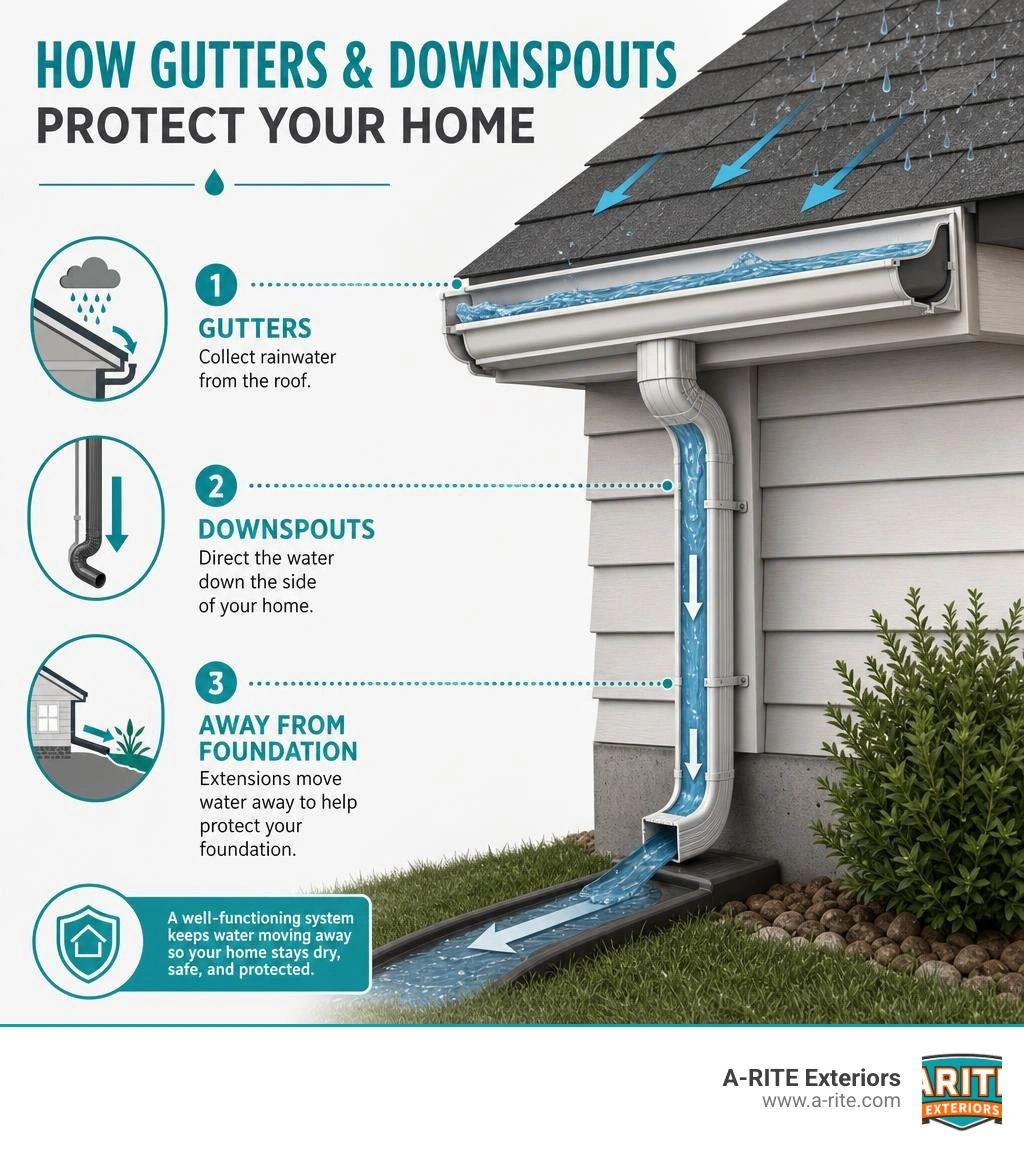
Here is a quick answer to how the system works:
| Component | What It Does | Orientation |
|---|---|---|
| Gutter | Catches rainwater running off your roof | Horizontal, along the roofline |
| Downspout | Carries that water down and away from your home | Vertical, along the wall |
| Extensions / Underground systems | Move water further from your foundation | At grade or below ground |
Together, these parts move water away from your roof, walls, fascia, and foundation before it can cause rot, mold, or structural damage.
When this system is undersized, clogged, or poorly installed, water doesn't just overflow; it works its way into your fascia boards, soffit, wall sheathing, and eventually your foundation. That kind of damage can lead to significant repair costs, and in severe cases, much more.
In Wisconsin, the stakes are even higher. Freeze-thaw cycles, heavy snow loads, and spring runoff put extra stress on every part of your gutter system. A system that works fine in a mild climate can fail quickly in a Central Wisconsin winter.
I'm Bryan Londerville, founder of A-RITE Exteriors, and since 2002 I've helped Central Wisconsin homeowners design, install, and maintain gutters and downspouts for roof drainage that hold up through our toughest seasons. This guide covers everything you need to know to make a smart decision for your home.
Must-know gutters and downspouts for roof drainage terms:
Understanding the Components: Gutters vs. Downspouts
To understand how to protect your home from water damage, it is helpful to look at how horizontal gutters and vertical downspouts work together as a unified system.
Horizontal gutters are installed along the eave line of your roof. Their primary job is water collection. As rain runs off your shingles, the gutter catches it before it can spill over the edge and pool next to your home. When gutters are pitched correctly, they funnel this collected water toward the outlets.
Vertical downspouts are the pipes that carry the water from the gutters down the side of your house. Without functional downspouts, water would simply pour out of the ends of your gutters, eroding your landscaping and soaking your foundation.
When these components fail, the fascia board (the wooden board behind your gutters) and the soffit (the underside of your roof overhang) are the first areas to suffer. Water backing up from a clogged gutter quickly rots out wooden fascia, which can cause the gutters to pull away from the house entirely. Proper water diversion is critical to keeping these wooden structures dry and structurally sound. You can read more about this dynamic in our detailed guide on how do gutters help prevent water damage.
Material and Profile Options for Your Home
Choosing the right materials and profiles for your gutter system is key to its performance and longevity. Different metals and shapes handle water flow, snow loads, and architectural styles in unique ways.
Gutter Materials
- Aluminum Gutters: Aluminum is the most common modern gutter material. It is lightweight, completely rust-proof, highly customizable, and offers excellent durability at an affordable price point. Our seamless aluminum gutters are roll-formed on-site to the exact dimensions of your home, minimizing joints that could leak.
- Copper Gutters: Copper is a premium material known for its classic beauty and incredible longevity. Over time, copper develops a rich green patina. It requires no painting, is highly resistant to corrosion, and can last for decades. For technical specifications on copper systems, you can refer to the Architecture Design Handbook: Architectural Specifications - Copper Gutters and Downspouts.
- Steel Gutters: Typically made from galvanized or galvalume steel, these gutters are incredibly strong and can handle heavy snow and ice loads. However, they are heavier than aluminum and can rust over time if the protective coating is scratched or wears away.
- Vinyl Gutters: Vinyl is a budget-friendly option often chosen for DIY projects. While lightweight and easy to snap together, vinyl gutters are prone to cracking in cold Wisconsin winters and typically have a shorter lifespan compared to metal systems.
Gutter Profiles
- K-Style Gutters: These feature a flat back and a decorative, crown-molding-shaped front. K-style gutters are the industry standard for modern homes because they carry more water than half-round gutters of the same width and blend seamlessly with modern architectural lines.
- Half-Round Gutters: Shaped like a simple U-channel, half-round gutters are often found on historic or European-style homes. They offer a classic aesthetic and are easier to clean because they have fewer corners where debris can collect, though they generally have less water capacity than K-style profiles.
| Material / Profile | Typical Lifespan | Pros | Cons | Best Suited For |
|---|---|---|---|---|
| Aluminum (K-Style) | 20+ years | Rust-proof, seamless, affordable, holds high water volume | Can dent under heavy impact | Most modern residential homes |
| Copper (K-Style/Half-Round) | 50+ years | Extremely durable, beautiful patina, low maintenance | High initial material and labor cost | Historic, luxury, or custom homes |
| Galvanized Steel | 15–20 years | High strength, handles heavy snow loads well | Prone to rust if coating is damaged | Heavy snow zones, commercial buildings |
| Vinyl (Sectional) | 10–15 years | Cheap, easy to install, won't rust | Becomes brittle in extreme cold | Budget outbuildings or mild climates |
Designing Gutters and Downspouts for Roof Drainage
A high-performing roof drainage system must be engineered to handle your specific roof's water flow. If a system is designed without considering drainage capacity, even the highest-quality materials will overflow during a heavy summer storm.
To prevent water from backing up, we carefully calculate the layout of your roofline, identify the best positions for downspouts, and ensure the entire system has the capacity to process extreme downpours. For more information on custom design options, explore our page on seamless gutters central wisconsin.
Sizing Gutters and Downspouts for Roof Drainage
Sizing is not a one-size-fits-all decision. The standard residential gutter size is 5 inches, paired with 2x3-inch downspouts. However, for homes with large steep roofs, complex valleys, or those located in heavy rainfall zones, 6-inch gutters paired with oversized 3x4-inch downspouts are often the safer choice.
A 6-inch K-style gutter holds roughly 45% more water than a 5-inch gutter. This extra capacity prevents water from overshooting the gutter during torrential rains. To learn more about selecting the right size for your specific home layout, read our guide on Choosing the Right Gutter Downspout Size for Your Home. If you want to run some numbers yourself, you can also use this interactive Gutter Sizing Calculator: Free Tool | HardHatCalc.
For homes in the Northwoods, such as Minocqua, WI, larger gutters are especially helpful for managing both heavy summer storms and melting winter snow. You can read more about these design demands here: Oversized Downspouts, Oversized Gutters, Minocqua, WI.
Calculating Rainfall Intensity and Roof Pitch
To size a gutter system accurately, professional installers look at three main factors:
- Actual Roof Area: The footprint of the roof section draining into a specific gutter run.
- Roof Pitch (Slope): Steeper roofs rush water down much faster than flat roofs. We apply a "pitch factor" to adjust the design area (for example, a 12/12 pitch roof requires a 1.30 multiplier because wind-driven rain hits steep roofs at a sharper angle).
- Rainfall Intensity: This is measured in inches of rain per hour based on local historical weather data. We use regional records from the National Oceanic and Atmospheric Administration (NOAA Atlas 14) to design systems that can handle a 10-year or 25-year storm event.
For detailed engineering tables and design principles used by agricultural and structural engineers, you can reference the Gutter PA1 (Revised 2019).xlsx resource.
Installation Best Practices and Climate Considerations
Proper installation is what separates a reliable gutter system from one that sags, leaks, and fails within a few seasons.
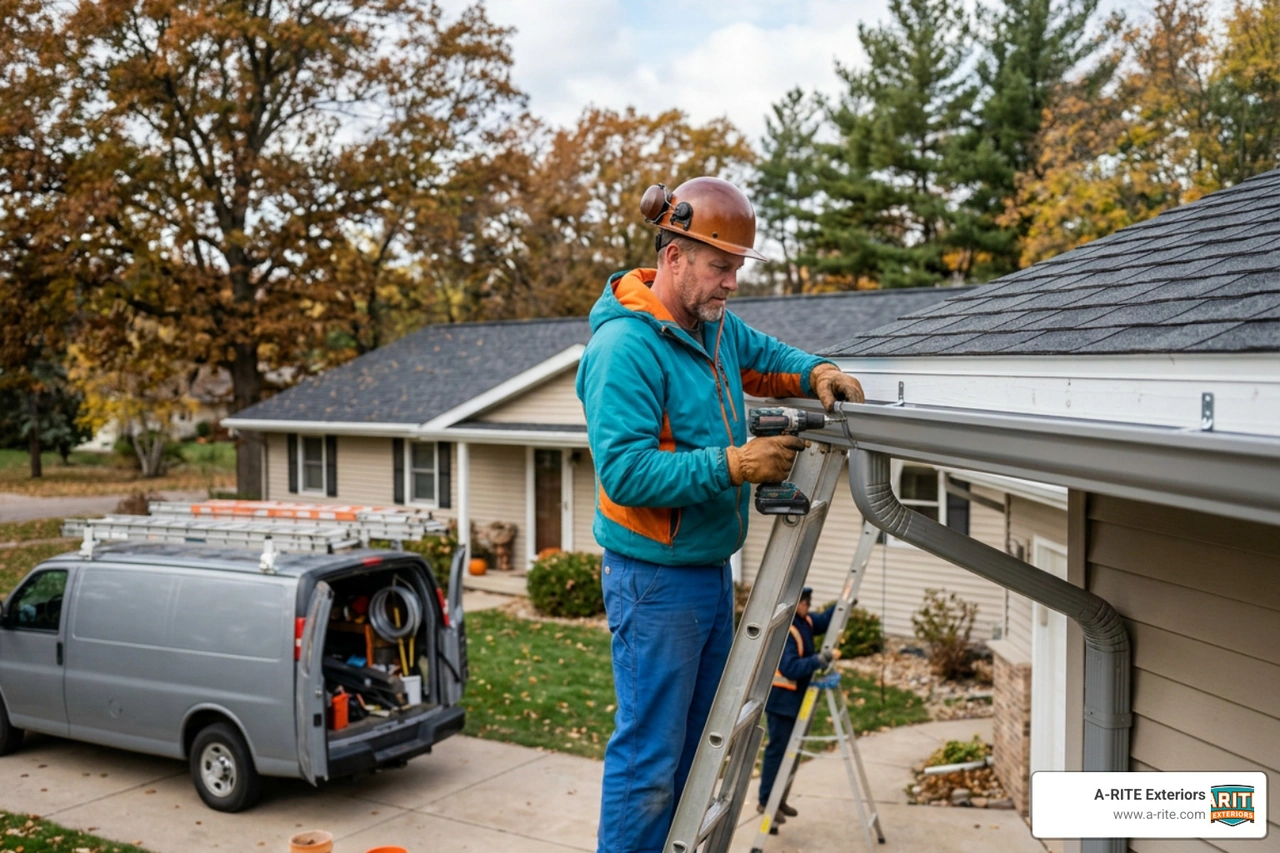
Best Practices for Installing Gutters and Downspouts for Roof Drainage
To ensure effective water flow and structural integrity, we follow several strict installation standards:
- Gutter Slope (Pitch): Gutters must be pitched downward toward the downspouts. The standard rule is a minimum of 1/16 inch to 1/8 inch of drop for every foot of gutter run. If the slope is too flat, water will pool and cause corrosion or attract pests. If it is too steep, the gutters will look crooked and the water may overshoot the downspout.
- Hanger Spacing: Hangers are the brackets that secure the gutter to your home. In mild climates, hangers can be spaced every 36 inches. In Wisconsin, we space heavy-duty hangers a maximum of 24 inches on center (and sometimes closer near corners and valleys) to support heavy snow and ice loads.
- Seamless vs. Sectional: Sectional gutters bought at big-box stores are pieced together with seams every 10 or 20 feet. Every seam is a potential leak point. We custom-fabricate seamless gutters from a single continuous piece of premium aluminum on-site, eliminating mid-run seams entirely.
We provide professional seamless gutter installation services tailored to the unique architectural needs of communities across Central Wisconsin, including:
- Rain Gutter Services Merrill | Professional Gutter Installation Services
- Rain Gutter Services Weston | Professional Gutter Installation Services
- Affordable Seamless Gutter Systems in WI
- JCS Seamless Gutters: Gutter installation Wisconsin Rapids, WI
Managing Freeze-Thaw Cycles and Ice Dams
Wisconsin winters present unique challenges for gutters and downspouts for roof drainage. When snow melts on your roof and refreezes at the cold eave line, it forms ice dams. These heavy blocks of ice can weigh down gutters, bend hangers, and force water under your shingles.
To survive these harsh freeze-thaw cycles, we use thick .032-gauge aluminum and secure our gutters with heavy-duty hidden hangers screwed directly into the rafter tails. We also design downspout systems that avoid north-facing walls when possible, as these shaded areas are highly prone to freezing solid and splitting the downspouts.
Advanced Drainage Solutions: Underground Extensions and Accessories
Once water leaves your roof, the job is only half done. You must ensure that water does not pool next to your foundation.
Underground Downspout Systems
Above-ground downspout extensions can be a tripping hazard and make mowing the lawn a chore. An excellent alternative is an underground downspout extension system.
With this setup, the downspout drains directly into a solid, 4-inch thinwall PVC pipe buried underground. The pipe carries the water at least 8 to 10 feet away from the home to a "bubbler pot" or pop-up emitter installed flush with the lawn. When water fills the pot, the lid pops up to release the water safely onto the grass, then closes to keep out grass clippings and pests.
In freezing climates, these systems use a debris filter or "ice guard" installed at the base of the downspout. This creates an open gap in the pipe. If the underground pipe freezes solid in January, the melting water can overflow safely through the gap rather than backing up and freezing vertically inside your downspouts.
Essential Accessories: Expansion Joints, Elbows, and Guards
- Expansion Joints: Metal gutters expand and contract with temperature swings. On long gutter runs (usually over 40 to 48 feet), we install custom expansion joints to allow the metal to move without buckling or pulling the fasteners out of the wood.
- Elbows (A-Style vs. B-Style): Elbows direct downspouts around corners and over wall offsets. A-style elbows curve forward or backward, while B-style elbows curve to the left or right. Using the correct elbow ensures smooth water flow and prevents debris clogs.
- Gutter Guards: High-quality gutter guards block leaves, pine needles, and twigs while allowing water to enter. Screen-type or micro-mesh guards are highly effective, though they can slightly reduce water intake capacity during extreme downpours.
Maintenance, Costs, and Financing Options
Keeping your drainage system clean and understanding the financial aspects of gutter replacement are key parts of home maintenance.
Preventing Water Damage and Managing Costs
Clogged gutters are worse than no gutters at all. When leaves and debris block water flow, the water backs up, overflows, and pours directly down your foundation walls. Over time, this water pressure can crack concrete, flood basements, and rot structural wood. Water damage to foundations can lead to significant repair costs, and severe cases can be much worse.
Regular gutter cleaning in the spring and fall is essential. Alternatively, investing in a high-quality gutter guard system can dramatically reduce your maintenance needs.
When planning a gutter replacement project, keep in mind that a lower price may reflect differences in materials, scope, cleanup, warranty coverage, or installation details. It is always wise to work with a licensed, insured contractor who stands behind their work. To find highly-rated professionals in your local area, you can browse THE BEST 10 GUTTER SERVICES IN STEVENS POINT, WI - Yelp or view our dedicated services page: Gutters and Gutter Guards in Central Wisconsin | A-RITE Exteriors.
Financing, Rebates, and Tax Credits
We want to make protecting your home as stress-free as possible. Financing options are available for qualifying homeowners. Loan amounts up to $100,000 unsecured may be available, with final approval, rates, and terms based on lender review and credit qualification.
Additionally, homeowners may qualify for Focus on Energy rebates. Please note that these rebates are specifically for qualifying insulation and air-sealing work (such as attic insulation, air sealing, wall insulation, foundation insulation, duct sealing, and qualifying DIY attic insulation and air sealing), not for roof or gutter replacement itself. Rebate amounts and eligibility rules change over time, and homeowners should confirm current program rules before starting work.
Regarding federal tax incentives, the Section 25C Energy Efficient Home Improvement Credit was available for qualifying improvements placed in service through December 31, 2025, and is not active for 2026. Be sure to consult a tax professional for active tax guidance.
Frequently Asked Questions about Roof Drainage
How long do aluminum gutters and downspouts typically last?
A high-quality aluminum gutter system is highly durable. However, typical durability varies by product, installation, ventilation, maintenance, and weather exposure. With regular cleaning and professional installation, seamless aluminum gutters often last around 20 years, while downspouts can last up to 30 years.
How many downspouts does my home actually need?
As a general rule of thumb, you should have at least one downspout for every 40 feet of gutter run. However, this spacing can vary depending on your roof's total square footage, pitch, and the water capacity of your gutters. For example, a steep roof with large valleys may require additional downspouts to handle localized water volume.
Do gutter guards affect the required size of my gutters?
Yes, some gutter guards can affect how quickly water enters the gutter. Screen-type or micro-mesh guards can reduce effective water intake by 10% to 20% during torrential downpours because the water must pass through a fine mesh. If you plan to install tight-mesh gutter guards in an area prone to heavy storms, we often recommend oversizing your gutters to 6 inches to compensate.
Conclusion
Your roof drainage system is one of the most important protective features of your home. By investing in properly sized, professionally installed gutters and downspouts for roof drainage, you safeguard your foundation, walls, and landscaping from costly water damage.
At A-RITE Exteriors, we specialize in building weather-resistant exterior solutions engineered specifically for Central Wisconsin's challenging climate. From Wausau and Stevens Point to Green Bay and the Northwoods, we are proud to be the trusted local team that helps homeowners protect their investments.
Are you ready to upgrade or repair your roof drainage system? Get a Free Estimate from A-RITE Exteriors today, and let our experienced crew design a system built to last.